Table of Contents |
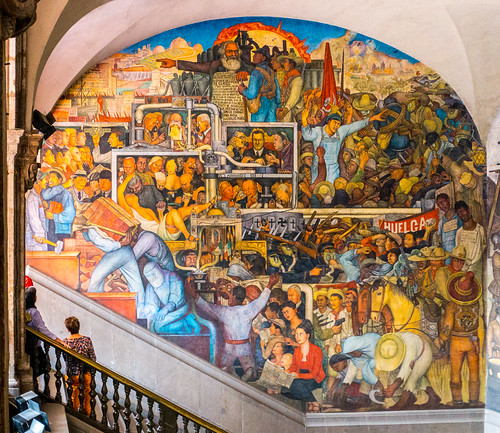
Mexican history is extremely rich, dating back to ancient civilizations from thousands of years ago. The country’s cultural heritage, from the majestic pyramids of Teotihuacan to the Baroque churches of its colonial cities and the revolutionary murals of Diego Rivera, tells the story of a people’s struggle and resilience.
Here are a few population facts about México:
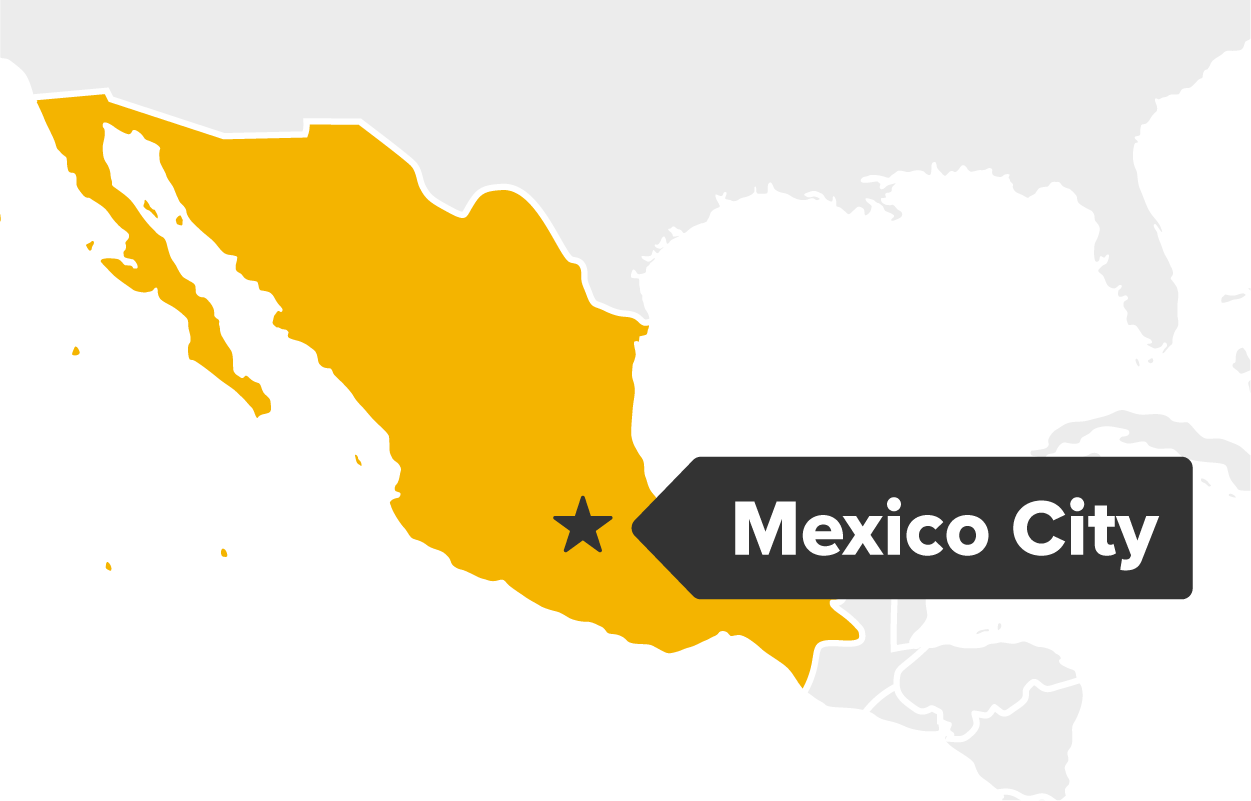 Ancient México was the home of some of the world’s most fascinating civilizations, including the Aztecs and the Maya, alongside others like the Olmecs, Toltecs, and Zapotecs. These societies were renowned for their monumental architecture, complex calendars, and significant advances in math and astronomy. The Spanish conquest in the 16th century introduced European cultural elements, creating a unique blend of indigenous and Spanish influences that define Mexico today.
Let’s begin this lesson with some interesting facts on México:
| Picture | Fact |
|---|---|

|
The axolotl is an endangered salamander whose natural habitat is Lake Xochimilco, in Mexico City. |
|
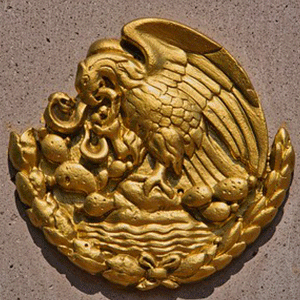
The national symbol of Mexico is a golden eagle standing on a cactus with a snake in its beak. |
|
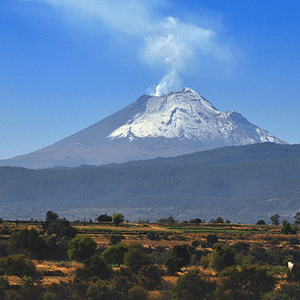
There are 48 active volcanoes in Mexico. |

|
In June 2024, the citizens of Mexico chose Claudia Sheinbaum to be the first woman to be elected president-elect of Mexico. Her administration began on January 2025. |
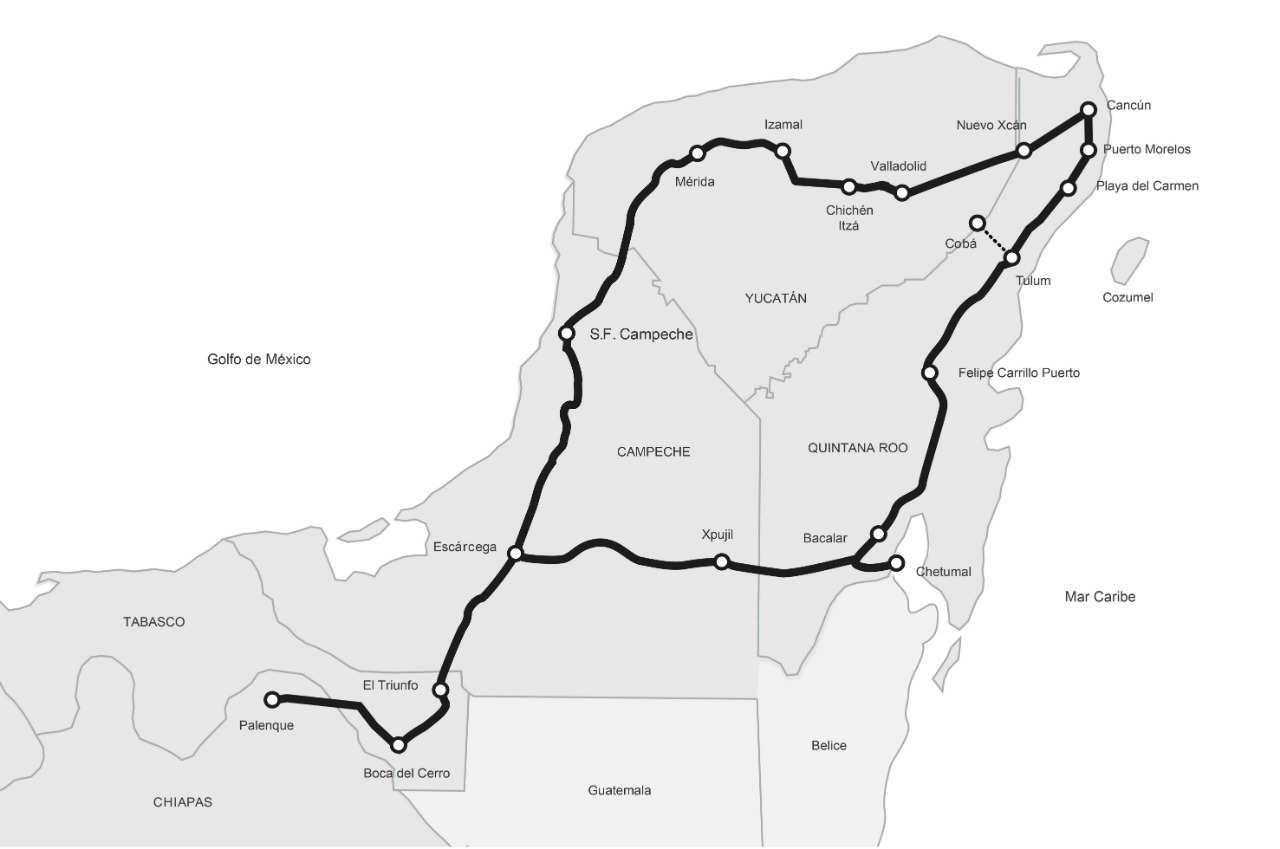
Another interesting feature in Mexico is the Maya Train. This ambitious tourist project of a new 950-mile train that includes more than 40 trains stopping at 34 stations across the states of Campeche, Chiapas, Quintana Roo, Tabasco, and Yucatán southeast Mexico. Here is the outlined route of the Tren de Maya:
Mexico’s vastness and geographical diversity is mirrored in its society, so it is important to understand that not all Mexicans experience the country in the same way. Though everyday life in Mexico varies according to setting such as urban, suburban, or rural; socioeconomic status; and even gender, and ethnicity, and racial perspectives, most daily activities are organized around:
EXAMPLE
Typically, families share multiple meals a day, which promotes close ties and community.Social life is still a very big aspect of Mexican culture, so plazas, squares, parks and open spaces are popular places where family, friends, and people of all ages congregate.
Going to the movies, bookstores, museums, and dance halls continue to be popular pastimes in Mexico. They all involve some level of sociability and community, and in these places, you can see Mexicans connecting and thriving. In terms of hobbies that involve sports, fútbol (soccer) and baseball remain the most popular ones in the country. It is not strange to see whole families participating in gatherings around matches, as players, cheering in the audience, or just enjoying a day out in the sun.
Mexican cuisine varies by region, but all places depend on this ancient trinity:
One can find restaurants that offer a rich variety of Mexican food fare: from traditional or "typical" Mexican food, to farm to table culinary experiences, to vegetarian and vegan dishes, to fusion and experimental offerings — all at different price points, in sit-down restaurants, or from street food vendors. Why not try them all?
Many of Mexico’s celebrations come from Christian festivities and historical events. Also, many of them are based on traditions that Indigenous people have passed down for centuries that form an important part of Mexican culture.
Click each of the holidays below to read more:
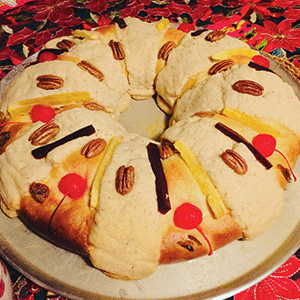 This holiday, which coincides with the feast of the Epiphany, is known for commemorating the three kings (the Three Wise men or Magi) who brought gifts to baby Jesus after his birth. It is celebrated on January 6th and is almost as important as Christmas, as in the past, children used to get most of their presents from the three kings rather than Santa. During Día de Reyes, Mexicans serve Rosca de Reyes, a cake adorned with candied fruits in an oval shape that contains a small doll baked inside which represents baby Jesus. This symbolizes the hiding of the baby from King Herod’s troops. The person who gets the slice with the doll inside must host a tamale party on Día de la Candelaria in February.
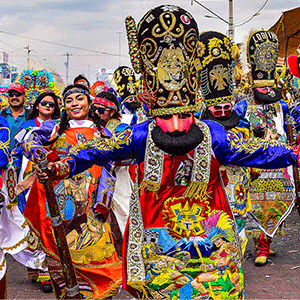 Semana Santa celebrates the Christian holiday of Easter and is an enormous holiday that varies by region involving some unique traditions to each place. Besides the religious ways of observing this holiday such as attending Mass on different occasions, Mexicans also use this time as vacation.
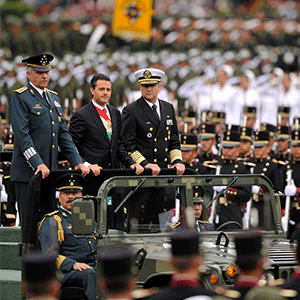 This is an event that celebrates the independence of Mexico from Spain, which colonized Mexico from 1521 to 1810. It commemorates the day in 1810 when the priest Hidalgo rang the bell of his local church and called for the country’s independence from Spanish rule. This particular incident inspired a war that ultimately led to Mexico’s independence. To celebrate this patriotic episode, there are parades throughout the day, and at dusk, people gather in the zocalo— the local main plaza or central square to enjoy fireworks and to participate in a ceremony known as el grito. There, led by the political leaders, citizens reenact the priest Hidalgo’s call for freedom and battle cry (grito) of independence.
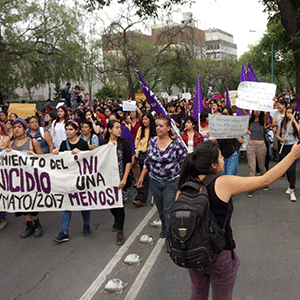 In Mexico, Columbus Day is known as "Race Day" to celebrate the mestizo character of its population: the mixed Indigenous, Black, and European heritage of Mexico. Many Mexicans (and people throughout Latin America, as well as Latinx in the U.S.) object to honoring the explorer and conqueror Christopher Columbus and rather see him as a key and controversial figure in the history of colonization in the Americas that started in 1492 when Columbus landed in the "New World."
 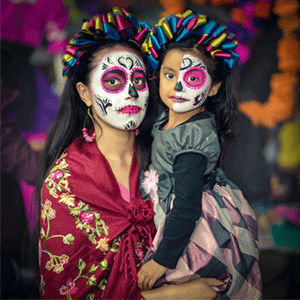 Mexico is known around the world for this celebration. On this day, death is commemorated as another element of life and as a way to remember and honor loved ones. It is believed that on this day, all souls of the dead return to the world of the living. Celebrations vary by region, but people almost always create an ofrenda, where they place photos of the deceased along with their favorite food or drink. Many people go to cemeteries where they visit the graves of their loved ones in order to place flowers, candles, and other offerings.
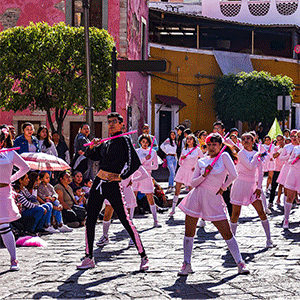 The Mexican Revolution started in 1910 to overthrow a dictator that had been in power for almost 30 years. Despite big economic growth and progress during this time, the benefits did not reach the working class or the poor. Thus, after a series of revolts, battles, and a long period of political instability, a new constitution was created in February 1917. This laid the foundations of modern Mexico. To celebrate this achievement, there are outdoors events such as festivals, bazaars, and parades.
 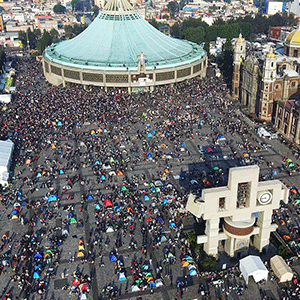 This day is dedicated to honoring the country’s patron saint, Our Lady of Guadalupe. This is a meaningful holiday even for people who are not Catholic or religious but identify the Virgin of Guadalupe as an important cultural icon. The symbol of the Virgin is fundamental to the identity of Mexico as a mestizo country because she stands for religious syncretism—the mingling of various elements into something new. Her image represents the religious syncretism of Indigenous religious practices with Spanish Catholicism.
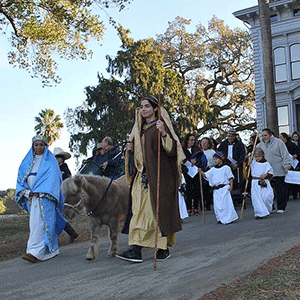 These fiestas—one happening each day from the 16th to the 24th of December—are the prelude to the big celebration on Christmas day. These are social events that go from the very informal and secular to the highly organized and religious, which entail a reenactment of Joseph and Mary’s journey to Bethlehem in search of a place where Mary could give birth to baby Jesus. These festivities also include singing, food, punch, and the breaking of piñatas.
Mexico has a rich artistic legacy dating back to its pre-Hispanic roots. Plus, art plays a key role in Mexico’s national identity, with artists like Diego Rivera, David Alfaro Siqueiros, and José Clemente Orozco using murals to explore Mexico’s social and political narratives. Along with muralism, Mexican handicrafts, or artesanías, represent Mexico by showcasing its history, culture, and traditions through pottery, textiles, and figurines.
María Izquierdo, Francisco Toledo, and of course Frida Kahlo are exceptional artists, and their contributions continue to attract audiences and provoke reflections. Current Mexican art is dynamic and eclectic. Through their work, some contemporary artists articulate reflections and critiques on issues such as social inequality, gentrification, globalization, corruption, and environmental concerns.
EXAMPLE
In particular, Ximena Cuevas, Teresa Margolles, and Gabriel Orozco are worth getting to know.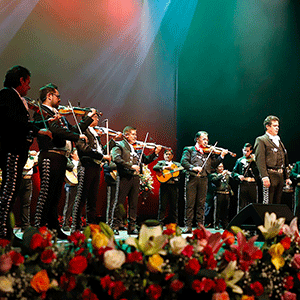
On the architectural front, Mexico is known for its ancient pyramids and colonial-era buildings, which showcase the country’s historical depth. Modern Mexican architects like Luis Barragán have further solidified Mexico’s status as an architectural pioneer by integrating traditional elements with uniquely modern design principles.
Mariachi music is a quintessential element of Mexican culture and is the best-known regional music genre in the world. The lyrics typically involve heartbreak while other songs tend to exalt traditional Mexican values like honor, courage, and hard work while using country-related lifestyle imagery.
The origins of this music are documented as far back as the 18th century in western Mexican states, most prominently in Jalisco. At the same time, Mexican music today spans to all genres and kinds of Mexican music fusions.
Mexican literature has a long and prolific history, with Sor Juana Inés de la Cruz, Carlos Fuentes, and Octavio Paz being three of the many successful and well-known writers in Mexican letters. Currently, contemporary authors continue to make significant contributions to both the national and global literary world. These new or recent authors keep exploring themes of identity, politics, and social justice. Recent voices, such as Yuri Herrera, Fernanda Melchor, Valeria Luiselli, and Silvia Moreno García, delve into issues of gender, trauma, migration, border culture, and the complexities of life in Mexico. These authors, among others, use their narratives to weave together the traditional and the contemporary, offering insights into the human condition while reflecting the nuances of Mexican society. 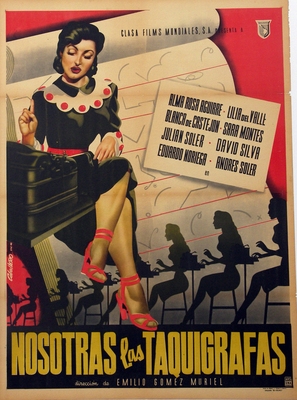
Want to experience Mexican film rather than read about it? Screen any movie from Guillermo del Toro, Alfonso Cuarón, Alejandro González Iñárritu, or Alonso Ruizpalacios (just to name a few) and you will be compelled by contemporary Mexican cinema. The aforementioned directors have become household names, winning numerous awards and showcasing Mexican talent on the international movie scene. Their films often blend magical realism with social commentary, offering a view into Mexican society while being entertaining for global audiences. And while these directors are said to represent Mexican cinema’s renaissance of the 21st century, Mexico has a previous long-standing film tradition.
Do you enjoy the classics? Pick any film from Mexico’s Golden Age (mid-1930s to mid-1950s) and chances are you will be drawn by the powerful visual stories as well as the strong performances by iconic actors of their time.
Source: THIS TUTORIAL WAS AUTHORED BY SOPHIA LEARNING. PLEASE SEE OUR TERMS OF USE



