Table of Contents |
A diverse Indigenous culture, significant Maya heritage, and the charm of Colonial-era buildings make Guatemala a fascinating place with a long and rich history. Experts believe the word Guatemala derives from the Indigenous Nahuatl word Quahtlemallan, meaning "land of many trees."
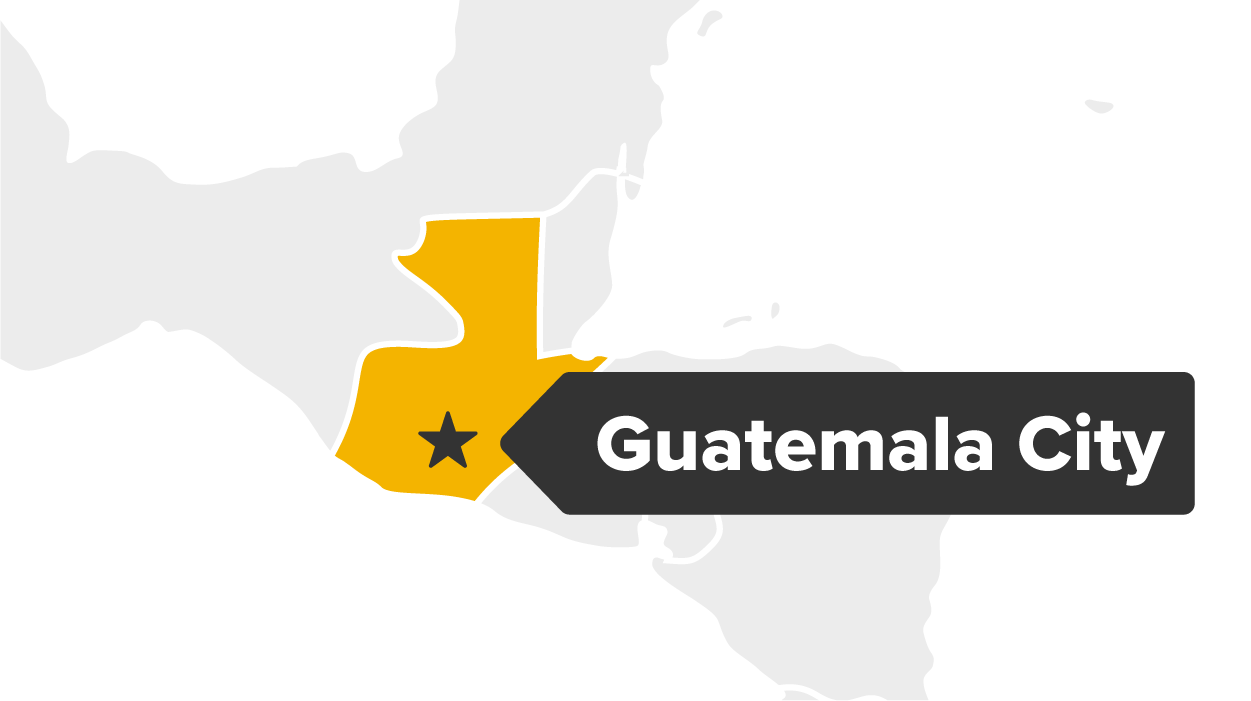
Guatemala is the largest country in Central America. It is bordered to the north and west by Mexico, to the northeast by Belize, along a short coastline by the Gulf of Honduras, to the east by Honduras, to the southeast by El Salvador, and to the south by the Pacific Ocean. Guatemala is home to Tajumulco, the tallest volcano in Central America, and it is the only country in Latin America with four active volcanoes:
| Picture | Fact |
|---|---|
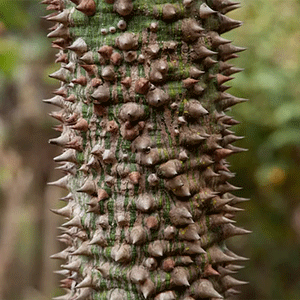
|
The ceiba is the national tree and is considered sacred. Some ceiba trees can grow up to 3.5 meters wide—around the same distance as 11 people standing in a line! |
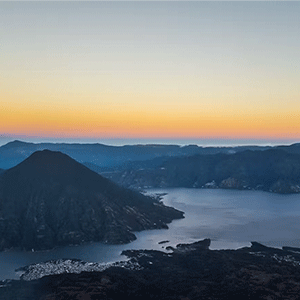
|
The volcano-ringed Lake Atitlán is not only a very popular tourist destination, but also the deepest lake in Central America at 340 meters deep. |
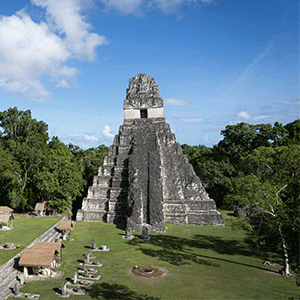
|
Guatemala is the birthplace of the Mayan civilization, which is still present as an important part of the culture continuing to practice ancient traditions. |
|
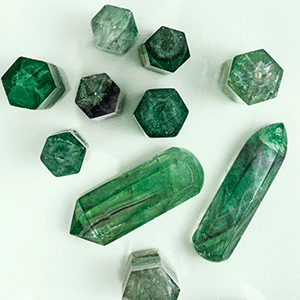
Guatemala is one of the top jade producers. |
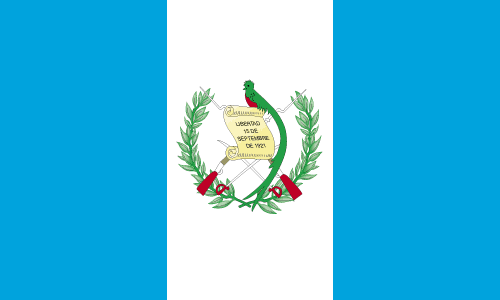 The quetzal is the national bird. Guatemala’s currency is named after it, and it is also on the Guatemalan flag. It is known for its long, colorful tail and for being a sacred animal to the Mayans.
Here are some interesting facts about the people in Guatemala:
Food is essential to Guatemala’s overall lifestyle and customs. As all other Latin American countries, Guatemala is a diverse nation, and that includes its culinary scene. Over time, an evolving mix of traditional cooking ingredients and techniques with foreign recipes from Europe via the Spanish colonizers have created an extraordinary and varied cuisine. Just like during Mayan times, Guatemala currently has different dishes that include corn as a main ingredient, maize-based beverages, and spicy slow-cooked stews. High on this list are tortillas, tamales, and pupusas, three corn-based dishes that are also gastronomical staples in Mexico and Central America. Below, we showcase just four iconic dishes from Guatemala:
| Food | Picture | Description |
|---|---|---|
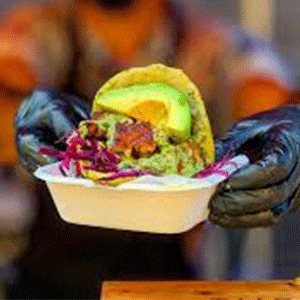
| Pepiá |
|
A thick chicken stew with vegetables that is especially common in Antigua. |
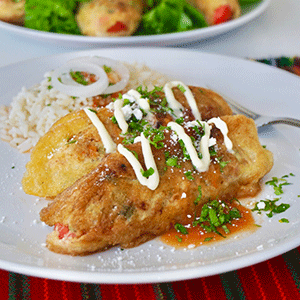
| Chiles rellenos |
|
Sweet peppers filled with a mixture of minced meat (typically beef) and vegetables, served with a tomato sauce. |
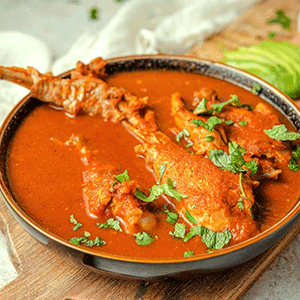
| Kak’ik |
|
A food of pre-Hispanic origin, kak’ik is a Mayan turkey soup. The name derives from the Q’eqchi’ words kak (red) and ik (hot or very spicy). |
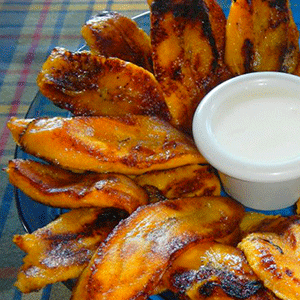
| Plátanos |
|
Plantains are starchier, less sweet relatives of the banana. When harvested before they are ripe, they are especially tasty when mashed and fried in round pieces, a preparation called tostones. When ripe, they make tasty desserts. |
IN CONTEXT: Chocolate, a Gift from the Gods
It is said that Guatemala is the birthplace of chocolate, going back to as early as the 6th century A.D. One theory posits that the word “chocolate” comes from the Mayan word xocoatl, which means "bitter water." Originally, chocolate was mainly consumed in drink form, with a metate or mealing stone being used to grind the cacao down into an edible form. Mayans liked their chocolate bitter and spicy, adding chilies and cornmeal to the fermented cacao pulp mixture and drinking up for health and vitality. Mayans also used cacao beans as currency. It is believed that the Mayans worshipped the cacao tree, and scholarly research shows that Mayans had a specific cacao god or goddess named Ek Chuah.
Some of the evidence found are vessels filled with cacao remains, Mayan vases with cacao image etchings, paintings depicting the Mayans consuming cacao, and statues of gods holding cacao seeds from Mayan and Aztec times.
In present day Guatemala, chocolate is more typically consumed as a drink, and not eaten as food, a practice which some say stays true to their ancient origins and roots. Recently, the cocoa industry has been on the rise in Guatemala, creating a type of "chocolate boom" backed up by the production of artisanal chocolates sold in boutique chocolate shops in Guatemala and fueling tourism that seeks the single-origin chocolate experience.
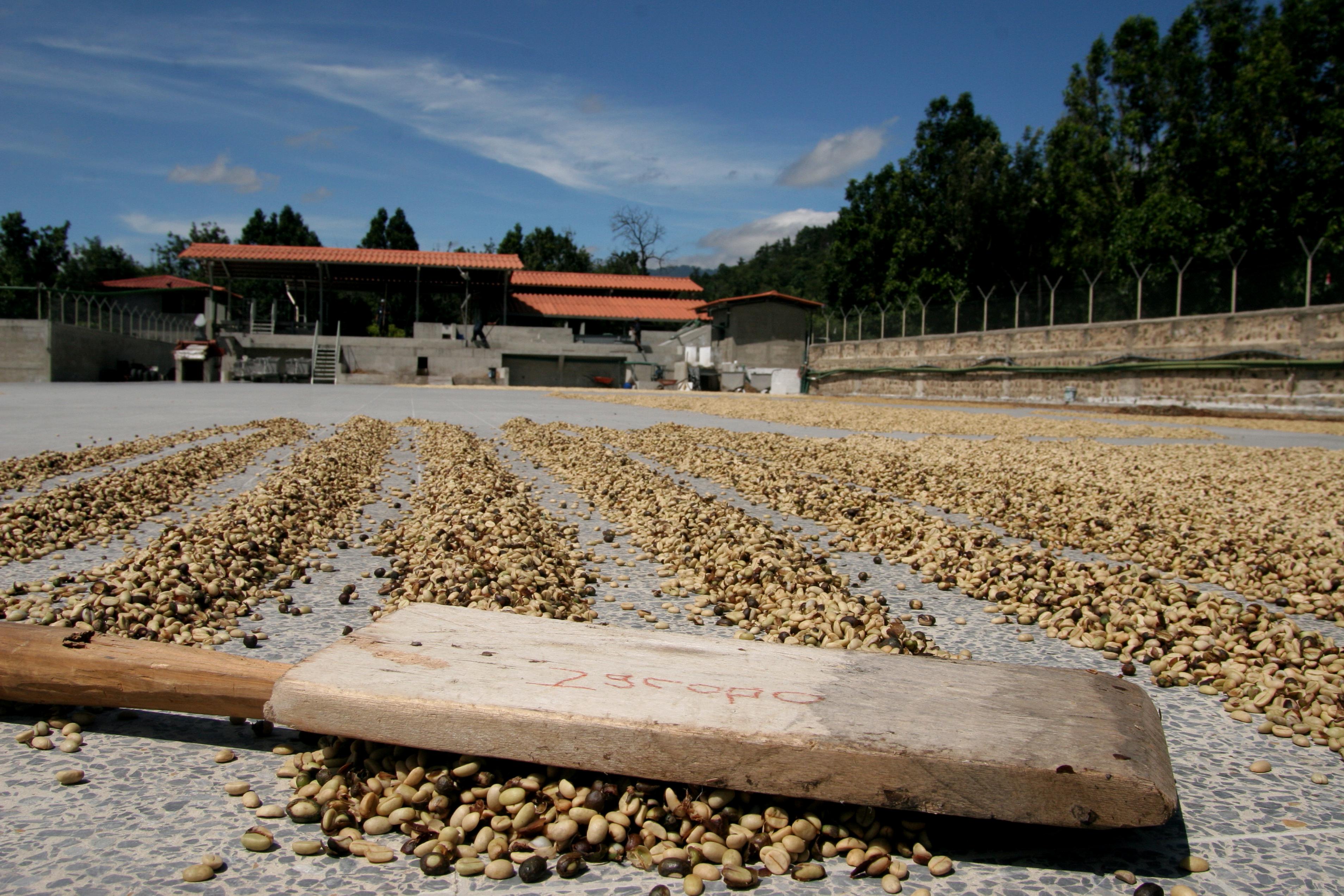
Did you know that Guatemalan coffee is consumed around the world, and it is the biggest industry in the country? Guatemala is one of the top 10 export producers of coffee in the world, so, if you like coffee, chances are you have enjoyed Guatemalan coffee beans already. Like cacao, coffee is a large industry in Guatemala, and the region produces some of the best in the world. There are seven types of Arabica coffee in Guatemala, distinctive in taste due to their soil, altitude, humidity, and rainfall.
People who visit Guatemala with the purpose of visiting coffee fincas (plantations) find a wide range of exceptional coffee, where they experience mounds of beans drying in the sun and smell their distinct aroma.
As the coffee and cacao reputation has risen in the global markets, so has the demand for them. Thus, Guatemala has attracted the attention of major industry players but also of cacao connoisseurs and coffee enthusiasts who are eager to tour cacao and coffee fincas in order to expand their knowledge and experience first-hand the rich agricultural heritage and growing conditions of the plantations. This, of course, can represent challenges and sometimes problems.
While many people are eager to capitalize on said booming business and tourist experiences, there are organized efforts led by locals that aim at creating strategies and initiatives that can ensure organizational, social and environmental practices that would help small-scale cooperatives remain autonomous or self-directed. This means that the co-ops have access to alternative global markets which offer higher prices and better financing conditions, marketing services, and technical assistance in all aspects related to the harvest.
This is where fair trade comes in. In basic terms, it is an agreement conceived to help producers in developing countries achieve better trading conditions. In Guatemala, the fair-trade movement seeks the payment of higher prices to producers, as well as improved social and environmental standards. At the same time, the fair-trade movement promotes sustainability by offering better trading conditions to marginalized producers and ensuring the rights of workers.
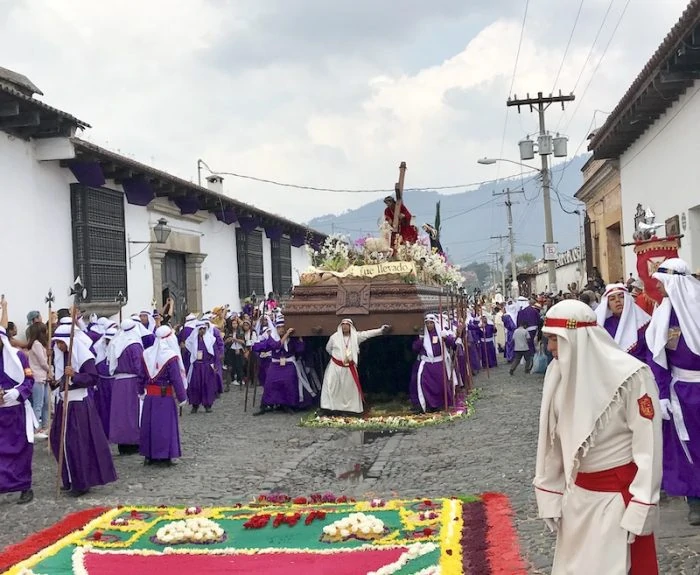
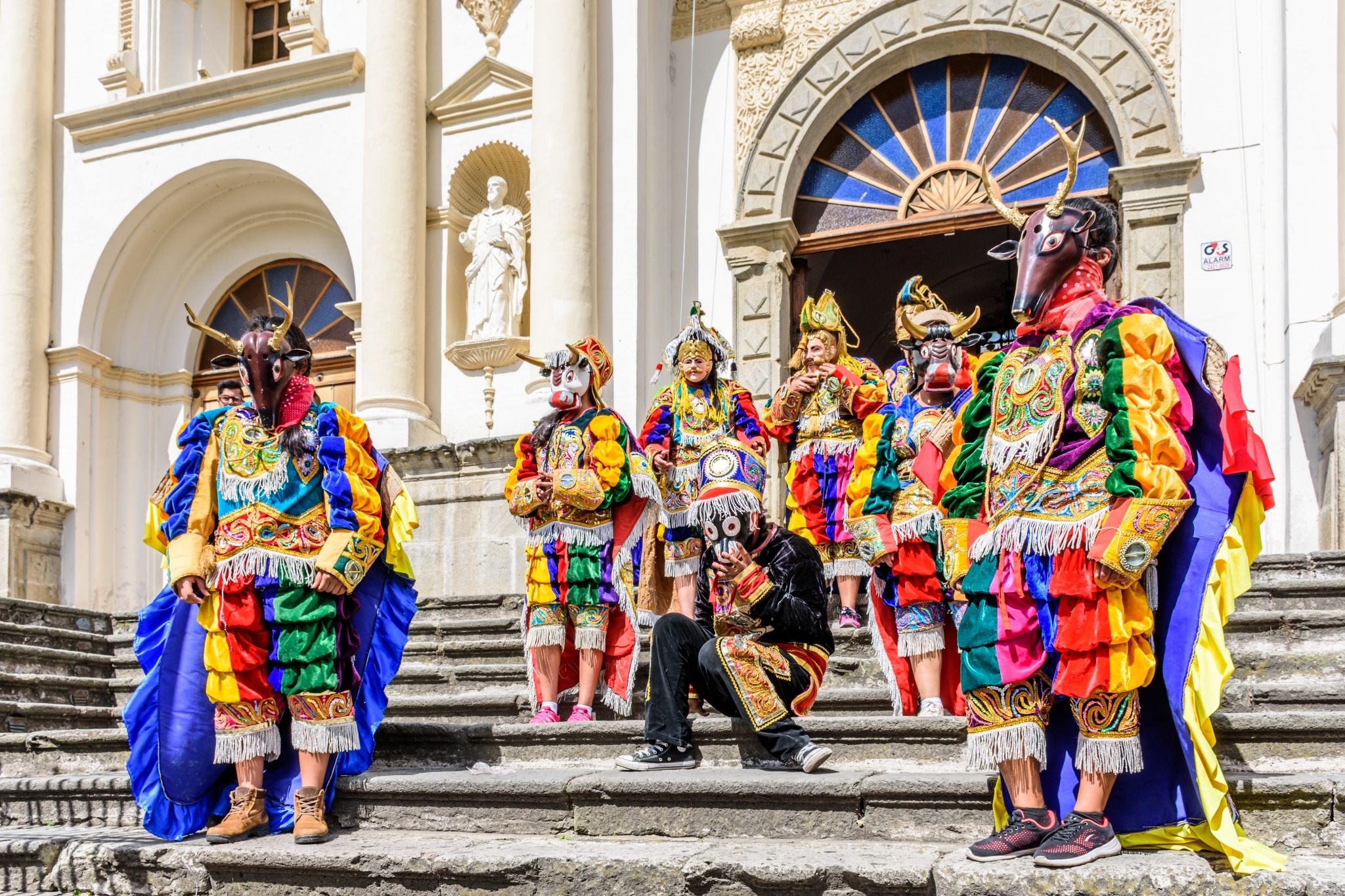
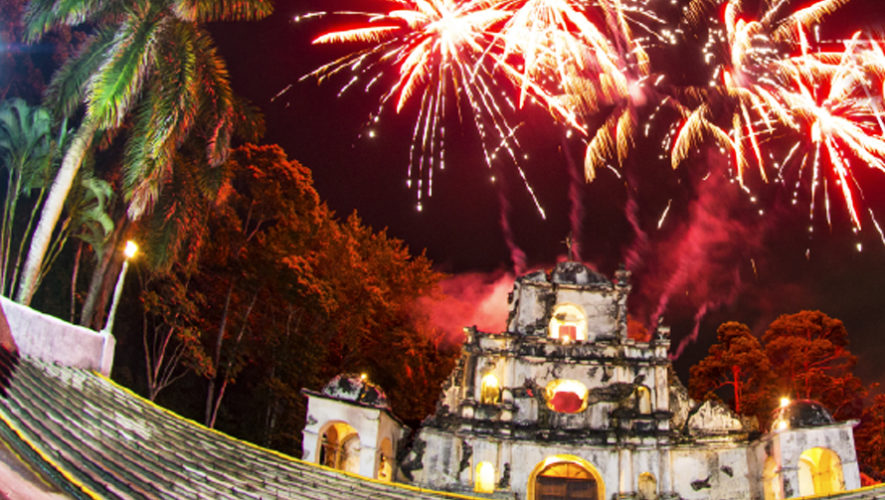
Celebrations hold a great significance in Guatemalan culture. A celebration is viewed as a time for friends and family to gather together for a common event and enjoy food, drinks, and activities that are customary for that specific celebration.
EXAMPLE
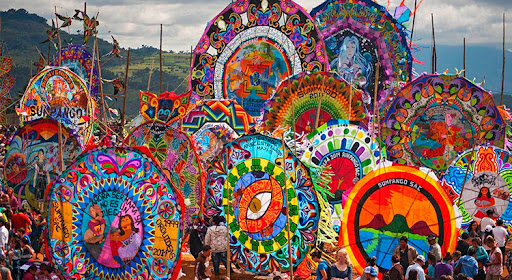
For the Día de Todos los Santos (All Saints’ Day), Guatemalans fly big, colorful kites to symbolically communicate with the dead.The celebrations also include marimba music and folkloric dances. The entire community and the families within it unite to celebrate and enjoy these events.
Click each of the holidays below to see images of the festivities:
Guatemala is a country rich in architecture, music, literature, crafts, and art in general. Here are some highlights.
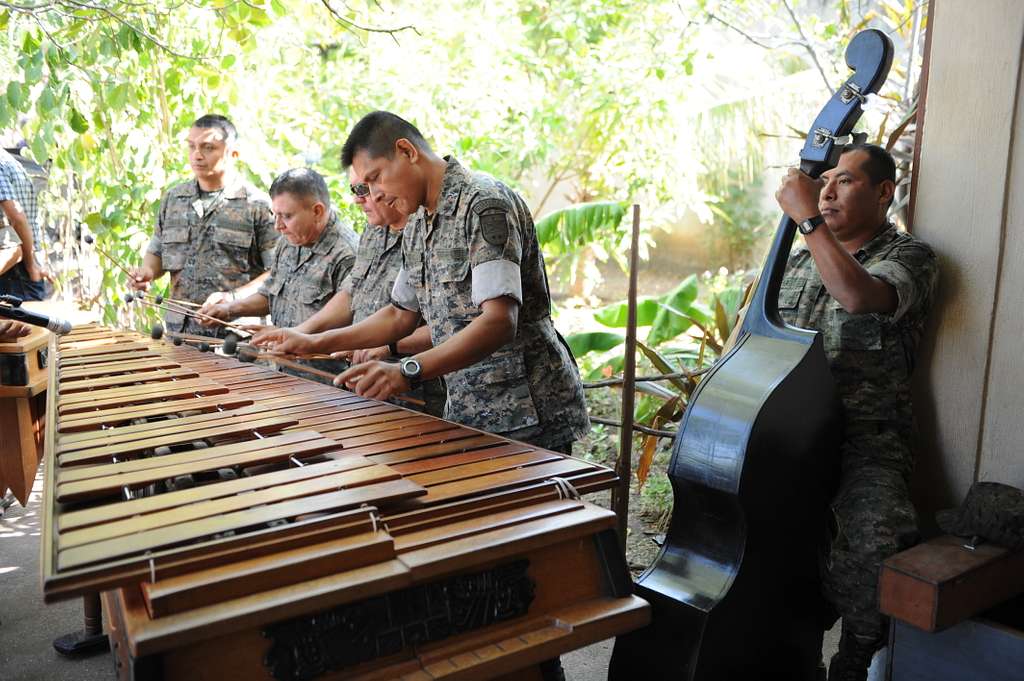
The marimba is a symbol of Guatemalan identity. In 1978, the Congress of the Guatemalan Republic declared it the national instrument. As Erick Vargas, a member of the musical ensemble, Marimba Chapinlandia expresses:
February 20th is national Marimba Day in Guatemala, and the holiday is also observed and celebrated in the U.S. by the immigrant communities as the musical instrument represents pride and resistance for the Guatemalan people.
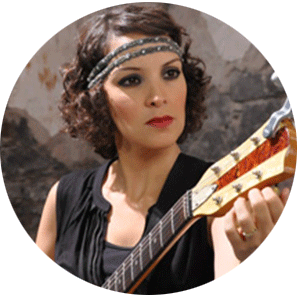
Obviously, Guatemalan music continues to evolve and luckily, transcend physical borders. Gaby Moreno is a gifted and popular singer-songwriter-producer who hails from Guatemala and now lives in the U.S. She has collaborated with multiple artists on different musical projects. A multi-linguist vocalist, she often sings in French, English, Portuguese, as well as in her native Spanish. (Manu Chao also sings in all these languages!)
Up for learning about more musicians and genres? Read up on:
The most iconic building styles of Guatemala are Mayan archeological sites and Spanish colonial-style architecture. There are more than 5,000 pre-Columbian archeological sites in Guatemala. The land was ruled by various Mayan kingdoms and has been inhabited for 20,000 years. It is interesting to note that Guatemala is home to three UNESCO World Heritage Sites:
| Picture | Site |
|---|---|
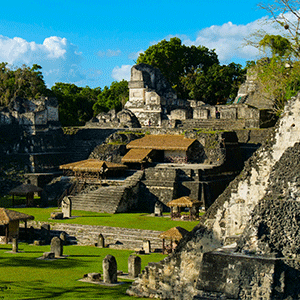
|
The city of Tikal |
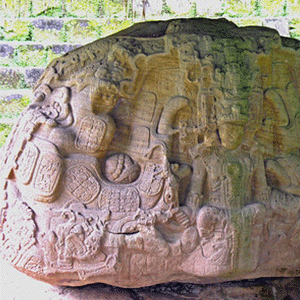
|
The ruins of Quirigua |
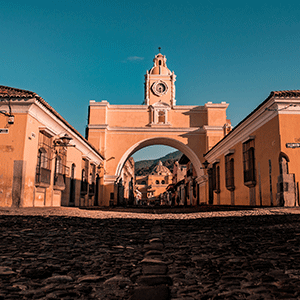
|
The colonial city of Antigua Guatemala |
In turn, Antigua and Guatemala City were founded in the 16th and 18th centuries, respectively, and were built on a grid pattern inspired by the Italian Renaissance. These two cities are known for their baroque architecture, found mostly in cathedrals and government buildings.
EXAMPLE
Barroco antigueño is a regional adaptation of the Baroque style in Antigua, designed to withstand the earthquakes common in the region.Guatemalan literature has, for some time, been tied to narratives of resistance, which is not surprising due to Guatemala’s colonial past and a long tradition of dictators and authoritarian rulers in the twentieth century. Two of the most prominent Guatemalan writers are Miguel Ángel Asturias and Rigoberta Menchú Tum.
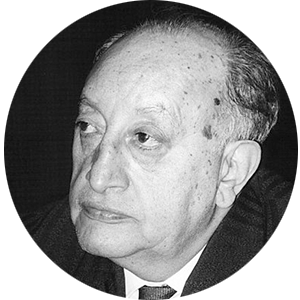
The novelist Miguel Ángel Asturias (1899-1974) is the predecessor of The Boom writers and the first Latin American novelist to win the Nobel Prize in Literature. He is known for creating an entirely new literary language, influenced by European avant-garde movements of the nineteen-twenties. In his prose, he combined political reality, myth, poetry, theatre, silent cinema, Indigenous cultures, and dreams.
Rigoberta Menchú Tum’s testimonial novel, I, Rigoberta Menchú, recorded and transcribed by Elisabeth Burgos, recounts the struggles of Guatemala’s Indigenous people. Menchú’s political activism won her the Nobel Peace Prize in 1992, and in her acceptance speech, she expressed:
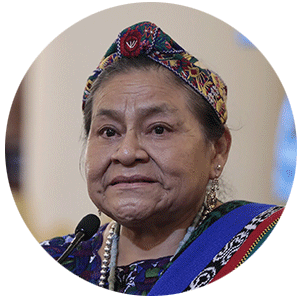 "I consider this prize, not as an award to me personally, but rather as one of the greatest conquests in the struggle for peace, for human rights and for the rights of the indigenous people who, along all these 500 years, have been split, fragmented, as well as the victims of genocide, repression and discrimination."
Other new and upcoming voices are currently making their mark and are worth watching for. Look out for works by:
Cinema is an excellent vehicle to explore in order to help us understand Guatemala’s multifaceted identity. Even if the Guatemalan film industry is not as well-known as its Mexican, Brazilian, or Argentinian counterparts, there is a selective and fine cinematic tradition worth discovering.
In that light, the following films—five fictional narratives and a feature length-documentary (the last one on this list)—showcase Guatemala’s most recent political and socioeconomic history:
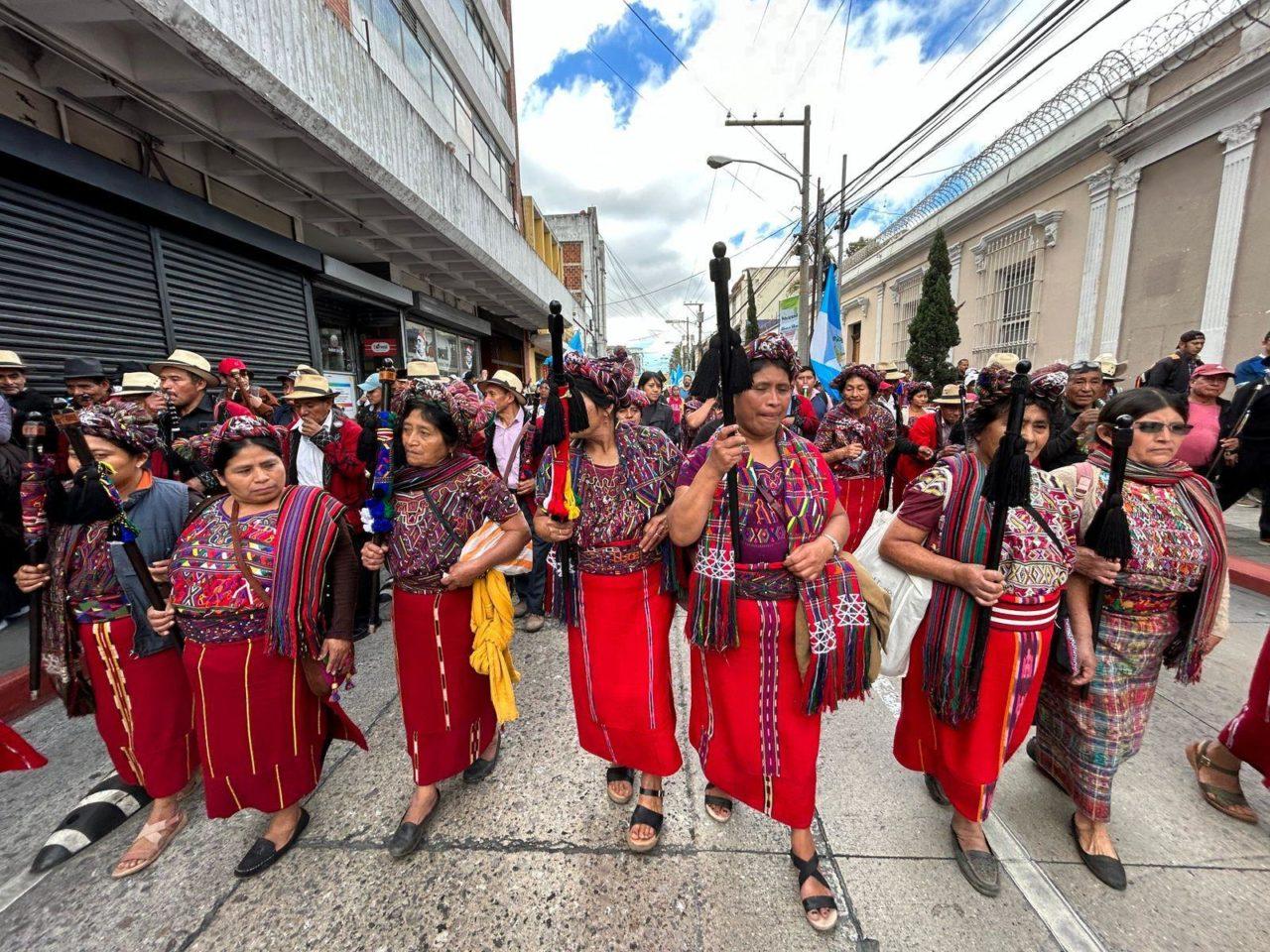
Guatemalan art is everywhere, and textiles are one specific art form that is associated with Guatemalan national identity. Textiles in Guatemala tell different stories: of origin and heritage, colonization, resistance, gender, resilience, and creativity. Textile making is an ancient art, as Mayan women had been weaving and dyeing fabric for over two thousand years before the Spanish colonizers arrived, and the practice continued after their arrival.
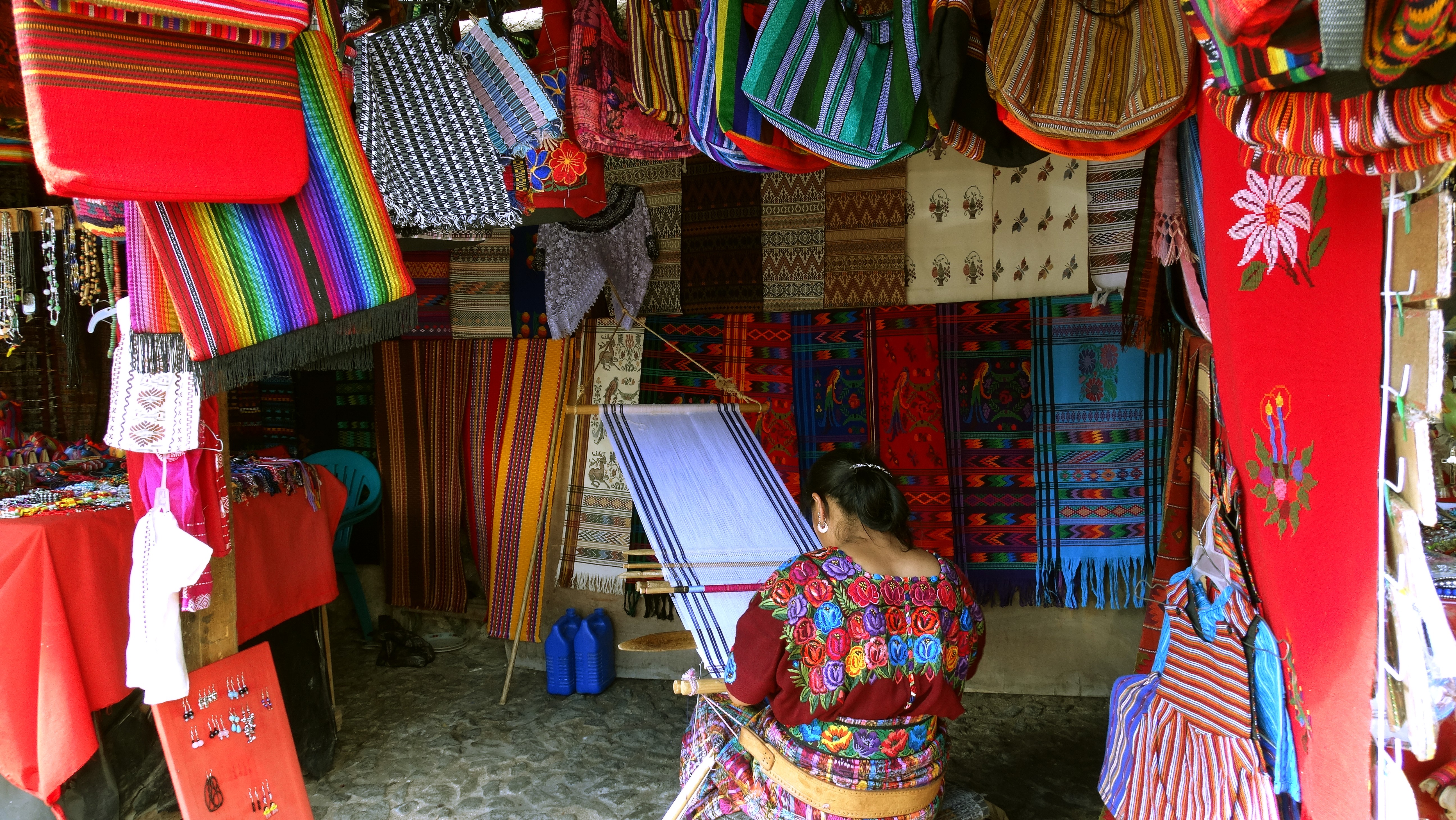
The artform of textiles in Guatemala is also a way of maintaining tradition and offering a counternarrative of a cultural history that others try to deny or erase.
Source: THIS TUTORIAL WAS AUTHORED BY SOPHIA LEARNING. PLEASE SEE OUR TERMS OF USE