Table of Contents |
Equatorial Guinea, or Guinea Ecuatorial in Spanish, located on the west coast of central Africa, is a treasure trove of rich cultural and architectural legacies, beautiful beaches, and splendid wildlife. It consists of an area on the African mainland known as Río Muni, plus five islands:
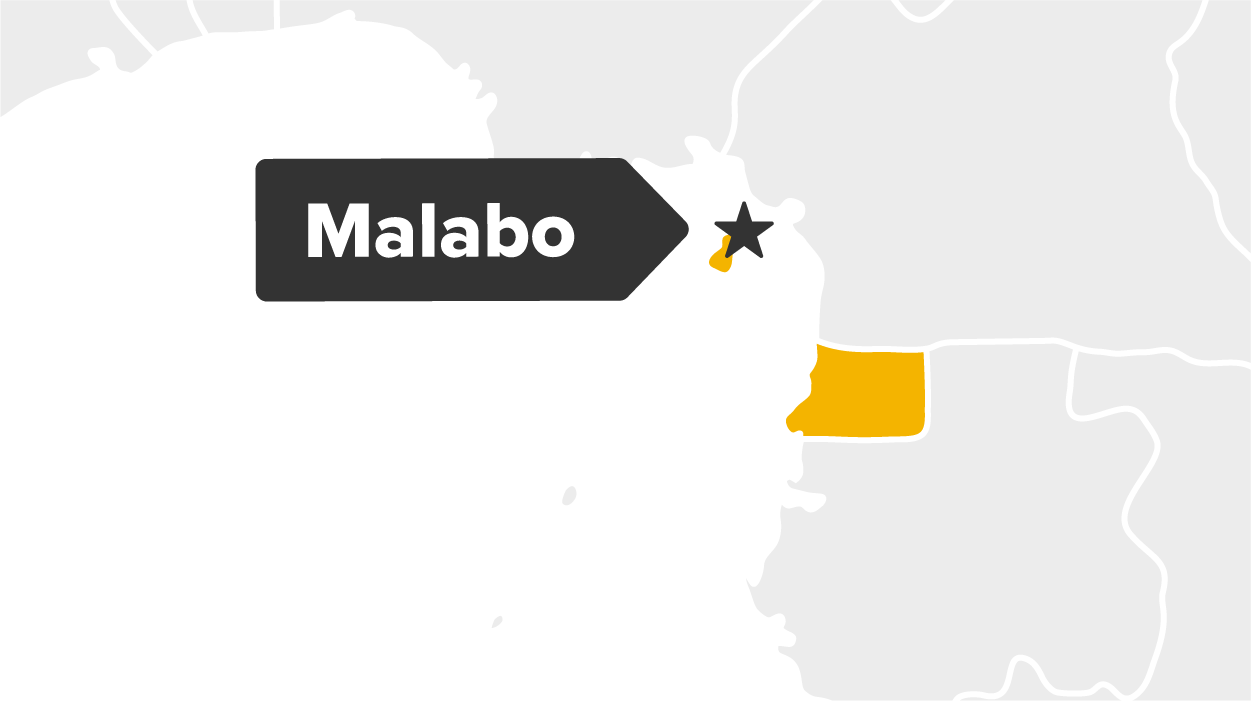
Here are just a few interesting facts about Equatorial Guinea:
The rich and varied traditions of Equatorial Guinea reflect the ethnic and cultural diversity of the country. Over the years, these traditions have been passed down from generation to generation and have become an integral part of the national identity. It is important to acknowledge that the long history of colonization first by the Portuguese and then by the Spanish has greatly influenced the country, creating cultural diversity in languages, food, art, and music.
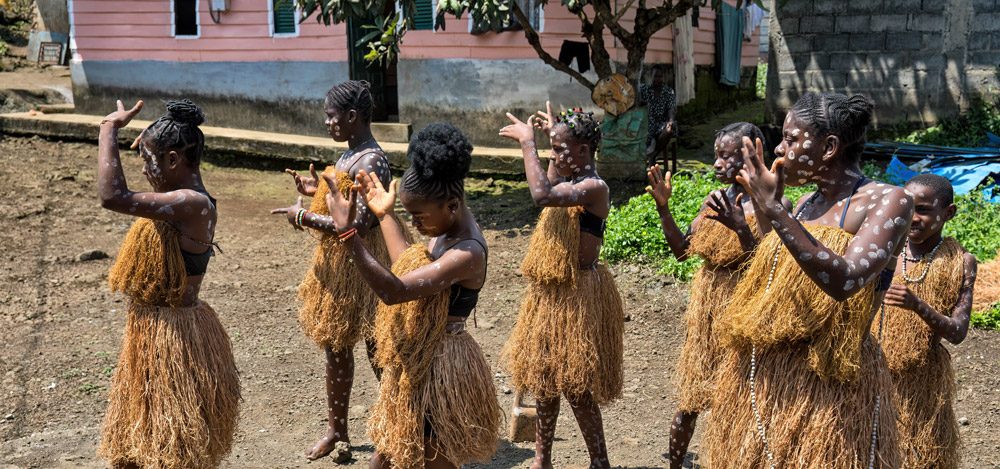
The Bubi culture is one of the most influential in Equatorial Guinea. They are an African ethnic matriarchal group and are considered members of the Bantu group, who are Indigenous to Bioko Island in Equatorial Guinea. They are a population of about 40,000 and used to be the majority tribe on Bioko Island (also known as Fernando Po). The name Bubi comes from the word boobe meaning "man."
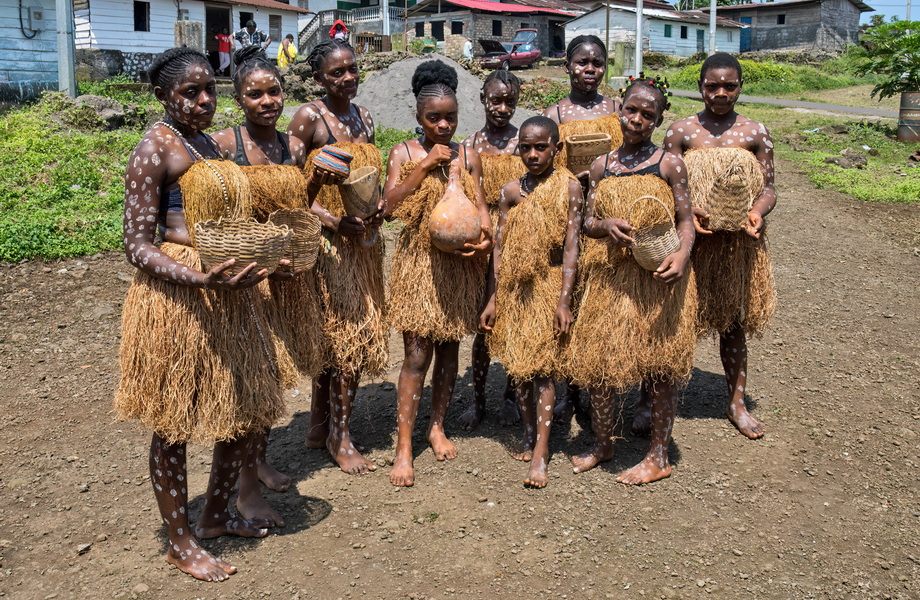
As one of the oldest ethnic groups in the country, the Bubi people and their traditions have remained alive throughout the years. Traditional Bubi music, which combines African rhythms with melodies and lyrics in the Bubi language, is particularly renowned. Furthermore, Bubi ceremonies and rituals are an important aspect of daily life, and the masks and costumes used in these celebrations are impressive.
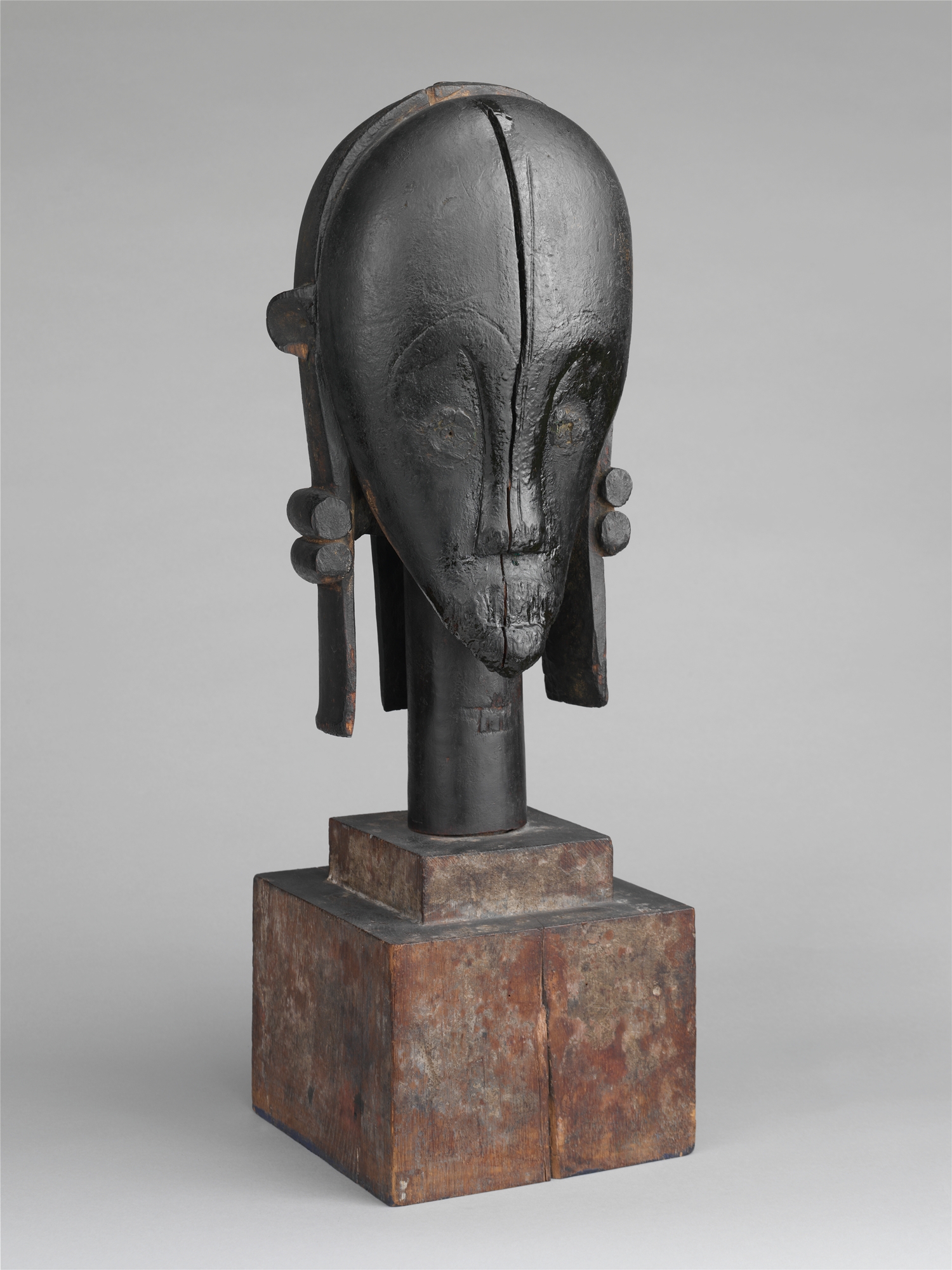
Sculptural Bust from a Reliquary Ensemble (The Great Bieri)
The Metropolitan Museum of Art
19th century
Wood, copper alloy, palm oil
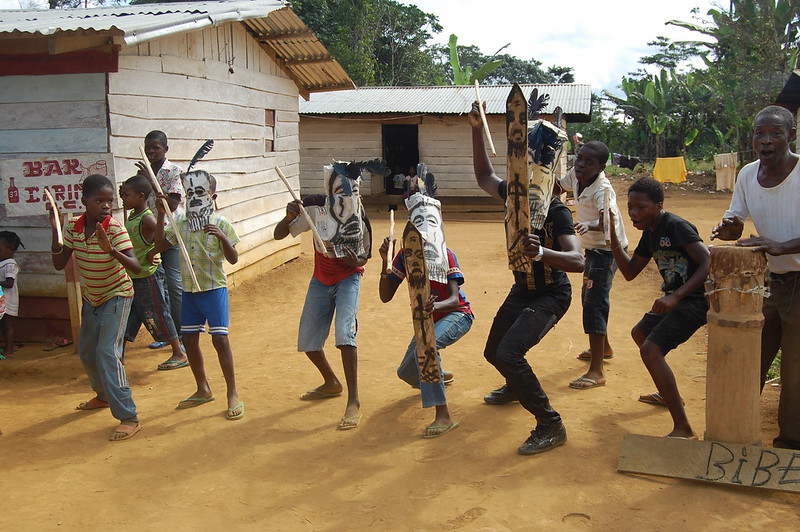
Equatorial Guinea is known for its traditional sculpture and mask making. Masks, in particular, play a central role in many of the country’s traditions. These Bieri masks are handmade and used in ceremonies and rituals to represent ancestral spirits and to communicate with the spiritual world. Masks are considered sacred, and their use requires respect and reverence.
The art of mask carving and designing is passed down from generation to generation, and master mask carvers are highly valued in society. Unfortunately, these and other objects, such as statues of famous Bieri ancestors, were systematically destroyed due to the Spanish colonizers’ sense of religious, cultural, and artistic superiority, as well as their ignorance of local customs and traditions.
Originally, Bieri sculptures belonged in the family homes of the Fang people, to remember deceased ancestors. They contained human ashes and part of the skull of the deceased.
According to EG vistas, the magazine of Equatorial Guinea, during the country’s Spanish colonial history from 1778 to 1968, missionaries considered Fang pieces to be idols and therefore felt justified in attempting to eradicate and destroy any trace or manifestation of them. This has left a gap in Equatorial Guinea’s artistic history for the period of the early to mid-20th century.
Despite the efforts of Spanish missionaries trying to eradicate them, Masks—and Fang masks in particular—became fashionable after their use in works by Pablo Picasso and Amedeo Modigliani at the beginning of the 20th century. The artists of the avant-garde saw in them a break with the bourgeois art of the time, both due to their aesthetics and because they represented a radical change from the dominant art.
Equatorial Guinean cuisine offers a wide variety of dishes and is influenced by both African and European cuisine.
The key ingredients in Equatorial Guinean cuisine come from local plants and animals. These ingredients include chicken, fish, snails, sweet potatoes, bananas, cassava, and peanuts.
| Food | Picture | Description |
|---|---|---|
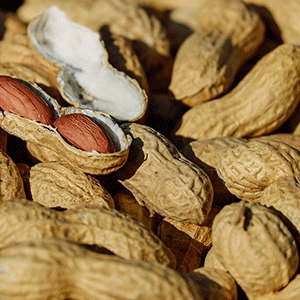
| Peanuts |
|
Peanuts are one of the most important foods in Equatorial Guinea due to their abundance and nutritional properties. They are eaten fresh, cooked, or roasted. Once roasted and thoroughly ground with salt, the resulting paste serves as a key ingredient in soup, peanut wraps, or the iconic peanut sauce, which also includes onion, tomato, and meat (chicken, pork, beef, or even shrimp). As side dishes, white rice, cassava, or plantain are essential. |
| Succotash |
|
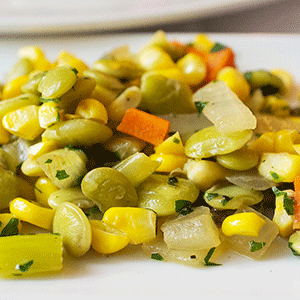
Succotash is considered the national dish of Equatorial Guinea. It is a corn and bean dish that often includes tomatoes, peppers, and okra. Succotash comes from the Narragansett word msickquatash, from the area that is now Rhode Island, referring to a simmering pot of corn and other ingredients. The story goes that when slavery ended in the U.S., former slaves returned to Africa and brought the succotash recipe with them. |
| Pepesup |
|
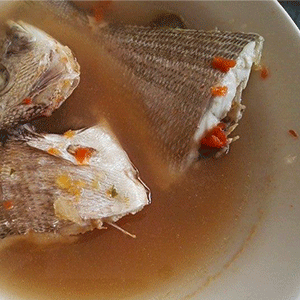
Pepesup is one of the staple dishes of Equatorial Guinean cuisine. It is a fish stew with tomatoes, onion, chilies, and spices, served with rice. Its name comes from the English word “pepper soup,” as pepper, along with other local ingredients, is what gives it a unique, spicy flavor. Its roots lie deep in the culinary traditions of the Bantu people of Central Africa, who passed down their knowledge of herbs, spices, and cooking techniques from generation to generation.
The preparation of pepesup is a culinary ritual for Equatorial Guineans, performed on special occasions and family gatherings. This dish is believed to have healing and energizing properties and is therefore eaten to regain strength after an illness or as a comfort food on cold days. |
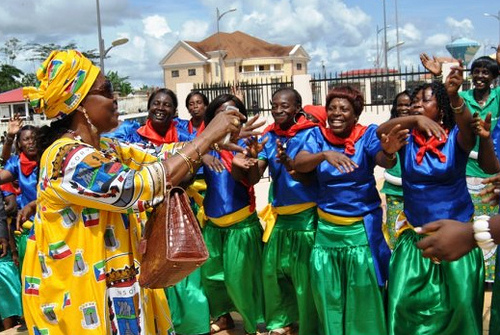
Dance is an integral part of Equatorial Guinea’s traditions and celebrations, and the Fang dance is one of the most popular. The Fang people are the largest ethnic group in the country, and their dance is known for its energy and emotion. Fang dancers use fast, acrobatic movements, while the rhythms of the drums create a festive and lively atmosphere. Fang dance is a form of artistic expression and a means of communicating with the gods and ancestors.
The impact of Spanish colonization on the traditions of Equatorial Guinea is also evident. The dance of Malabo, the country’s capital, combines elements of traditional African dance with Spanish influences. This dance reflects the blending of cultures in Equatorial Guinea and demonstrates the adaptability and fusion of different traditions.
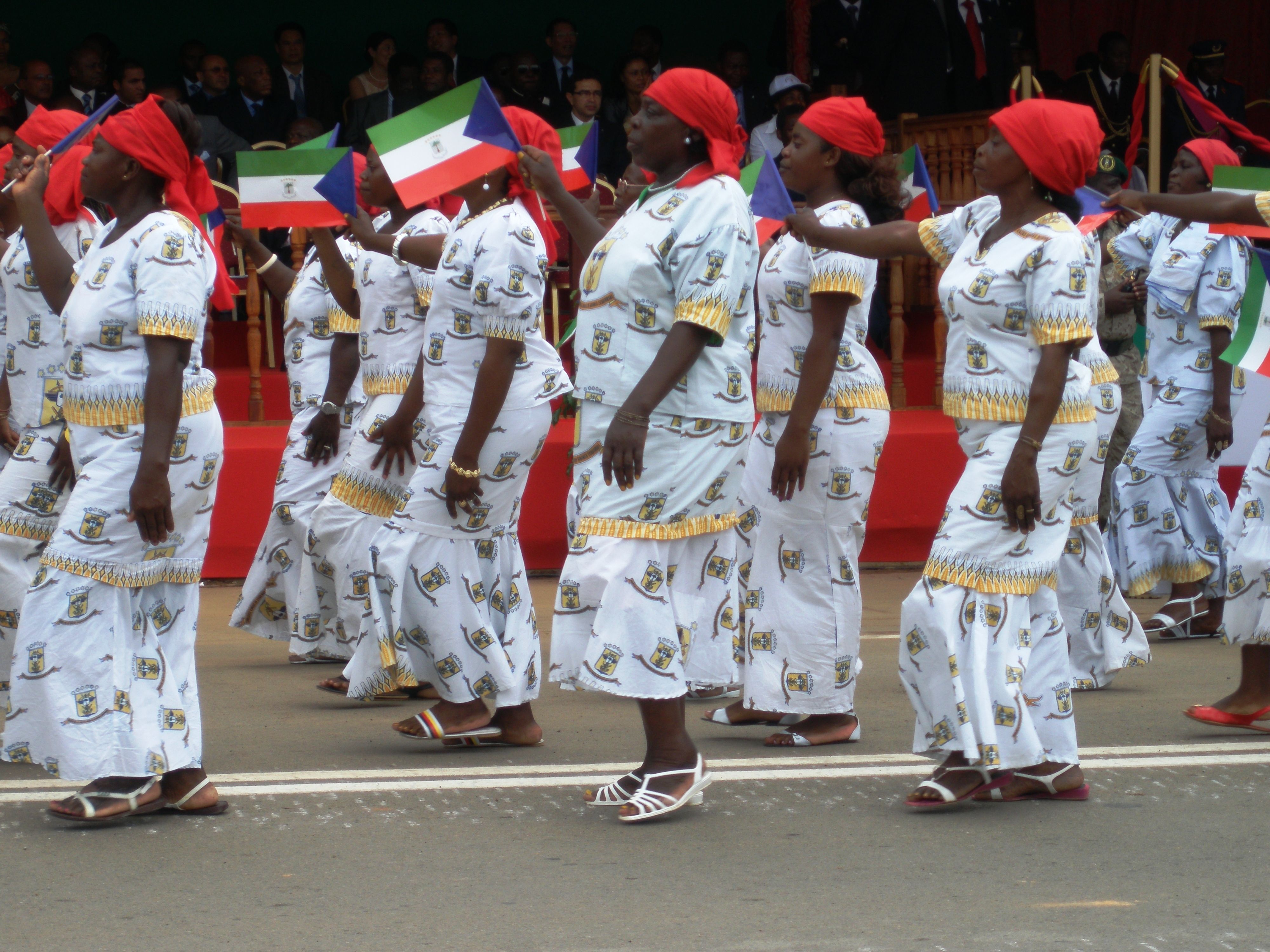
Here are some of the significant yearly celebrations in Equatorial Guinea, one which includes a component of dance in the festivities:
As you have seen throughout this lesson, Guinea Equatorial is a country of traditions, most notably seen in dance, music, crafts, cinema, and art in general.
 Leandro Mbomio Nsue (1932-2012) is a visual artist and one of the most famous sculptors and artists from Equatorial Guinea. He is known in the art world as "the Black Picasso" and is deemed emblematic of Black culture in Spain.
Because of his unique creativity and sense of African identity, Mbomio was at the forefront of many of the artistic, social, and cultural movements of the 20th century. He was trained both in his home country and then in Spain, where he became a member of the cultural elites of cities like Madrid and Barcelona, places that were also sources of his artistic, neo-figurative, and symbolic reflections. In the early decades of his life, he met and became good friends with figures like Pablo Picasso and Joan Mirò.
Besides being a renowned artist and a cosmopolitan intellectual, Mbomio served as Minister of Education in Equatorial Guinea, and in 2007, he was appointed as a UNESCO Ambassador for Peace.
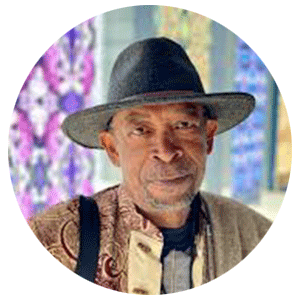
Plácido ‘Pocho’ Guimaraes (1951-2025) is an artist and a creative force whose work engaged and revived the Equatorial Guinean textile craft in a particular style that blended tradition and modernity. In his work, Guimaraes used materials like African fabrics, old newspapers, fishing nets, shells, pieces of wood, found plastics, and soda cans, among other items, to create multidimensional and multitextured tapestries. These materials helped him conceptualize symbols and stories rooted in his Bubi culture and heritage.
Guimaraes’s work stood out for its development using high-warp looms. These involved tapestries worked on vertical warp looms and whose weft is usually made with cotton, thread, wool, silk, or linen. While he is primarily known for his work in textile art, Guimaraes also worked in many other forms of artistic expression, such as theater, dance, and film.
Throughout his life, Guimaraes’s work has been shown in numerous exhibitions across Europe and Africa, and his artistic and creative legacy lives on in young and contemporary artists of Equatorial Guinea and the African diaspora.
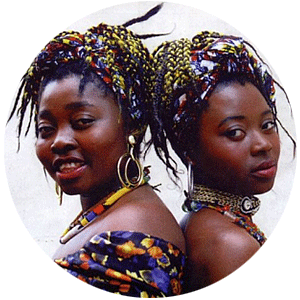 Las Hijas del Sol is a duo from Equatorial Guinea whose members are Piruchi and Paloma, an aunt and her niece. The duo was formed in 1992 to participate in Equatorial Guinea’s national music contest. Thanks to the originality of their lyrics and choreography, Las Hijas del Sol won the contest, which opened doors for them abroad. That same year, the duo participated in the OTI Festival, an annual singing competition in Spain. It was the first time the music of Equatorial Guinea was presented to the European public.
Two years later, in 1994, Piruchi and Paloma, who are from the island of Bioko, emigrated to Madrid. With the help of musician Manu Chao, they began recording albums to share the culture and music of their country. The pair recorded six albums between 1995 and 2004, and their song “Sibèba” reached the list of the top 10 songs on the European World Music Charts. What made the music of Las Hijas del Sol catch the attention of the public was the group’s vibrant ethnic style, distinctive voices, and lyrics. Their albums included songs in the native language of the singers (Bubi) as well as in Spanish.
Part of the success of Las Hijas del Sol was their cultural messaging. Their songs narrated old traditions of the tribes of Equatorial Guinea as well as the problems of daily life. These sung stories featured a fusion of Afro-Caribbean rhythms and Western sounds, which pleased the European audience. One particular song in Spanish that resonated deeply with the public was "Tirso de Molina," which narrates the problems that immigrants, especially those who come from African countries, experience in Madrid.
 Another Equatoguinean music staple is Miss Yuma, who hails from the small town of Evinayong on the mainland. Her real name is Yolanda Ayingono, and she draws on her African roots as she blends reggae, soul, and hip-hop in her music.
Miss Yuma comes from a musical family; her father was a traditional music singer, and her mother was a backing vocalist. She began expressing her musical aptitudes while singing in a church choir and listening to gospel music, and she later developed a taste for Spanish reggae and hip-hop.
Miss Yuma lives between the countries of Spain and Equatorial Guinea; in her lyrics, she has spoken candidly about issues of social justice and racism, especially as experienced by immigrants in Europe. This echoes the sentiment expressed by Las Hijas del Sol on their own "Tirso de Molina" melody.
Miss Yuma likes to collaborate with other musicians and DJs, and her lyrics often use the Fang language of Equatorial Guinea or a mix of Fang, Spanish, and English.
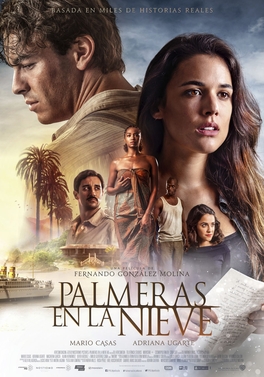 Palmeras en la nieve (Palm Trees in the Snow) (2015) is a film adaptation of the 2012 Spanish novel of the same name by Luz Gabás. Directed by Fernando González Molina, the film tells a story based on real events that took place in Equatorial Guinea in the late 1960s.
In 1953, Kilian, the protagonist, leaves the mountains of Huesca in Spain to embark on a journey with his brother to Fernando Po, a former Spanish colony in Equatorial Guinea. There, their father awaits them at the Sampaka farm, where he grows some of the finest cocoa in the world. In the colony, the brothers discover that social life is more pleasant than in the rigid, gray Spain, and they experience the contrasts between settlers and natives.
Though the movie was shot in Colombia, Senegal, and Gambia rather than Equatorial Guinea, it does a good job depicting the troubled system of colonialism and the film tries to lead audiences to question its continued legacy both in film narratives and more, in general, in economic systems of the present.
Source: THIS TUTORIAL WAS AUTHORED BY SOPHIA LEARNING. PLEASE SEE OUR TERMS OF USE
REFERENCES:
Evuna Andeme, M.-C. (2012, October 24). Bieri (reliquary guardian). The Royal Collection Trust. https://www.rct.uk/
Stanes, M. (2014, Summer). A Museum of Modern Art. EG vistas - the magazine of Equatorial Guinea, Summer 2014. https://www.egvistas.com/a_museum.html