Table of Contents |
Just-in-time (JIT) is an operations management philosophy that originated in the 1970s. Taiichi Ohno is credited with developing JIT and perfected it for Toyota’s manufacturing plants in Japan. The main goal of JIT is to eliminate anything that does not add value from the customer’s perspective. Non-value-added activities are referred to as “waste” in JIT. Examples of waste include:
|
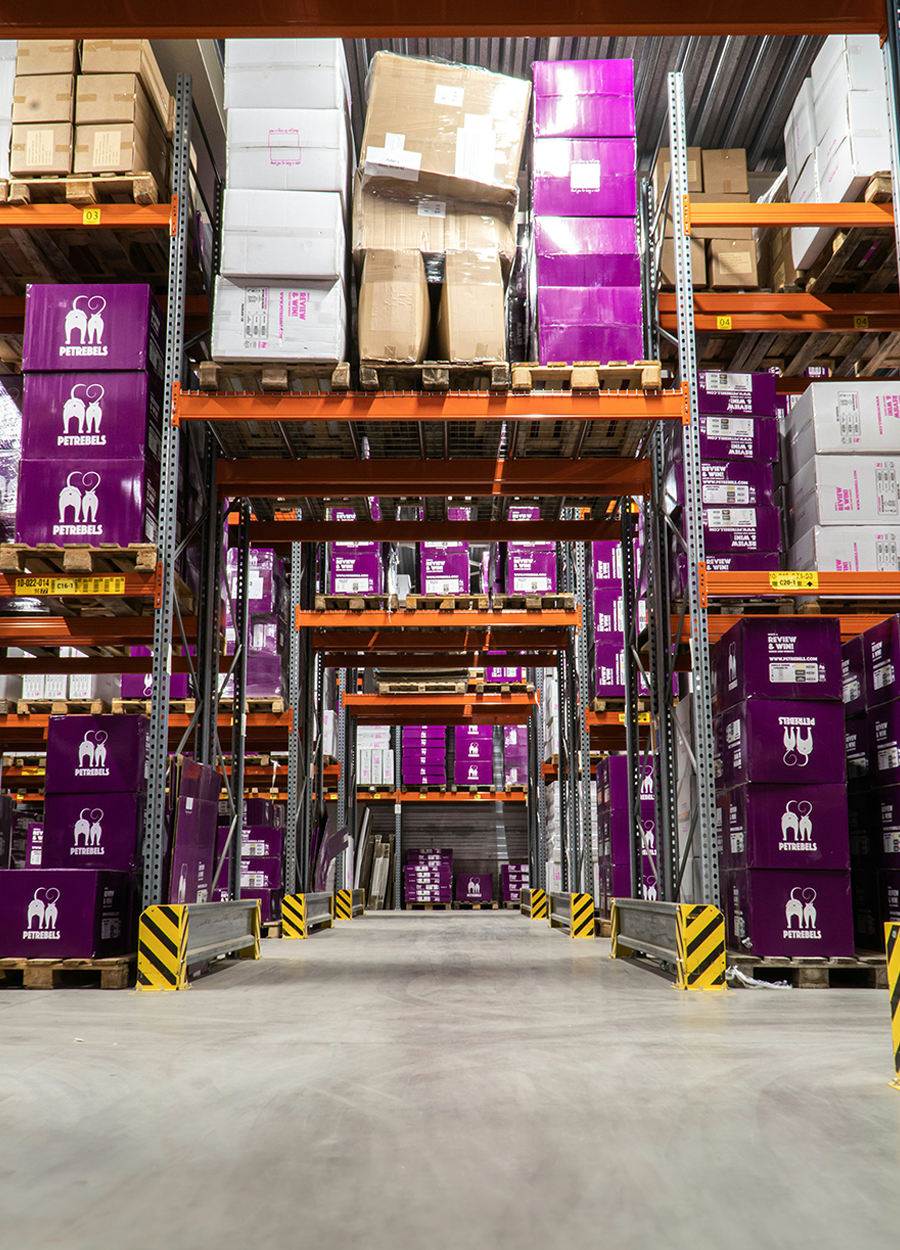
Inventory can take up significant amounts of space and be expensive in terms of storage, insurance, and potential obsolescence. Because of this, some companies use JIT inventory systems to cut down on these costs. |
In a manufacturing setting, there are six major ways to pursue JIT goals:
Inventory covers up a lot of wasteful practices (poor equipment, weak vendors, bad quality, long setup times, etc.). By gradually lowering inventory, the weaknesses of the production system can be revealed and addressed one by one. Machines can be replaced or better maintained, vendor quality and delivery can be improved, machine setup procedures can be streamlined, quality practices can be implemented, and labor and equipment can be laid out more efficiently. These improvements permit the organization to operate with less inventory, less costs, and faster response times in meeting customer needs.
The traditional approach to manufacturing management promotes a strong focus on machine and labor utilization. The view was that if managers make sure that workers and machines are always busy, then surely the factory will be productive and efficient. This approach is called the push system of manufacturing, where raw materials and work-in-process are continuously pushed through the factory in the pursuit of high production. The problem with this approach is that it usually produces high levels of inventories, long lead times, overtime costs, high levels of potential rework, and workers who are competing with one another rather than working cooperatively.
In contrast to the push system, JIT espouses a demand-pull system that operates on the rule that work should flow to a work center only if that work center needs more work. If a work center is already occupied with work activity, the upstream work center should stop production until the downstream work center communicates a need for more material. The emphasis on maintaining high utilization is removed in a JIT environment. The focus of a JIT environment is on addressing the challenges that affect the overall effectiveness of the factory (setup time reduction, quality improvement, enhanced production techniques, waste elimination, etc.) in meeting its strategic goals, rather than allowing excess inventory to cover up inefficiencies that reduce the factory’s competitiveness.
The longer it takes, and the more expensive it is to set up equipment and labor to produce an item, the greater the quantity of items that must be produced in each production run. Traditional production management philosophy promoted the notion that long production runs of the same item were the key to driving down unit costs. The problem was that large production runs created large quantities of WIP (work-in-process) and finished goods inventory that far exceeded the demand. These items would consequently cause high levels of inventory costs, long lead times, high potential rework, low flexibility in responding to customer needs, etc.
Driving down setup costs and setup times are key to dramatically improving factory competitiveness in a JIT environment. In the 1980s, the 3M company converted a factory that made a few adhesive products in long production runs into a factory that made over 500 adhesive products in small production runs. To keep unit production costs under control, 3M studied the setup on its coating machines. Since the cost of chemical waste disposal was a major part of the cost of changing over a coating machine to make another product, 3M shortened the length of hoses that needed purging and redesigned the shape of the adhesive solution holding pan on the coating machine to be shallower. 3M also used quick-connect devices, disposable filters, and work teams to speed up setups. The result was that 3M could maintain low unit costs on its coating machines while producing small lots of hundreds of products to meet market demand quickly.
The successful practice of JIT means having the right quantities of the right products in the right place at the right time. Uniform plant loading is setting production goals and sticking to the schedule to minimize variability in production time. Driving down setup times enables the company to produce the product in the exact quantities that are demanded in the present time period.
The enemy of JIT is uncertainty. A JIT environment thrives on predictability in customer demand, production processes, suppliers, and workers. Of course, uncertainty cannot be eliminated in most organizational environments.
The defense against this inevitable uncertainty is to implement flexible resources that can adapt easily to changing circumstances. General-purpose, moveable equipment that can fulfill a wide variety of production requirements is one way to improve flexibility. For example, drilling machines with quick-change bits which can be wheeled into position to form new work cells allows the factory to maximize efficiency while producing exactly what is needed to satisfy immediate demand. Another example is Toyota’s use of paint canisters that attach to paint sprayers. Any car can be painted any color without having to purge hoses in switching from one color to another.
Multifunctional workers are another way to bring flexibility to the work environment. At Honeywell’s heating and cooling controls plant, workers are trained to operate all the machines on their work line. The flexibility that comes from multifunctional workers changes the nature of how work gets done. Instead of workers being trained on one machine and working independently of one another, multifunctional workers have a “big picture” view of the production line, where every worker understands all aspects of the line and how to work together to meet quality and schedule goals regardless of the circumstances.
Earlier in this Challenge, we described the efficiencies that repetitive process layouts provide. Repetitive process layouts are perfectly suited for driving out non-value-added activities and transitioning to a JIT environment. Intermittent layouts feature dozens or even hundreds of different paths through the facility. They are filled with complexity, uncertainty, and low visibility. Workers tend to have specialized skills, work independently of other departments, and have little sense of “ownership” of the products they work on.
In contrast, cell layouts promote JIT goals by featuring unidirectional product flows, high visibility, and fast throughput times. Workers with multifunctional skills are assigned to individual cells and have responsibility and control of the products they produce. Workers in a cell environment tend to have a greater sense of ownership and pride in their work because they have a “big picture” view of the product as it is converted from raw materials to a finished good. This deeper understanding of the production process increases the opportunities for workers to contribute ideas for process improvements.
An essential part of JIT is adherence to total quality management (TQM), a model of continuous improvement that emphasizes customer satisfaction. Like continuous improvement, TQM is a mindset more than a specific set of tools to measure and manage processes, like Lean and Six Sigma. In fact, continuous improvement is one of three principles of TQM. The three principles are:
The first, and major, TQM principle is to satisfy the customer—the person who pays for the product or service. Customers want to get their money’s worth from a product or service they purchase. If the user of the product is different than the purchaser, then both the user and customer must be satisfied, although the person who pays gets priority.
A company that seeks to satisfy the customer by providing them value for what they buy and the quality they expect will get more repeat business, referral business, and reduced complaints and service expenses. Some top companies not only provide quality products but also give extra service to make their customers feel important and valued.
This may also refer to internal customers. Within a company, a worker provides a product or service to his or her managers. If the person has any influence on the wages the worker receives, that person can be thought of as an internal customer. A worker should have the mindset of satisfying internal customers to keep their job and get a raise or promotion. Some roles within an organization are entirely fulfilling the needs of workers, such as human resources. They should have a customer-minded approach to helping the staff at their organization.
A second TQM principle is to satisfy the supplier, which is the person or organization from whom you are purchasing goods or services. This refers to both external and internal suppliers. A company must look to satisfy their external suppliers by providing them with clear instructions and requirements and then paying them fairly and on time. It is in the company’s best interest that its suppliers provide quality goods or services if the company hopes to provide quality goods or services to its external customers. A supervisor must try to keep workers happy and productive by providing good task instructions, the tools they need to do their job, and good working conditions. The supervisor must also reward the workers with praise and good pay.
This concept was discussed at length in the previous tutorial. In terms of TQM, this means defining, collecting, and analyzing data for both internal and external suppliers and customers. We will take a deeper look at TQM in the next unit.
Frontline employees play a critical role in successful JIT practice. They work in partnership with management and each other in the continuous pursuit of excellence. There are several ways in which frontline employees contribute to JIT success:
Source: This tutorial has been adapted from Saylor Academy and NSCC “Operations Management”. Access for free at https://pressbooks.nscc.ca/operationsmanagement2/. License: Creative Commons Attribution 4.0 International.



