Table of Contents |
Posture is the vertical orientation of a typeface.
As you can see from the example below that reads, "I have good posture," the letterforms are nice and straight. Conversely, where it reads, "I have bad posture," the letters are slanted towards the right.
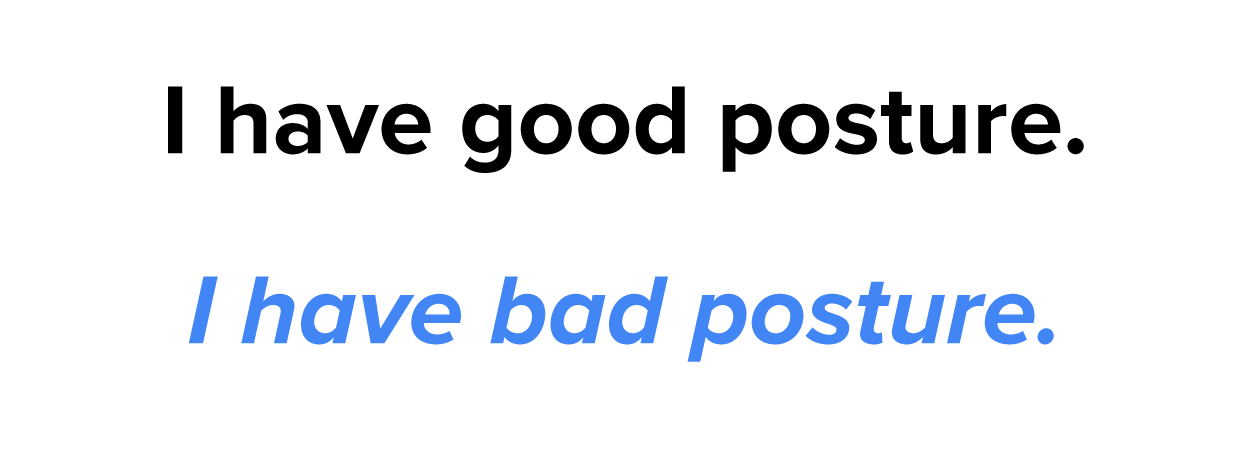 A type of posture which slants to the right is called italic. It is important to note that not all typefaces have italics.
As simple as italic type seems, it is carefully crafted and designed. Below you can see an example of normal, italic, and manually slanted type.
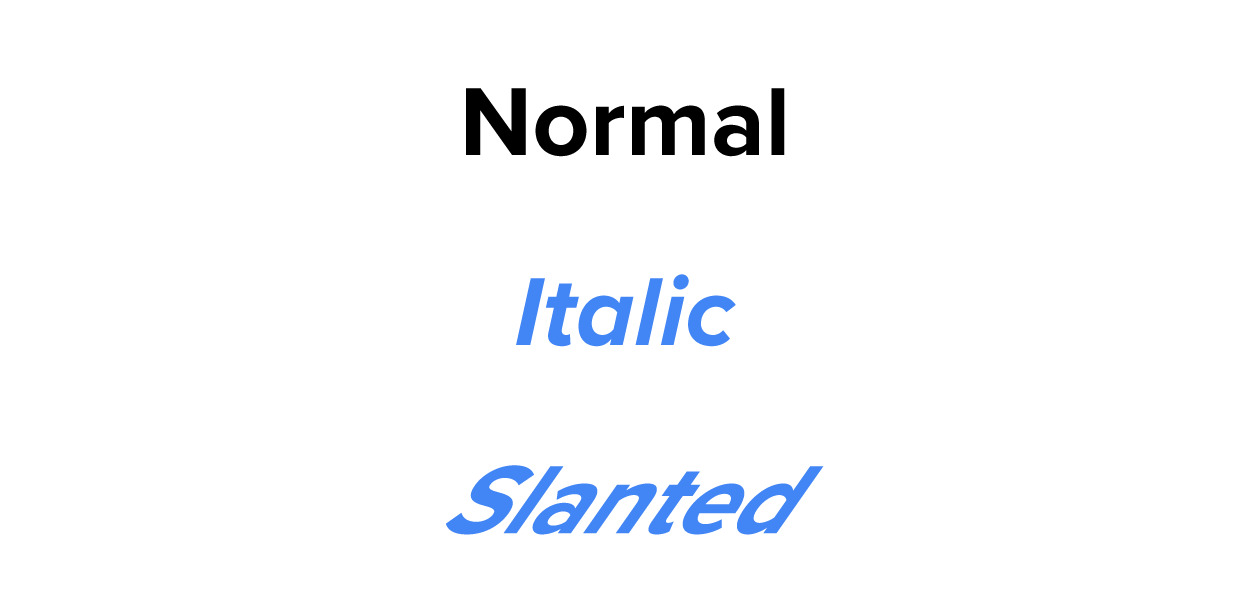
Normal is the standard type style regarding posture. Italic is the fully designed, slanted version of the type. Slanted type has been manually slanted, as opposed to being designed that way, like italic type.
When letters appear skewed, readability may suffer, as certain character design elements are not intended to be slanted.
You can see that the letter “A” in italic has been completely redesigned from normal type, as have the letters “T” and “I.”
If you compare the slanted version of the “I”, you'll notice that it is thinner, and the “A” is more difficult to read because it's not as clear.
The “A” is similar between the italic and slanted versions, but there are still some differences in shape and proportion that could affect readability.
Script is a type classification developed in the late 1700s and originally based on handwriting.
This style is characterized by italic letterforms that can be formal or casual and sometimes joined. Member families include Nuptial and Zapfino.
You can see from the example below that script has a handwritten aesthetic.
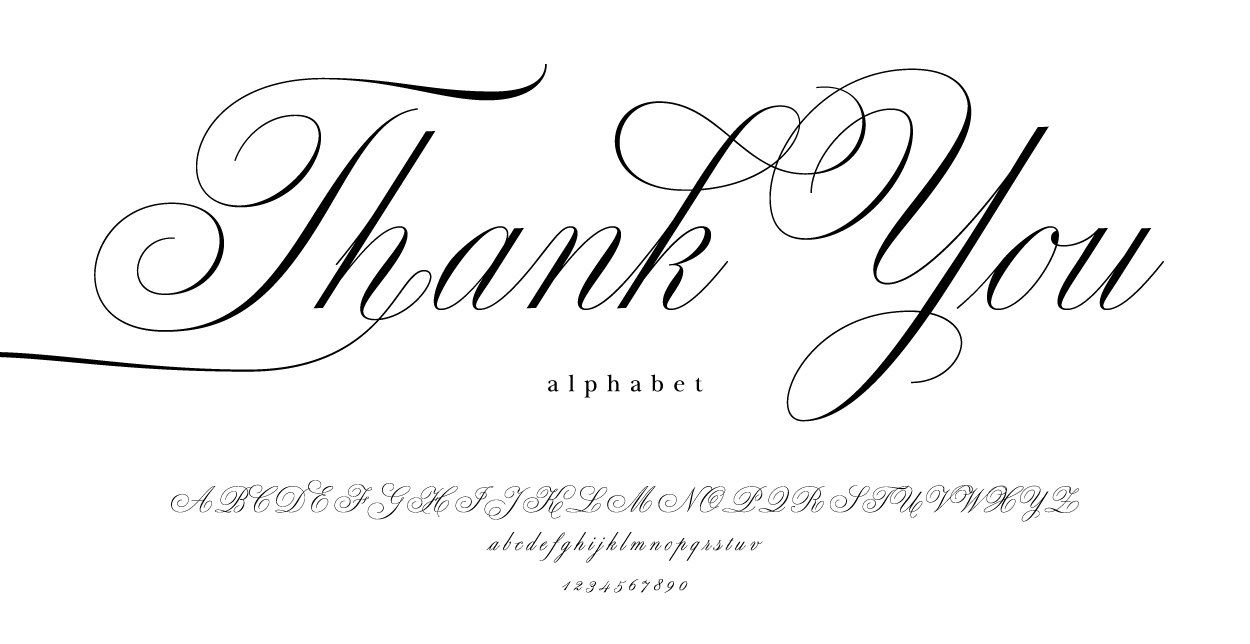
While it's usually styled quite nicely, its decorative nature does not make it a good choice for large bodies of text, like books, magazines, or newspapers.
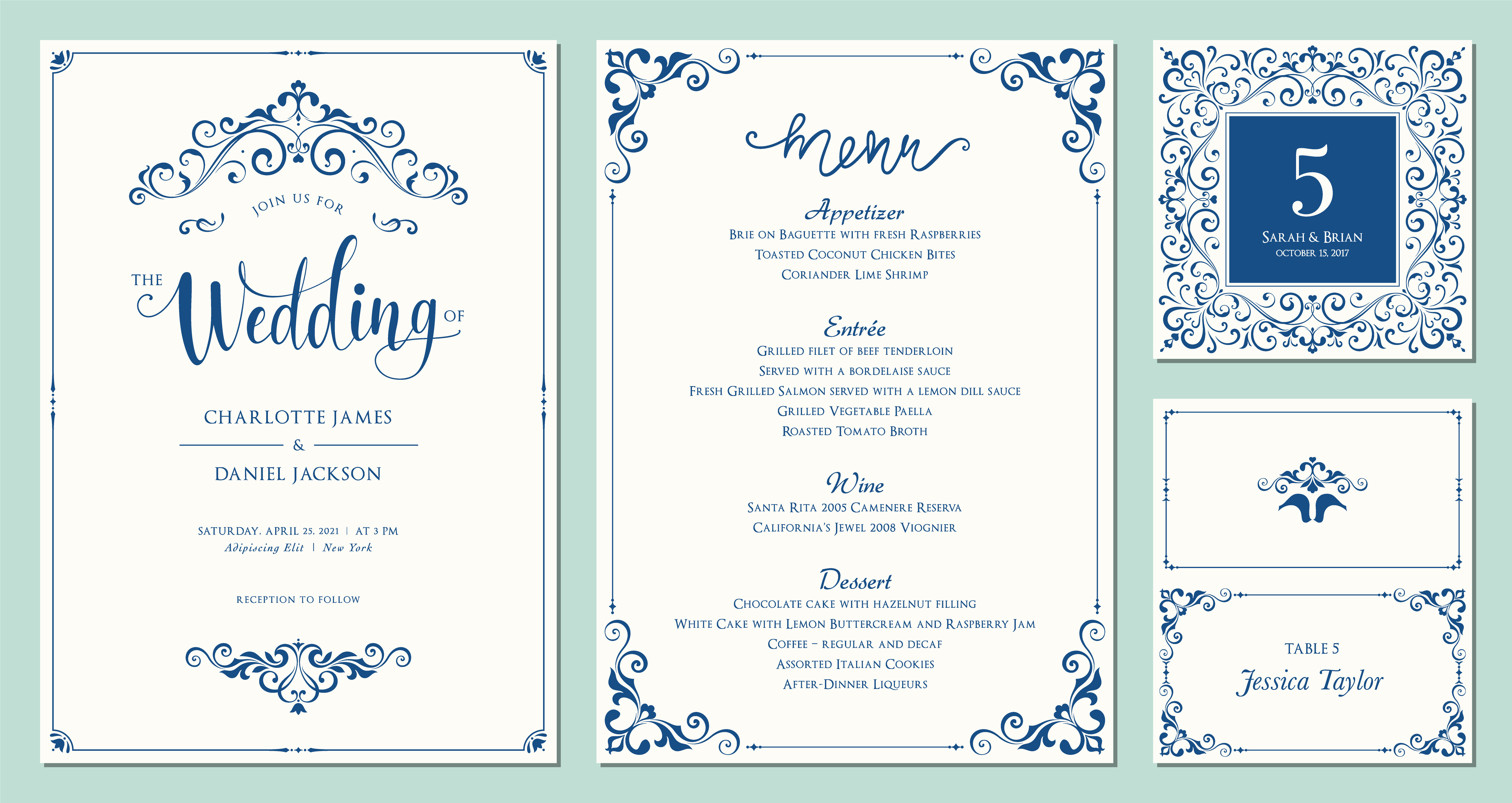
Because of their decorative nature, script fonts are often utilized in invitation, stationary, and greeting card designs. The image below is a great example of an invitation package for a wedding ceremony and reception.
Decorative type is a group of novelty or illustrative typefaces used primarily for headlines or initial capital letters.
Below is an example of a decorative typeface called Playful. Notice how decorative type is different from script.
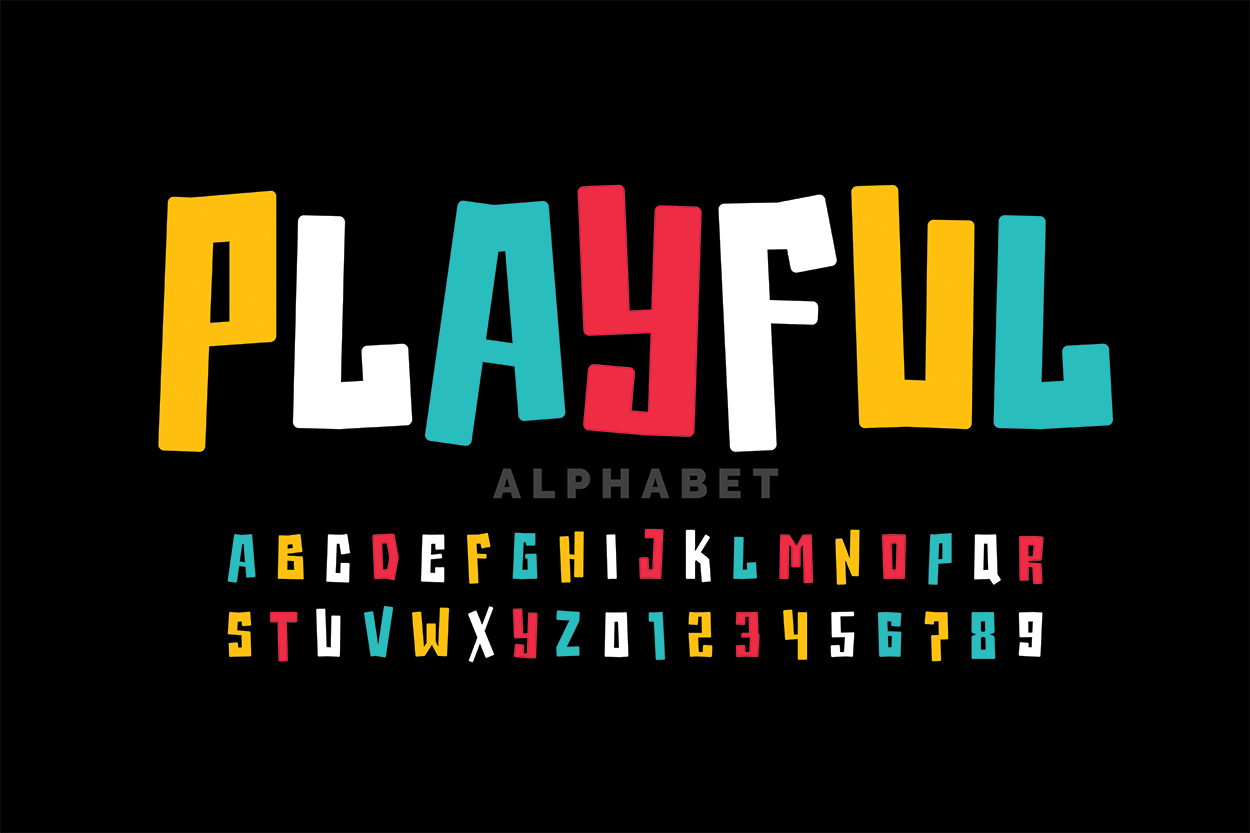
Decorative type is a lot more illustrative, but not as practical in use. Thus, it is oftentimes tailored for a specific application in projects. However, it can work well for headlines or other attention-grabbing text.
Another good use for decorative type is the initial capital letter, which is the first letter of the first word in a paragraph. The initial capital letter is enlarged to the height of several lines which surround it.
EXAMPLE
Remember classic storybooks? Those books often used a large capital letter, called a drop cap, to start off the word in the first paragraph; from that point on, the books used more legible text.Source: THIS TUTORIAL WAS AUTHORED BY MARIO E. HERNANDEZ FOR SOPHIA LEARNING. PLEASE SEE OUR TERMS OF USE.



