Table of Contents |
The Baroque is a style of art and architecture characterized by grand scale, movement, and dramatic effects. The artwork that you will be looking at today dates from 1623 to 1652 and is based in the Vatican City.

The Baroque period followed the Renaissance and Mannerism, marking a significant shift in artistic style and expression. Originating in Italy, the Baroque style quickly spread across Europe, characterized by its dramatic, emotional, and dynamic qualities.
Characteristics of Baroque Art
One of the Council's significant decrees was on the use of art in the church. It emphasized that art should:
Gian Lorenzo Bernini (1598–1680) was an Italian sculptor and architect who played a pivotal role in defining the Baroque style. His work exemplifies the dynamism, emotional intensity, and grandeur characteristic of Baroque art. Bernini's contributions to sculpture, architecture, and urban planning made him one of the most influential artists of his time. He was even invited to France to work for King Louis XIV.
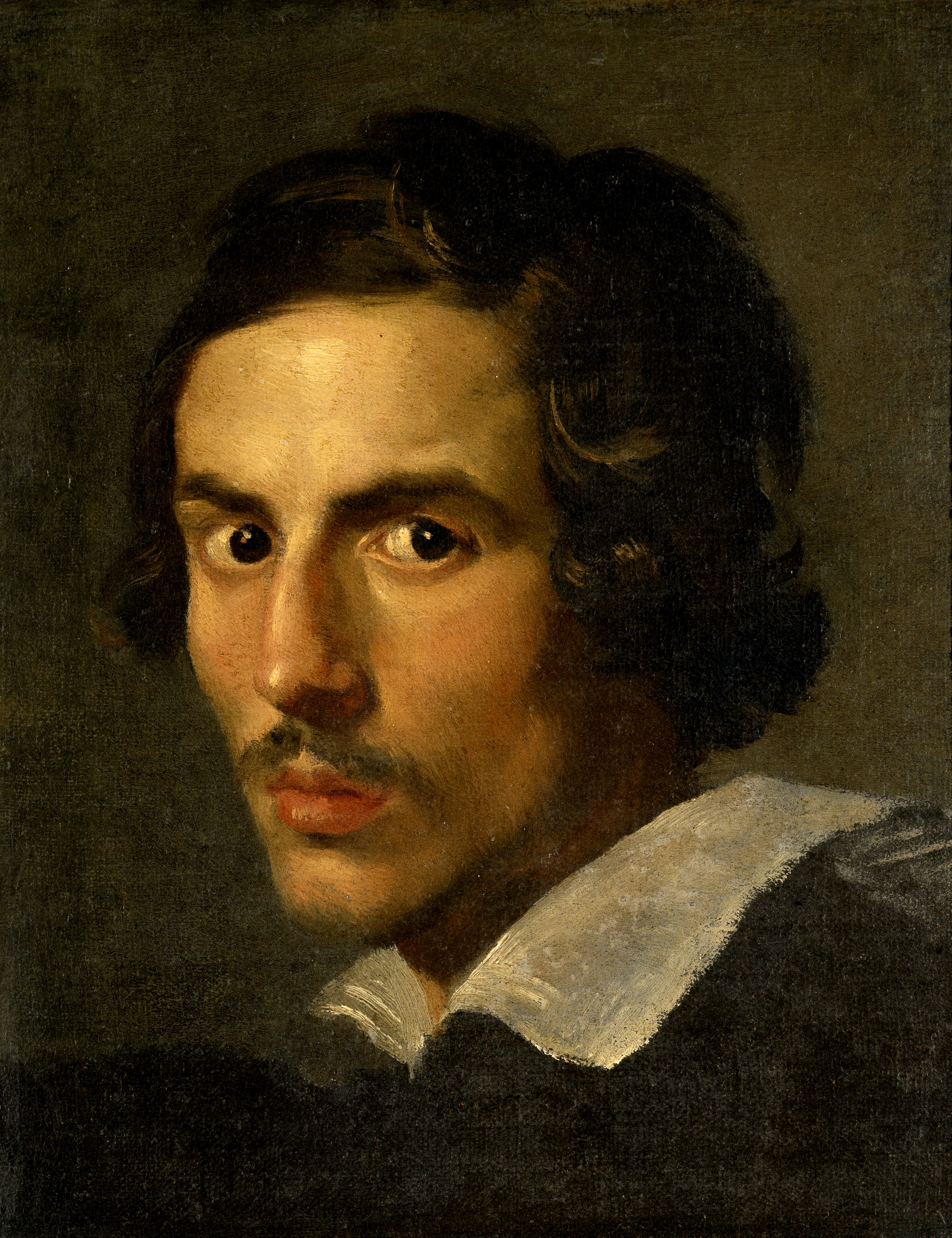
Self-Portrait
Galleria Borghese, Rome
1623
Oil on canvas
The biblical story of David and Goliath has captivated artists for centuries, inspiring numerous interpretations. Bernini's rendition stands out as a quintessential example of Baroque art, showcasing the dynamic movement and emotional intensity characteristic of the style. Bernini's David offers a striking contrast to earlier Renaissance depictions, particularly by Michelangelo.
Bernini depicts the hero winding up to launch a stone at Goliath. It is a very dynamic scene. You feel as though you’re viewing a snapshot of the man in action. It’s an interesting contrast between the fierce determination and steady gaze of his face and head, and the sense of torsion and energy in the way the body is coiling, like a pitcher ready to throw a fastball in a baseball game.
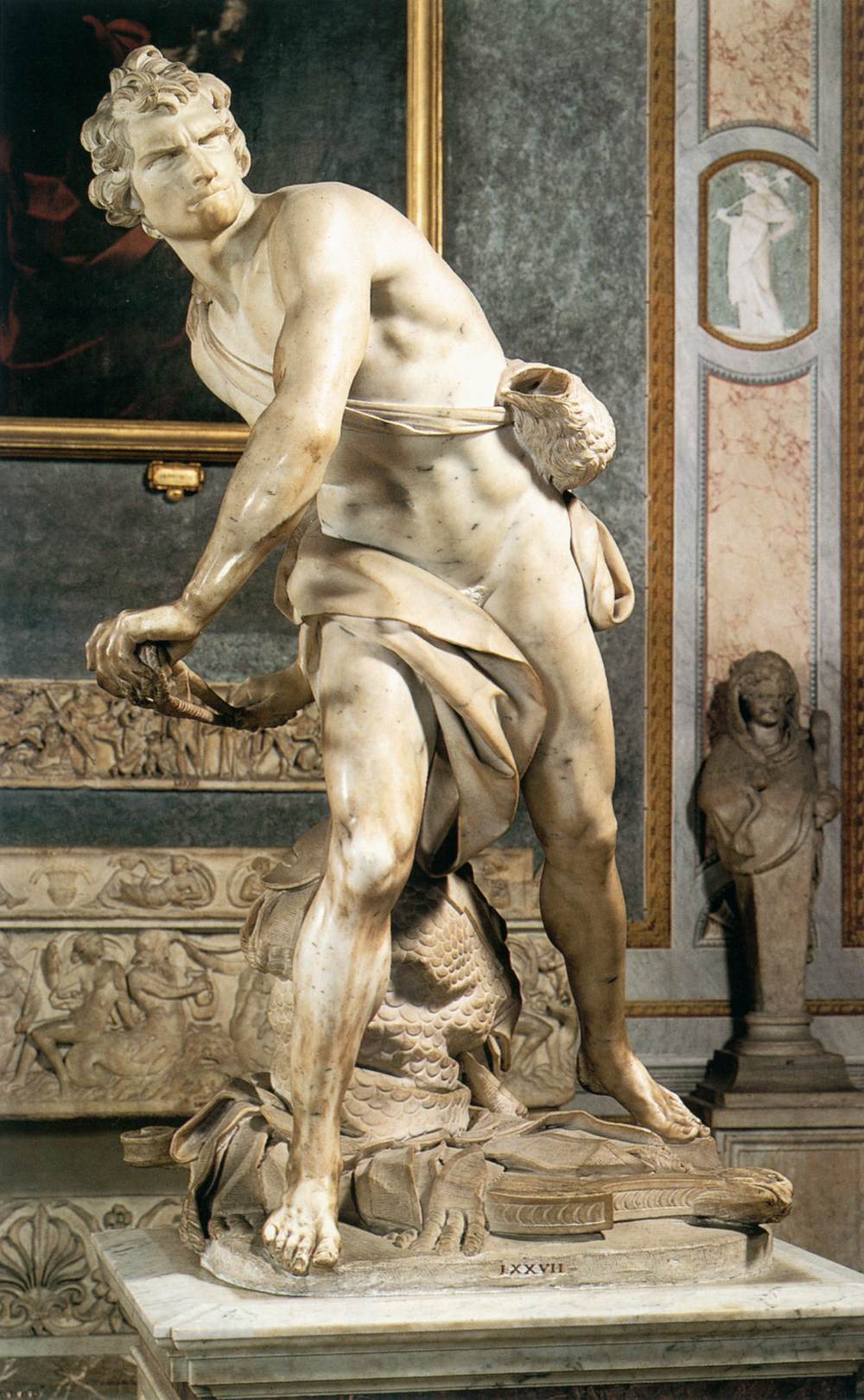
David
1623–1624
Galleria Borghese, Rome
Carrara marble
The stylistic contrast is most apparent when Bernini’s David is compared with its Renaissance counterpart, the David by Michelangelo, shown below. In the same way that Michelangelo’s David is regarded as a masterpiece of Renaissance style, Bernini’s David is regarded as a masterpiece of the Baroque—the same story, but two very different thematic interpretations.
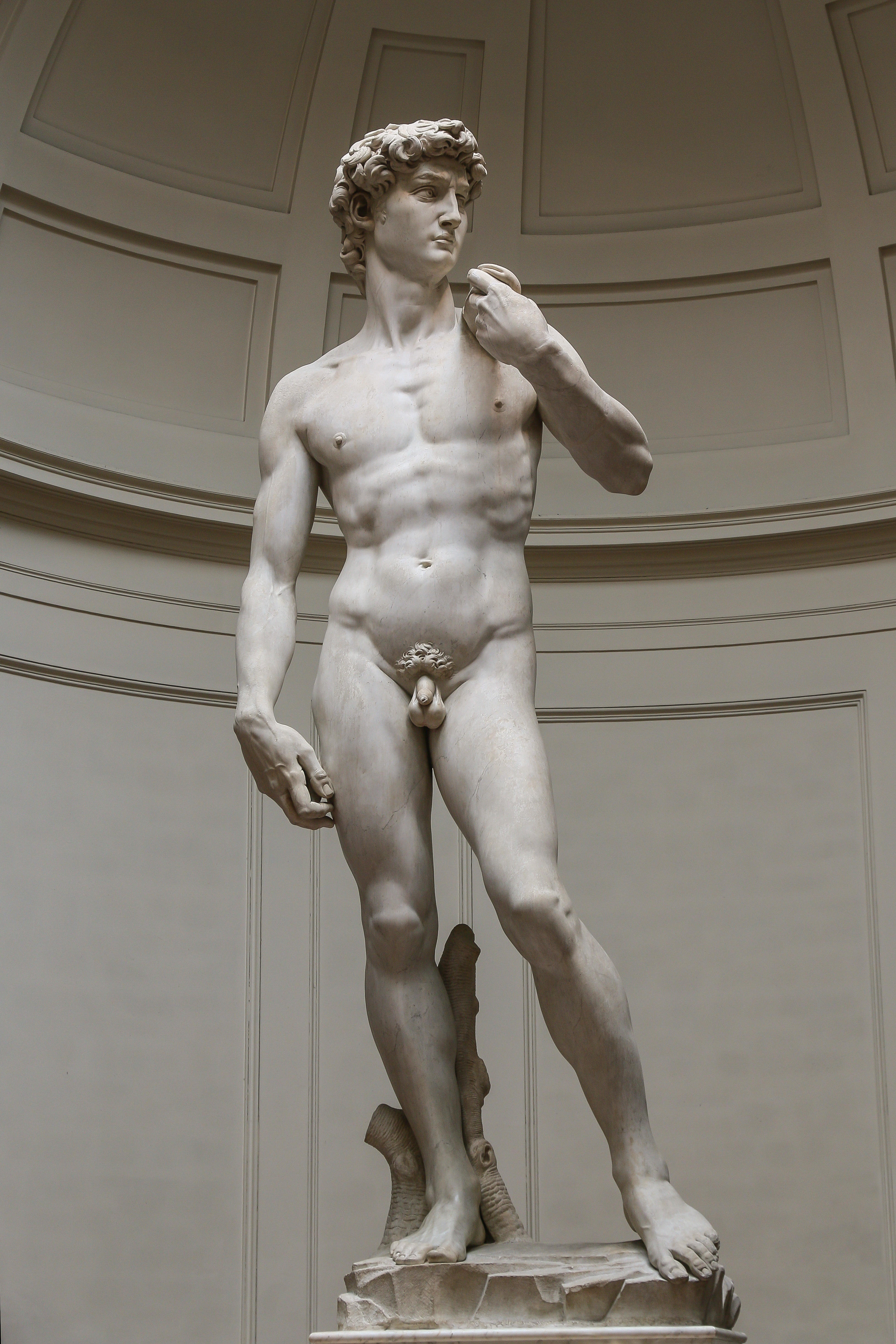
David
Galleria dell'Accademia, Florence
1501–1504
Marble
Michelangelo’s David is rather static, posed, and tranquil in his overall appearance. However, there is an intensity in his focus, which enhances the sensation of restrained emotion. Compare the two sculptures side by side, below. Even the geometry of Michelangelo’s David is an application of the Renaissance ideal. The pyramid, or triangle, that is a hallmark of the Renaissance style, can be seen in his contrapposto-style pose and reinforces this feeling of stability and calm.
Bernini, in Baroque fashion, coils his David around a sharp diagonal, which creates a sense of movement and tension. This is further enhanced by the way the drapery around David appears to shift and slip away from his body, reminiscent of examples of Hellenistic sculpture from Greece that use a similar technique.
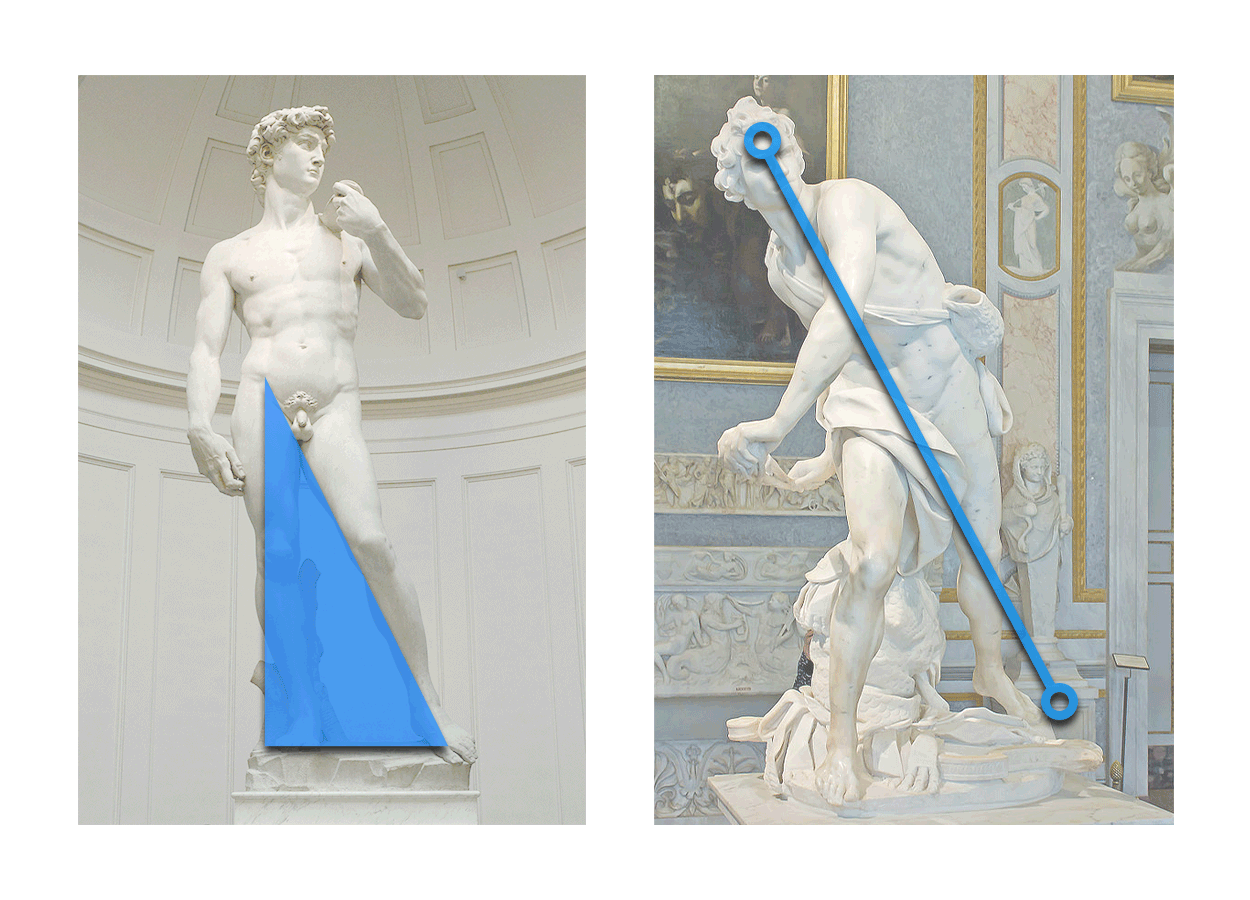
While Michelangelo’s use of contrapposto creates stability, Bernini’s David breaks free of it. If Michelangelo’s David is the calm before the storm, Bernini's David is clearly the storm itself.
The Baroque embodies emotion, drama, and dynamism. Bernini’s sculpture depicting Saint Teresa in ecstasy, from the Cornaro Chapel at the Church of Santa Maria della Vittoria in Rome, clearly articulates the Catholic Church’s view that depictions of intense spiritual experiences were important devotional and persuasive functions of artwork.
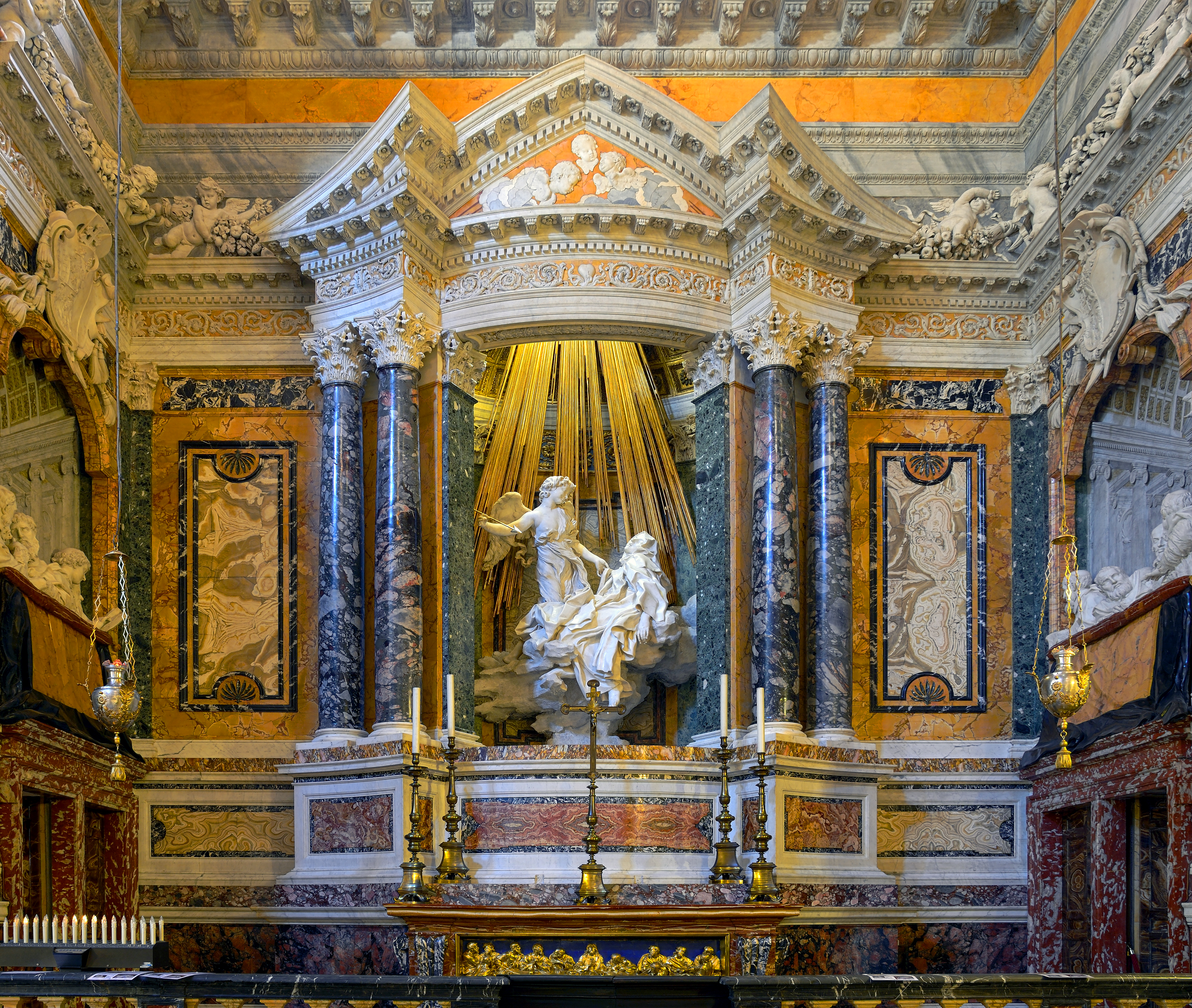
Ecstasy of Saint Teresa
Cornaro Chapel in Santa Maria della Vittoria, Rome
1647–1652
Marble, stucco, and gilt bronze
According to the story, Saint Teresa’s conversion took place during a bout of intense visions that followed the death of her father, in which she felt a pain in her heart that she attributed to a fire-tipped arrow repeatedly thrust in her by an angel. The experience could be described as delightfully agonizing, and Bernini depicts these conflicting sensations brilliantly. Again, Bernini uses a sharp diagonal as his primary axis for the swooning saint, whose clothes appear to billow upwards as she falls in ecstasy into a cloud.
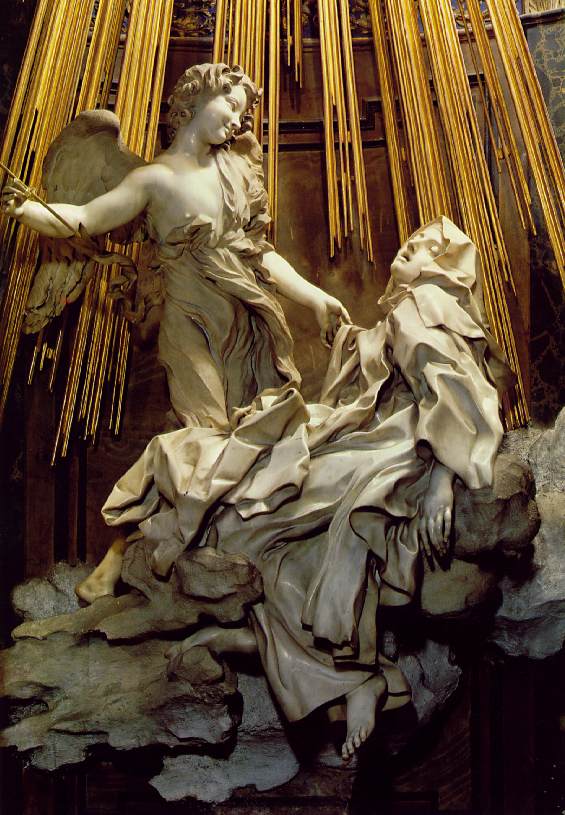
The angel is at the apex of its arrow-thrusting motion, about to lunge forward with its golden arrow and pierce the heart of Teresa again. It’s through powerful visualizations such as this that the Catholic Church felt a connection could be made between the devout on earth and the heavenly realm that transcended it.
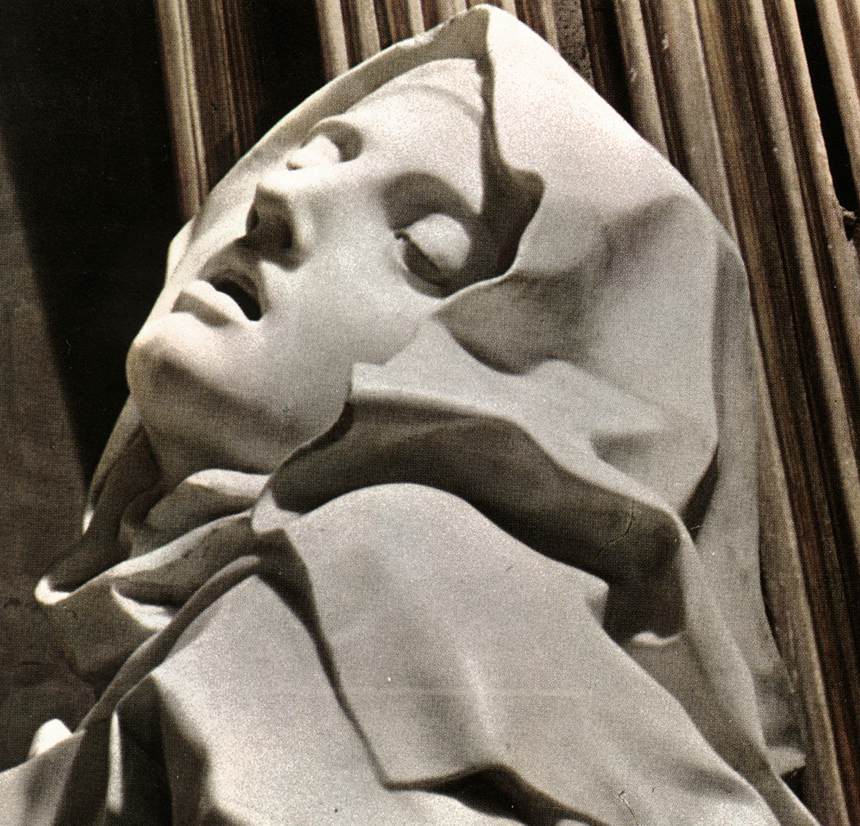
The Ecstasy of Saint Teresa overall captures the emotional and spiritual intensity of a divine encounter. Through its dramatic composition, use of light, and intricate detail, the sculpture exemplifies the Baroque style and its emphasis on engaging the viewer's senses and emotions. As a product of the Counter-Reformation, it also reflects the Roman Catholic Church's aim to use art as a means of inspiring faith.
Source: THIS TUTORIAL WAS AUTHORED BY SOPHIA LEARNING. PLEASE SEE OUR TERMS OF USE.



