Table of Contents |
Baroque architecture in Italy, much like Baroque sculpture and painting, is characterized by grandeur, drama, and movement. It developed as a reaction against the restrained and orderly aesthetic of Renaissance architecture, aiming instead to evoke emotional responses through bold, dynamic designs.
The sculpture and architecture that you will be looking at today dates from between 1606 and 1667 and comes from Rome, Italy.
The architectural design and construction of St. Peter’s Basilica in Vatican City is a remarkable tale of ambition, collaboration, and lofty expectations. Spanning more than a century and involving numerous architects and artists, the project stands as a testament to the grandeur and complexity of Baroque architecture.
The construction of the new St. Peter’s Basilica began in 1506 under Pope Julius II, with Donato Bramante as the chief architect. Pope Julius II is the same patron who sponsored the redesign of the Sistine Chapel ceiling and Raphael’s frescoes in the papal apartments.
As noted in Tutorial 1.1.6, Bramante's design featured a Greek cross plan, symbolizing perfect symmetry and balance. After Bramante’s death, several architects took over, but it was Michelangelo who designed the iconic dome, though it was completed after his death. By the early 17th century, Carlo Maderno was tasked with extending the nave to form a Latin cross plan and to design the façade, completing it in 1614.
While the façade is undeniably impressive with its grand scale and classical elements, it has been criticized for not living up to the technical expectations set by the rest of the basilica. Such challenges with the façade can likely be attributed to its “design by committee” approach. Maderno’s original design was further altered by various influences and decisions, leading to a final version that deviated from his initial vision.
Façade of St. Peter’s Basilica
Vatican City
1606–1612
Notice the addition of the two bell towers on either end, which stretched out the front of the façade, removing the verticality that was articulated in the earlier design. Catholic officials desired to lengthen the nave of the church, which forced Michelangelo’s gorgeous dome even further back. You can see in this example how the dome is barely visible from the front, much less the drum that it rests upon.
The Piazza San Pietro, or St. Peter’s Square, is a magnificent example of Baroque architecture and urban planning. Designed by Bernini between 1656 and 1667, the square is celebrated for its grandeur, harmonious proportions, and symbolic significance. Located in front of the façade of St. Peter’s Basilica, it serves as a monumental entrance to one of the most iconic religious sites in the world.
The piazza is designed in the shape of an ellipse, creating a welcoming embrace that symbolizes the arms of the Church reaching out to the faithful. This shape is both visually striking and functional, accommodating large gatherings of people.
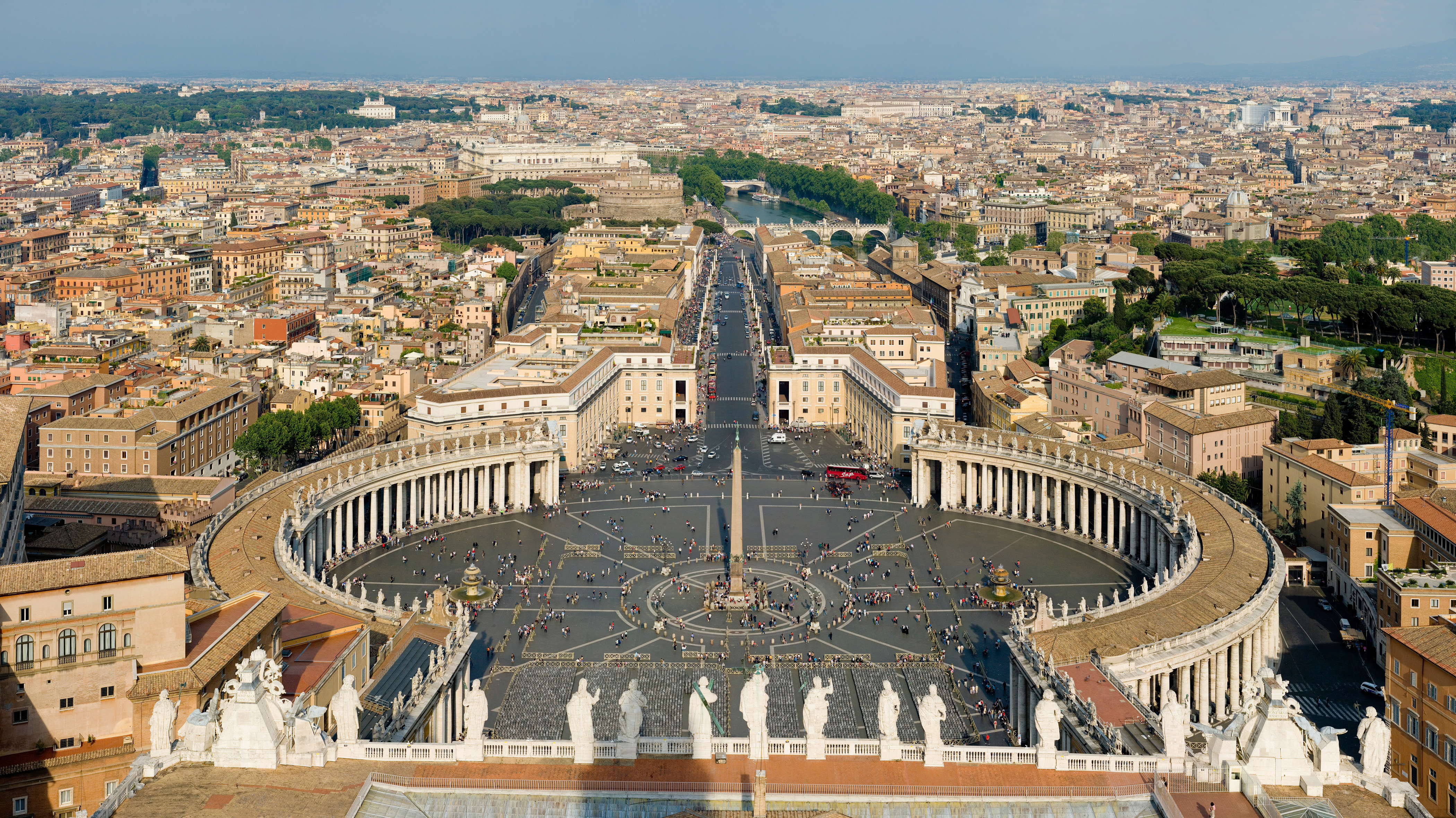
Piazza of St. Peter’s Basilica (St. Peter’s Square)
Vatican City
1656–1667
Bernini’s talents were remarkable, and aside from his architectural endeavors, it was his skill as a sculptor that is most widely recognized. The baldacchino of St. Peter’s Basilica is a breathtaking example of Baroque sculpture that marks the location of the central altar of the church as well as the tomb of Saint Peter beneath it.
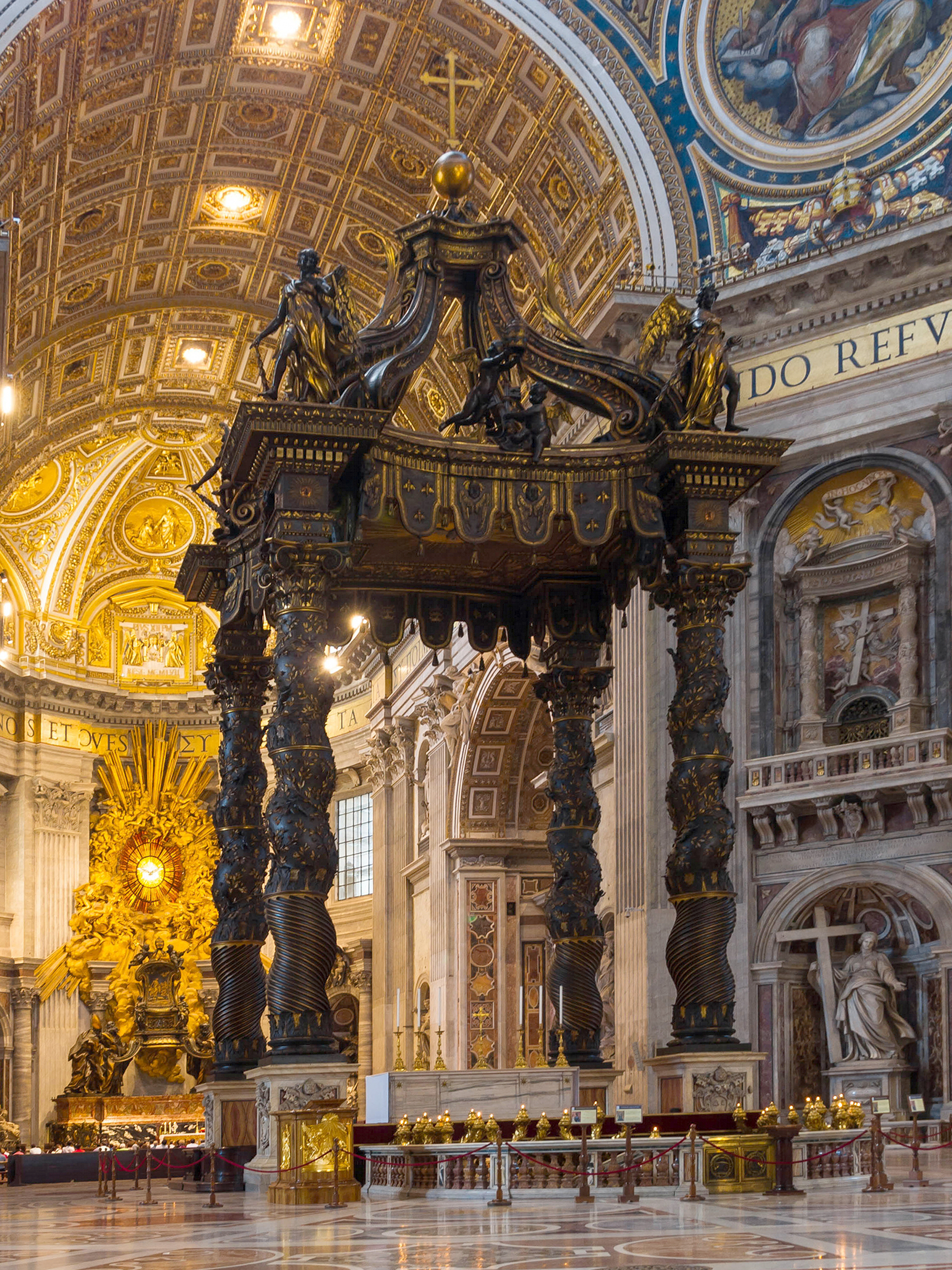
Baldacchino of St. Peter's Basilica
Vatican City
1623–1634
Gilded bronze
The baldacchino is thought to be constructed using bronze repurposed from the Pantheon in Rome, a testament to Bernini’s ingenuity and resourcefulness. This recycling of materials, or spolia, connects the ancient Roman past with the Christian present. The design features elaborate Baroque elements, including twisted Solomonic columns, ornate decorations, and dynamic forms. These columns are said to resemble the original columns of the Temple of Solomon, adding a layer of biblical symbolism.
Overall, Bernini’s baldacchino was meant to symbolize the triumph of the Church, an important symbol after the Counter-Reformation, and serves as a bridge of space between the vast architectural scale of the church’s interior and that of the humble viewer below.
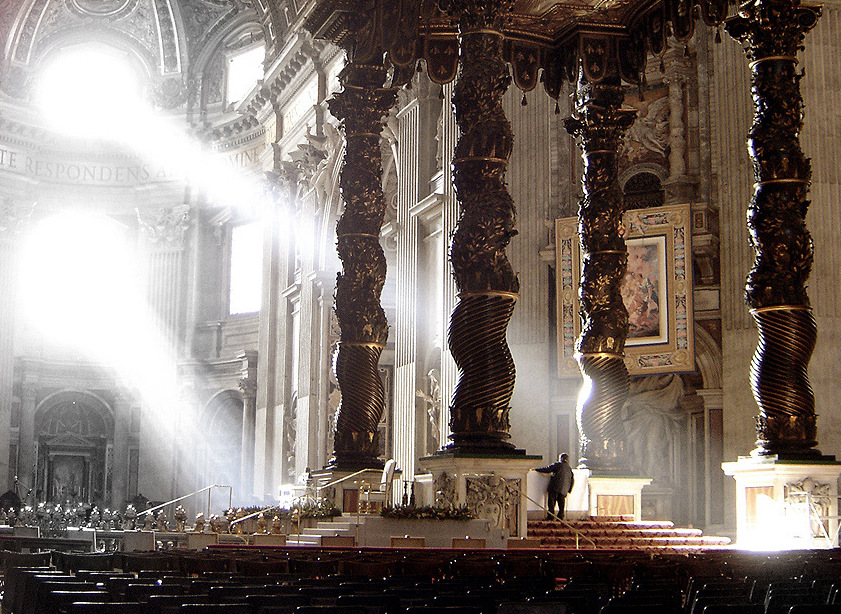
Baldacchino of St. Peter's Basilica
Vatican City
1623–1634
Gilded bronze
Francesco Borromini was considered one of the leading Baroque architects of his time. The façade of the Church of San Carlo alle Quattro Fontane is one of his most well-known works and marks a departure from the flat Renaissance and classically inspired façades of the Renaissance.
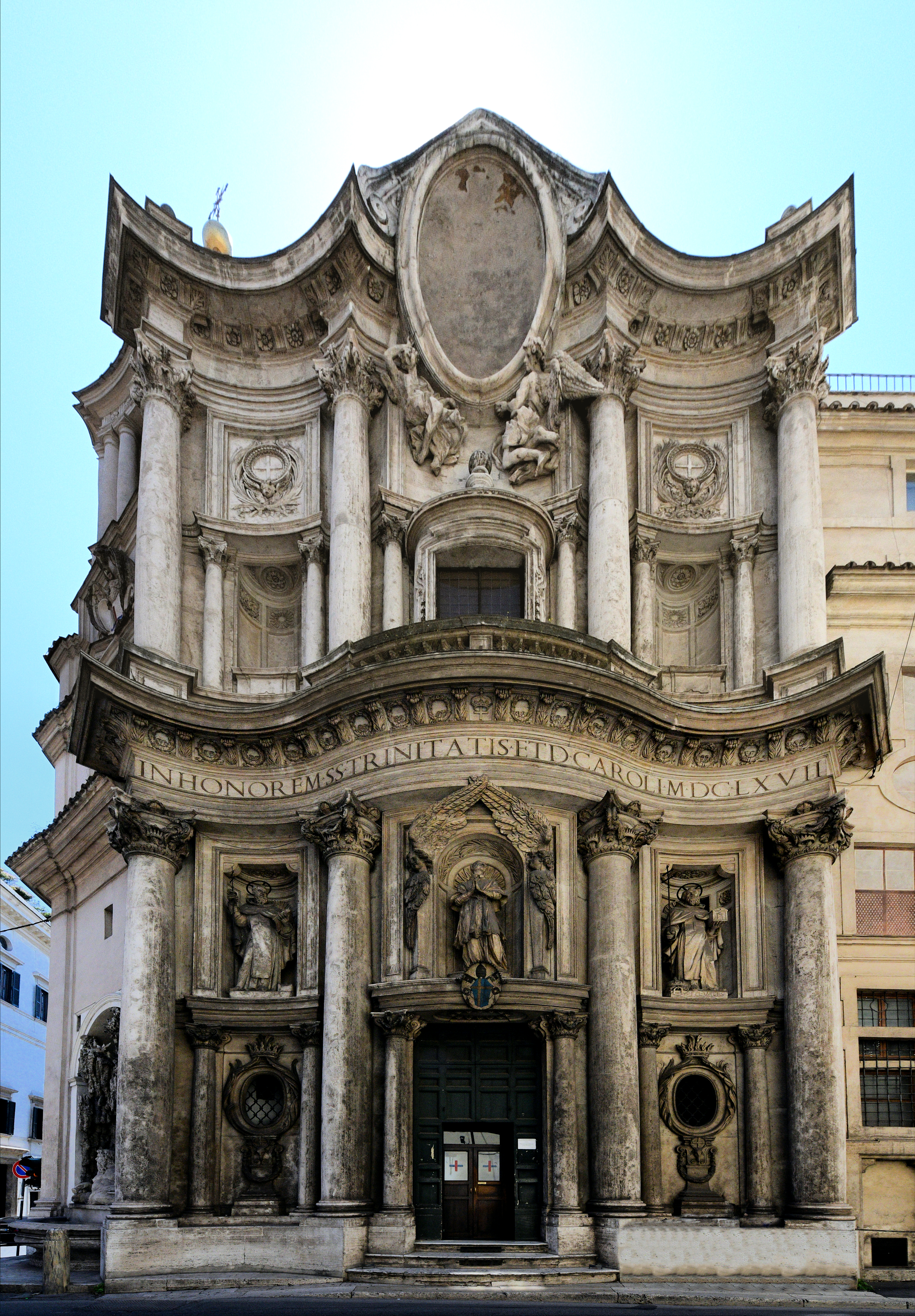
Façade of San Carlo alle Quattro Fontane
Rome
1665–1667
Embodying the qualities of drama and dynamism essential to the Baroque design, Borromini created a curving and rippling exterior in his façade. It resembles the undulation of a wave, as if the façade were inhaling and exhaling, causing the banner of inscription above the Corinthian-style columns to seemingly flap as if in a breeze. This movement is extended to all the elements of the façade and genuinely blurs the line between architecture and sculpture.
Source: THIS TUTORIAL WAS AUTHORED BY IAN MCCONNELL AND TAMORA KOWALSKI FOR SOPHIA LEARNING. PLEASE SEE OUR TERMS OF USE.



