Table of Contents |
Similar to vitamins, minerals are essential to human health and can be obtained in our diet from different types of foods. Minerals are abundant in our everyday diet. There are 20 essential minerals that must be consumed in our diets for us to remain healthy. The amount of each mineral found in our bodies varies greatly between people. When there is a deficiency in an essential mineral, health problems may arise.
IN CONTEXT
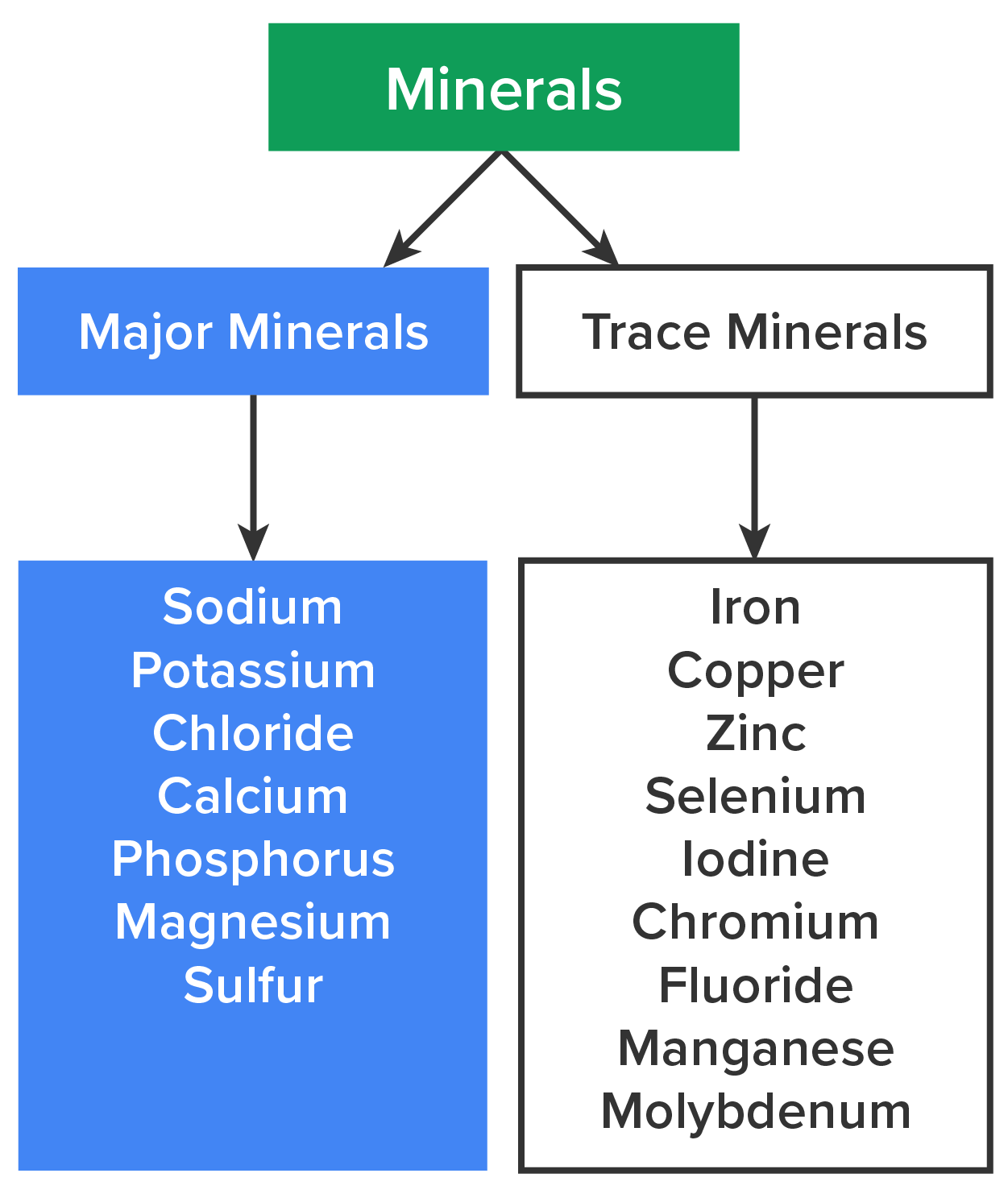
Major minerals are classified as minerals that are required in the diet each day in amounts larger than 100 milligrams. These include sodium, potassium, chloride, calcium, phosphorus, magnesium, and sulfur. These major minerals can be found in various foods. Consuming a varied diet significantly improves an individual’s ability to meet their nutrient needs.
Because calcium is such an important part of our bodies and is needed in a healthy diet, we will review it alone in this tutorial. The next tutorials will include the major and trace minerals seen in the image below.
Minerals are not as efficiently absorbed as most vitamins, and so the bioavailability of minerals can be very low. Plant-based foods often contain factors, such as oxalate and phytate, that bind to minerals and inhibit their absorption. In general, minerals are better absorbed from animal-based foods. In most cases, if dietary intake of a particular mineral is increased, absorption will decrease.
Some minerals influence the absorption of others. For instance, excess zinc in the diet can impair iron and copper absorption. Conversely, certain vitamins enhance mineral absorption. For example, vitamin C boosts iron absorption, and vitamin D boosts calcium and magnesium absorption. As is the case with vitamins, certain gastrointestinal disorders and diseases, such as Crohn’s disease and kidney disease, as well as the aging process, impair mineral absorption, putting people with malabsorption conditions and the elderly at higher risk for mineral deficiencies.
| Micronutrient: Calcium | |
|---|---|
| Sources | Yogurt, cheese, sardines, milk, orange juice, turnip |
| Recommended Intakes for Adults | 1,000 mg/day |
| Major Functions | Component of mineralized bone, provides structure and microarchitecture |
| Deficiency Diseases and Symptoms | Increased risk of osteoporosis |
| Groups at Risk for Deficiency | Postmenopausal women, those who are lactose intolerant, or vegan |
| Toxicity | Kidney stones |
| UL | 2,500 mg |
Calcium is the most abundant mineral in the body, and greater than 99 percent of it is stored in bone tissue. Although only 1 percent of the calcium in the human body is found in the blood and soft tissues, it is here that it performs the most critical functions. Blood calcium levels are rigorously controlled so that if blood levels drop, the body will rapidly respond by stimulating bone resorption, thereby releasing stored calcium into the blood. Thus, bone tissue sacrifices stored calcium to maintain blood calcium levels. This is why bone health is dependent on the intake of dietary calcium and also why blood levels of calcium do not always correspond to dietary intake.
IN CONTEXT
Calcium plays a role in a number of different functions in the body, like bone and tooth formation. The most well-known calcium function is to build and strengthen bones and teeth. When bone tissue first forms during the modeling or remodeling process, it is unhardened, protein-rich osteoid tissue. In the osteoblast-directed process of bone mineralization, calcium phosphates (salts) are deposited on the protein matrix. The calcium salts typically make up about 65 percent of bone tissue.
When your diet is calcium deficient, the mineral content of bone decreases, causing it to become brittle and weak. Thus, increased calcium intake helps to increase the mineralized content of bone tissue. Greater mineralized bone tissue corresponds to a greater bone mineral density and to greater bone strength. The remaining calcium plays a role in nerve impulse transmission by facilitating electrical impulse transmission from one nerve cell to another. Calcium in muscle cells is essential for muscle contraction because the flow of calcium ions is needed for the muscle proteins (actin and myosin) to interact. Calcium is also essential in blood clotting by activating clotting factors to fix damaged tissue.
In addition to calcium’s four primary functions, calcium has several other minor functions that are also critical for maintaining normal physiology.
EXAMPLE
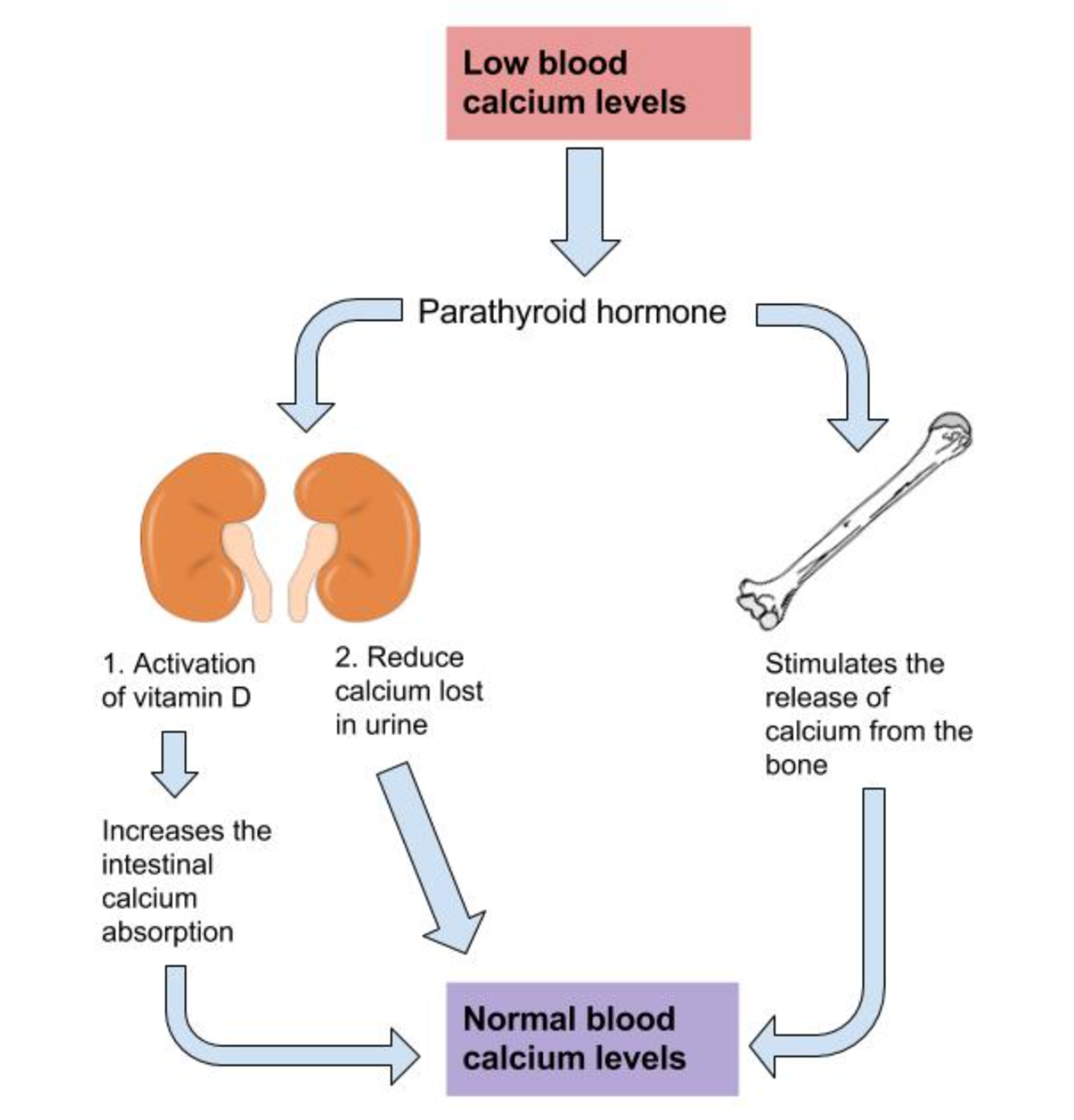
Without calcium, the hormone insulin could not be released from cells in the pancreas, and glycogen could not be broken down in muscle cells and used to provide energy for muscle contraction.Because calcium performs such vital functions in the body, blood calcium level is closely regulated by the hormones parathyroid hormone (PTH), calcitriol, and calcitonin. When blood calcium levels are low, PTH is secreted to increase blood calcium levels via three different mechanisms.
Besides forming and maintaining strong bones and teeth, calcium has been shown to have other health benefits for the body, including:
IN CONTEXT
- Cancer. The National Cancer Institute reports that there is enough scientific evidence to conclude that higher intakes of calcium decrease colon cancer risk and may suppress the growth of polyps that often precipitate cancer. Although higher calcium consumption protects against colon cancer, some studies have looked at the relationship between calcium and prostate cancer and found higher intakes may increase the risk for prostate cancer; however, the data is inconsistent, and more studies are needed to confirm any negative association.
- Blood pressure. Multiple studies provide clear evidence that higher calcium consumption reduces blood pressure. A review of twenty-three observational studies concluded that for every 100 milligrams of calcium consumed daily, systolic blood pressure is reduced 0.34 millimeters of mercury (mmHg), and diastolic blood pressure is decreased by 0.15 mmHg.
- Cardiovascular health. There is emerging evidence that higher calcium intakes protect against other risk factors for cardiovascular disease, such as high cholesterol and obesity, but the scientific evidence is weak or inconclusive.
- Kidney stones. Another health benefit of a high-calcium diet is that it blocks kidney stone formation. Calcium inhibits the absorption of oxalate, a chemical in plants such as parsley and spinach, which is associated with an increased risk for developing kidney stones. Calcium’s protective effects on kidney stone formation occur only when you obtain calcium from dietary sources. Calcium supplements may actually increase the risk for kidney stones in susceptible people.
Calcium inadequacy is most prevalent in adolescent girls and the elderly. Proper dietary intake of calcium is critical for proper bone health.
Despite the wealth of evidence supporting the many health benefits of calcium (particularly bone health), the average American diet falls short of achieving the recommended dietary intakes of calcium. In fact, in females older than nine years of age, the average daily intake of calcium is only about 70 percent of the recommended intake. Here we will take a closer look at particular groups of people who may require extra calcium intake.
IN CONTEXT
- Adolescent teens. A calcium-deficient diet is common in teenage girls as their dairy consumption often considerably drops during adolescence.
- Amenorrheic women and the “female athlete triad”. Amenorrhea refers to the absence of a menstrual cycle. Women who fail to menstruate suffer from reduced estrogen levels, which can disrupt and have a negative impact on the calcium balance in their bodies. The “female athlete triad” is a combination of three conditions characterized by amenorrhea, disrupted eating patterns, and osteoporosis. Exercise-induced amenorrhea and anorexia nervosa-related amenorrhea can decrease bone mass.
- The elderly. As people age, calcium bioavailability is reduced, the kidneys lose their capacity to convert vitamin D to its most active form, the kidneys are no longer efficient in retaining calcium, the skin is less effective at synthesizing vitamin D, there are changes in overall dietary patterns, and older people tend to get less exposure to sunlight.
- Postmenopausal women. Estrogen enhances calcium absorption. The decline in this hormone during and after menopause puts postmenopausal women especially at risk for calcium deficiency. Decreases in estrogen production are responsible for an increase in bone resorption and a decrease in calcium absorption. During the first years of menopause, annual decreases in bone mass range from 3–5 percent.
- Lactose-intolerant people. Groups of people, such as those who are lactose intolerant or who adhere to diets that avoid dairy products, may not have an adequate calcium intake.
- Vegans. Vegans typically absorb reduced amounts of calcium because their diets favor plant-based foods that contain oxalates and phytates. In addition, because vegans avoid dairy products, their overall consumption of calcium-rich foods may be less.
If you are lactose intolerant, have a milk allergy, are a vegan, or simply do not like dairy products, remember that there are many plant-based foods that have a good amount of calcium, and there are also some low-lactose and lactose-free dairy products on the market.
Many people choose to fulfill their daily calcium requirements by taking calcium supplements. Calcium supplements are sold primarily as calcium carbonate, calcium citrate, calcium lactate, and calcium phosphate, with elemental calcium contents of about 200 milligrams per pill. It is important to note that calcium carbonate requires an acidic environment in the stomach to be used effectively. Although this is not a problem for most people, it may be for those on medication to reduce stomach-acid production or for the elderly who may have a reduced ability to secrete acid in the stomach. For these people, calcium citrate may be a better choice. Otherwise, calcium carbonate is the cheapest. The body is capable of absorbing approximately 30 percent of the calcium from these forms.
A recent study published in the British Medical Journal reported that people who take calcium supplements at doses equal to or greater than 500 milligrams per day in the absence of a vitamin D supplement had a 30 percent greater risk of having a heart attack.
Does this mean that calcium supplements are bad for you? If you look more closely at the study, you will find that 5.8 percent of people (143 people) who took calcium supplements had a heart attack, but so did 5.5 percent of the people (111 people) who took the placebo. While this is one study, several other large studies have not shown that calcium supplementation increases the risk for cardiovascular disease. While the debate over this continues in the realm of science, we should focus on the things we do know:
The recommended dietary allowance (RDA) for calcium is 1,300 milligrams per day during adolescence because this is the life stage with accelerated bone growth. Studies have shown that a higher intake of calcium during puberty increases the total amount of bone tissue that accumulates in a person. For women above age fifty and men older than seventy-one, the RDAs are also a bit higher for several reasons, including that as we age, calcium absorption in the gut decreases, vitamin D3 activation is reduced, and maintaining adequate blood levels of calcium is important to prevent an acceleration of bone tissue loss (especially during menopause). The Institute of Medicine (IOM) recommends that people do not consume over 2,500 milligrams per day of calcium, as it may cause adverse effects in some people.
| Dietary Reference Intakes for Calcium | ||
|---|---|---|
| Age Group | RDA (mg/day) | UL (mg/day) |
| Infants (0–6 months) | 200* | – |
| Infants (6–12 months) | 260* | – |
| Children (1–3 years) | 700 | 2,500 |
| Children (4–8 years) | 1,000 | 2,500 |
| Children (9–13 years) | 1,300 | 2,500 |
| Adolescents (14–18 years) | 1,300 | 2,500 |
| Adults (19–50 years) | 1,000 | 2,500 |
| Adult females (50–71 years) | 1,200 | 2,500 |
| Adults, male & female (> 71 years) | 1,200 | 2,500 |
| * denotes Adequate Intake | ||
In the typical American diet, calcium is obtained mainly from dairy products, primarily cheese. A slice of cheddar or Swiss cheese contains just over 200 milligrams of calcium. One cup of nonfat milk contains approximately 300 milligrams of calcium, which is about a third of the RDA for calcium for most adults. Foods fortified with calcium, such as cereals, soy milk, and orange juice, also provide one-third or greater of the calcium RDA. Although the typical American diet relies mostly on dairy products for obtaining calcium, there are other good non-dairy sources of calcium.
| Calcium Content of Various Foods | |||
|---|---|---|---|
| Food | Serving | Calcium (mg) | Percent Daily Value |
| Yogurt, low fat | 8 oz. | 415 | 42 |
| Mozzarella | 1.5 oz. | 333 | 33 |
| Sardines, canned with bones | 3 oz. | 325 | 33 |
| Cheddar Cheese | 1.5 oz. | 307 | 31 |
| Milk, nonfat | 8 oz. | 299 | 30 |
| Soymilk, calcium fortified | 8 oz. | 299 | 30 |
| Orange juice, calcium fortified | 6 oz. | 261 | 26 |
| Tofu, firm, made with calcium sulfate | ½ c. | 253 | 25 |
| Salmon, canned with bones | 3 oz. | 181 | 18 |
| Turnip, boiled | ½ c. | 99 | 10 |
| Kale, cooked | 1 c. | 94 | 9 |
| Vanilla Ice Cream | ½ c. | 84 | 8 |
| White bread | 1 slice | 73 | 7 |
| Kale, raw | 1 c. | 24 | 2 |
| Broccoli, raw | ½ c. | 21 | 2 |
In the small intestine, calcium absorption primarily takes place in the duodenum (first section of the small intestine) when intakes are low, but calcium is also absorbed passively in the jejunum and ileum (second and third sections of the small intestine), especially when intakes are higher. The body doesn’t completely absorb all the calcium in food. Interestingly, the calcium in some vegetables—such as kale, Brussels sprouts, and bok choy—is better absorbed by the body than dairy products. About 30 percent of calcium is absorbed from milk and other dairy products.
The greatest positive influence on calcium absorption comes from having an adequate intake of vitamin D. People deficient in vitamin D absorb less than 15 percent of calcium from the foods they eat. The hormone estrogen is another factor that enhances calcium bioavailability. Thus, as a woman ages and goes through menopause, during which estrogen levels fall, the amount of calcium absorbed decreases, and the risk for bone disease increases. Some fibers, such as inulin, found in jicama, onions, and garlic, also promote calcium intestinal uptake.
IN CONTEXT
Chemicals that bind to calcium decrease its bioavailability. These negative effects of calcium absorption include the oxalates in certain plants, the tannins in tea, phytates in nuts, seeds, and grains, and some fibers. Oxalates are found in high concentrations in spinach, parsley, cocoa, and beets. In general, the calcium bioavailability is inversely correlated to the oxalate content in foods. High-fiber, low-fat diets also decrease the amount of calcium absorbed, an effect likely related to how fiber and fat influence the amount of time food stays in the gut. Anything that causes diarrhea, including sickness, medications, and certain symptoms related to old age, decreases the transit time of calcium in the gut and therefore decreases calcium absorption. As we get older, stomach acidity sometimes decreases, diarrhea occurs more often, kidney function is impaired, and vitamin D absorption and activation is compromised, all of which contribute to a decrease in calcium bioavailability.
Source: This Tutorial has been adapted from "Human Resources Management" by Lumen Learning. Access for free at courses.lumenlearning.com/wm-humanresourcesmgmt/. License: CC BY: Attribution.
REFERENCES
Bolland MJ. et al. Effect of Calcium Supplements on Risk of Myocardial Infarction and Cardiovascular Events: Meta-Analysis. Br Med J. 2010; 341(c3691).
Birkett NJ. Comments on a Meta-Analysis of the Relation between Dietary Calcium Intake and Blood Pressure. Am J Epidemiol. 1998;148(3), 223–28. aje.oxfordjournals.org/content/148/3/223.long. Accessed October 10, 2017.
Ross AC, Manson JE, et al. The 2011 Report on Dietary Reference Intakes for Calcium and Vitamin D from the Institute of Medicine: What Clinicians Need to Know. J Clin Endocrinol Metab. 2011; 96(1), 53–8. www.ncbi.nlm.nih.gov/pubmed/21118827. Accessed October 10, 2017.
Fact Sheet for Health Professionals: Calcium. National Institute of Health, Office of Dietary Supplements. ods.od.nih.gov/factsheets/Calcium-HealthProfessional/. Updated November 17, 2016. Accessed November 12, 2017.



