Table of Contents |
When you prepare to interview, don’t just set your sights on doing well. Strive to achieve exceptional results. To be exceptional means you stand out from the crowd. An exceptional candidate is the one who is offered the position!
In order to be exceptional, you need to have a plan and know the steps to answering interview questions. If you already believe in your ability to answer interview questions well, it's likely that you have participated in an interview, performed well, and gotten hired for the job. Congratulations! However, each job is different, and your skills and experiences are going to need to evolve. You must embrace the fact that you need to prepare and practice.
If you don't have faith in your ability to answer interview questions, fear not. Progress can be made. Everyone has the ability to improve on the interview skills that they currently have. We all perform better when we have studied and prepared.
Each person has their own unique style when it comes to answering interview questions. Your goal should not be to adopt a style or technique that works for someone else. You want to be as prepared as possible for any interview opportunities. Have the self-awareness to understand what you do well as an employee. Identify the skills you have and highlight them with confidence. It’s easier to speak with confidence when you believe in something. Have faith in your own ability to do the job well, then communicate effectively to employers and make believers out of them.
Before we get into the process of planning your response to an interview question, it is important to talk about time. When you’re on the so-called “hot seat,” and experiencing the sense of urgency that takes place during an interview, remember to slow down and remain poised. People often get nervous and anxious during an interview. In the excitement, everything feels like it is happening faster. Or waiting in the lobby for five minutes may feel like an hour when you are nervous and your heart is beating fast. When you are nervous you may talk too much, too fast, or not enough.
STOP FOR A MOMENT… THINK… AND RESPOND.
Your mind works better when you are calm, and the time that you take to gather your thoughts and respond to questions is not as long as you think it is. Especially when your answers have a positive impact on the employer.
Employers ask questions for different reasons, and it’s very valuable for you to know what the employer is trying to understand about you when certain questions are asked. Take the time to evaluate each question that you’re asked, and search for the hidden meaning.
Consider the following interpretations as a way to know what to look for while evaluating questions. If you are able to understand the core meaning of an interview question, you will be more laser-focused on how to respond with a complete answer.
| What they say… | What they could mean… |
|---|---|
| What do you know about our company? | Are you interested enough to learn about our business, and have you done your research? |
| Where do you see yourself in five years? | Do you find the work you do meaningful, or could you be someone that is a risk to leave the company shortly after they are hired? |
| What is your greatest weakness? | Can you handle feedback? Do you have self-awareness? Are you currently addressing the areas where you need to improve? |
Let’s go more in-depth and review a full interview response.
EXAMPLE
| What they say… | What they could mean… |
|---|---|
| Describe a time when you had to deal with a conflict between you and one of your co-workers. | The employer wants to understand if you’re a team player, and how you handle interpersonal relationships. |
Responding to an interview question would not be difficult if a one-word answer was the right response.
Take a moment to think about how a person could astound and amaze during an interview.
Think about what makes a good response, and what makes a great response. The interview should feel like a two-way conversation. You are trying to share unique pieces of information that highlight your special abilities to do the job well. You are also hoping to learn from the employer the value that this role will bring to your career. Great answers include:
| Tip | Example |
|---|---|
| Ask the employer if they agree with your response. When you ask for feedback it can make the interview process more conversational. | "Is that typically how you handle situations here at XYZ company?" |
| Reiterate what you know about the role in your answer. | "From talking to your team, and from everything that I have read about the company..." |
| Show enthusiasm, charm, and interest | "That's really exciting to me! I've been hoping to get a chance to do...." |
| Share information that shows your self-awareness and empathy |
"I realized that I work more effectively when I create a to-do list." "I wanted to speak with her/him directly so that I could understand their perspective." |
| Give insights that share the results of your work |
"The company noticed a dramatic improvement..." "I believe that I could learn on the job quickly and make an impact." |
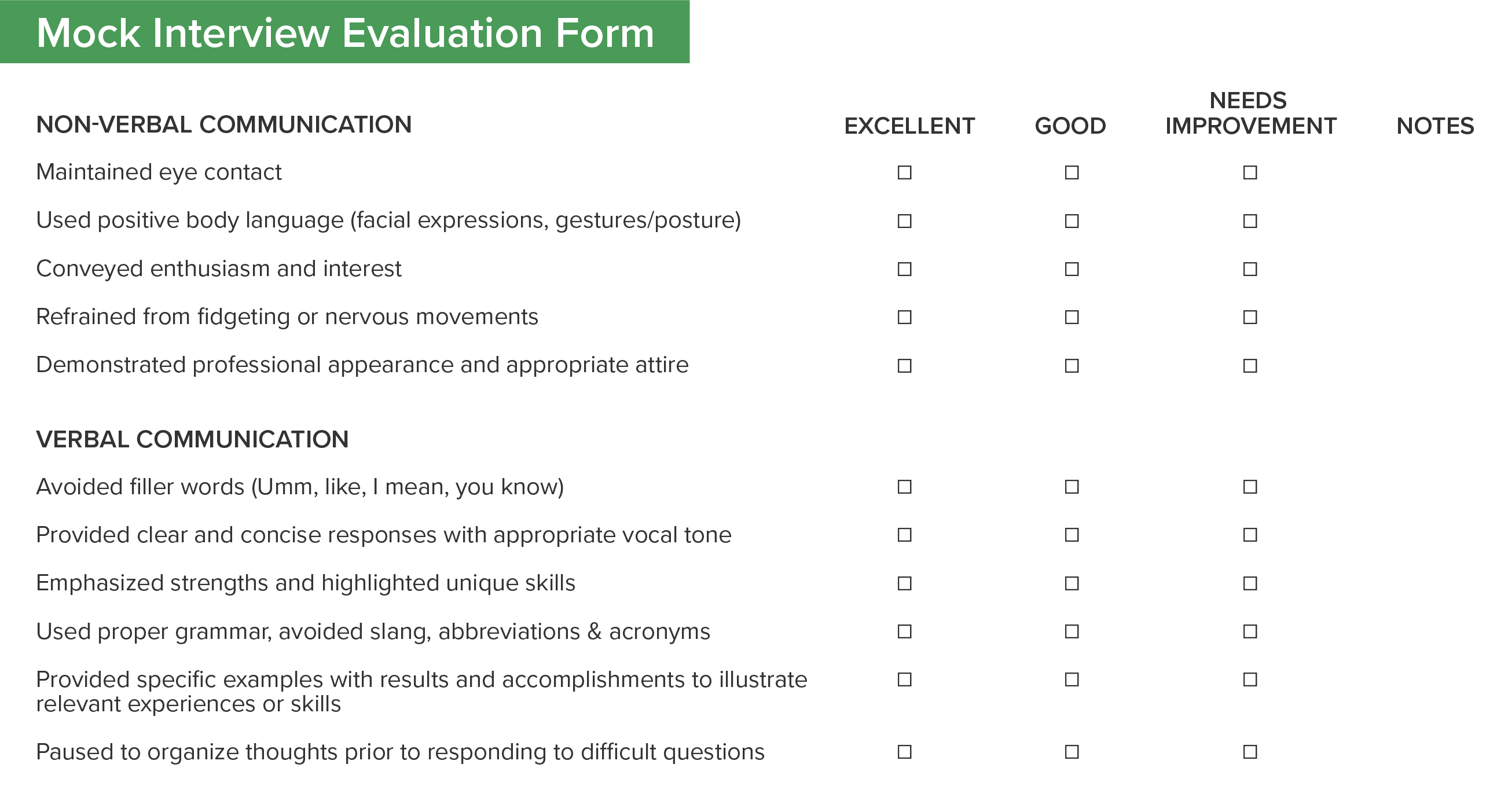
Throughout this challenge we have discussed the importance of preparation, and how insights and details can enhance your interview performance. We can now take what we have learned and put it into practice. Mock interviews can be extremely helpful when preparing for an interview. A mock interview is when you simulate the interview process, by having someone ask you interview questions. You then receive feedback on your responses, and how well you presented. When set up correctly, a mock interview can offer you important takeaways and feedback to improve.

Being focused and locked in is how to really benefit from your mock interviews. Take it seriously, and respond as though the employer of interest is asking intense questions.
Work with someone that can lead the interview conversation the same way an employer would. Choose from family members, professors, or career counselors. Perhaps you know someone that works in human resources, or an individual that has experience conducting interviews? The feedback and insights that you receive after a mock interview should come from someone that you trust.
Use this rubric as a way to gain feedback from your interviewer.
Person-to-person mock interviews are not the only resource. You can use technology to participate in mock interviews, and practice as much as you need. Platforms like Handshake, Interview Stream, and Big Interview offer mock interview services that allow you to select relevant questions and record your interview sessions. The platforms mentioned do come at a cost, but you can often find access through a school or public library. There are also free options on YouTube. By searching under the term “mock interview practice,” you can find videos that set up an interview scene and moderate questions for the mock interview.