Recall that bone (osseous) tissue is a rigid connective tissue that provides protection to internal organs and supports the body. Osseous tissue forms most of the adult skeleton, the support structure of the body. In the areas of the skeleton where bones move (i.e., the ribcage and joints), cartilage, a semi-rigid form of connective tissue, provides flexibility and smooth surfaces for movement. Recall that the skeletal system is the organ system composed of bones and cartilage that performs the following critical functions for the human body:
Supports the body.
Facilitates movement.
Protects internal organs.
Produces blood cells.
Stores and releases minerals and fat.
2. Support, Movement, and Protection
The most apparent functions of the skeletal system are the gross functions—those visible by observation. By simply looking at a person, you can see how the bones support, facilitate movement, and protect the human body.
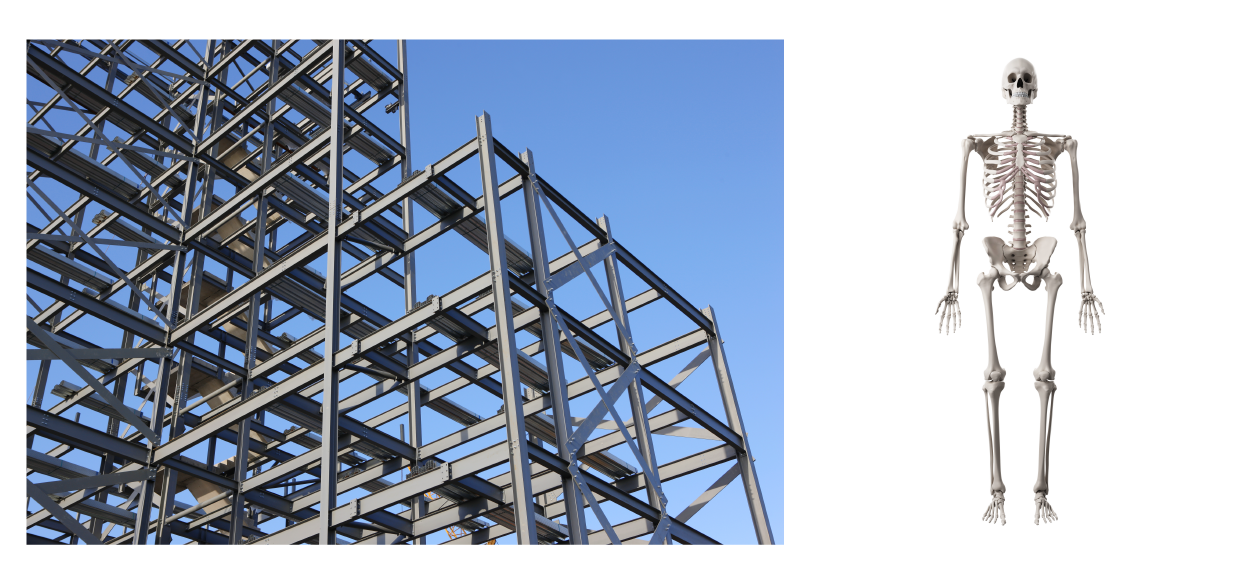
Just as the steel beams of a building provide a scaffold to support its weight, the bones and cartilage of your skeletal system compose the scaffold that supports the rest of your body. Without the skeletal system, you would be a shapeless mass of organs, muscles, and skin.
Bones Provide Support - The skeletal system, like each steel beam of a building, provides support upon which the structure and weight of its components (organs, tissues or walls, lights, and doors) can be held up and kept in place.
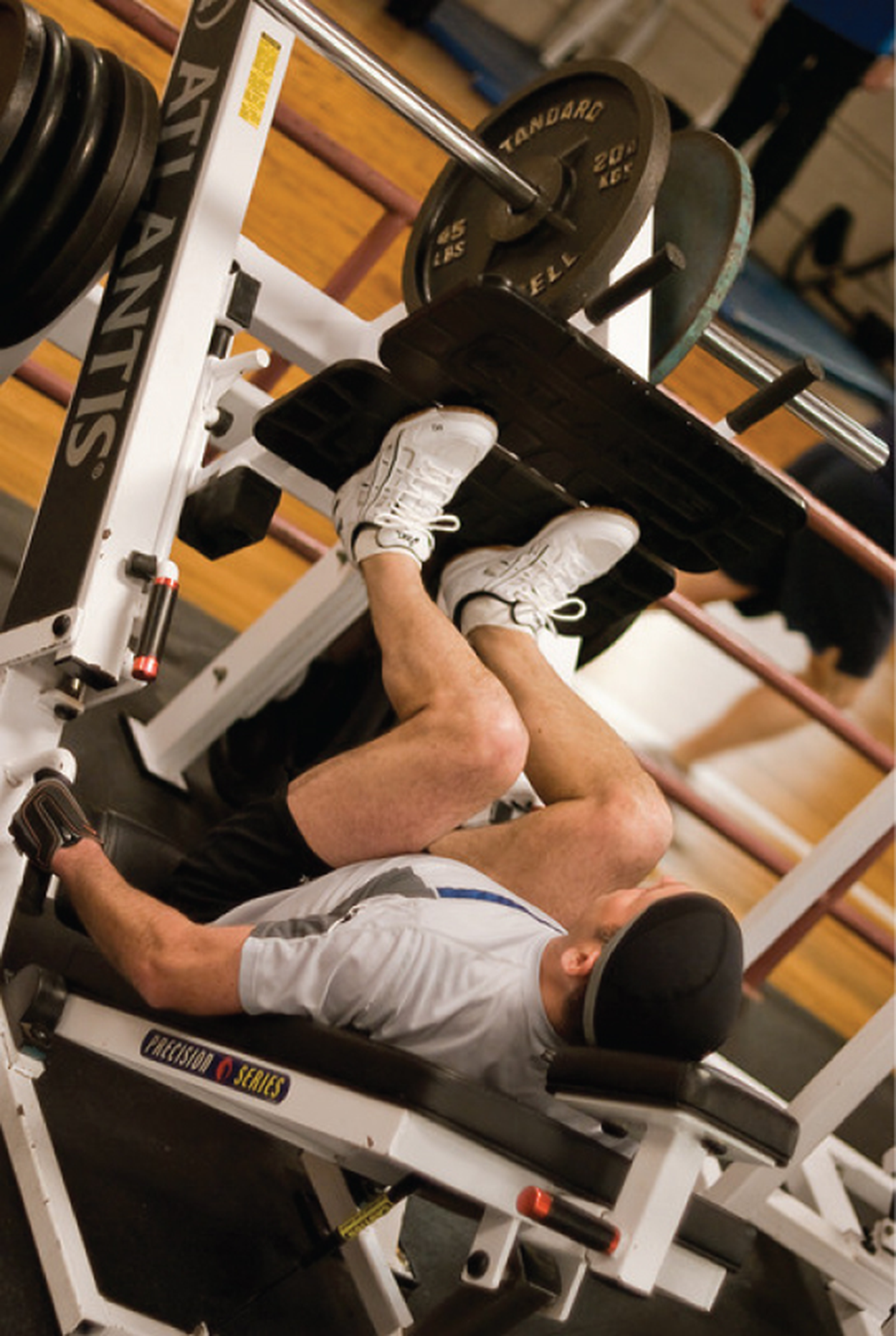
Bones also facilitate movement by serving as points of attachment for your muscles. While some bones only serve as a support for the muscles, others also transmit the forces produced when your muscles contract. From a mechanical point of view, bones act as levers and joints serve as fulcrums. Unless a muscle spans a joint and contracts, a bone is not going to move. More information about this interaction of the muscular and skeletal systems will be provided in future lessons.
Bones Support Movement - Bones act as levers when muscles span a joint and contract.
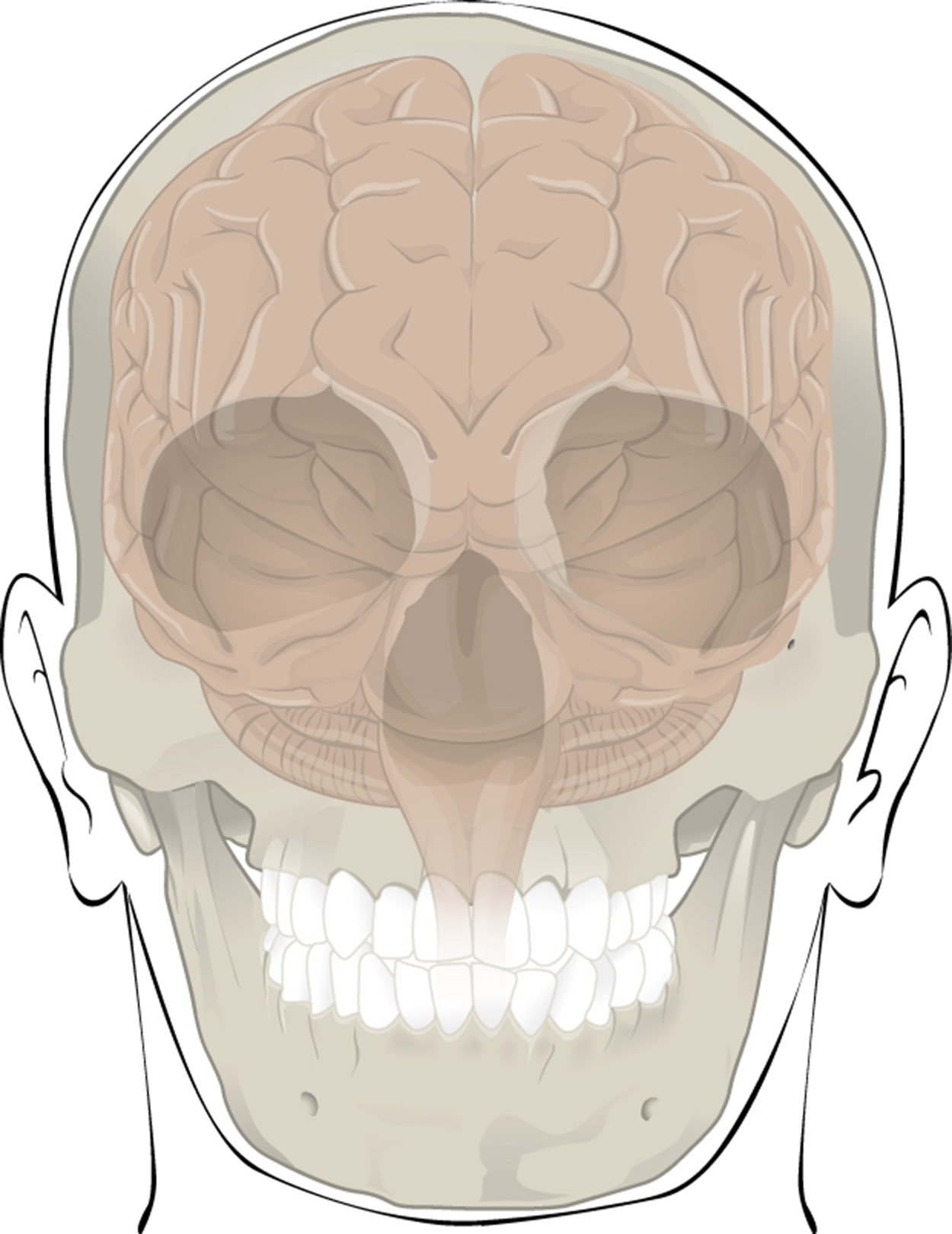
Bones also protect internal organs from injury by covering or surrounding them. For example, your ribs protect your lungs and heart, the bones of your vertebral column (spine) protect your spinal cord, and the bones of your cranium (skull) protect your brain.
Bones Provide Protection - The cranium completely surrounds and protects the brain from non-traumatic injury.
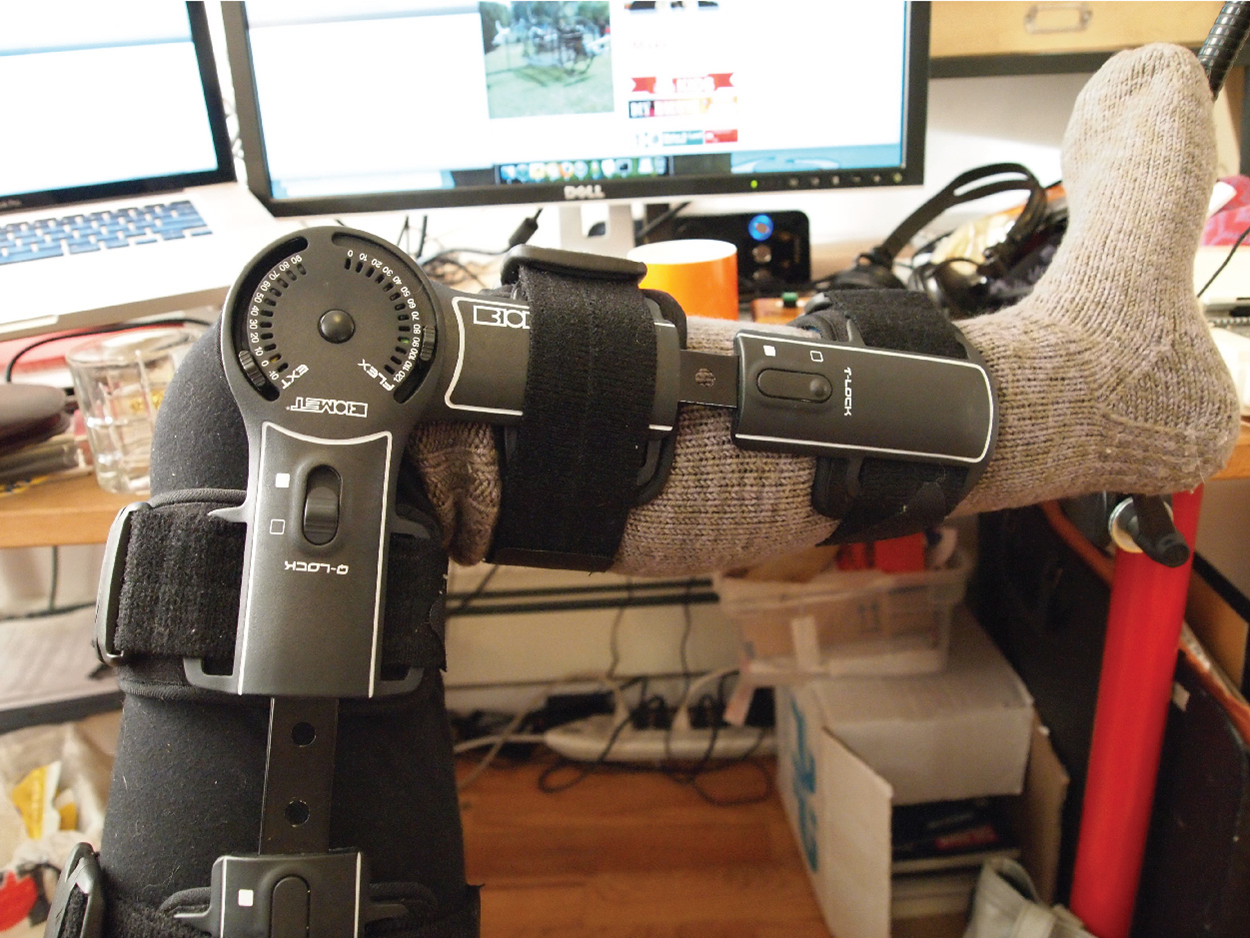
IN CONTEXT Career Connection-Orthopedist Complex Brace - An orthopedist will sometimes prescribe the use of a brace that reinforces the underlying bone structure it is being used to support.
An orthopedist is a doctor who specializes in diagnosing and treating disorders and injuries related to the musculoskeletal system. Some orthopedic problems can be treated with medications, exercises, braces, and other devices but others may be best treated with surgery.
While the origin of the word “orthopedics” (ortho-, straight; paed-, child), literally means “straightening of the child,” orthopedists can have patients who range from pediatric to geriatric. In recent years, orthopedists have even performed prenatal surgery to correct spina bifida, a congenital defect in which the neural canal in the spine of the fetus fails to close completely during embryologic development.
Orthopedists commonly treat bone and joint injuries, but they also treat other bone conditions including curvature of the spine. Lateral curvatures (scoliosis) can be severe enough to slip under the shoulder blade (scapula) forcing it up as a hump. Spinal curvatures can also be excessive dorsoventrally (kyphosis) causing a hunch back and thoracic compression. These curvatures often appear in preteens as the result of poor posture, abnormal growth, or indeterminate causes. Mostly, they are readily treated by orthopedists. As people age, accumulated spinal column injuries and diseases like osteoporosis can also lead to curvatures of the spine, hence the stooping you sometimes see in the elderly.
Some orthopedists sub-specialize in sports medicine, which addresses both simple injuries, such as a sprained ankle, and complex injuries, such as a torn rotator cuff in the shoulder. Treatment can range from exercise to surgery.
3. Mineral Storage, Energy Storage, and Blood Cell Production
On a metabolic level, bone tissue performs several critical functions. The bone matrix acts as a reservoir for a number of minerals important to the functioning of the body—especially calcium and phosphorus. This works much like a bank account. The body can deposit and store calcium in bones for short or long periods of time. It can also withdraw calcium when it is needed by other parts of the body. The body stores 98% of its calcium in bone tissue (Calcium, n.d.). When the level of these minerals in the blood decreases, the bone can release them into the blood to maintain homeostasis. Calcium ions, for example, are essential for muscle contractions and controlling the flow of other ions involved in the transmission of nerve impulses.
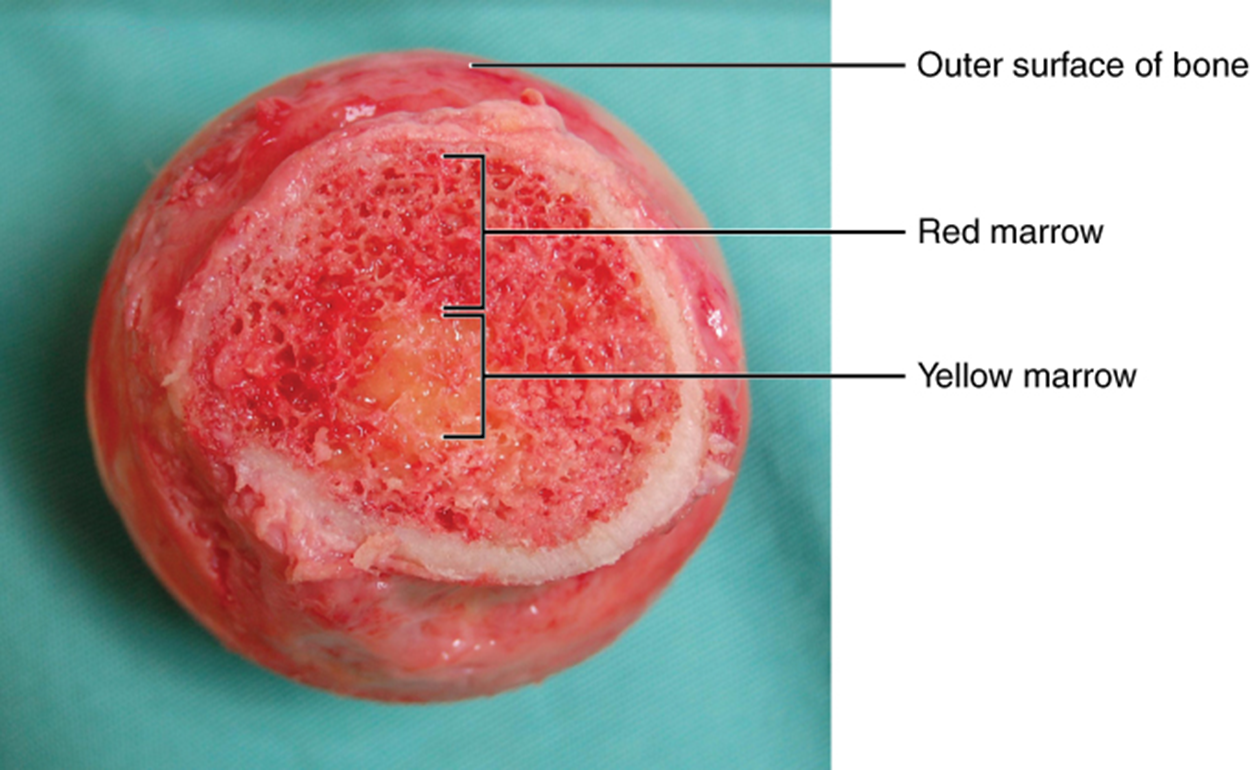
Bones also serve as a site for the storage of lipid (fat) storage and blood cell production. The softer connective tissue that fills the interior of most bones is referred to as bone marrow. There are two types of bone marrow: yellow marrow and red marrow. Yellow bone marrow contains adipose tissue and the triglycerides stored in the adipocytes of this tissue can serve as a source of energy. Red bone marrow is where blood cells (red blood cells, white blood cells, and platelets) are all produced.
Head of Femur Showing Red and Yellow Marrow - The head of the femur contains both yellow and red marrow. Yellow marrow stores fat. Red marrow is responsible for hematopoiesis.
terms to know
Yellow Bone Marrow
A soft connective tissue found inside of bones that contains adipose tissue.
Red Bone Marrow
A soft connective tissue found inside of bones that produces blood cells.
summary
In this lesson, you learned about the general physiological function of the skeletal system. You learned about how the bones of the skeleton provide support, facilitate movement, and provide protection of vital organs. You also learned about how bones provide a site for mineral storage such as calcium, energy storage in the form of adipose tissue, and the production of blood cells.