Table of Contents |
In conflict resolution, diversity refers to the inclusion of a wide range of perspectives, backgrounds, and experiences. When addressing conflicts, having diverse viewpoints is essential because it brings a broader understanding of the issue at hand. Each person involved in a conflict comes with unique insights shaped by their cultural background, personal experiences, and individual values. This variety in perspectives can uncover aspects of the conflict that might otherwise be overlooked, leading to a more comprehensive analysis.
When diverse perspectives are embraced, they often result in more creative and effective solutions. Different viewpoints encourage out-of-the-box thinking and challenge assumptions, opening the door to innovative approaches that a more homogeneous group might not consider. For instance, a team comprising members from various disciplines or cultural backgrounds is likely to generate a wider range of ideas, increasing the chances of finding a solution that is both novel and practical. Additionally, including varied perspectives in the resolution process helps ensure that the solutions developed are more inclusive and consider the needs of all the parties involved, making them more sustainable and acceptable in the long term.

Diverse perspectives are shaped by factors such as culture, personal experience, professional expertise, gender, and age, all of which influence how individuals perceive and respond to conflict. For instance, cultural background impacts communication styles; someone from a collectivist culture may prioritize group harmony, while an individualist might focus on personal goals. Personal experience also plays a role, as someone with experience managing workplace stress may offer valuable insights. Professional expertise adds further diversity, with input from different fields, such as human resources, enhancing team dynamics.
Cultural differences bring varied values to conflict resolution. Some cultures view conflict as negative, while others see it as an opportunity for growth. Communication styles vary too, with direct communicators openly expressing concerns, while indirect communicators expect others to infer meaning. Recognizing these differences is key to resolving conflicts effectively.
Incorporating diverse perspectives provides a fuller understanding of conflict, uncovering underlying issues. For instance, in a workplace dispute over deadlines, considering both technical and sales viewpoints reveals different pressures. Diverse perspectives also foster creativity and prevent groupthink by encouraging new ideas and challenging assumptions, resulting in well-rounded solutions.
Incorporating diverse perspectives in conflict resolution leads to a more comprehensive understanding of the issues at hand. When multiple viewpoints are considered, it becomes easier to identify the underlying causes and contributing factors of a conflict that might otherwise go unnoticed.
EXAMPLE
In a disagreement between roommates about household chores, each person’s background can lead to a more balanced solution. One might prefer a strict schedule, having grown up in a household where chores were done routinely, while another might favor a flexible, as-needed approach. A third might have experience in a co-op, where chores are divided based on preference and strengths. By considering these perspectives, the group could create a system that combines structure with flexibility, accommodating everyone’s preferences and creating a more harmonious living environment.Considering diverse perspectives not only fosters creativity but also enhances empathy and understanding. For instance, in a workplace conflict about work hours, management might learn that employees’ concerns are about work-life balance rather than the hours themselves. Recognizing this can lead to empathetic solutions, like flexible scheduling and addressing core issues.
Solutions that include diverse perspectives are often more sustainable. Involving various stakeholders ensures solutions are more likely to be accepted and meet different needs. For instance, a community planning project that includes input from residents, businesses, and environmental experts can lead to a plan balancing economic development with sustainability, fostering long-term success and commitment.
Embracing diversity in conflict resolution comes with its own set of challenges, such as miscommunication, biases, and resistance to differing viewpoints. However, these obstacles can be navigated with effective strategies that actively include and value diverse perspectives. By applying a structured framework, it’s possible to create an environment where different voices are heard and integrated into the resolution process, leading to more inclusive and innovative outcomes.

When integrating diverse perspectives into conflict resolution, several challenges can arise. The list below outlines common obstacles such as miscommunication, biases, and resistance to new viewpoints, along with their potential impact on the resolution process.
EXAMPLE
Consider a situation where two friends are planning a trip. One friend, accustomed to planning everything in detail, directly communicates the need for a strict itinerary. The other friend, who values spontaneity, feels pressured and interprets this directness as controlling behavior. The first friend becomes frustrated when the second friend does not respond as expected. Here, cultural or personality-based communication differences lead to the misinterpretation of intentions, complicating their ability to plan together.Incorporating diverse perspectives into conflict resolution not only enriches the process but also has significant benefits for group dynamics. Valuing different viewpoints can enhance group cohesion by fostering an environment of inclusivity and shared purpose. When group members feel that their unique perspectives are heard and respected, they are more likely to engage collaboratively and support one another. This inclusive atmosphere not only strengthens the group’s unity but also helps prevent groupthink. By actively encouraging a variety of opinions, groups can avoid the trap of conforming to a single viewpoint, instead promoting critical thinking and the exploration of multiple angles. This diversity of thought leads to more robust discussions and well-rounded solutions. Additionally, recognizing and valuing diverse perspectives plays a key role in building trust among group members. When individuals see that their input is genuinely considered, it builds a foundation of mutual respect, making it easier to work through conflicts together in a constructive manner. In the following section, we’ll explore strategies for effectively incorporating diverse perspectives to achieve these outcomes.
EXAMPLE
While the benefits of including diverse perspectives are clear, it’s equally important to examine cases where a lack of diversity led to suboptimal outcomes. For instance, consider a corporate board composed of members with similar backgrounds and experiences. When faced with declining product sales, they decided to cut costs by reducing staff and simplifying product features without seeking input from lower-level employees or customers. This decision, made without considering diverse perspectives, resulted in a drop in employee morale and customer dissatisfaction due to the lack of innovative product improvements. The board’s homogeneous viewpoint missed the opportunity to explore alternative solutions, such as investing in product innovation or improving customer engagement, which might have been more effective in addressing the root causes of declining sales.Contrast this with a similar scenario in another company where a diverse board, including members with varied industry backgrounds, customer insights, and technical expertise, approached a similar problem. They conducted a series of focus groups with employees across departments and customers from different demographics. This process revealed that the issue was not cost but rather a disconnect between product features and customer needs. By gathering and valuing these diverse perspectives, the board chose to invest in product development and employee training instead of cost cutting. As a result, they not only improved the product but also boosted employee engagement and customer satisfaction, leading to a significant recovery in sales.
These comparative examples highlight how the inclusion or exclusion of diverse perspectives can profoundly impact conflict resolution outcomes. In the first case, a lack of diversity resulted in a narrow approach that ultimately exacerbated the problem. In contrast, when diverse input was actively sought and incorporated, it led to innovative solutions that addressed the core issues more effectively.
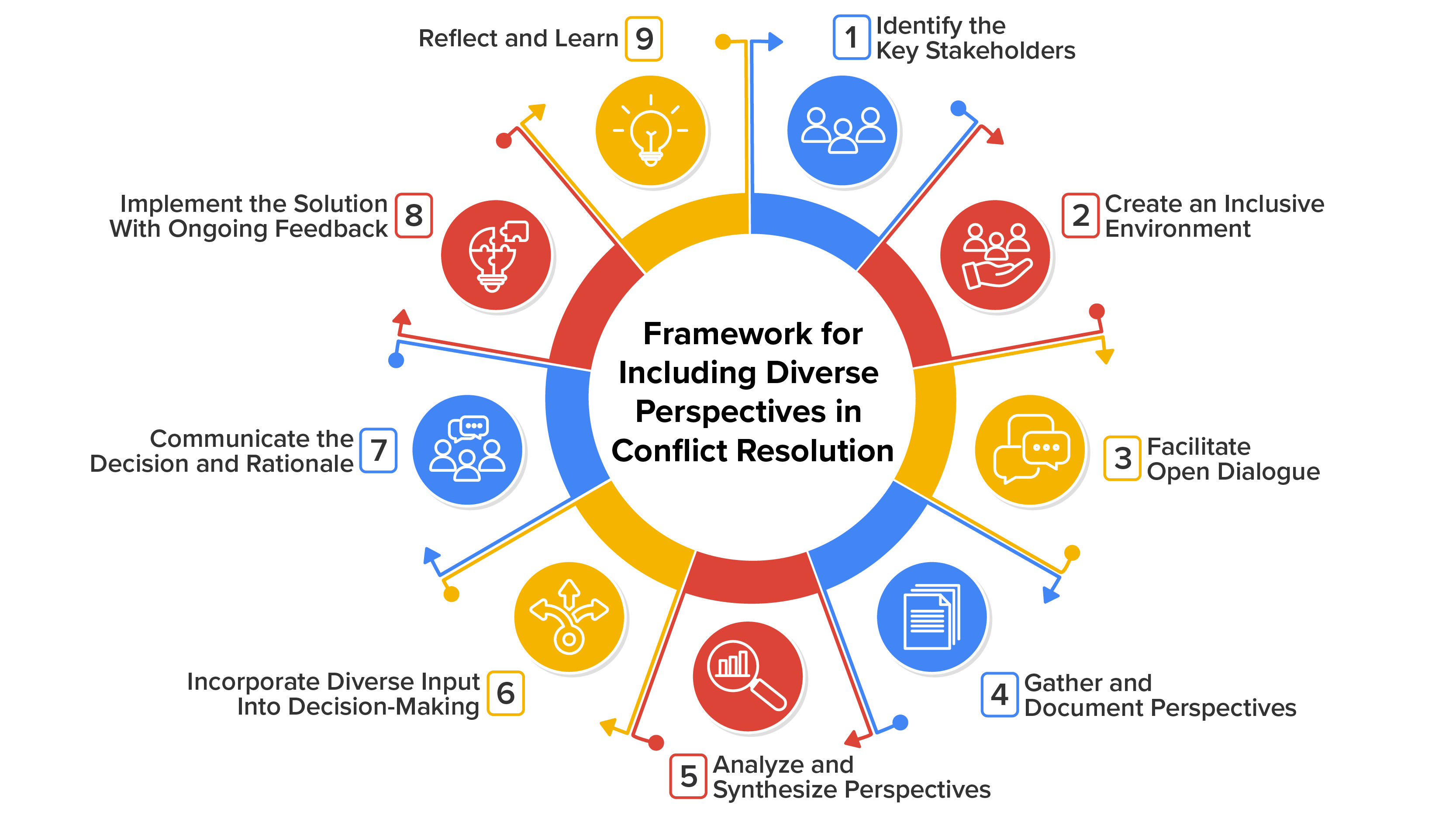
Incorporating diverse perspectives into conflict resolution is an ongoing practice requiring careful attention and commitment to ensure all voices are integrated throughout the process. This framework provides a structured approach to include diverse viewpoints from initial discussions to final decisions, creating a more inclusive and effective resolution process. Reflection and continuous improvement are essential to genuinely consider and integrate these perspectives, making each conflict resolution effort an opportunity to learn and refine your approach for greater inclusivity and effectiveness over time.
Source: THIS TUTORIAL WAS AUTHORED BY MARLENE JOHNSON (2019) and STEPHANIE MENEFEE and TRACI CULL (2024). PLEASE SEE OUR TERMS OF USE.



