What are the different ways employees are compensated? When you hear the word “compensation,” do you think of money or something else? In this lesson, you will get an overview of compensation and benefits in the workplace. Specifically, this lesson will cover:
1. Types of Compensation
Compensation is important in business because it attracts, motivates, and retains talent while aligning employee performance with organizational goals. Compensation takes on a variety of different forms. It can take the form of direct compensation, which is money an employee receives directly, or indirect compensation, which is non-monetary.
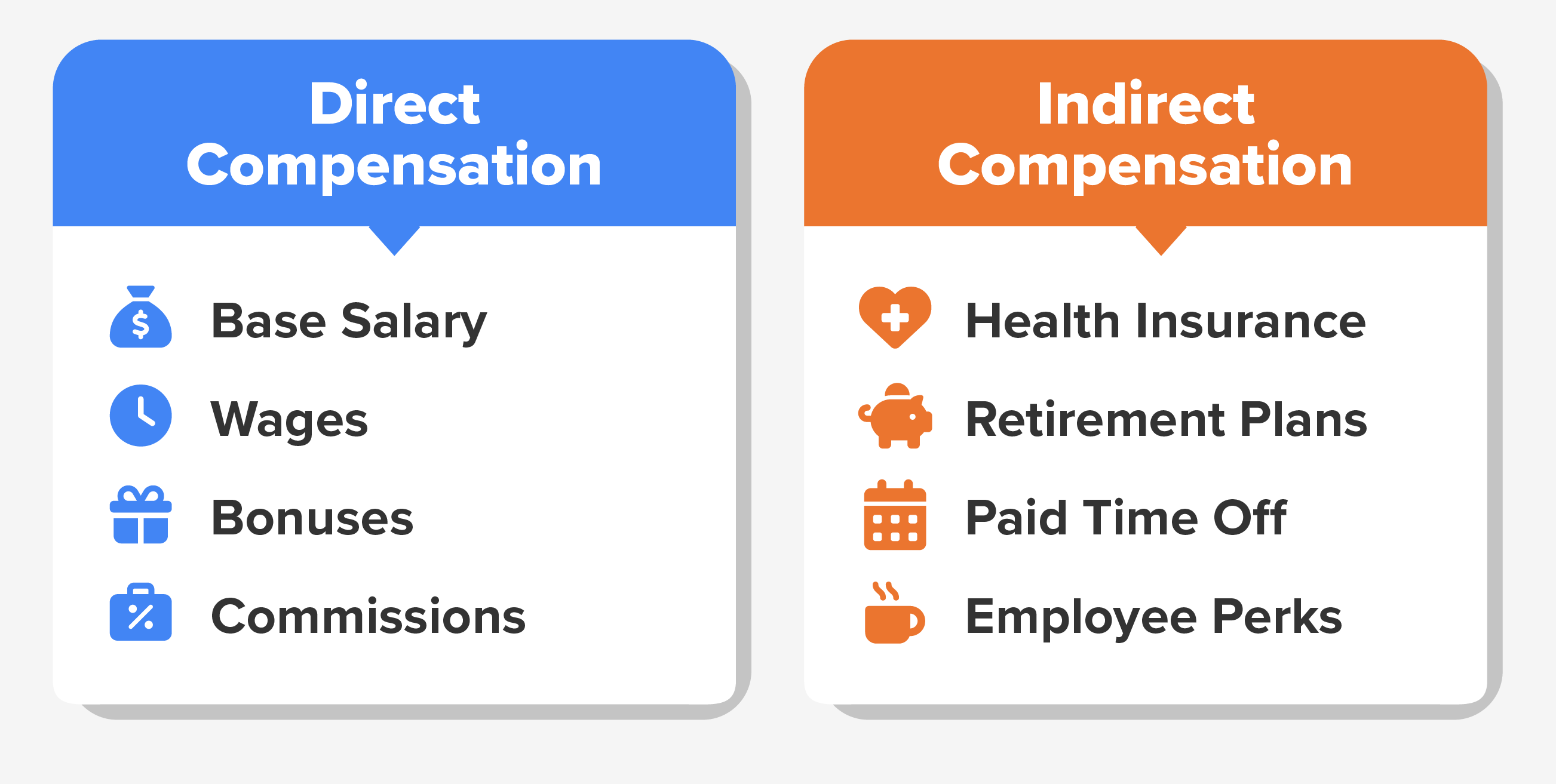
Let’s look at some of the forms of direct compensation. First, there is base pay. Base pay is a type of compensation that includes:
- A fixed salary per month or year
- An hourly wage, which is a set amount paid based on the number of hours worked
Some organizations offer
differential pay, which refers to extra compensation for less desirable work conditions.
-
EXAMPLE
People who work the night shift, since it is less desirable, may receive additional pay.
In the next sections, we’ll compare the different types of direct and indirect compensation.
-
- Direct Compensation
- The money an employee receives directly from an employer.
- Indirect Compensation
- The nonmonetary compensation to an employee.
- Base Pay
- A type of compensation that can include a fixed salary per month or year and an hourly wage, which is a set amount paid based on the number of hours worked.
- Differential Pay
- The extra compensation for less desirable work conditions.
2. Direct Compensation: Incentive Programs
Incentive programs consist of a series of measures designed and used by an organization to encourage specific employee behaviors and outcomes. An incentive program is a useful tool that employers have to motivate employees.
-
EXAMPLE
Suppose your employer offers you an incentive, or bonus, of $1,000 if you hit a specific target or sell a specific number of items over a pay period. You are more motivated at that point to sell those items or hit that target in order to qualify for the incentive that the employer is offering you.
There are several different types of incentive programs that can be used as compensation:
-
Bonuses: These can be given for a certain performance over a period, such as selling those thousand extra pieces of equipment to make a profit as a business.
-
Merit salary system: In this type of incentive program, an employee is paid more for particular achievements; it may not necessarily be a sales job. For instance, suppose you reduced the company’s costs by a certain amount over a pay period; this might earn you extra pay as part of a merit salary system.
-
Pay for performance: This refers to variable pay based on the performance on the job, which is usually tied to measurable criteria. Again, it’s an incentive, involving paying people to hit a certain target or goal. It’s a type of motivational incentive for an employee to meet that particular target.
-
Pay for knowledge: In this case, an employee is being paid for additional knowledge or skill sets that they bring to the job. Employers may pay an employee extra to have a bachelor’s or master’s degree, for example, or certification in a certain area.
-
Profit sharing: This is a different type of motivational tool where an employee gets a piece of the profits that the business makes. So, if the business does well, the share of that profit increases for each employee.
-
Stock options/equity compensation: This means giving part ownership in a company, in the form of stocks.
-
EXAMPLE
After an employee has worked for a company for a period of time with good performance, they may be given 50 shares per year of service, which means they own a small part of the company. Sometimes, organizations will offer this as a hiring incentive also.
-
- Incentive Programs
- A series of measures designed and used by an organization to encourage specific employee behaviors and outcomes.
3. Indirect Compensation: Benefits
Benefits refer to a different type of compensation that is not cash but is offered as a way to motivate employees or make the company more attractive for recruitment purposes. This is compensation other than money that is paid to an employee by an employer.
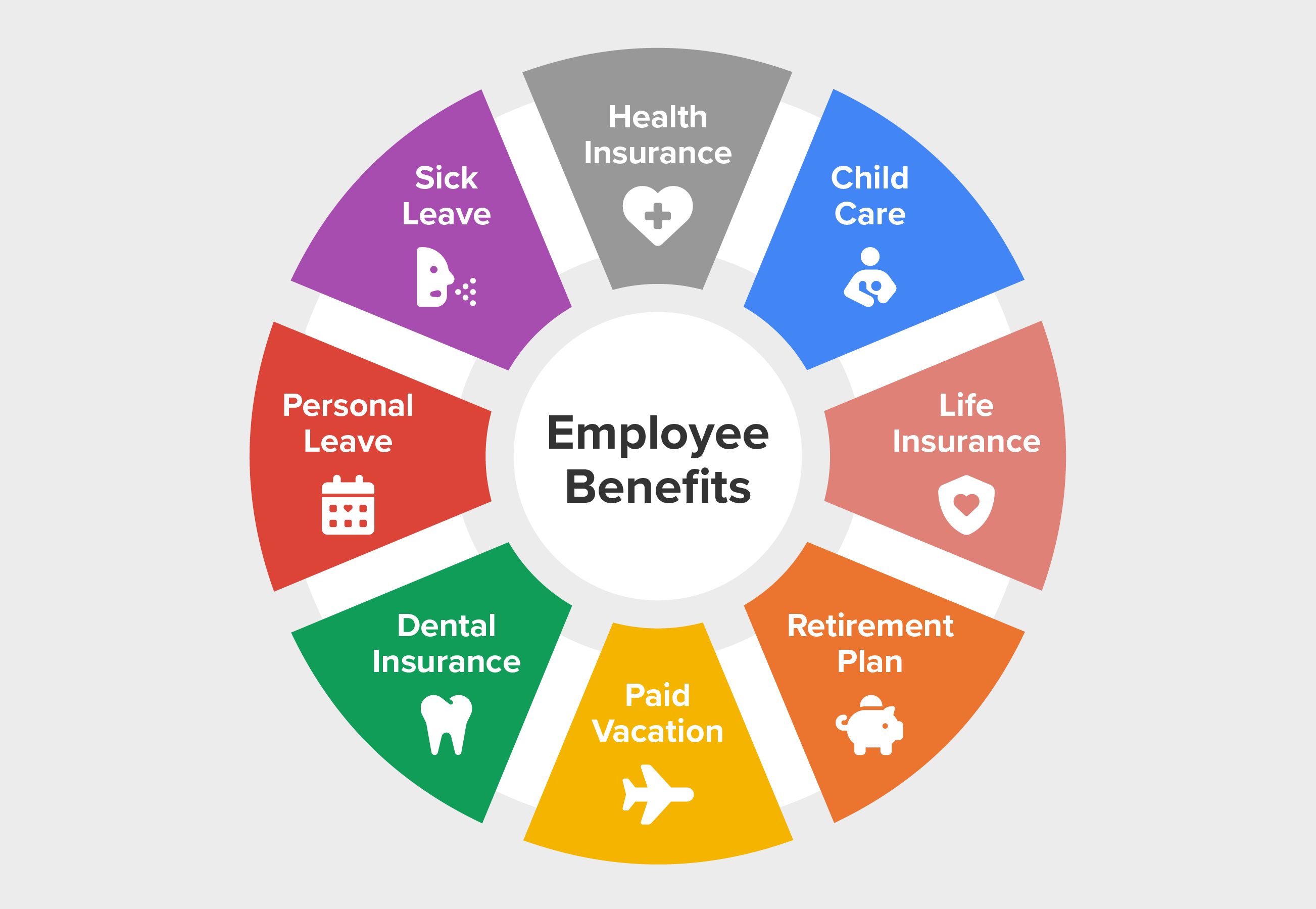
Human resources, or HR, is responsible for developing benefit plans, and they work with different departments throughout the organization to assess the needs of their employees as well as other considerations to put together the best benefits package for their employees.
Now, some benefits are required by law.
-
EXAMPLE
For full-time employees at larger companies, benefits like workers’ compensation insurance or medical insurance are required. Employers have to pay Social Security taxes and payroll taxes in order to secure their employees’ future.
Here are some of the benefits potentially offered by employers:
-
Benefits, such as health insurance and retirement plans
-
Paid time off, which can include paid vacation and paid holidays
-
Work-life balance perks, such as flexible schedules, remote work options, gym memberships, or other wellness programs
-
Development opportunities such as tuition reimbursement, training, and mentoring
-
Employee services, such as employee discounts
Let’s look at how Maya, the flower shop owner, compensates her employees using a mix of direct and indirect compensation:
IN CONTEXT: Blossom & Bloom Floral Boutique Employee Compensation
 For direct compensation, she provides a base hourly wage to her florists, delivery drivers, and shop assistants. During peak seasons like Valentine’s Day and Mother’s Day, Maya offers bonuses to reward employees for managing high order volumes and meeting sales goals. She may also implement a small commission system for staff who successfully upsell additional items such as chocolates or greeting cards, encouraging stronger sales performance.
In terms of indirect compensation, Maya supports her team with benefits that enhance their work experience. She offers flexible scheduling to accommodate personal responsibilities, such as childcare or school commitments. Employees also enjoy discounts on flowers and gift shop items, which serve as meaningful perks. After a certain period of employment, Maya provides paid time off to recognize commitment and prevent burnout. Additionally, she occasionally invests in her staff’s growth by covering the cost of floral design workshops or arranging in-house training sessions. These efforts help Maya create a supportive and motivating environment for her employees while operating within the financial capability of a small business.
-
- Benefits
- Any compensation other than money that is paid to an employee by an employer.
In this lesson, you learned about the types of compensation, including both direct and indirect forms. Direct compensation refers to the monetary pay employees receive, including base pay—either a fixed salary or hourly wage—and differential pay, which is additional pay for undesirable working conditions like night shifts. Another form of direct compensation is through incentive programs, which are designed to encourage certain behaviors or performance. These may include bonuses, merit-based pay, pay for performance, pay for knowledge, profit sharing, and stock options. Each of these offers employees extra motivation by linking compensation to performance, skills, or company success.
Conversely, you learned that indirect compensation includes noncash benefits provided by employers to improve job satisfaction and attract talent. These benefits are often managed by HR and may be legally required or offered voluntarily. Examples are health insurance, retirement plans, paid time off, and work-life balance perks such as flexible schedules or wellness programs. Employers may also offer development opportunities like tuition reimbursement or mentoring, along with employee services such as discounts. These benefits play a crucial role in employee retention and overall satisfaction.



