Table of Contents |
Up until the 18th and 19th centuries, much of public health theory and practice developed from emergent situations related to the control of epidemics and contagious diseases like the bubonic plague, smallpox, leprosy, and tuberculosis. Waste management developed around 3,000 B.C.E. in Greece as did advances in thinking about how to manage public health policy and law as living conditions became overcrowded. In the 18th and 19th centuries, public health built on these earlier practices as data were beginning to be collected and analyzed to promote healthier living conditions. In the 1700s and 1800s, there were significant advances in sanitation reform and the development of hospitals. As population growth continued in Europe, infant mortality and unsanitary conditions in prisons and mental institutions were at the forefront of these public health advances. Hospitals began to emerge through private citizens’ voluntary efforts and set the foundation for future services in public health.
The Industrial Revolution also impacted public health through deteriorating health conditions and safety for workers. A sanitary reform movement gained momentum in London as the population of that city doubled and rising death rates prompted some action to address widespread disease and poor health.
Here are some key public health figures and their contributions to the field worth noting during this time period:
During a cholera outbreak in London, where hundreds of people died within days, Dr. Snow suspected that the disease was related to a contagion and not miasma as was the popular belief at the time. Miasma refers to the theory that foul air was the cause of disease, not germs. Dr. Snow lived near the affected area where the cholera outbreak originated. Dr. Snow meticulously collected data and mapped the cholera cases. He suspected and was correct that the water pump located on Broad Street was the source of the outbreak. He confirmed that the water supply through that pump was contaminated with human feces. This was groundbreaking work and led to the modern field of epidemiology. His work emphasized evidence-based investigations, data analysis, and the importance of clean water to prevent disease. His work led to advocacy for sanitation, clean water, and hygiene, and this transformed public health practices that continue today (University of California, 2005).
The history and field of Public Health have been shaped by many remarkable women whose contributions saved countless lives and continue to improve many of our lives to this day. This video highlights just a few of those public health pioneers and their achievements: Lady Montague’s early advocacy for smallpox inoculation, Octavia Hill’s work on the health benefits of improved social housing, Dr. Alice Hamilton’s focus on occupational health, and Dr. Virginia Alexander’s research on health disparities. Each of these women helped forge our approaches to and understanding of Public Health.
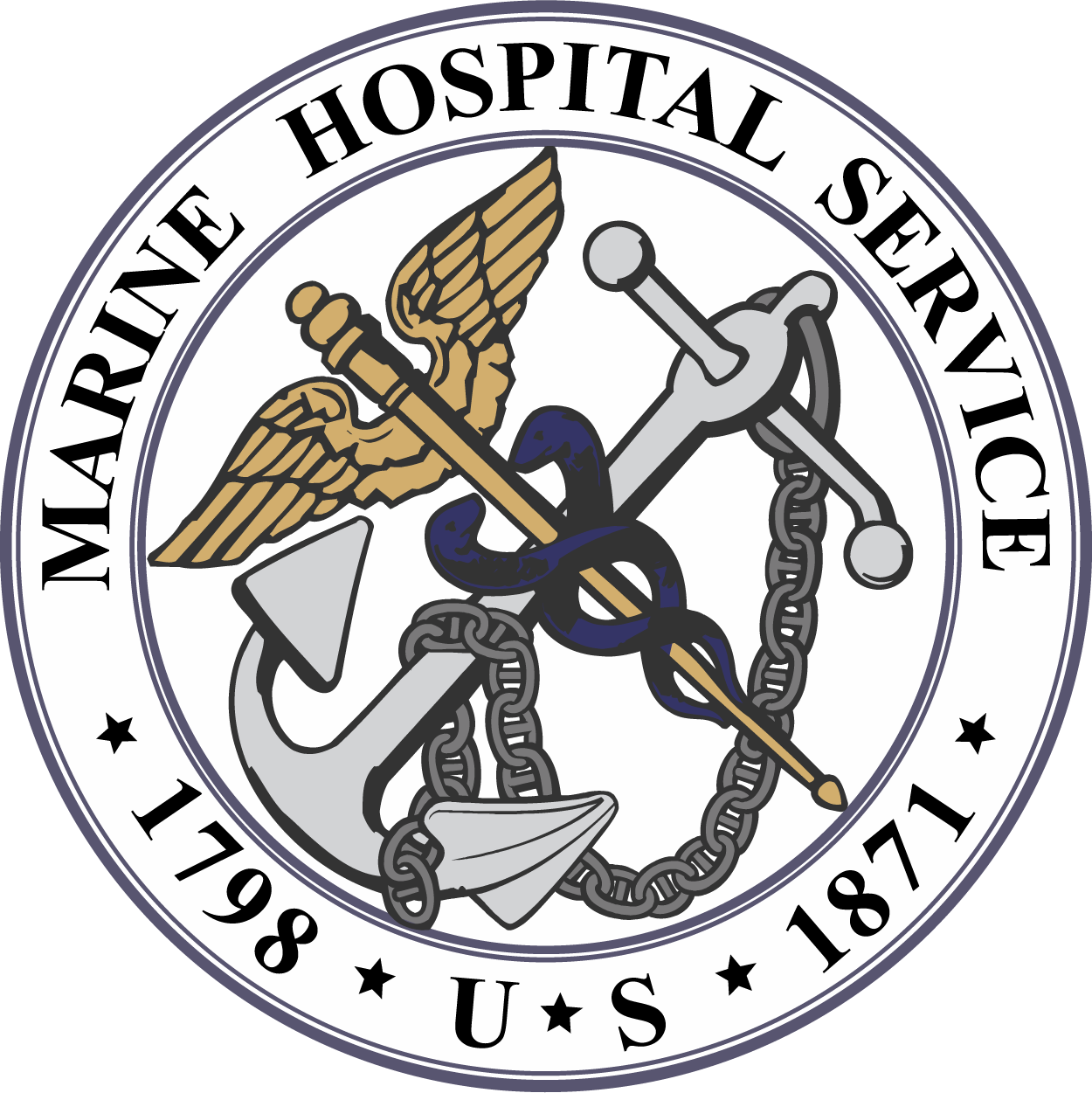
A key public health agency worth noting during this time was the Marine Hospital Service (MHS), the first U.S. public health agency. The image on right shows the official flag of the United States Marine Hospital Service. Its mission in 1798 was to care for sick and injured seamen. When seamen fell ill while at sea, it was difficult to find health care in the port cities. Seafarers received care from the network of hospitals operated by the MHS. To support this network of hospitals, seamen were taxed 20 cents per month. The tax was abolished in 1884.
Among some of the public health rules of the network of hospitals was the directive that “every patient is to be shaved Sunday and Wednesday” and “every patient is forbidden to spit on the floor” (Centers for Disease Control and Prevention, n.d.). Over time, the MHS expanded its role to prevent the spread of infectious diseases throughout the United States. Eventually, the MHS evolved to become the United States Public Health Service (USPHS).
The USPHS also played a pivotal role in monitoring and managing disease outbreaks, particularly during epidemics. It is worth noting that the quarantine stations at border crossings, entry ports to the United States, and airports all safeguard public health.
As discussed, the 18th and 19th centuries experienced many challenges and achievements in public health practice. Advances in addressing child deaths (infant mortality) occurred during this time period. On average, about half of newborns did not survive their early years. Families often had multiple children, and parents frequently experienced the loss of several children. Factors that contributed to reducing infant mortality included efforts to improve public health around sanitation and access to healthcare, which gradually began to reduce child mortality rates in the late 19th century.
Medical advances also played a crucial role in improving the rates of child deaths. Improved understanding of hygiene, nutrition, and control of diseases contributed to better outcomes. Living conditions also improved as there was generally access to clean water, better housing, and nutrition. Food security improved, and quarantines continued to abate the spread of contagious diseases. These efforts aimed to protect the most vulnerable members of society.
During the 18th and 19th centuries, several public health agencies were established to address growing challenges and promote well-being:
Source: THIS TUTORIAL WAS AUTHORED BY SOPHIA LEARNING. PLEASE SEE OUR TERMS OF USE.
Disclaimer: The use of any CDC and United States government materials, including any links to the materials on the CDC or government websites, does not imply endorsement by the CDC or the United States government of us, our company, product, facility, service, or enterprise.
REFERENCES
Centers for Disease Control and Prevention. (n.d.). The roots of public health and CDC. www.cdc.gov/museum/online/story-of-cdc/roots/index.html
University of California. (2005). Father of modern epidemiology. www.ph.ucla.edu/epi/snow/fatherofepidemiology.html



