Table of Contents |
This lesson covers architecture from the years 1420 to 1487 in Florence, Italy.
The architect and artist Brunelleschi was the runner-up in the panel competition for the Florence baptistery doors. Later this accomplished artist was hired to solve a major problem with the final construction phase of the Florence Cathedral, shown below. There was a huge open span, some 140 feet in length, that needed to be covered. It was an engineering nightmare, and it was up to Brunelleschi to create a solution by devising new building methods.
Take a look at the Florence Cathedral below.
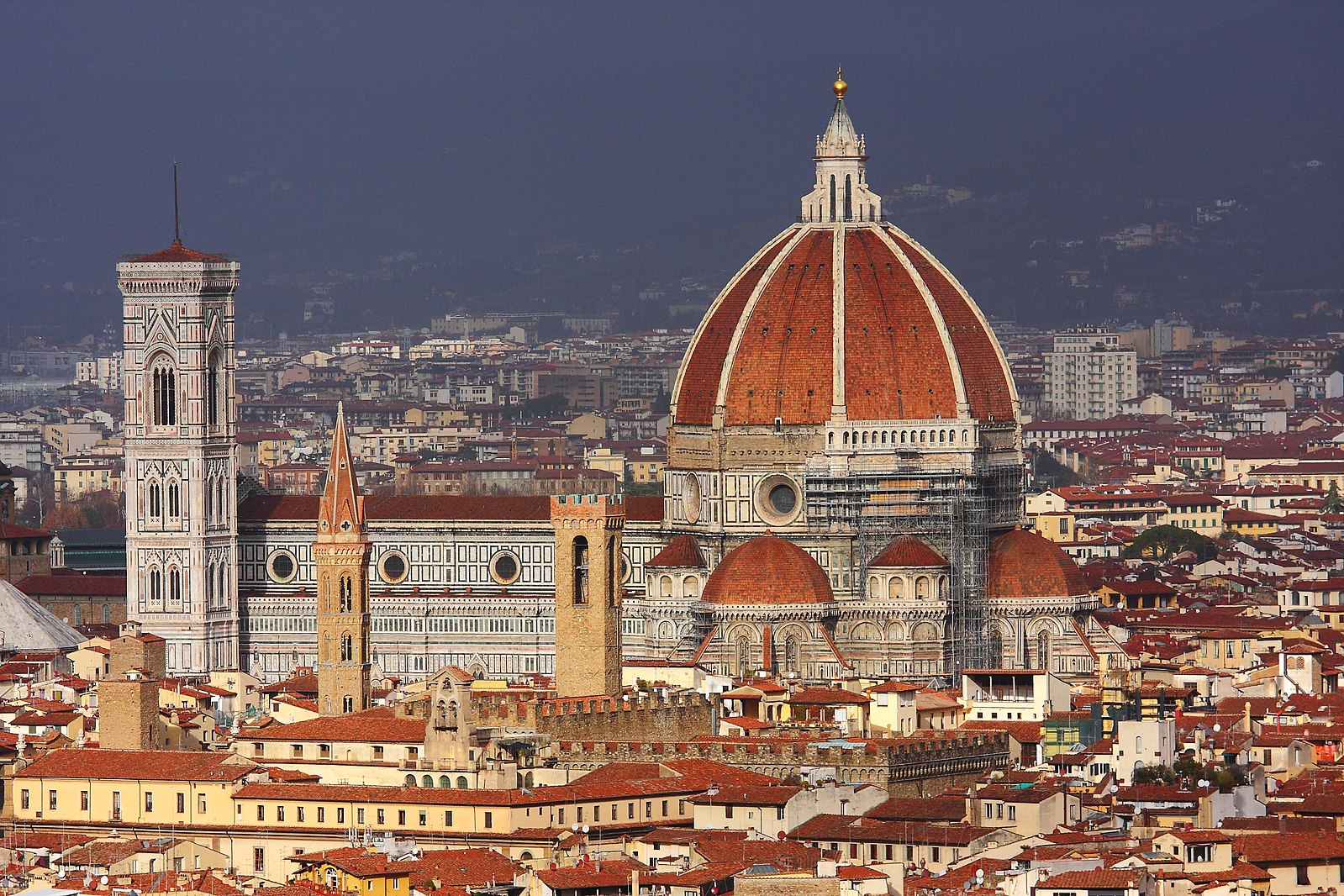
Cathedral of Santa Maria del Fiore (Florence Cathedral)
Florence, Italy
1296 - 1436 CE
Marble and brick
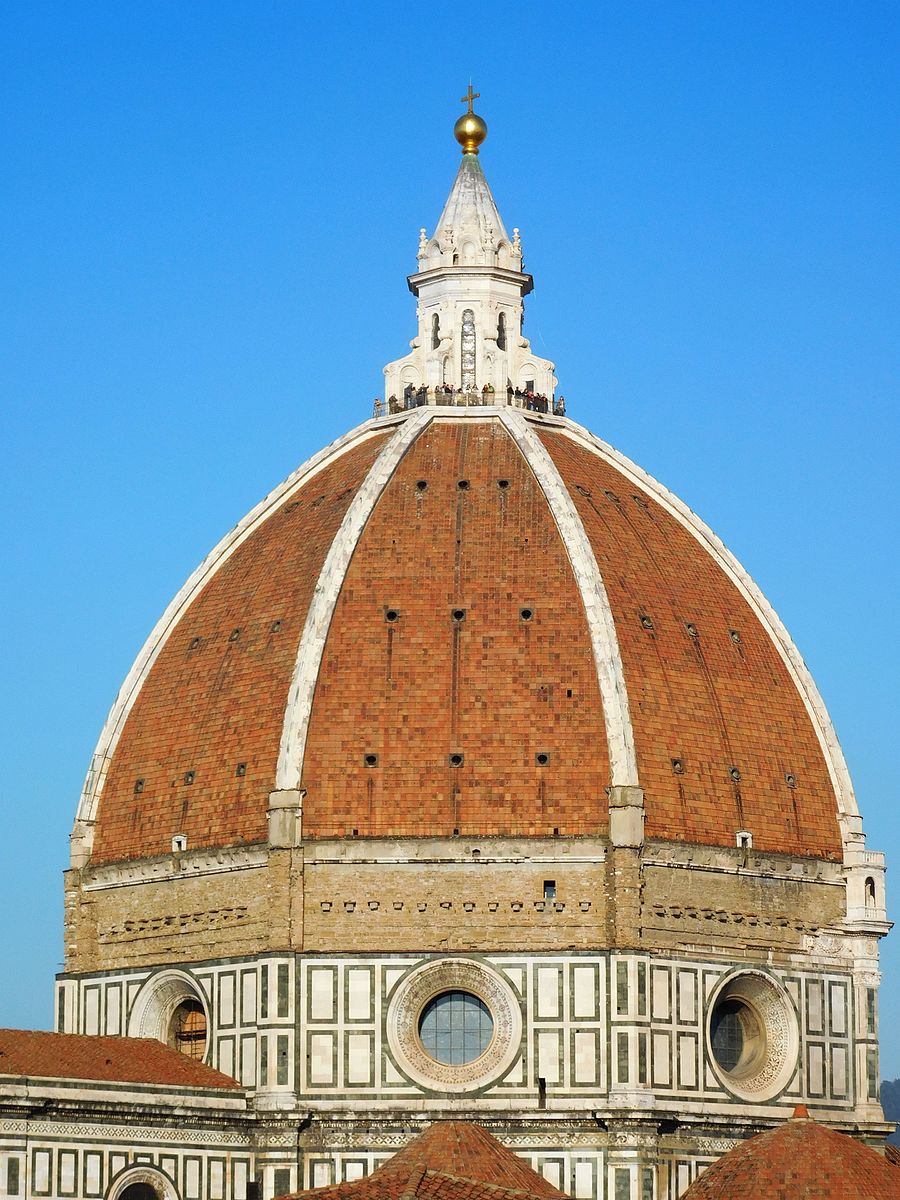
The design by Brunelleschi was inherently stronger because the outward thrust was limited. To conserve weight, he designed the dome as a double-walled shell with a ribbed, semi-hollow interior. The eight primary supports can be seen on the outside, but there are 24 ribs altogether. There is also a heavy lantern on top that anchors the entire structure. The dome clearly dominates the church, as it is tremendous in size.
Here is the dome of the Florence Cathedral.
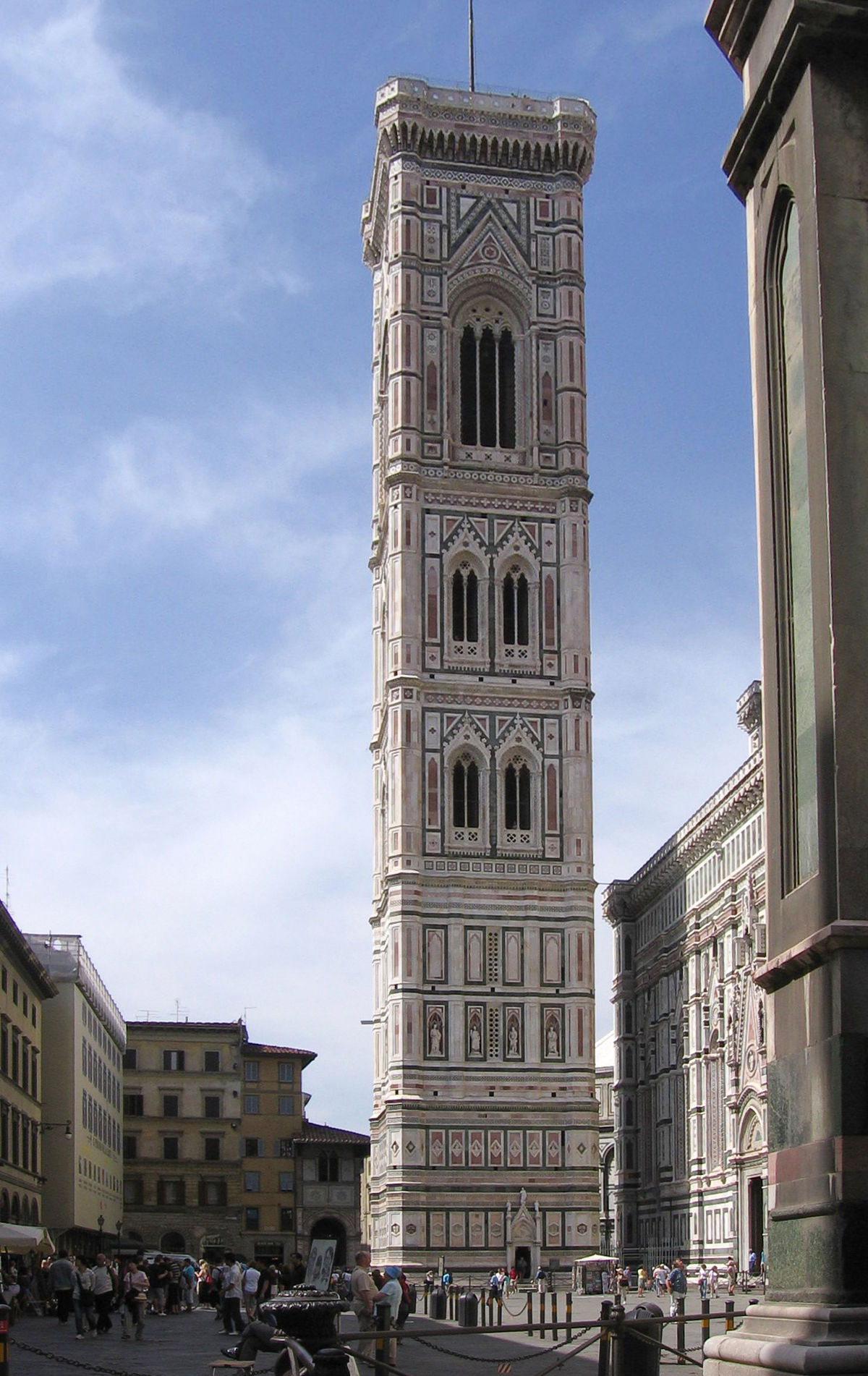
The artist Giotto was responsible for the design of the campanile. It has geometric patterns that reflect the exterior decoration of the church, but it is itself unattached to the church, and functions very much as its own structure.
Here is the campanile of the Florence Cathedral.
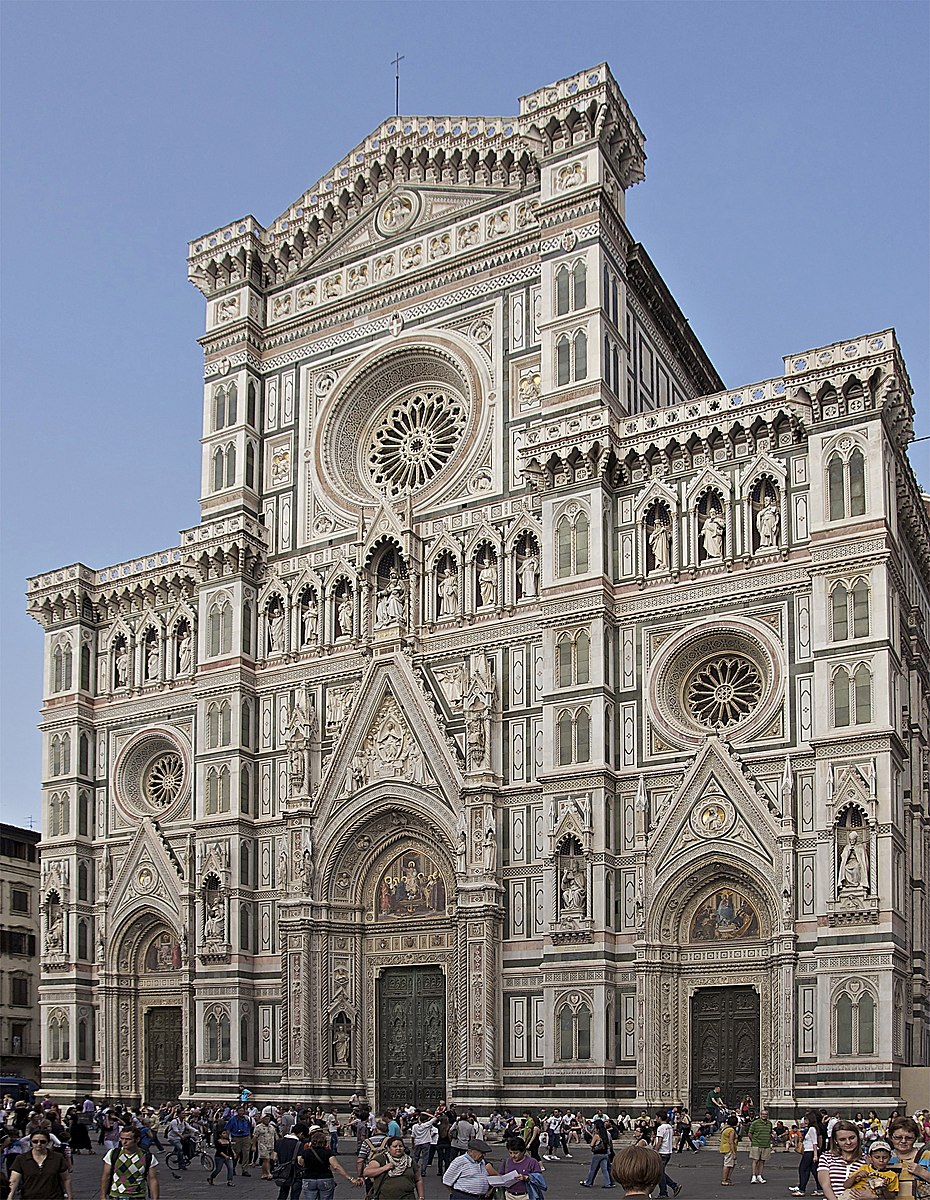
Something interesting to consider is how the Florence Cathedral, which came to be so closely associated with the Renaissance in Florence, had its most notable feature designed using Gothic techniques. For instance, the use of the pointed arch and ribbed vaulting are Gothic, but the overall design is more earthbound than vertical—actually, more horizontal than vertical.
The exterior is decorated in white, green, and pink marble in geometric designs rather than the elaborate sculptural programs of French Gothic cathedrals.
The interior is also much more reserved and efficient in terms of its design. Again, notice the use of the ribbed vaulting and pointed arches.
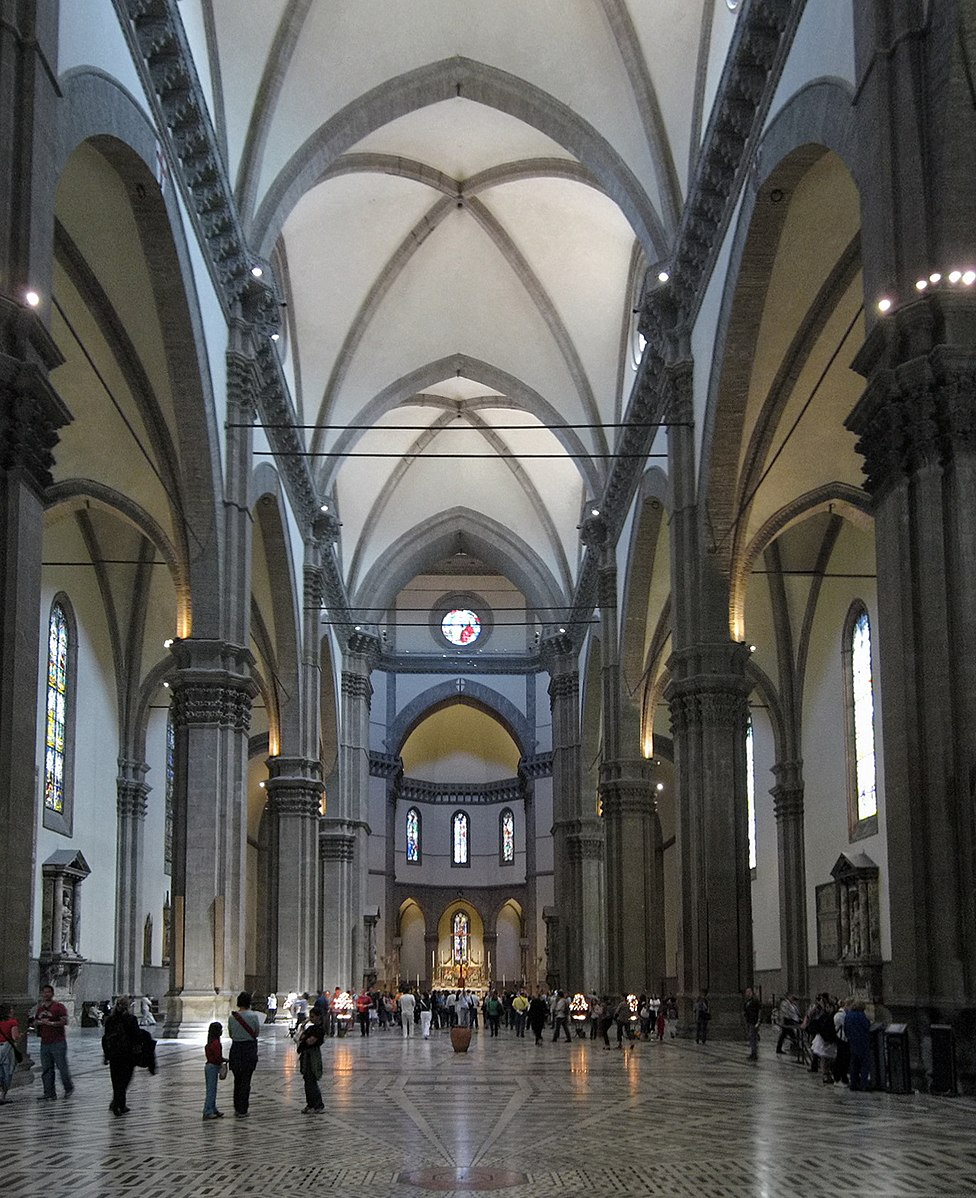
Although Brunelleschi’s work on the Florence Cathedral was quite ingenious, it was essentially Gothic in its execution. The Church of Santo Spirito in Florence, Italy, gave Brunelleschi the opportunity to incorporate the classic rationality found in the Renaissance.
Below is the Church of Santo Spirito.
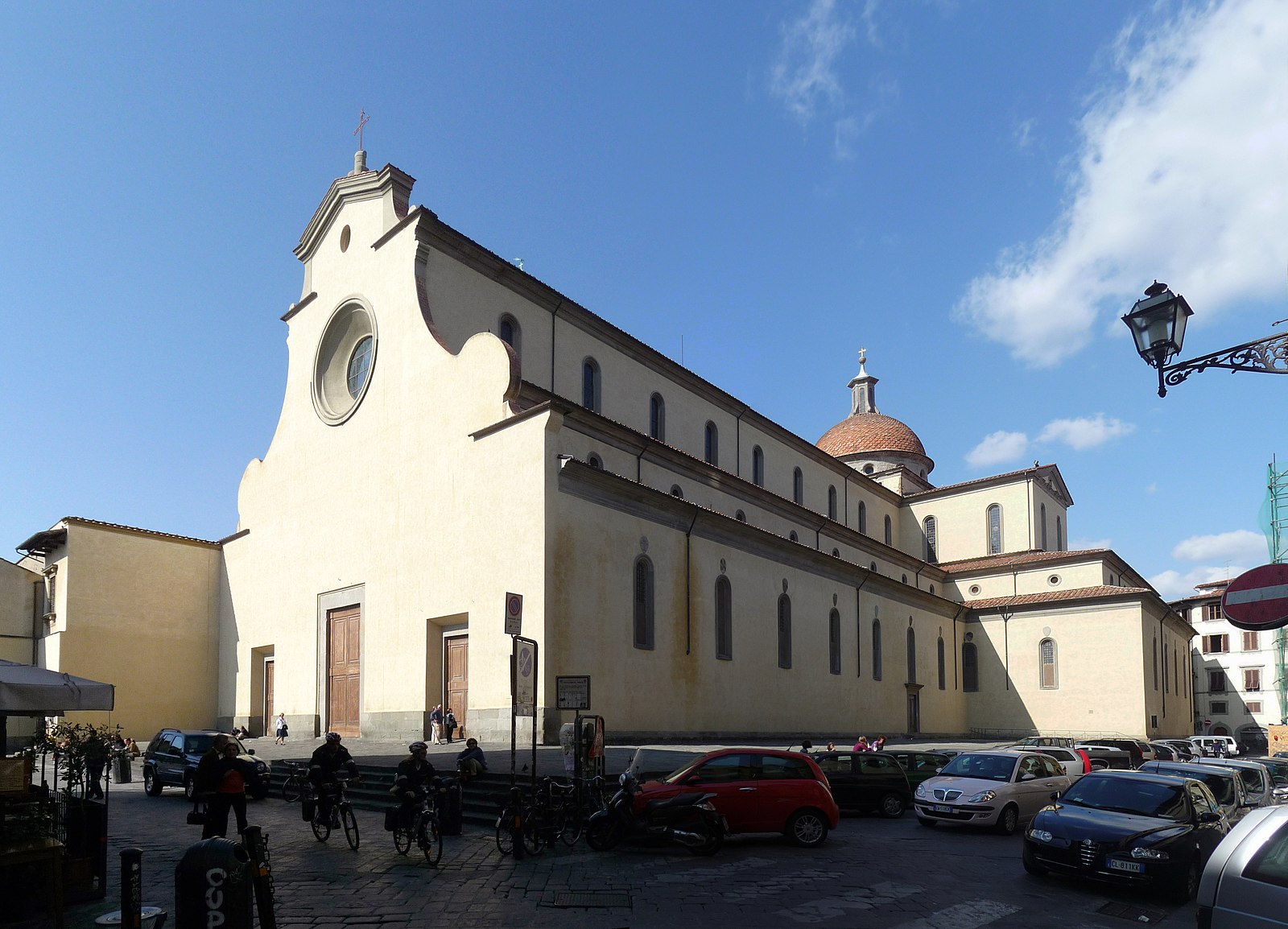
Basilica di Santo Spirito (Church of Santo Spirito)
Florence, Italy
1444 - 1487 CE
Stone
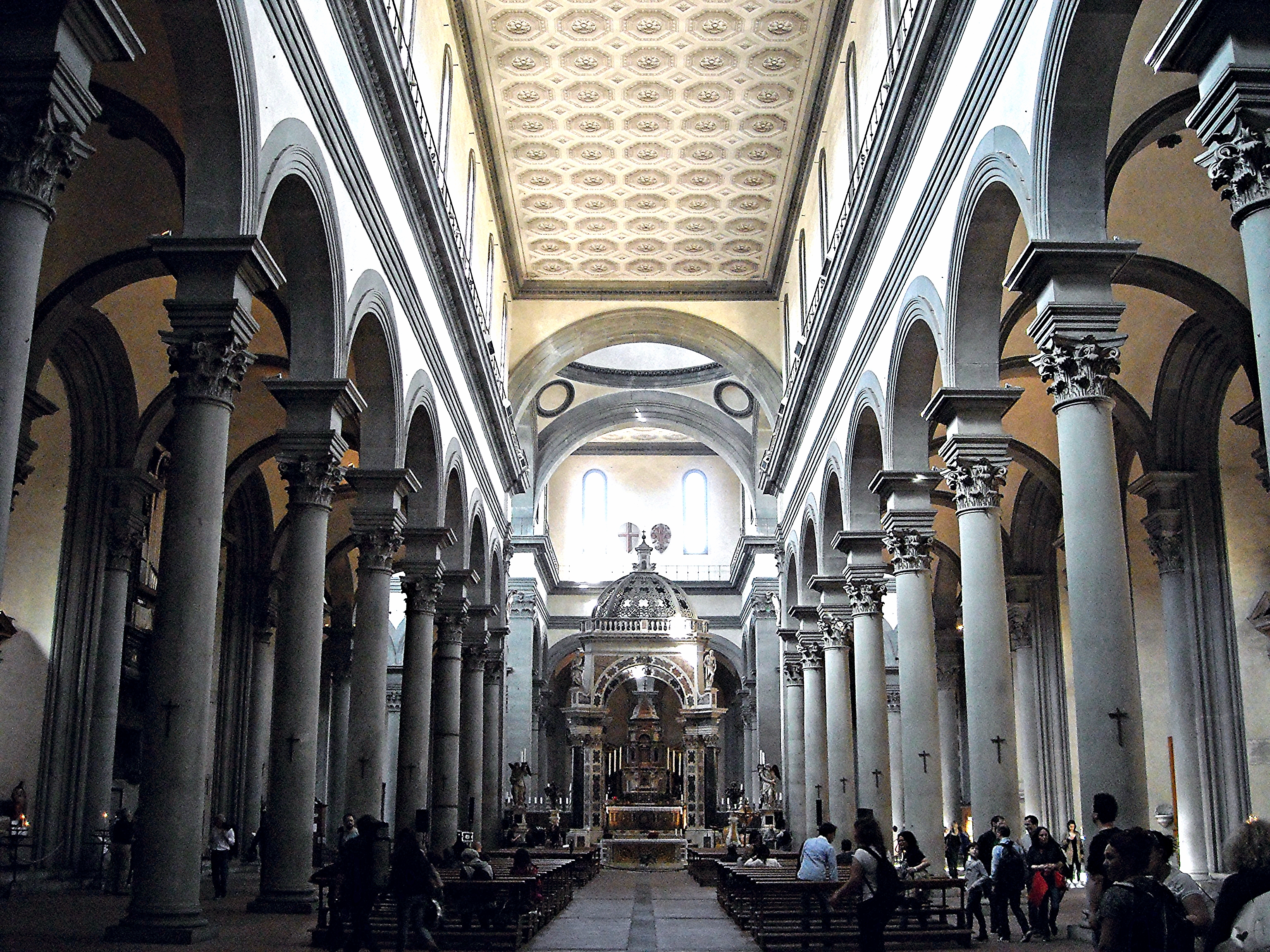
The church also incorporated classic Renaissance aspects such as:
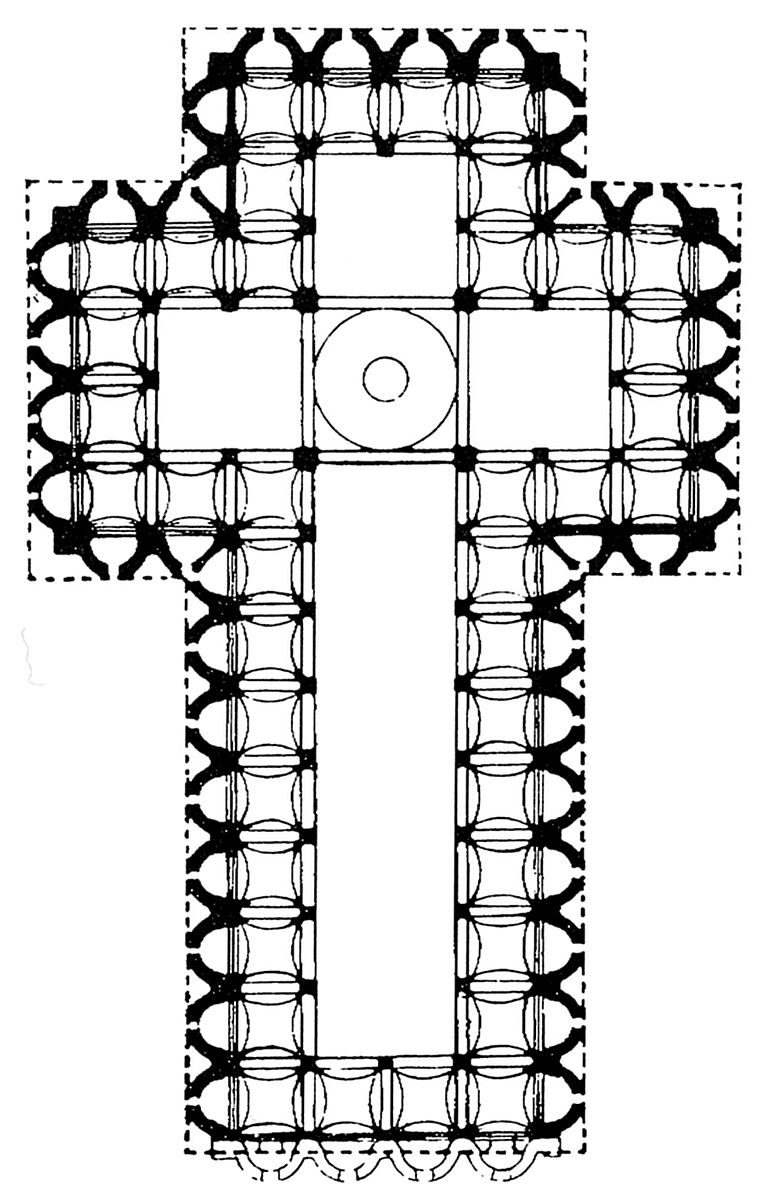
The term "modular design" refers to the way that the floor plan of a church is subdivided into a series of equally sized units, or modules. We first saw this approach to architectural design during the Romanesque period. It reached its height, so to speak, during the Gothic period, when the modules indicated series of ribbed vaults and flying buttresses on the exterior that helped support the weight of the walls and vaulting.
Here in the Renaissance, we see modular design, with a return to the classical rounded arch, in Santo Spirito.
Brunelleschi also used a defined mathematical constant throughout the design that created a sense of mathematical harmony. This concept was present in the design of Chartres Cathedral and other Gothic churches, and was similar to the classical, architectural temple designs of ancient Greece, such as the Parthenon, which used a similar approach.
Take, for instance, the main arcade in the clerestory seen above. These are equal in height, and their combined height is twice that of the width of the nave. This was a marvel of classical influence, and the church stands as perhaps the greatest example of Brunelleschi’s Renaissance-styled architecture.
Although it wasn’t designed by Brunelleschi, the Palazzo Medici by Michelozzo de Bartolommeo, was definitely inspired by his style. In the classic Roman house design, the house is centered around an open, colonnaded courtyard. This house was commissioned by Cosimo de' Medici, of the influential Medici family.
The exterior is hardly ostentatious, and yet it is far from plain. It expresses Michelozzo’s understanding of classical design while at the same time creating something that was uniquely modern.
Here is the exterior of the Palazzo Medici:
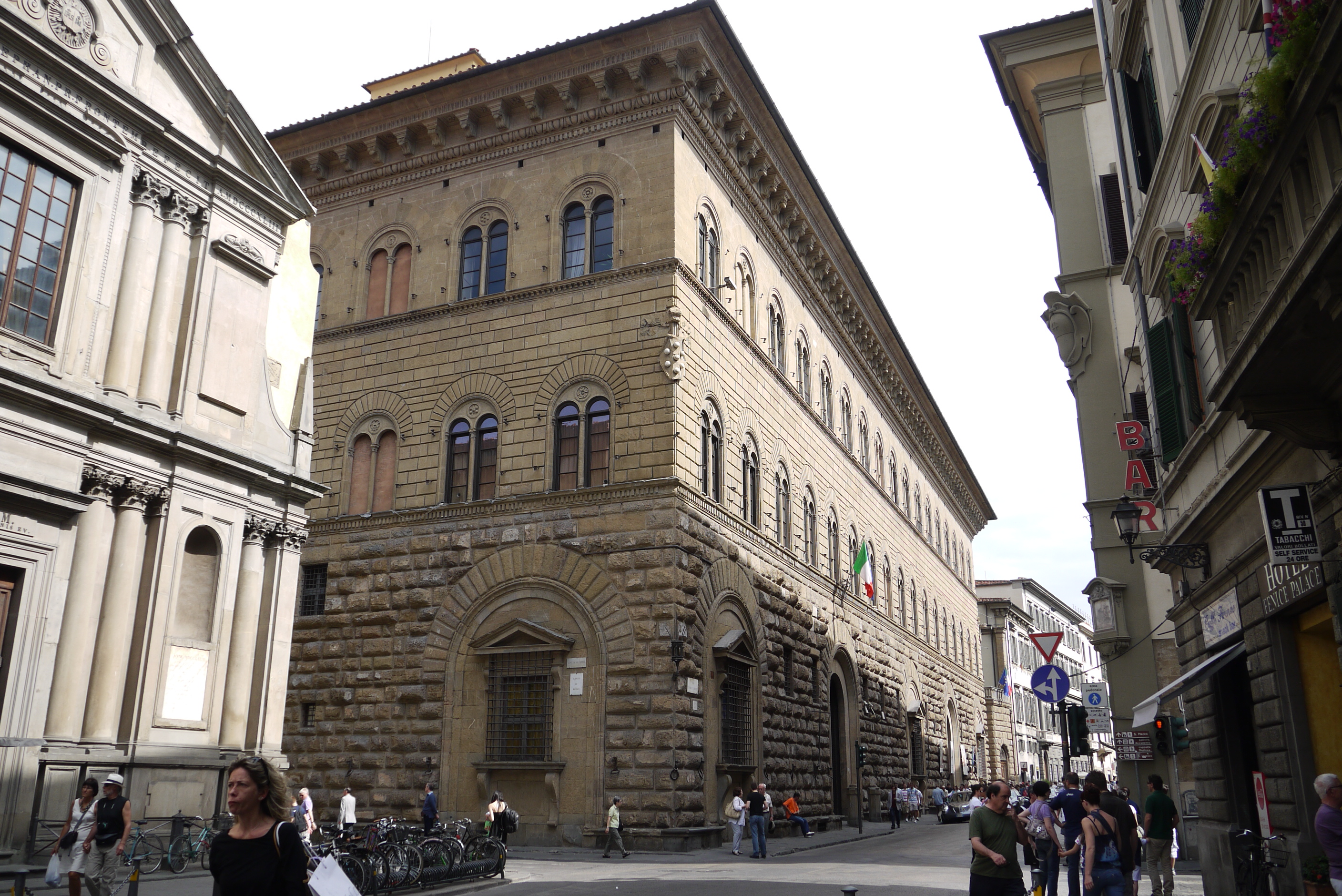
Palazzo Medici Riccardi
Florence, Italy
1444-1484 CE
Stone
Three distinct horizontal bands are combined to create a sense of visual weight that decreases as you move upwards, and this is partially accomplished by the use of finished and unfinished stone. Notice how the stone begins as unfinished on the bottom and is progressively smoother as it moves upward. Finally, to balance the overall appearance, a heavy cornice roof is affixed on the very top. A cornice is the ledge that you can see on the top.
Here is a view of the interior courtyard:
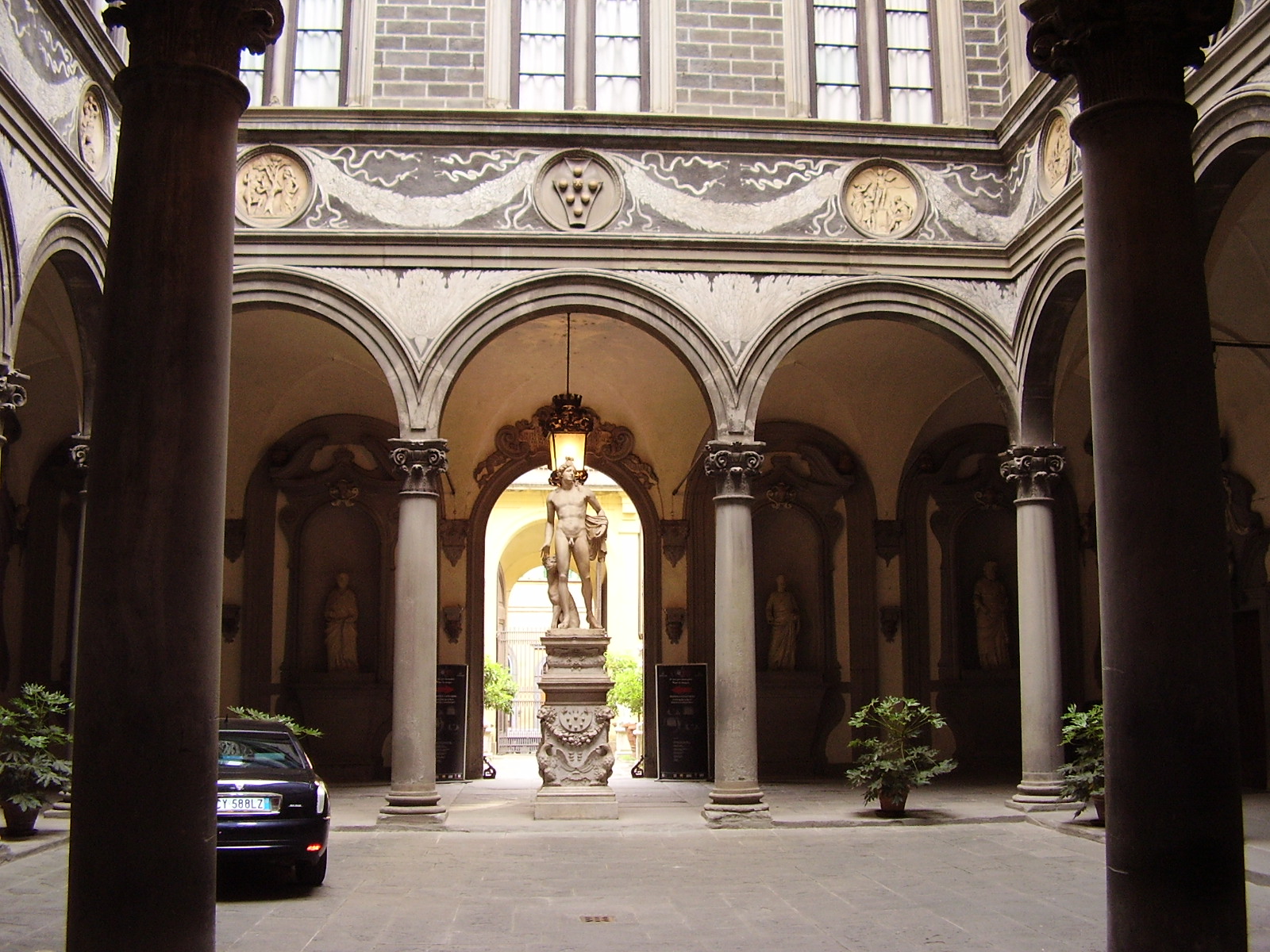
Notice the rounded arcade that goes around the central courtyard. This was a common feature in the housing designs in ancient Rome.
Source: THIS TUTORIAL WAS AUTHORED BY IAN MCCONNELL FOR SOPHIA LEARNING. PLEASE SEE OUR TERMS OF USE.



