Recall that for an organism to grow, develop, and maintain its health, cells must reproduce themselves by dividing to produce two new cells by mitosis. In order for each cell to have the full set of coded genetic instructions, it must contain a full complement of DNA as found in the original cell. Billions of new cells are produced in an adult human every day. Only very few cell types in the body do not divide—including nerve cells, skeletal muscle fibers, and cardiac muscle cells.
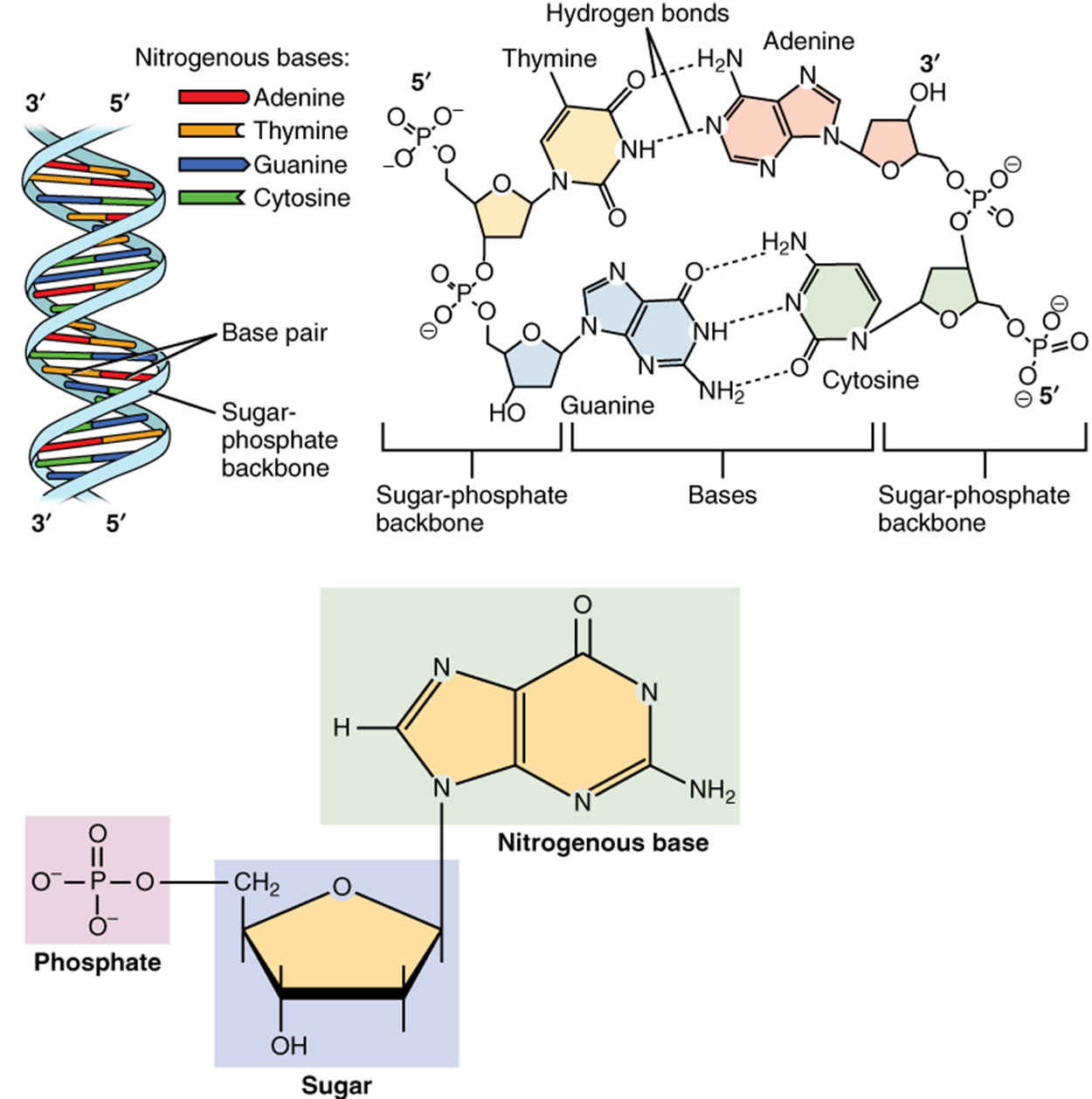
As you have learned, each DNA strand is a polymer of nucleotides and is formed by a deoxyribose sugar and phosphate backbone with bases projecting inward. The two sides of the twisted ladder that the DNA double helix forms are not identical but are complementary. These two backbones are bonded to each other across pairs of protruding bases, each bonded pair forming one “rung,” or cross member.
Recall that the four DNA bases are adenine (A), thymine (T), cytosine (C), and guanine (G). Because of their shape and charge, the two bases that compose a pair always bond together. Adenine always binds with thymine, and cytosine always binds with guanine. The particular sequence of bases along the DNA molecule determines the genetic code. Therefore, if the two complementary strands of DNA were pulled apart, you could infer the order of the bases in one strand from the bases in the other, complementary strand. For example, if one strand has a region with the sequence AGTGCCT, then the sequence of the complementary strand would be TCACGGA.
Molecular Structure of DNA—The DNA double helix is composed of two complementary strands. The strands are bonded together via their nitrogenous base pairs using hydrogen bonds.
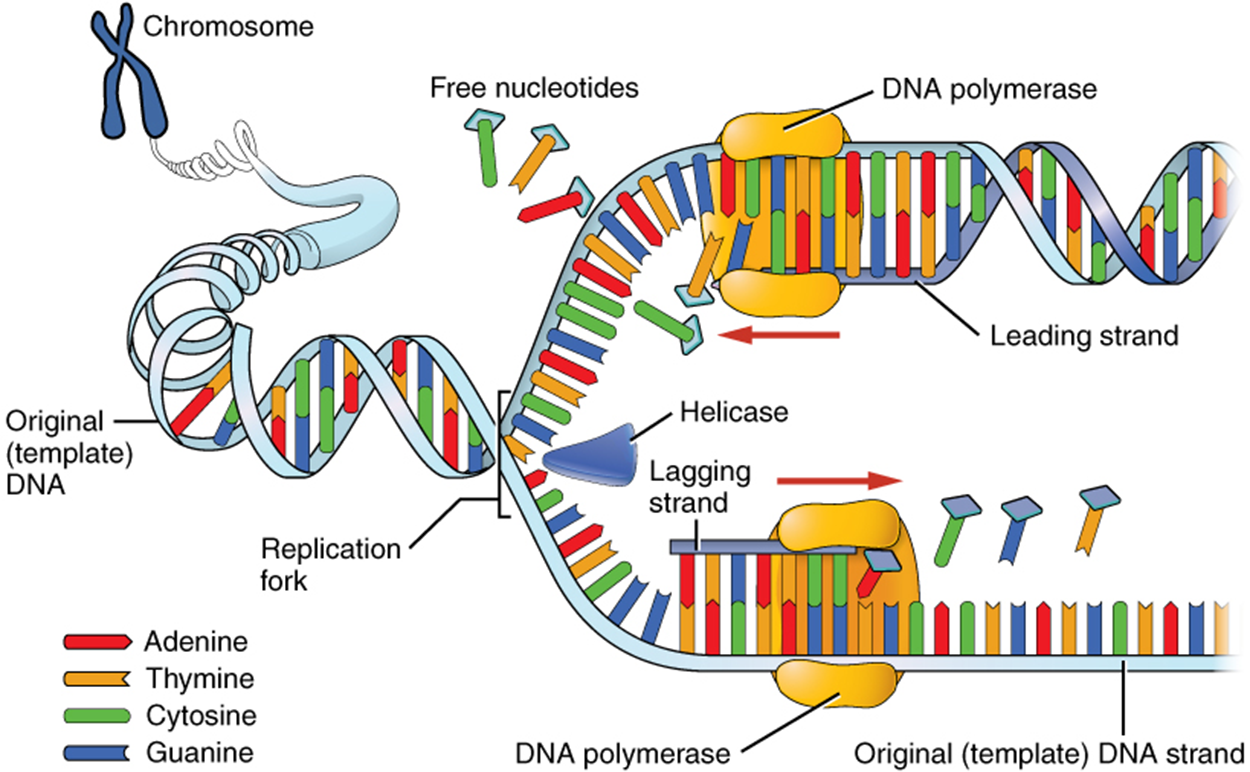
DNA replication is the process of making a copy of DNA that occurs before cell division can take place. After a great deal of debate and experimentation, the general method of DNA replication was deduced in 1958 by two scientists in California: Matthew Meselson and Franklin Stahl. This method is illustrated and described below.
DNA Replication—DNA replication duplicates the entire genome of the cell. During DNA replication, a number of different enzymes work together to pull apart the two strands so each strand can be used as a template to synthesize new complementary strands. The two new daughter DNA molecules each contain one pre-existing strand and one newly synthesized strand. Thus, DNA replication is said to be “semiconservative.”
Stage 1: Initiation. The two complementary strands are separated, much like unzipping a zipper. Special enzymes, including helicase, untwist and separate the two strands of DNA. There are multiple origins of replication on a DNA helix so that multiple sections can be copied simultaneously. As the DNA opens up, Y-shaped structures form called replication forks. The replication will begin at the forks and continue down the helix.
Stage 2: Elongation. Each strand becomes a template along which a new complementary strand is built. A DNA polymerase (also known as DNA pol) is an enzyme that adds free nucleotides to the end of a chain of DNA, which makes a new double strand. This growing strand continues to be built until it has fully complemented the template strand. DNA polymerase can only add nucleotides to an existing strand—it cannot make a new strand—so the enzyme primase will come in first and lay an RNA primer down as a temporary strand. DNA polymerase will come behind the primase and replace the RNA nucleotides with the permanent DNA nucleotides. DNA polymerase can only work from the 5′ to 3′ direction. As a result, the DNA polymerase will run the 5′ to 3′ replicated strand in a continuous fashion, and this is called the leading strand. The 3′ to 5′ opposing strand, however, is called the lagging strand. This is because it is built in segments called Okazaki fragments rather than continuously. Later on, the enzyme DNA ligase will come in and seal the sections of the Okazaki fragments together to make a continuous strand.
Stage 3: Termination. Once the two original strands are bound to their own, finished, complementary strands, DNA replication is stopped, and the two new identical DNA molecules are complete.
Each new DNA molecule contains one strand from the original molecule and one newly synthesized strand. The term for this mode of replication is “semiconservative,” because half of the original DNA molecule is conserved in each new DNA molecule. This process continues until the cell’s entire genome, the entire complement of an organism’s DNA, is replicated. As you might imagine, it is very important that DNA replication takes place precisely so that new cells in the body contain the exact same genetic material as their parent cells. Mistakes made during DNA replication, such as the accidental addition of an inappropriate nucleotide, have the potential to render a portion of the genetic code dysfunctional or useless. Fortunately, there are mechanisms in place to minimize such mistakes. A DNA proofreading process enlists the help of special enzymes that scan the newly synthesized molecule for mistakes and correct them. Once the process of DNA replication is complete, the cell is ready to divide.
terms to know
DNA Replication
The process of making a copy of DNA.
DNA Polymerase
(also, DNA pol) An enzyme that adds free nucleotides to the end of a chain of DNA.
2. Telomere Replication
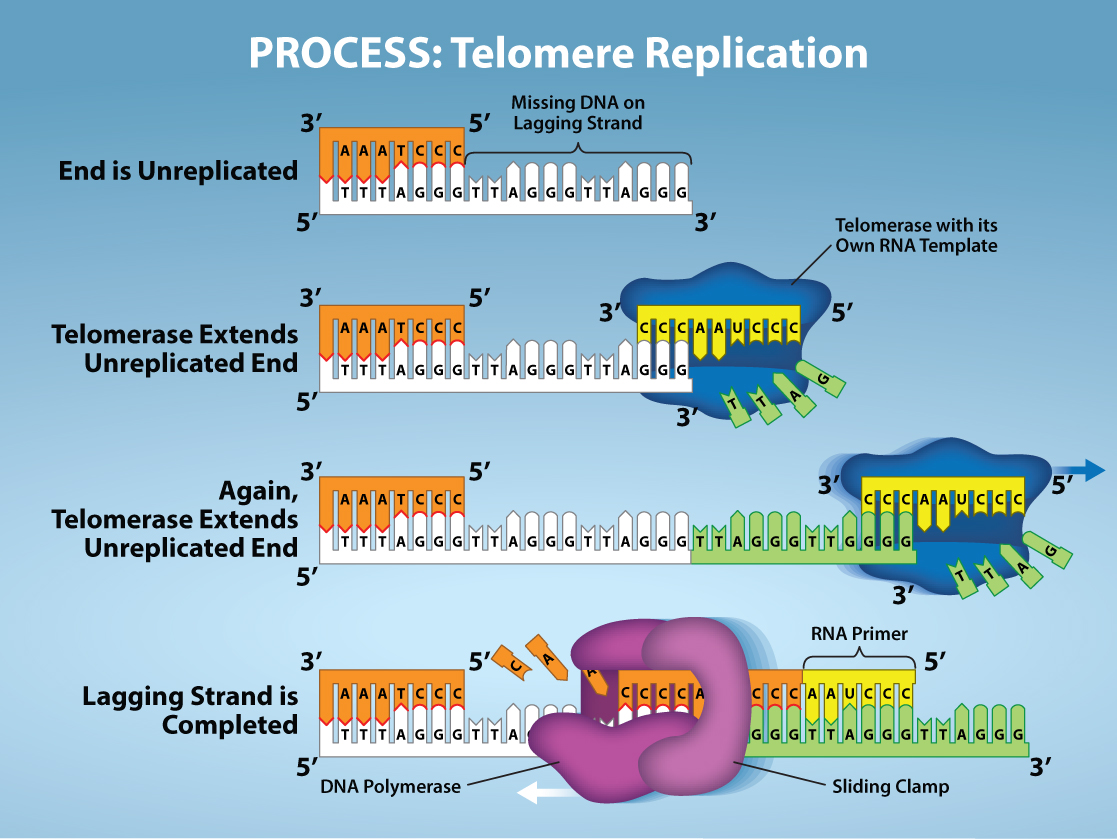
The enzyme DNA polymerase can add nucleotides only in the 5′ to 3′ direction. In the leading strand, synthesis continues until the end of the chromosome is reached. On the lagging strand, DNA is synthesized in short stretches, each of which is initiated by a separate primer. When the replication fork reaches the end of the linear chromosome, there is no way to replace the primer on the 5′ end of the lagging strand. The DNA at the ends of the chromosome thus remains unpaired, and over time these ends, called telomeres, may get progressively shorter as cells continue to divide.
Telomeres comprise repetitive sequences that code for no particular gene. In humans, a six-base-pair sequence, TTAGGG, is repeated 100 to 1000 times in the telomere regions. In a way, these telomeres protect the genes from getting deleted as cells continue to divide. The telomeres are added to the ends of chromosomes by a separate enzyme, telomerase, whose discovery helped in the understanding of how these repetitive chromosome ends are maintained. The telomerase enzyme contains a catalytic part (which catalyzes the reaction) and a built-in RNA template. It attaches to the end of the chromosome, and DNA nucleotides complementary to the RNA template are added on the 3′ end of the DNA strand. Once the 3′ end of the lagging strand template is sufficiently elongated, DNA polymerase can add the nucleotides complementary to the ends of the chromosomes. Thus, the ends of the chromosomes are replicated.
The ends of linear chromosomes are maintained by the action of the telomerase enzyme. Credit: Rao, A. and Fletcher, S. Department of Biology, Texas A&M University.
Telomerase is typically active in germ cells and adult stem cells. It is not active in adult somatic cells. For their discovery of telomerase and its action, Elizabeth Blackburn, Carol W. Greider, and Jack W. Szostak received the Nobel Prize for Medicine and Physiology in 2009. Later research using HeLa cells (obtained from Henrietta Lacks) confirmed that telomerase is present in human cells. In 2001, researchers including Diane L. Wright found that telomerase is necessary for cells in human embryos to rapidly proliferate.
Elizabeth Blackburn, 2009 Nobel Laureate, is one of the scientists who discovered how telomerase works. (credit: US Embassy Sweden)
IN CONTEXT
Telomerase and Aging
Cells that undergo cell division continue to have their telomeres shortened because most somatic cells do not make telomerase. This essentially means that telomere shortening is associated with aging. With the advent of modern medicine, preventative health care, and healthier lifestyles, the human life span has increased, and there is an increasing demand for people to look younger and have a better quality of life as they grow older.
In 2010, scientists found that telomerase can reverse some age-related conditions in mice. This may have potential in regenerative medicine. Telomerase-deficient mice were used in these studies; these mice have tissue atrophy, stem cell depletion, organ system failure, and impaired tissue injury responses. Telomerase reactivation in these mice caused extension of telomeres, reduced DNA damage, reversed neurodegeneration, and improved the function of the testes, spleen, and intestines. Thus, telomere reactivation may have potential for treating age-related diseases in humans.
Cancer is characterized by uncontrolled cell division of abnormal cells. The cells accumulate mutations, proliferate uncontrollably, and can migrate to different parts of the body through a process called metastasis. Scientists have observed that cancerous cells have considerably shortened telomeres, and that telomerase is active in these cells. Interestingly, only after the telomeres were shortened in the cancer cells did the telomerase become active. If the action of telomerase in these cells can be inhibited by drugs during cancer therapy, then the cancerous cells could potentially be stopped from further division.
terms to know
Telomere
DNA at the end of linear chromosomes.
Telomerase
An enzyme that functions to maintain telomeres at chromosome ends.
3. DNA Repair
DNA replication is a highly accurate process, but mistakes can occasionally occur, such as DNA polymerase inserting a wrong base. Uncorrected mistakes may sometimes lead to serious consequences, such as cancer. Repair mechanisms correct the mistakes. In rare cases, mistakes are not corrected, leading to mutations; in other cases, repair enzymes are themselves mutated or defective.
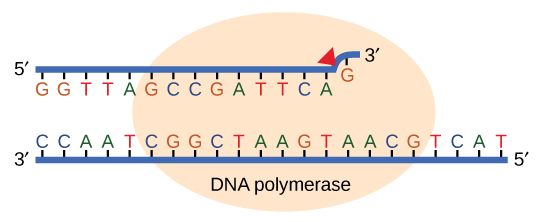
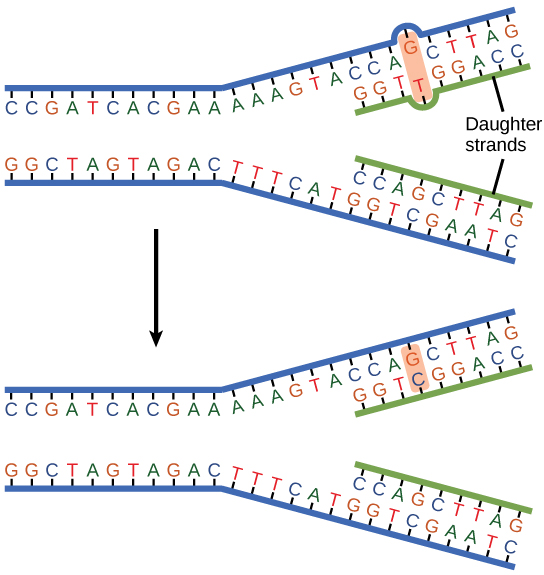
Most of the mistakes during DNA replication are promptly corrected by the proofreading ability of DNA polymerase itself. In proofreading, the DNA polymerase reads the newly added base before adding the next one, so a correction can be made. The polymerase checks whether the newly added base has paired correctly with the base in the template strand. If it is the right base, the next nucleotide is added. If an incorrect base has been added, the enzyme makes a cut at the phosphodiester bond and releases the wrong nucleotide. This is performed by the 3′ exonuclease action (removing nucleotides) of DNA polymerase. Once the incorrect nucleotide has been removed, it can be replaced by the correct one.
Proofreading by DNA polymerase corrects errors during replication.
Some errors are not corrected during replication but are instead corrected after replication is completed; this type of repair is known as mismatch repair. Specific repair enzymes recognize the mismatched nucleotide and excise part of the strand that contains it; the excised region is then resynthesized. If the mismatch remains uncorrected, it may lead to more permanent damage when the mismatched DNA is replicated.
How do mismatch repair enzymes recognize which of the two bases is the incorrect one? In the bacterium E. coli, after replication, the nitrogenous base adenine acquires a methyl group; the parental DNA strand will have methyl groups, whereas the newly synthesized strand lacks them. Thus, DNA polymerase is able to remove the wrongly incorporated bases from the newly synthesized, non-methylated strand. However, in eukaryotes (including humans), the mechanism is not very well understood, but it is believed to involve recognition of unsealed nicks in the new strand, as well as a short-term continuing association of some of the replication proteins with the new daughter strand after replication has completed.
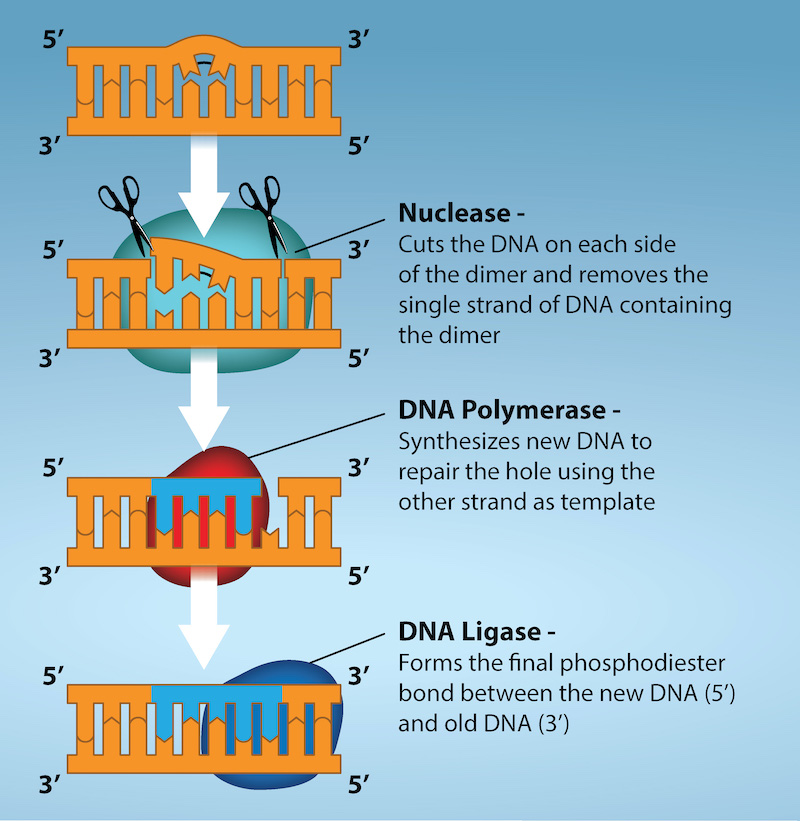
In mismatch repair, the incorrectly added base is detected after replication. The mismatch repair proteins detect this base and remove it from the newly synthesized strand by nuclease action. The gap is now filled with the correctly paired base.
Another type of repair mechanism, nucleotide excision repair, is similar to mismatch repair except that it is used to remove damaged bases rather than mismatched ones. The repair enzymes replace abnormal bases by making a cut on both the 3′ and 5′ ends of the damaged base. The segment of DNA is removed and replaced with the correctly paired nucleotides by the action of DNA pol. Once the bases are filled in, the remaining gap is sealed with a phosphodiester linkage catalyzed by DNA ligase. This repair mechanism is often employed when UV exposure causes the formation of pyrimidine dimers (two identical molecules that are linked).
Nucleotide excision repairs thymine dimers. When exposed to UV light, thymines lying adjacent to each other can form thymine dimers. In normal cells, they are excised and replaced. Credit: Rao, A., Fletcher, S. and Tag, A. Department of Biology, Texas A&M University.
IN CONTEXT
Xeroderma Pigmentosa
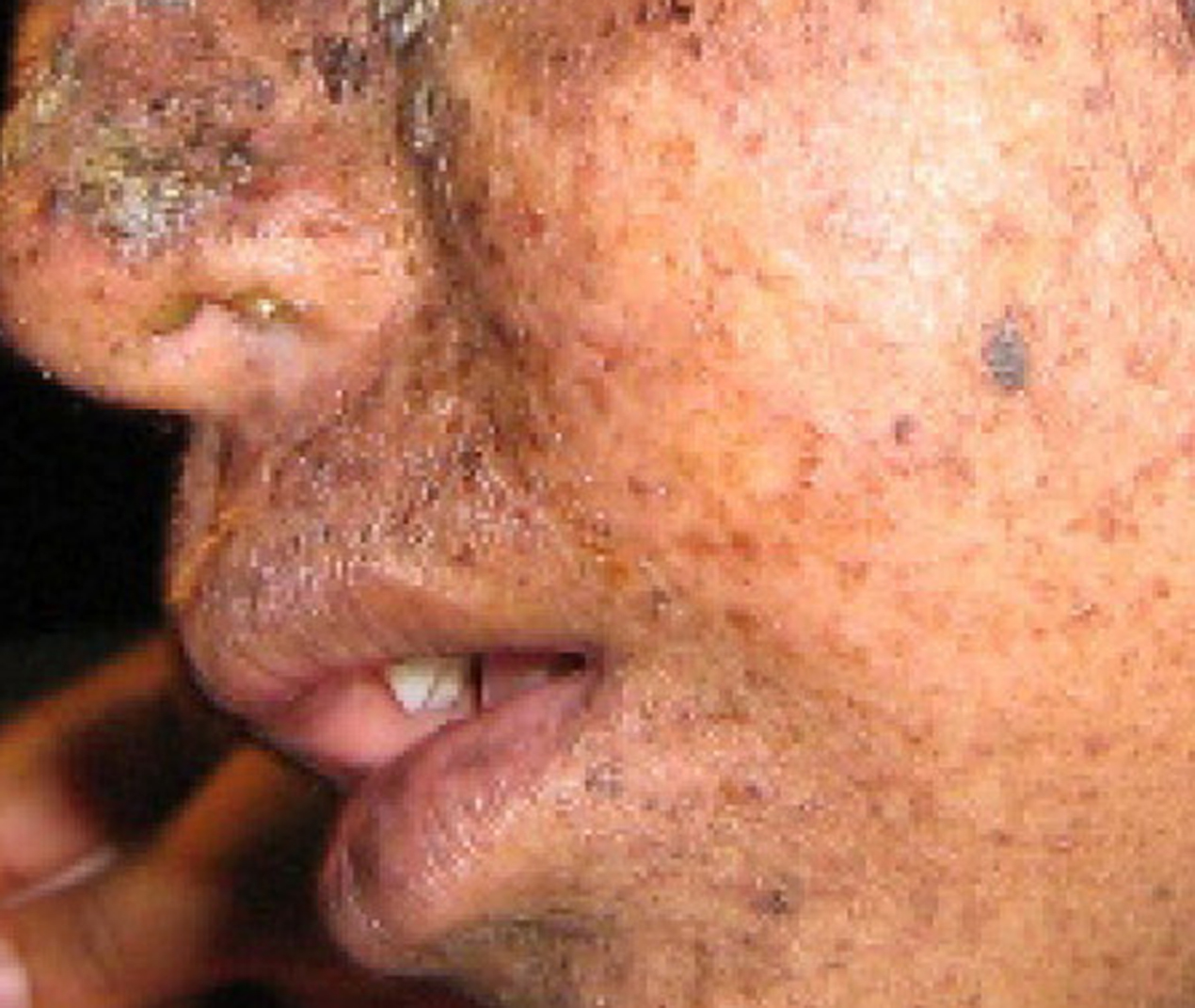
A well-studied example of mistakes not being corrected is seen in people suffering from xeroderma pigmentosa. Affected individuals have skin that is highly sensitive to UV rays from the sun. When individuals are exposed to UV light, pyrimidine dimers, especially those of thymine, are formed; people with xeroderma pigmentosa are not able to repair the damage. These are not repaired because of a defect in the nucleotide excision repair enzymes, whereas in normal individuals, the thymine dimers are excised, and the defect is corrected. The thymine dimers distort the structure of the DNA double helix, and this may cause problems during DNA replication. People with xeroderma pigmentosa may have a higher risk of contracting skin cancer than those who don't have the condition.
Xeroderma pigmentosa is a condition in which thymine dimerization from exposure to UV light is not repaired. Exposure to sunlight results in skin lesions. (credit: James Halpern et al.)
terms to know
Proofreading
The function of DNA polymerase in which it reads the newly added base before adding the next one.
Mismatch Repair
A type of repair mechanism in which mismatched bases are removed after replication.
Nucleotide Excision Repair
A type of DNA repair mechanism in which the wrong base, along with a few nucleotides upstream or downstream, are removed.
summary
In this lesson, you learned about how DNA is replicated and repaired. First, you learned how DNA can be duplicated through DNA replication to make sure each new cell in cell division has a full genome. You then explored telomere replication and how telomeres at the end of chromosomes get progressively shorter as cells continually divide, which affects how humans age. Finally, you learned about mechanisms by which errors in DNA replication can be fixed through DNA repair.