Table of Contents |
Diversity marketing is a strategic approach that involves identifying diverse subsegments of the population within a market and creating intentional marketing efforts to reach wider audiences. This last piece is key. It has an element of inclusion because it purposefully incorporates identity-specific consumers that have been overlooked or pushed to the margins of society such as some ethnic minorities, people with disabilities, elderly adults, low-income persons, and other groups. Marginalized consumers are often excluded in mainstream advertising, translating into missed business opportunities. Diversity marketing is a strategy for marketers to include them.
IN CONTEXT
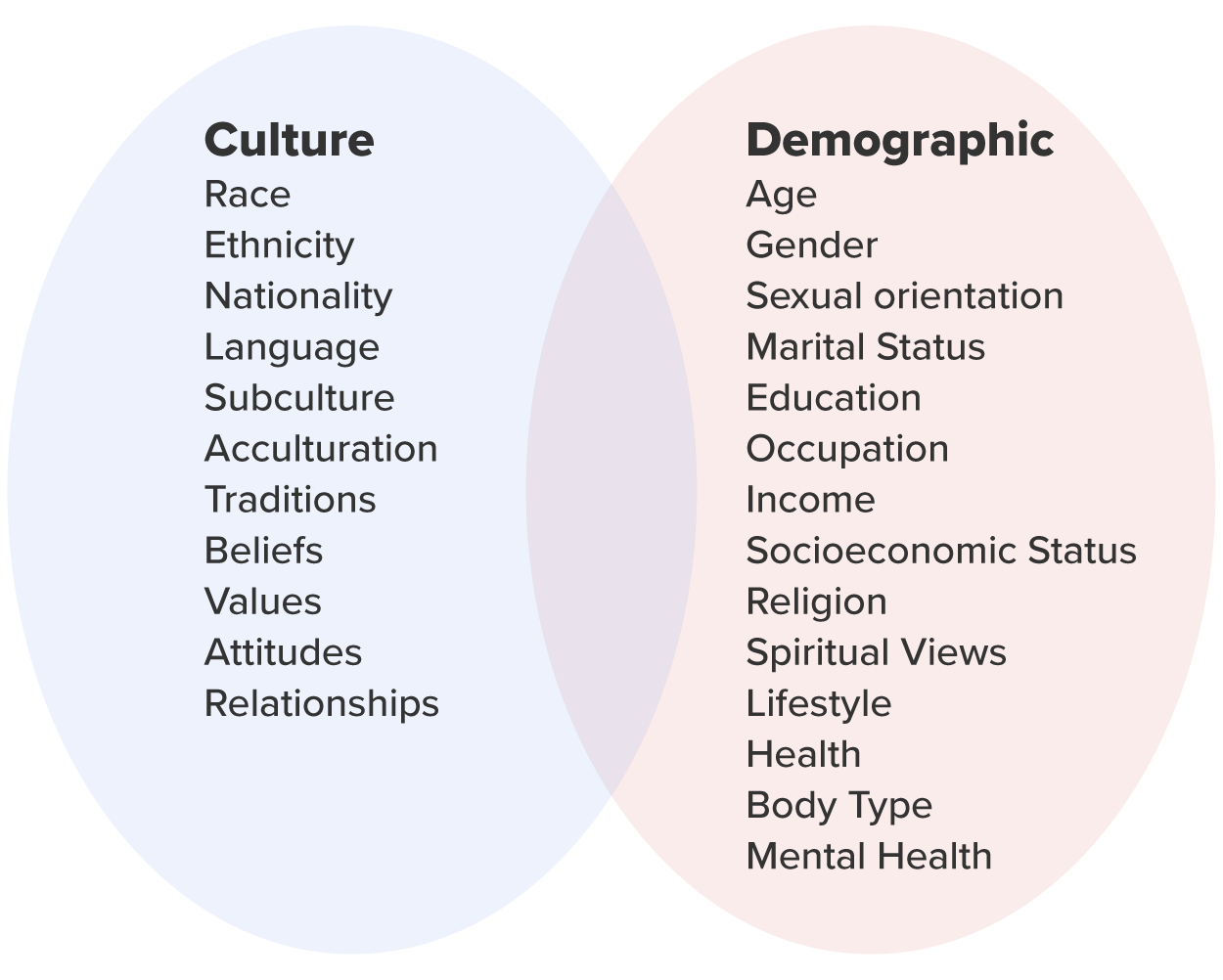
Diversity marketing is more than just an awareness of minority identities, underrepresented communities, or racial distinctions. It is about being culturally responsive, meaning having an actionable understanding of diverse consumers’ interests and preferences based on shared cultural and sociodemographic characteristics. Consider the five key parameters most often used to describe diversity: cultural, racial, and ethnic; gender and sexual identity; generational; religion; and disability.
Culture, race, and ethnicity are part of the cultural aspect, while the others are part of the sociodemographic aspect. Because of the broad scope of diversity marketing, this strategy can help marketers reach larger market audiences. Diversity marketing can also influence consumers’ mindsets and generate positive attention.
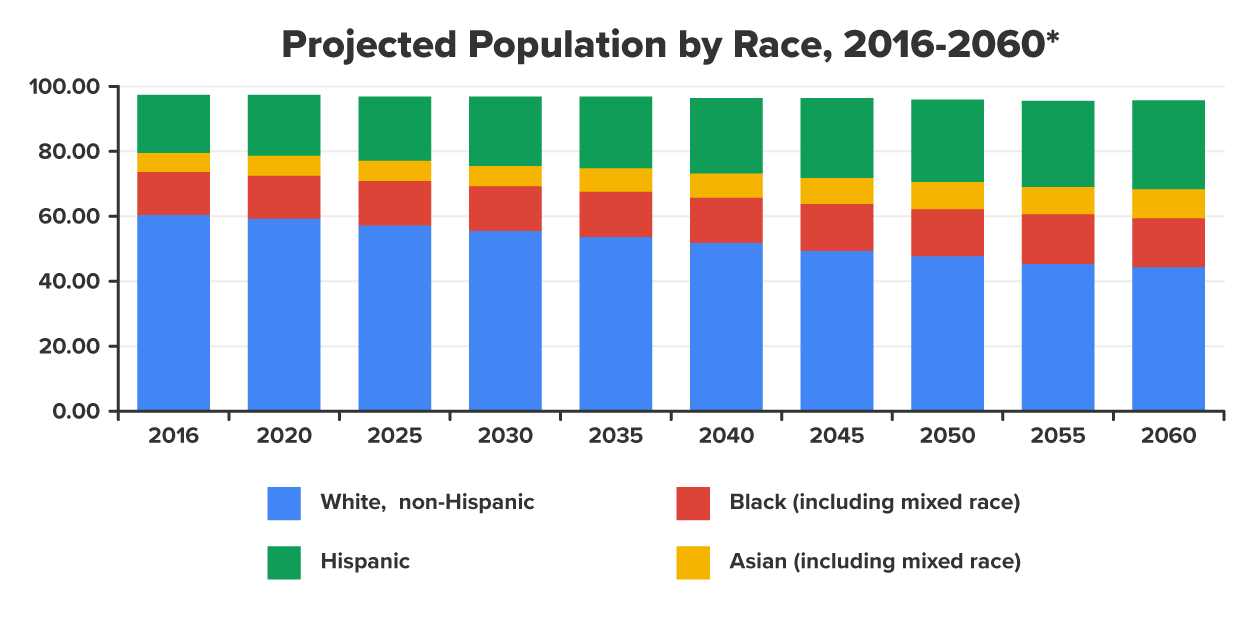
Two out of every five individuals in the United States—over 40 percent of the population—identify racially or ethnically as other than non-Hispanic White. Researchers expect this trend to keep growing in the coming decades, and as consumer diversity increases, cultural identification becomes even more important. Race, ethnicity, and culture give meaning to one another. This makes it critical for marketers to pay attention to how multiracial or multiethnic consumers identify culturally. Having a multicultural identity means that a person has been exposed to various cultures and self-identifies as being part of more than one racial or ethnic community or various social groups.
We will focus on four key multicultural identity segments of the American population: Hispanic, Black, Asian, and Native American/Alaska Native. Being multicultural can take many forms. Multicultural individuals may speak multiple languages or have different sets of friends in each culture.
Multicultural marketing is a strategic approach to intentionally target audiences based on different racial, ethnic, and cultural identities and backgrounds. It focuses on relevant, value-rich, and culturally authentic communication tailored to multicultural consumers. You are probably asking, is multicultural marketing the same thing as diversity marketing? After all, both are often used interchangeably. The answer is no; they are not the same thing. Diversity marketing is an inclusive approach that results in reaching a wider portion of the entire market. Multicultural marketing is a subcategory of diversity marketing that is aimed at multicultural individuals.
This projection has enormous marketing implications for companies and nonprofit organizations. As the marketplace becomes even more racially and ethnically diverse, marketing efforts must be aligned with the needs and expectations of multicultural groups to be effective.
Let us take a closer look at these key multicultural segments of the American population.
IN CONTEXT
The Hispanic population is the largest multicultural group in the nation and makes up about 19 percent of the total population. According to data-driven marketing company Claritas, the Hispanic population is one of the fastest-growing groups, with over 63 million individuals, and is also responsible for 59 percent of the country’s population growth between 2010 and 2021. Plus, by 2026, business strategists believe that nearly two out of every three consumers in the United States will belong to this ethnic group. With a median age of 29, this group also has the youngest population in the country.
The Black population is also a growing segment with 46.9 million individuals—or 14.2 percent of the total population—according to the 2020 U.S. Census. This group is made up of three different subethnicities: individuals who identify as Black alone (single race), or as Black Hispanic, or as Black with another race such as White or Native American (multiracial). The Black population in general has the second youngest median age. In fact, almost 60 percent of this group were millennials or younger (under the age of 38) in 2019 based on findings from the American Community Survey.
The Asian population accounts for 7.2 percent of the American population with 24 million individuals from combined subethnicities as reported by the 2020 Census. Like Black people, Asian people also self-classify as either single race, Asian Hispanic, or multiracial individuals. Communities often included as part of the Asian multiracial composition are Native Hawaiians and Pacific Islanders. Asians’ three classifications combined experienced the fastest population growth of all multicultural segments in the nation between 2000 and 2019. The Asian population has a median age of 34 and is expected to reach around 35 million individuals by 2040.
The Native American/Alaska Native population represents 1.1 percent of the population in the United States with 3.7 million individuals identifying as single race Native people. During the 2020 Census, these Native groups were combined with other races and ethnicities, boosting the number to 9.7 million people, or about 2.9 percent of the total population.
In marketing, sociodemographics describes the combination of social and demographic factors that characterize specific consumer groups in the market. These factors are mostly quantifiable, meaning they can be measured or verified to a certain extent. Though race and ethnicity are cultural factors, sometimes they are included in market research as sociodemographic parameters. This is done to increase the generalization of consumer findings and to uncover potential areas of concern linked to social issues. Sociodemographic variables typically consist of gender and sexual orientation, age or generation, family structure, religion, education level, and income. The latter two are also frequently associated with socioeconomic status. Disability is another variable that can be treated as a demographic factor.
Sociodemographic marketing is a strategic approach to intentionally target audiences based on shared social and demographic characteristics. Sounds familiar? Like multicultural marketing, sociodemographic marketing also focuses on relevant and authentic communications with consumers. Both strategies help businesses and organizations align their products and services with audiences’ needs, preferences, and expectations.
EXAMPLE
In a 2019 study, nearly 3,000 consumers were asked to consider ads with sociodemographic attributes like gender identity, sexual orientation, age, socioeconomic status, and physical ability. Results showed 64 percent of consumers taking some sort of action after seeing an ad with sociodemographic diversity. You might be wondering, Is sociodemographic marketing the same thing as diversity marketing then? The answer is no. Again, as with multicultural marketing, sociodemographic marketing includes underrepresented and overlooked consumers in a large population. Sociodemographic marketing is another subcategory of diversity marketing. While all sociodemographic consumer groups are important, the following are essential segments of sociodemographic marketing:
IN CONTEXT
LGBTQIA+ population: LGBTQIA+ stands for lesbian, gay, bisexual, transsexual, queer/questioning, intersex, asexual, and other sexual identities. About 5.6 percent of American adults—roughly 14.4 million individuals—identify as LGBTQIA+ according to a 2020 survey. In general, LGBTQIA+ consumers spend more at retail stores than other groups and have a higher percentage of online purchases compared to non-LGBTQIA+ households. Not only is this segment part of diversity marketing, but the LGBTQIA+ community is very diverse too.
Generational population: Consumers are grouped into age clusters based on birth year. These populations include 21.7 million Traditionalist or Silent Generation (born between 1928 and 1945), 70.6 million baby boomers (born between 1946 and 1964), 65 million Generation X (born between 1965 and 1980), 72.2 million Generation Y or millennials (born between 1981 and1996), 67 million Generation Z or Zoomers (born between 1997 and 2009), and 27.6 million Generation Alpha (born between 2010 and 2025) according to 2020 U.S. Census data. Every generation is unique and has different historical references, challenges, interests, and technological experiences that impact these consumers’ preferences and appeals.
Socioeconomically disadvantaged population: These individuals tend to come from low-income households, experience financial insecurity, and have less access to education. In the United States, the estimated number of people living in poverty was over 34 million individuals in 2019. The majority of disadvantaged consumers are located either in poor rural areas or inner-city communities that lack social resources and infrastructure to reduce poverty. Marketers must be careful in targeting these consumers to avoid negative repercussions from the market.
Consumers with disabilities: This group represents an estimated 61 million Americans. About one in four adults live with some type of disability. Disability is a classification derived from an impairment related to mobility, learning, intellectual, or other types of functions. This group is also considered truly diverse because disabilities span cultural, social, and demographic factors. Consumers with disabilities have been traditionally underrepresented in marketing efforts, though studies show they are one of the largest sociodemographic market opportunities after baby boomers and other segments.
The idea of marketing driven by consumer diversity is relevant and meaningful because today’s marketplace is changing dramatically. This evolution is happening not only in the United States but also around the globe. For marketers, this means that generalizing buyers, households, or communities anywhere in the world is a shortsighted perspective because it limits business growth and commercial possibilities. Plus, oversimplifying population segments can also adversely affect a company’s reputation by shifting the public’s opinion in a negative way. The consequences can hurt sales, lead to missed opportunities, and undermine competitive status. This makes it essential to align markets and diversity marketing goals.
IN CONTEXT
Even though “one size fits all consumers” type of tactics worked in past decades, that is no longer the case. Failure to recognize diversity marketing as an essential component of any marketing plan in these changing times is a business blunder. In a study conducted by Adobe in 2019 among 2,000+ consumers, results showed that 61 percent of participants believed that diversity in marketing campaigns was important, and at least 38 percent were also said to be more inclined to trust brands that showed good diversity in advertisements. Inclusion and diversity marketing are vital to a company’s success in any market.
Leading the marketing strategy with a diversity-driven intention can increase customer satisfaction and build stronger brand loyalty. Top Design Firms surveyed hundreds of consumers in late 2020 and found that 67 percent would consider making repeat purchases from companies committed to diversity in marketing campaigns.
Another report confirmed that these observations are not restricted to specific populations. Market analysis by Heat Agency found that high diversity scores for brands translated into a whopping 83 percent higher preference by consumers. Besides improving brand sentiment overall, studies show that companies that build emotional ties through diversity marketing programs generate more revenue, increase stock price performance, and enhance brand perceptions.
Diversity marketing is based on a variety of cultural and sociodemographic consumer characteristics. Marketers must be mindful of these distinctions, so marketing communication campaigns launched are sensitive to the audiences they are attempting to serve. Cultural and sociodemographic factors can greatly influence consumers’ motivations, reactions, and decisions. Other related variables, such as behavioral and personal, can shape buyers’ consumption levels and their receptiveness to marketing messages. Given these factors' impact, for companies to be successful in any market, diversity marketing must be customer-centric rather than company-centric. Being customer-centric is when a company targets customers first regarding any decisions about its goods, services, or experiences, while company-centric is when a company focuses decisions from the perspective of the organization. Building a proper sociocultural conscience in marketing starts with good research.
Market research is essential for developing successful marketing strategies because it leads to consumer insights. It also identifies potential communication gaps. This means that diversity must be treated as a market research factor to learn about multidimensional audiences. Leveraging consumer diversity in the research process has several benefits. For instance, it provides the information needed to better understand people’s cultural or social differences. This is useful for companies to avoid wrong assumptions and avert public mishaps.
IN CONTEXT
To do good research, marketers do not have to belong to or identify with a specific consumer group. However, understanding how ethnic and sociocultural differences impact buyers’ decisions and actions requires diversity marketing intelligence (DMiQ). Diversity marketing intelligence refers to the capability of identifying, accepting, and valuing the diversity of consumers within a market and using this knowledge to tailor the marketing mix accordingly. In early 2018, Tarte Cosmetics introduced to the market its highly anticipated Shape Tape Foundation. The launch featured 15 shades of makeup, almost all light tones. However, the product was not well received. Loyal customers were furious because of the lack of shades for people with darker skin. Tarte Cosmetics was accused of being a whitewashed brand and even making deeper skin-toned people feel inadequate. The company quickly apologized for alienating customers and changed its product and marketing communication.
When diversity marketing efforts fall short, as the Tarte Cosmetics case shows, it is often the result of racially or socially charged insensitivities and missteps. The outcome can have costly repercussions for companies.
EXAMPLE
In 2017, PepsiCo received heavy backlash for its “Live for Now Moments Anthem” campaign featuring Kendall Jenner. The commercial was criticized for trivializing the Black Lives Matter (BLM) movement and undermining protesters’ real-life hardships in pursuit of peace and justice. It was described as insensitive and offensive.Source: THIS TUTORIAL HAS BEEN ADAPTED FROM OPEN STAX’S PRINCIPLES OF MARKETING COURSE. ACCESS FOR FREE AT https://openstax.org/details/books/principles-marketing. LICENSE: CREATIVE COMMONS ATTRIBUTION 4.0 INTERNATIONAL.



