Table of Contents |
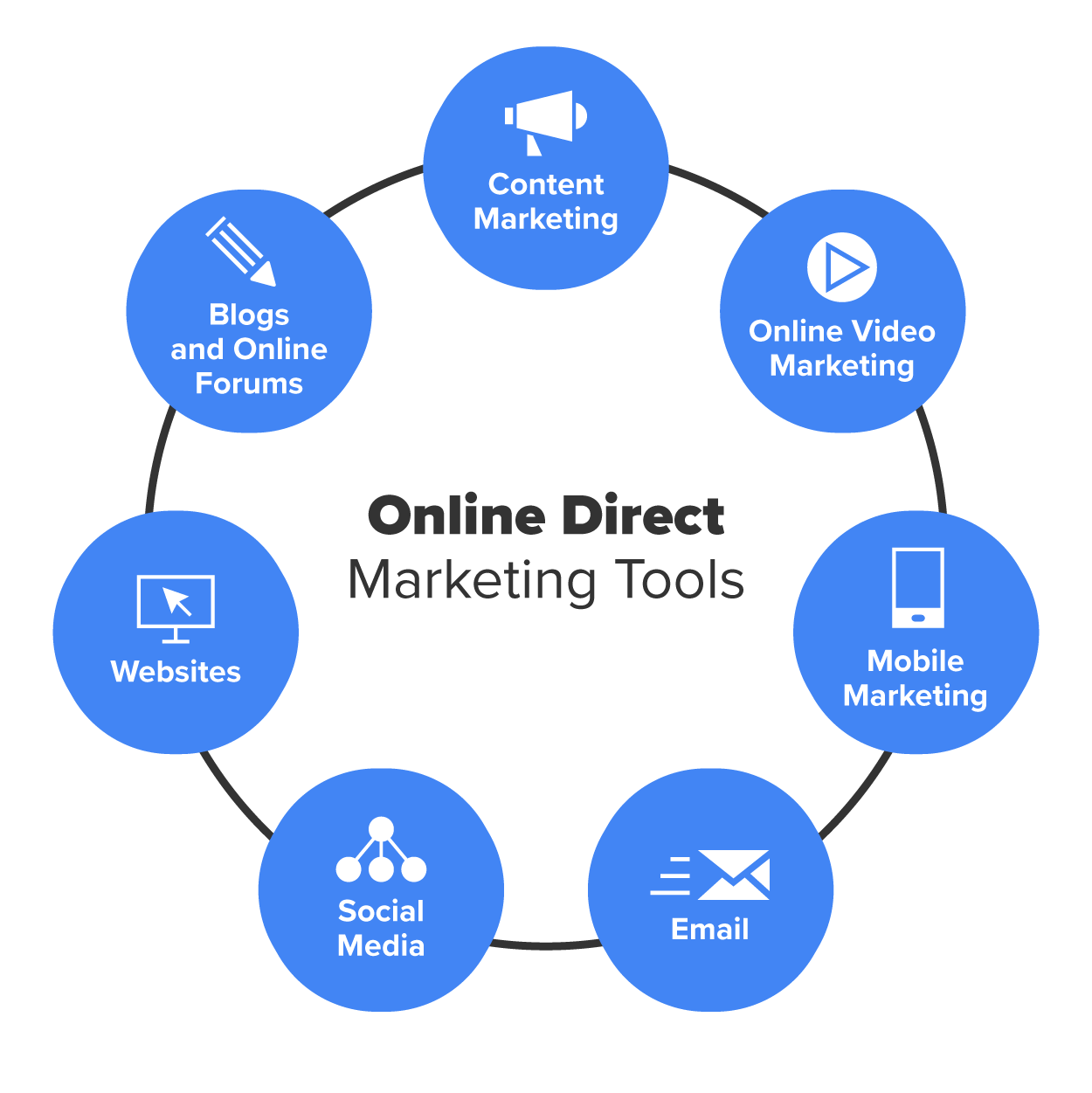
There are several online direct marketing tools that can be used. These include content marketing, online video marketing, email, social media, websites, blogs and online forums, and mobile marketing. Let’s take a look at each tool in the following section.
Websites, email, and other forms of online marketing are only as good as the content they carry. Content marketing involves creating and distributing content that is valuable and relevant to a company’s target customers. New York-based Dotdash Meredith is a good example of this. The company’s digital brands include Verywell, The Spruce, Byrdie, and others. Dotdash Meredith is a unit of Barry Diller’s IAC. Company policy: no pop-up ads!
IN CONTEXT
As with other forms of direct marketing, content is about driving customers to take some desired action. Consumers would much rather consume a funny video clip, a highlight reel of their favorite athlete, and an inspiring quote or comment than see banner ads and pop-up ads. In order for content marketing to work, it must be useful, relevant, high quality, and engaging to the targeted audience.
When content is delivered through social media, blogs, and email, consumers have the opportunity to directly engage with the company and other content consumers. They can like, share, retweet, and mark as a favorite—all examples of actions taken in response to the content. Marketers can use the data created by these actions to perform sentiment analysis to determine how consumers feel about a brand and generate other metrics.
Online video marketing involves creating videos that tell a story about a product, company, or brand that is designed to drive consumer engagement through activities such as liking, sharing, and retweeting. Video marketing is becoming increasingly popular as a marketing tool because the cost of creating video campaigns has dropped significantly in the last decade due to technological advancements.
EXAMPLE
Biteable offers marketers a cost-effective way to create brand videos that are quick, simple, and customizable.Along with the drop in cost to produce online videos, consumer demand for videos has increased. Because of this demand, Instagram, Facebook, and X (formerly Twitter) have pivoted to video-first platforms.
Email marketing is a type of direct marketing that is highly personal and designed to build relationships with consumers. Marketers use email to communicate promotions about products and share relevant content. It offers the advantage of connecting companies with highly targeted consumers at a much lower cost than other channels. Email usage statistics are also impressive, making this channel attractive as an online direct marketing tool.
EXAMPLE
Buzzfeed provides a great example of a company that optimizes email marketing to reach subscribers. According to Campaign Monitor, it has created a collection of diverse and audience-catered newsletters that are tailored to the preferences of Buzzfeed’s subscribers. Emails feature relevant articles and funny GIFs that prompt subscribers to visit the site to read more. On average, subscribers who visit the site via email spend more time on the site than those website visitors who have come from other channels.Social media marketing has emerged as a powerful online marketing tool as consumer time spent on these platforms has grown substantially over the last decade. A growing share of Americans report that they use YouTube and Facebook more than any other social media platform. In segments under the age of 30, the most popular platforms are Instagram, Snapchat, and TikTok.
Social media marketing is defined as using social media platforms to deliver content that drives engagement with your brand. Companies from PepsiCo to Home Depot to the pizza restaurant located in town use social media to connect with users, share content, and, ultimately, generate sales. Marketers can create brand profiles and sponsored content that they pay for.
EXAMPLE
Warby Parker uses Instagram to create high-quality content and showcase different styles of eyeglasses based on face shape. Users may click on the post, read and reply to comments, like it, mark it as a favorite, or share it on their own feed. If they are in the market for new eyewear, the social media post may drive them to the company’s website, where they can virtually try on different styles of eyeglasses and ultimately make a purchase.Marketers recognize that social media presents an exciting opportunity to connect with consumers across a variety of platforms. Unlike some other forms of promotion, social media marketing allows marketers to precisely target audiences. Marketers can create social media campaigns that target demographic attributes such as gender, age, and location in addition to psychographic attributes such as interests and viewing behavior.
EXAMPLE
Facebook allows marketers to upload a list of customers that includes the demographic and psychographic attributes of the company’s target audience. Facebook then creates what’s called a “lookalike audience” that matches those customer attributes to the attributes of Facebook users so that the company’s ads will show up in the feeds of the lookalike audience.Harvard Business Review (HBR) provides a great example of how to use social media marketing effectively. HBR, a business management magazine published by the Harvard Business Publishing subsidiary of Harvard University, offers paid subscribers the latest research and articles on all things related to management. During the pandemic, HBR gave people free access to all HBR content. The campaign ran on social media and resulted in increased traffic to the HBR website.
Website marketing is the promotion of a website that results in driving traffic or visitors to the site to learn more about the product or company or to make a purchase. The purpose of website marketing is to attract online shoppers who may be interested in a company’s product or service offering.
IN CONTEXT
Developing a website is one of the most important steps a company can take to establish a digital presence online. Websites serve a variety of purposes. Some are designed to nurture consumers and guide them toward making a purchase while others are designed to facilitate transactions. For example, car manufacturers like Toyota and Honda use their websites to deliver details and options related to their product lines. Consumers can use interactive tools to change out features and colors based on their preferences; however, consumers would likely visit a dealership to make the actual purchase.
Amazon.com is designed to allow third-party sellers to share product details, reviews, and product comparisons. Its purpose is to facilitate a purchase transaction in which the consumer buys something directly from the site. Shopify has recently emerged as the “anti-Amazon” by offering sellers more than a dozen services ranging from e-commerce websites to inventory management and payment processing.
There are still other websites whose purpose is not transactional but that are designed to build community and engagement among customers.
EXAMPLE
Bleacher Report’s website offers sports articles, game scores, and live sports streaming. Fans are invited to comment and engage with one another regarding the latest sports news. The website also offers the option of signing up for its newsletter delivered to consumers’ email inboxes. Whether it’s to communicate information, facilitate a transaction, or build a community, websites should be designed with a positive user experience (UX) in mind.A blog is an online journal of interests, beliefs, or other topics published by a person, a group of people, or an organization. In its early stages, a blog was a personal journal that someone posted to the web. It’s since evolved into an online marketing tool that is typically a website or a webpage and serves a variety of purposes.
IN CONTEXT
First, a blog’s purpose can be to share valuable and relevant information with targeted audiences. Ultimately, the goal is to attract visitors to the page or site and convert them to customers. In addition, marketers create blog content on sometimes a weekly or even daily basis so that consumers continue to visit the site or the page to access the new content. When the blog content is good, visitors will continue to engage with the articles produced by the company. Ultimately, this helps a company’s organic ranking on Google. In Google, your page or website will rank higher on the Google search results page as it grows in popularity and consumers click on it.
Blogs are also a great way to create and nurture online communities, called online forums, or groups of people with similar interests connecting to one another online.
Customer relationship management company HubSpot is excellent at creating high-quality blog content for marketing and business professionals. It covers an array of professional topics, from marketing to human resources management to communicating effectively in the workplace. Its content ultimately drives visitors to its website, where they’ll find a suite of programs designed for marketing, sales, customer service, and operations.
Mobile marketing is defined as the use of multiple digital marketing channels that are designed to reach consumers on their smartphones and tablets. Given the variety of digital tools that marketers use to engage with consumers, it’s important to discuss how mobile device use impacts digital marketing strategies. As mobile device technology and digital technology have improved, people are doing everything from refinancing their homes to buying cars online. Mobile device usage will continue to grow, and as consumers spend more time on mobile devices, marketers must adapt their strategies to meet consumers where they are.
Responsive web design means that when people visit your website via their mobile device, the menus and content display in a way that is easy to read and engage with. Users don’t need to pinch, expand, or scroll the screen to view content. Responsive web design became the standard in 2015 when Google announced that mobile-friendly websites would be prioritized over non-mobile-friendly designs in search results. Responsive web design is critical to ensuring that visitors have a good experience while navigating your website.
Mobile-friendly emails are emails whose images, text, and links display in a user-friendly way when accessed via a mobile device. With 68 percent of emails being opened on mobile devices, responsive design is necessary to create a good user experience. Similar to responsive web design, email content needs to be displayed on mobile devices in a way that is simple for the user to consume.
IN CONTEXT
One way that email marketers can meet mobile-friendly standards is to ensure that subject lines are between 41 and 50 characters. Subject lines should capture attention and paint a benefit for the subscriber. In addition, mobile-friendly emails often contain a pre-header, which is the first line of text in your email. It provides context for what the email contains. Finally, emails should be concise with a clear and easy-to-find call to action. Many emails contain buttons that link email viewers directly to the company’s website. The button is typically rectangular and includes actionable language like “Get Started” or “Shop the Sale.”
An internet site’s address on the web is technically known as a uniform resource locator (URL). In the digital world, you could have a great website with great content and a strong social media presence, but visitors cannot reach your website without a well-constructed URL.
Source: THIS TUTORIAL HAS BEEN ADAPTED FROM OPEN STAX "PRINCIPLES OF MARKETING". ACCESS FOR FREE AT openstax.org/details/books/principles-marketing. LICENSE: CREATIVE COMMONS ATTRIBUTION 4.0 INTERNATIONAL. Accessed by November 2023.



