Table of Contents |
We’ve repeatedly mentioned satisfying customer needs. But understanding those needs and/or wants isn’t always as simple as it sounds. For example, some customers have needs of which they’re not fully aware; others can’t articulate their needs, or the words require some degree of interpretation. Consider this: what does it mean when a customer asks for a “restful” hotel, an “attractive” bathing suit, or a “powerful” lawn mower?
Let’s consider an example to illustrate this concept.
EXAMPLE
A customer comes into your car dealership and indicates that she wants to purchase an inexpensive hybrid vehicle. That description is broad and subject to interpretation, so it’s essential that the marketer probe further because there are really five types of customers’ needs.Stated needs are needs that are clearly specified by the customer. It’s what the customer requests. For example, you go into a big box store such as Best Buy and tell the sales associate that you “need a new phone.” The opportunity with stated needs is that marketers have a place to start in communicating with the consumer. The challenge is that many times the consumer is simply trying to replace an existing product with the same level of features and benefits, which makes it critical for marketers to screen the needs of the consumer to find opportunities to discuss new and better models.
Real needs are one level above stated needs; they are more specific and define the parameters that are immediate to defining and fulfilling the need. In other words, real needs are what the stated needs actually mean. What are our phone buyer’s real needs? Are they looking for a phone with long battery life, a high-resolution camera, or a lot of internal memory? The more specific, real needs marketers uncover, the more effectively they can meet them through the 4 Ps.
Unstated needs are what the customer also expects but doesn’t ask for. Once again, using our phone example, the consumer may expect but not express the desire for good service from the carrier and/or the big box store. Marketers frequently use a series of questions or queries to learn about customers and determine what they might like to experience but have not articulated as shown in the table below.
| Category | Question | Description |
|---|---|---|
| Personal data | Who are they? | age, gender, marital status |
| Occupation | What do they do? | profession, interests, wanted achievements |
| Buying habits | When, how and what do they buy? | face-to-face or online; in the morning or in the evening, etc |
| Financial status | How much money do they have? | knowing your customer can afford your product or service |
| Emotions | What makes them feel good about buying? | knowing what makes them feel good helps you to serve them accordingly |
| Expectations | What do they expect? | is it a best deal, quality product, convenience, great service, etc. |
| Opinions | What do they think? | knowing what they think about your company and your competitors |
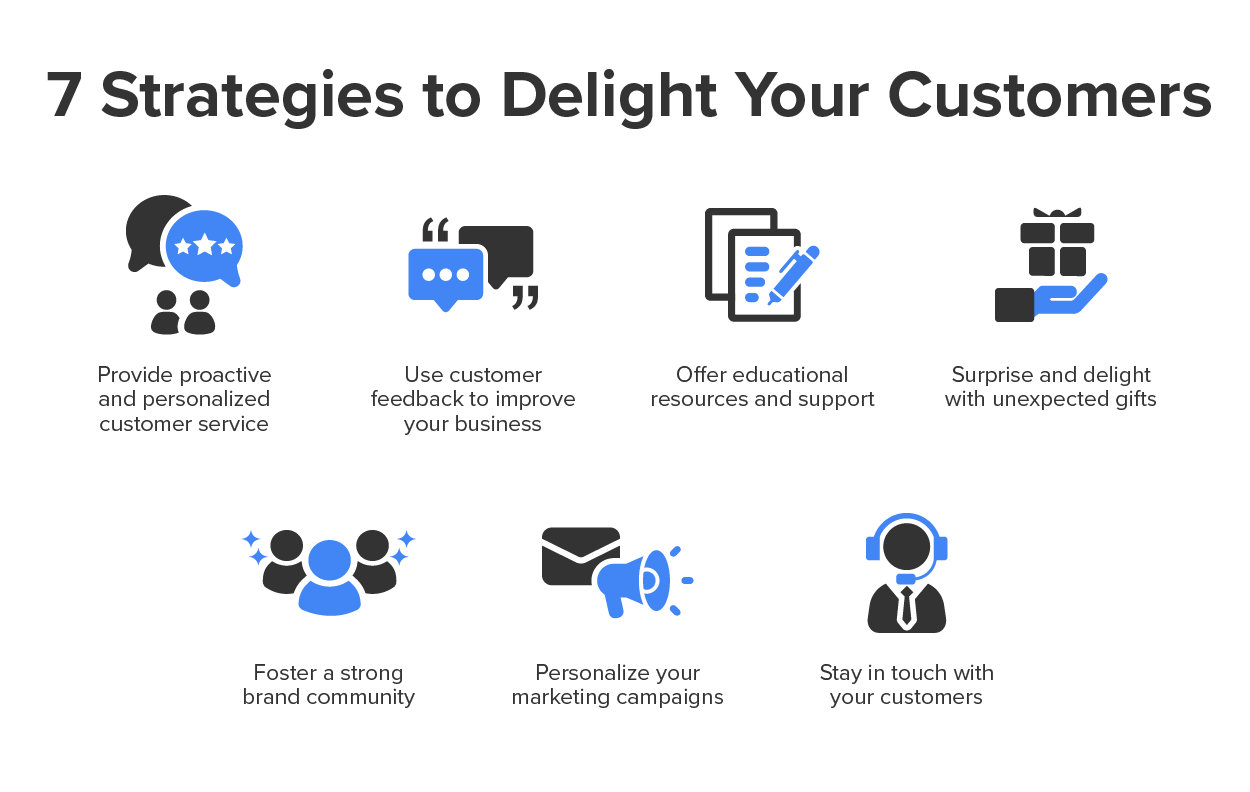
Delight needs are those that provide the “wow” factor. These needs, like unstated needs, can make some products more desirable than others if they meet those needs. Going back to our phone example, delight needs can be something like a phone case or other promotional gift. The image below shows some ways that marketers can delight customers, such as offering them unexpected gifts that add value, providing customized service, offering resources and support, and including them in fostering a strong brand community.
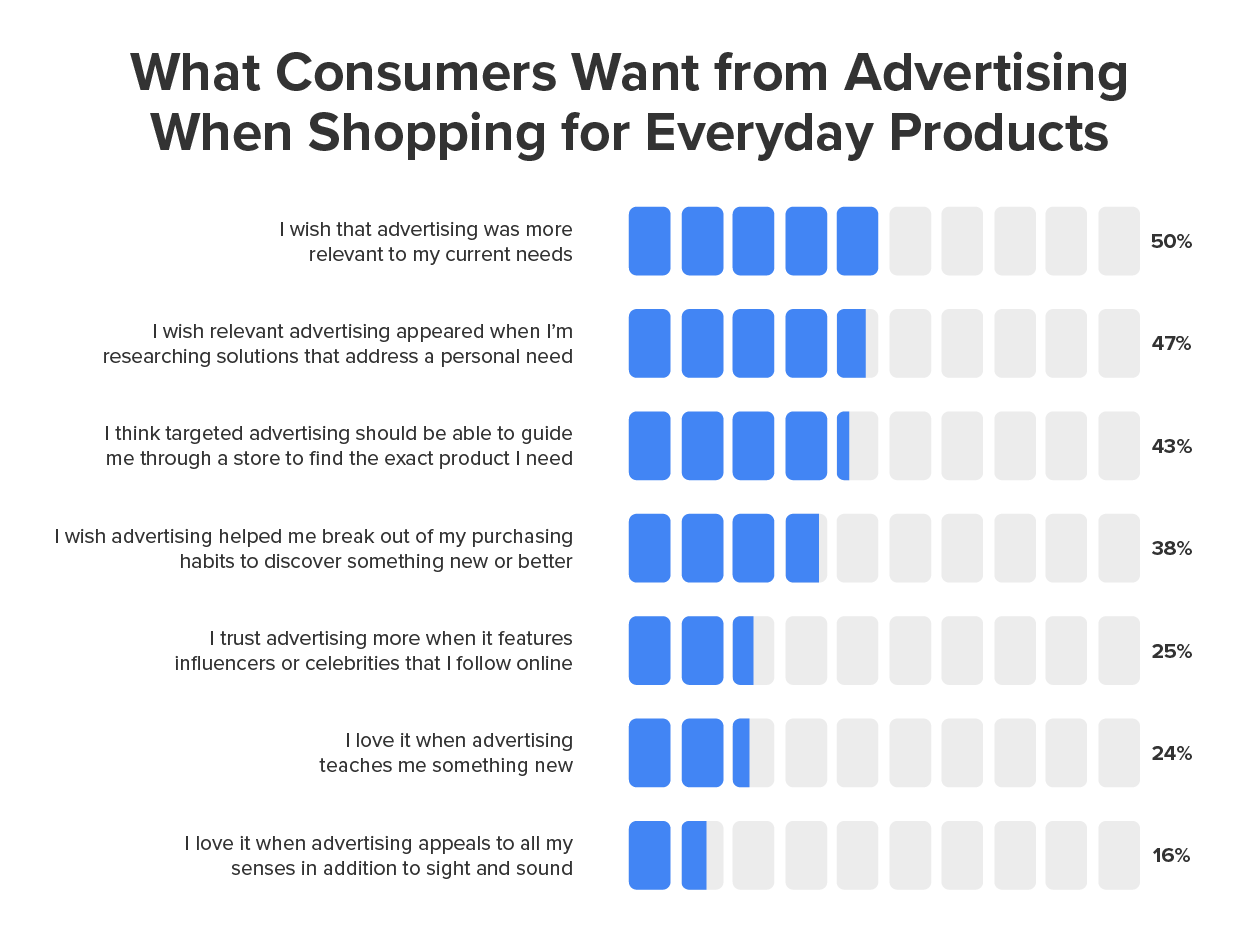
Secret needs are needs that a customer may not state or realize but can be one of the main reasons for choosing a particular product to fulfill the basic stated need. Do customers want a new cell phone as a status symbol but won’t admit that status is important to them? Consumers have expectations of each of the 4 Ps, even promotion and advertising as shown below.
You may be asking yourself at this point, “Does marketing satisfy needs, or does it create needs?” Some people feel that marketing creates needs and pressures consumers into buying unneeded products or services. However, marketing does not create needs; rather, it opens consumers’ eyes to their wants, and it’s up to marketers to understand those wants in order to guide consumers on the path to purchasing their products or services. Marketing creates value, and value speaks to the satisfaction of customer needs and the benefits customers receive from the product. It’s the customer, however, who ultimately determines how well the product fulfills their needs and how much value the product creates.
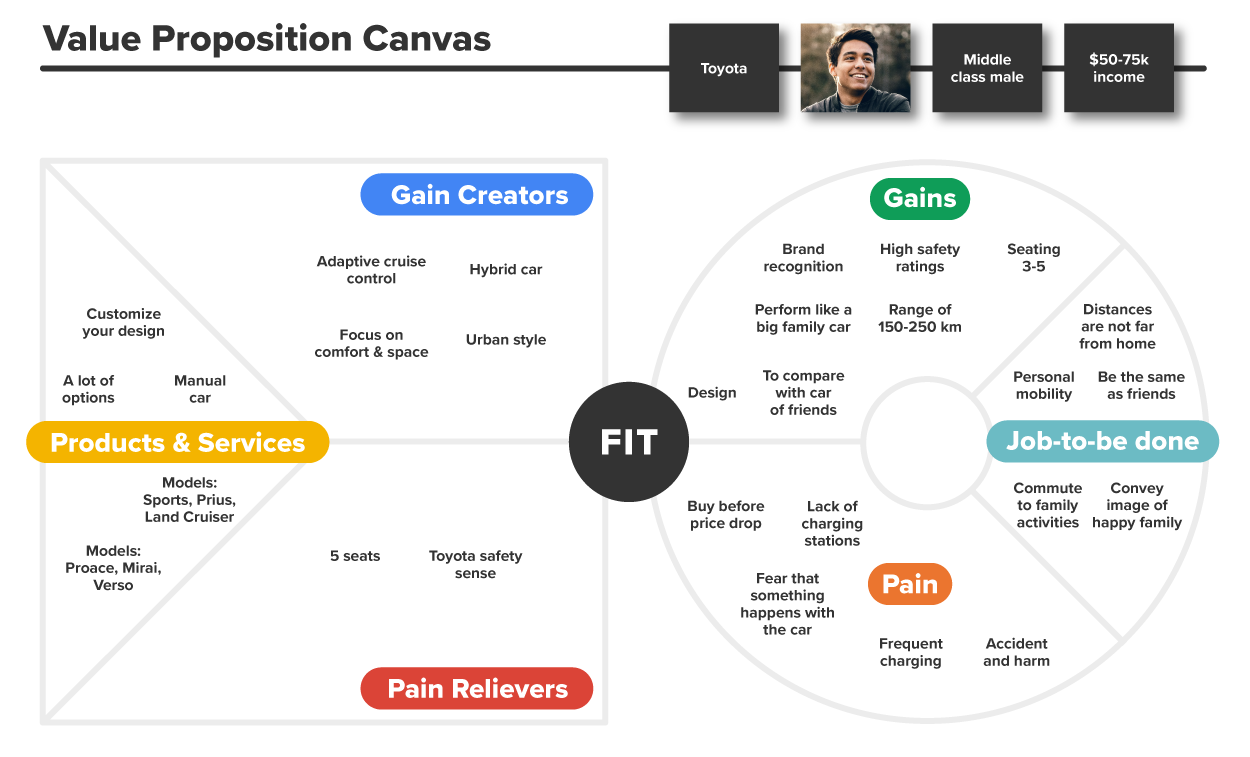
A value proposition identifies the quantifiable benefits that customers can expect when they choose to purchase your company’s product or service. A value proposition is, in effect, a promise from the company to the customer, and it can serve as a competitive differentiator to motivate customers to purchase your company’s products or services. In other words, your value proposition should bring together in a brief, concise statement what your customer wants and/or needs and how your product or service will meet those wants and needs better than your competitors.
That’s a bit abstract, so we thought we’d include a few examples of some good value propositions:
Marketing facilitates what is known as the exchange process—the act of obtaining a desired product or service from an individual or business by providing in return something of value, as illustrated in the image below.
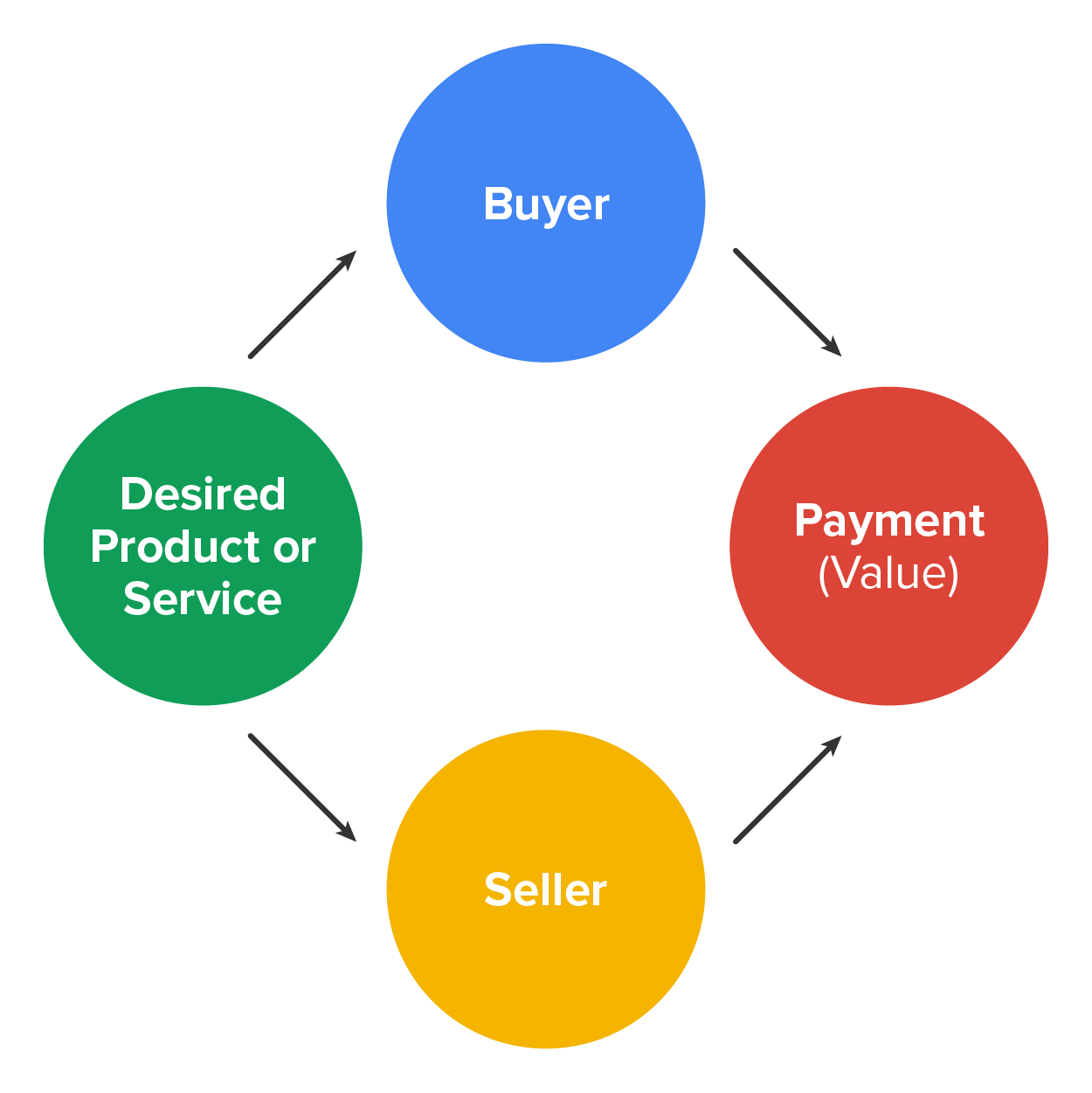 The buyer (or customer) initiates the exchange process. The buyer (who has a want or need) is the individual or business who is willing to pay money or provide other personal resources to satisfy this need or want. Let’s simplify that definition with an example. When lunchtime rolls around and you’re on campus or at your job, you’re hungry; you have a need for food and drink. You go to the dining hall or a nearby restaurant to order lunch, and you’re willing to pay money in exchange for your meal. Simple, right?
Keep in mind here, however, that there is a difference between a customer and a consumer. The customer is the individual or business that purchases the product or service. The consumer is the user of the product or service. To put this concept in simple terms, if a grandmother buys a toy for her grandson, she is the customer; her grandson (who will use the product) is the consumer. In the case of going out for lunch, you’re both the customer and the consumer.
The desired object is the product or service itself. It may be a physical good, service, or experience that consumers expect will satisfy their wants and/or needs. Let’s go back to our lunch example. The desired object is the meal. The seller is the individual or organization that supplies the need-satisfying product, service, or experience. Once again, in the lunch example, the seller would be the dining hall or the restaurant.
Inherent in the exchange process is what’s known as value—the benefit to the customer or consumer relative to the cost of the exchange. In other words, value is the monetary worth of the benefits the customer receives in exchange for the product or service. You may really want a backpack because it keeps your “stuff” organized and it’s lightweight (the benefits), but if the cost is too high, either in terms of the monetary cost or the time you’d have to spend going to the store to buy it, that backpack won’t have value for you. No sale!
Source: THIS TUTORIAL HAS BEEN ADAPTED FROM OPEN STAX’S PRINCIPLES OF MARKETING COURSE. ACCESS FOR FREE AT https://openstax.org/details/books/principles-marketing. LICENSE: CREATIVE COMMONS ATTRIBUTION 4.0 INTERNATIONAL.
REFERENCES
Fard, A. (2023). Value Proposition Canvas: The Whats, Whys & Hows. Retrieved from adamfard.com/blog/value-proposition-canvas
Marketing Charts. (2020). Here’s What Consumers Want From Advertising When Shopping for Everyday Products. Retrieved from www.marketingcharts.com/advertising-trends/creative-and-formats-111745
Peekator. (2021). How To Identify Customer Needs And Expectations. Retrieved from peekator.com/how-to-identify-customer-needs-and-expectations/
Qualtrics. (2023). Customer Needs Analysis: Definition & Research Methods. Retrieved from www.qualtrics.com/experience-management/research/customer-needs-analysis/
Storylane. (2023). Ultimate Guide to Customer Delight - 7 Retention Strategies. Retrieved from www.storylane.io/blog/maximizing-customer-delight



