Table of Contents |
Consider the area of the region bounded by  between the x-axis,
  and
and 
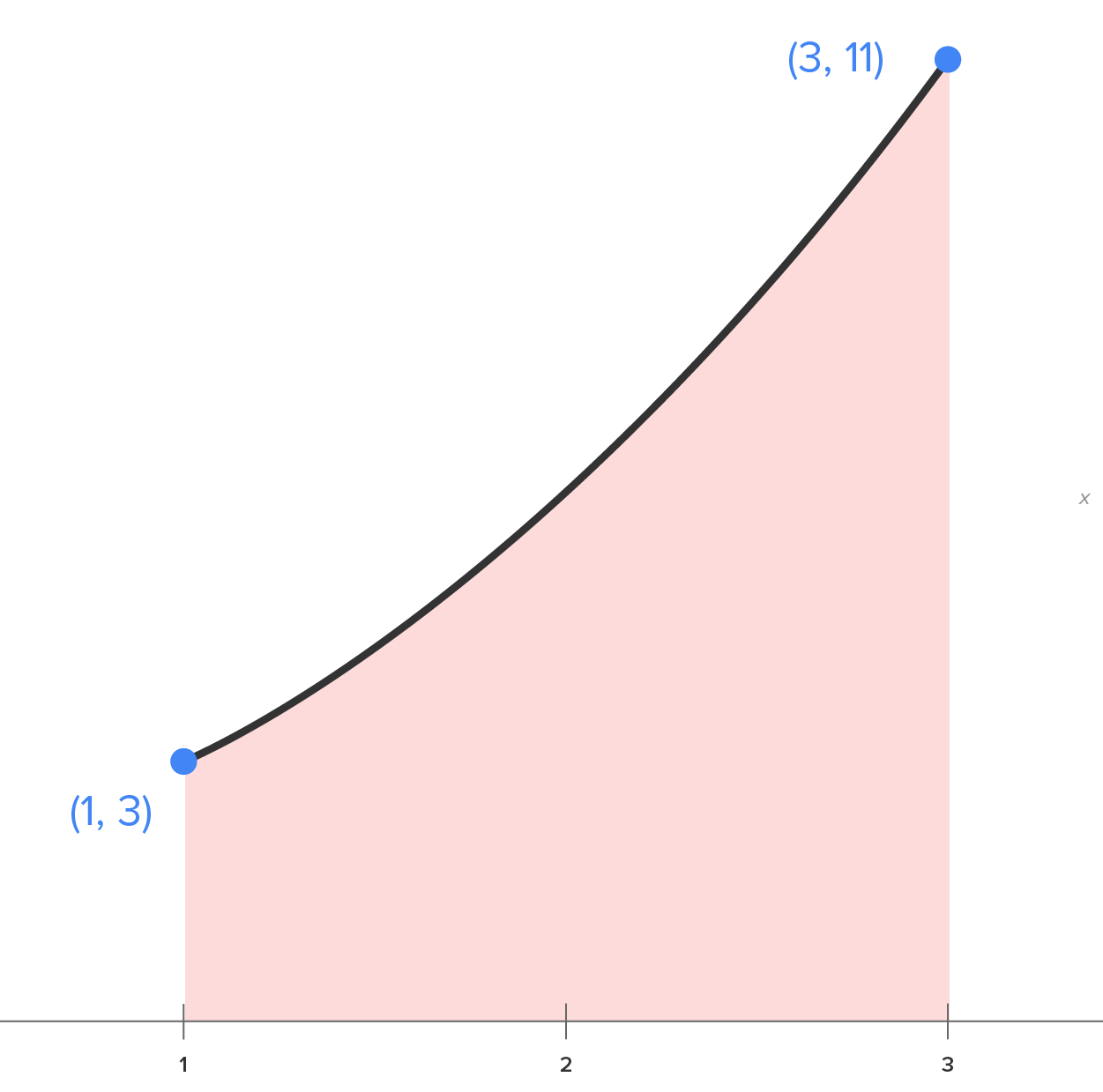
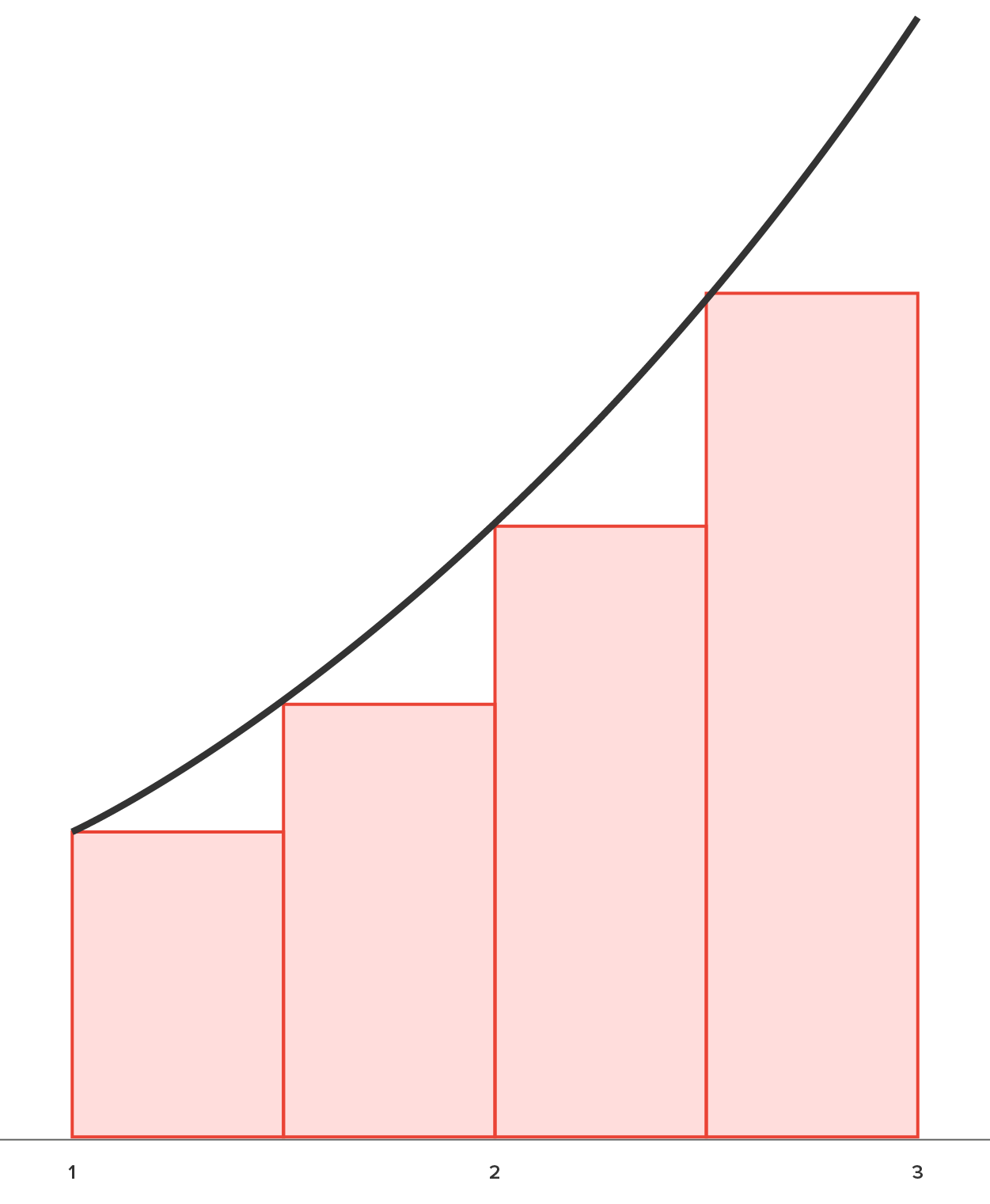
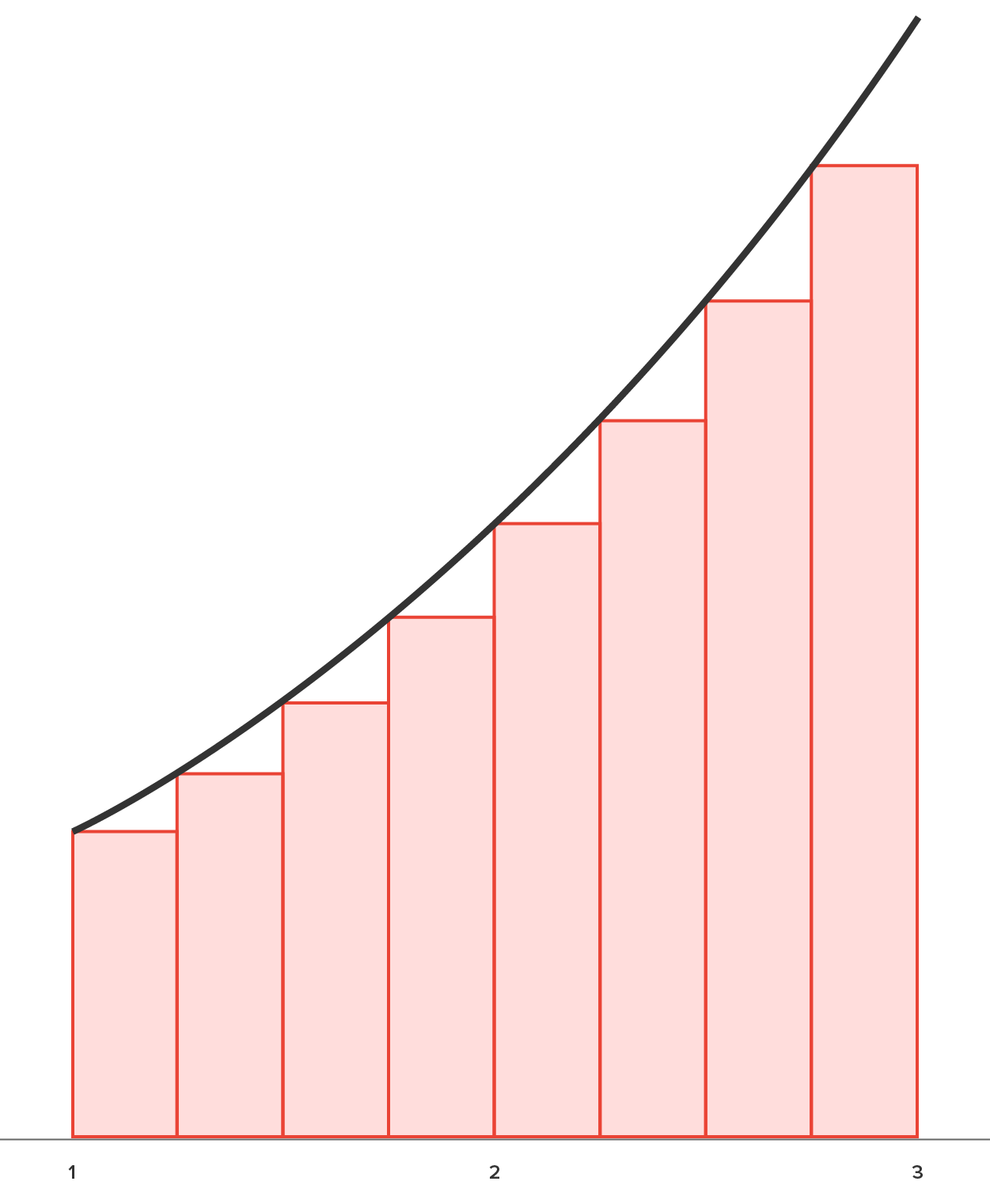
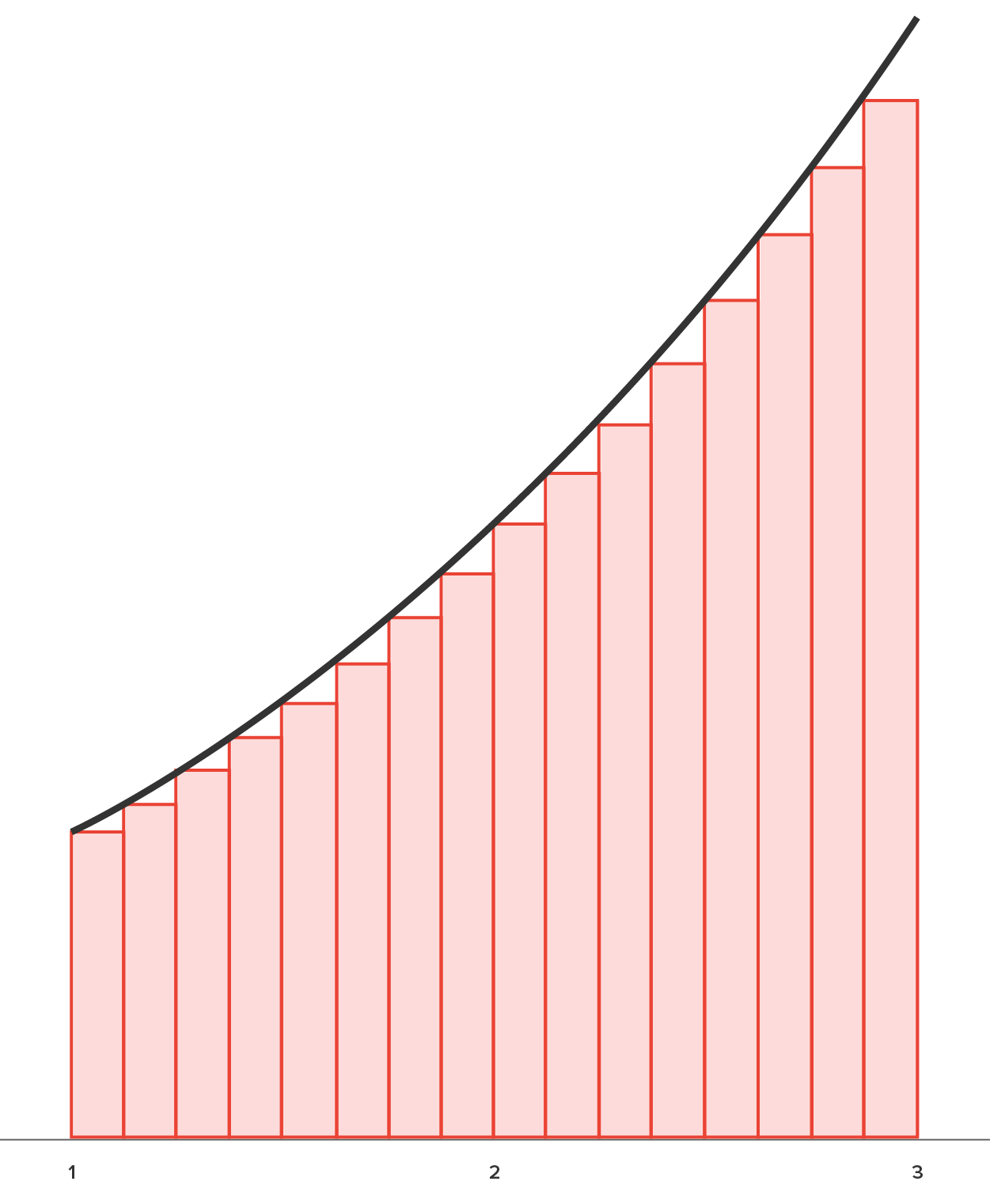
Shown below is the actual region as well as the region approximated by 4, 8, and 16 rectangles; all have equal width.
| Actual Region | 4 Rectangles |
|---|---|
|
|
| 8 Rectangles | 16 Rectangles |
|
|
When the subintervals have equal width, we notice the following as the number of rectangles (and subintervals) increases:
 on
on  we will only use rectangles that have equal width. That is, when n subintervals are used, the width of each subinterval is
  This also means that Riemann sums from this point forward will be written as:
 is nonnegative. As the number of rectangles gets larger, which means that
  this quantity will get closer to the actual area as long as
  for all k.
When 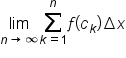 exists and has the same value regardless of the values of
  used in each subinterval, then is integrable on
If we call A the definite integral of on then 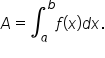
In this notation,
is called the integrand.  the value of the Riemann sum approaches the definite integral as
  Then, the quantity
  is the area between the graph of a nonnegative function and the x-axis, between
  and
and 
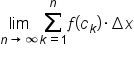 exists and is equal to A regardless of the values of used in each subinterval, then we say that is integrable on the interval
Using the definition of a definite integral, we can write Riemann sums as definite integrals and vice versa.
EXAMPLE
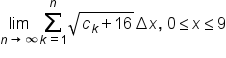
Write as a Riemann sum.
is
as a Riemann sum.
is 
 the definite integral is the value of the Riemann sum as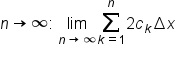
Now, let’s take a Riemann sum and write it as a definite integral.
EXAMPLE
A function on the interval  has the Riemann sum
 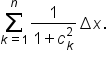 and is written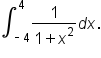
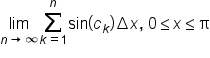
We learned that is integrable on  if exists and is equal to the same value for any choice of
  each of which is in their respective subintervals.
By using the formulas for sigma notation combined with the limit definition, we can evaluate some definite integrals of functions for which we don’t know the area of the corresponding region.
Here is how:
to be the right-hand endpoint of the interval. Then, 

 ... which means
  into the function.
 EXAMPLE
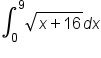
Use a Riemann sum to evaluate
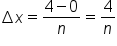
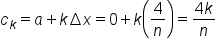

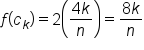
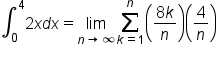 .
.
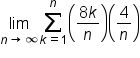
|
Calculate the limit. |
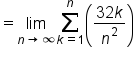
|
Simplify. |
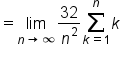
|
 is a constant factor since k is the index of summation. Therefore, it can be factored out. is a constant factor since k is the index of summation. Therefore, it can be factored out.
|
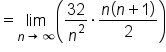
|
Apply the summation formula: 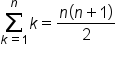
|
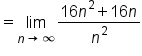
|
Simplify. |
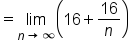
|
Divide each term by 
|

|
Evaluate the limit. |
used (left endpoints, etc.), this holds true.
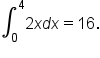

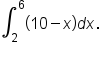
 to
to  we need to set up the values of
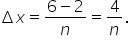



 we have:

 The corresponding limit of a Riemann sum is
 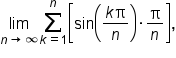 which has no known summation formula. We will learn how to find the value of the definite integral without summations in a future challenge.
EXAMPLE
Evaluate the definite integral:
 and the x-axis on the interval
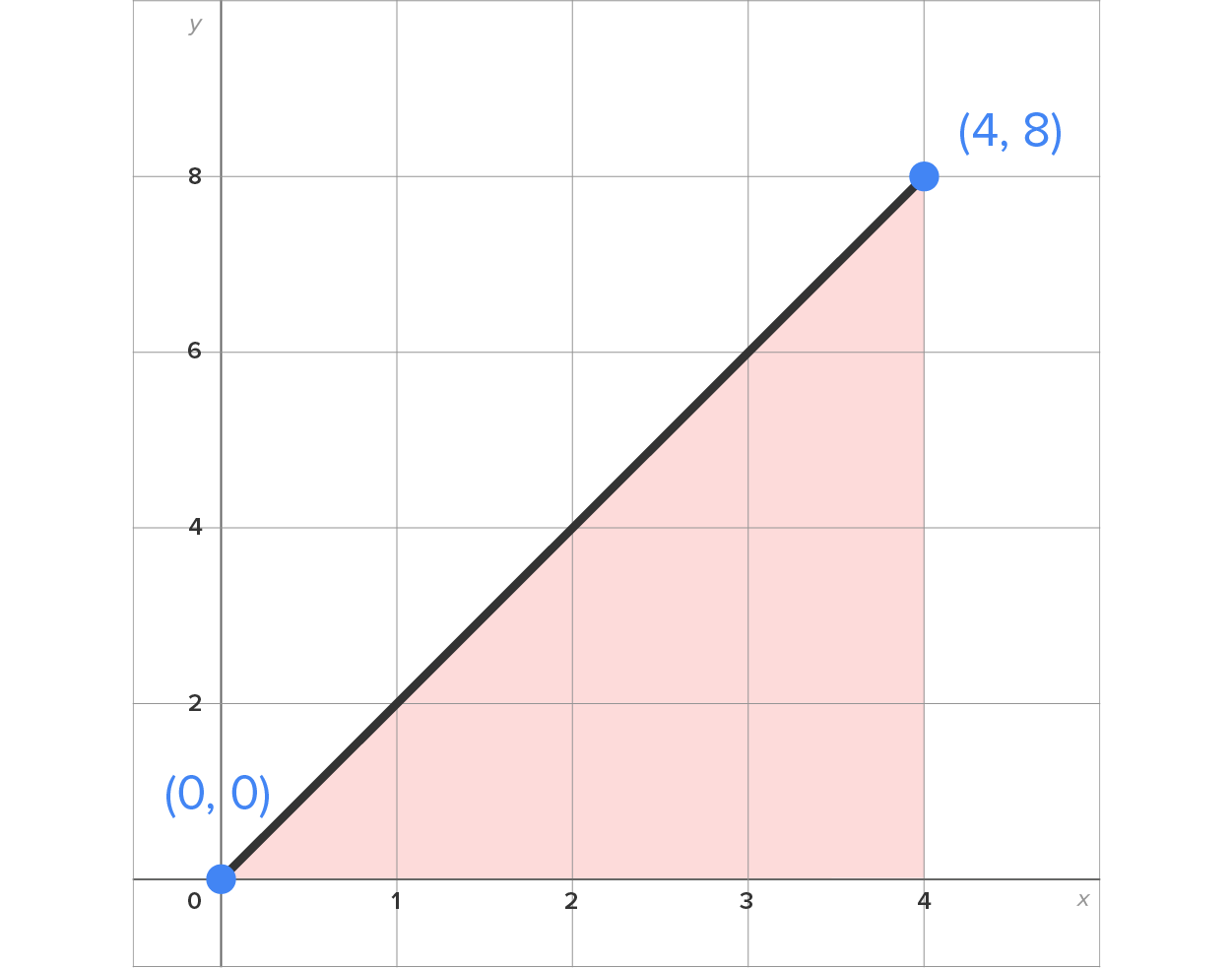
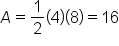 square units.
Let’s look at an example of a continuous piecewise function.
EXAMPLE
Consider the graph of shown in the figure. Use it to evaluate 
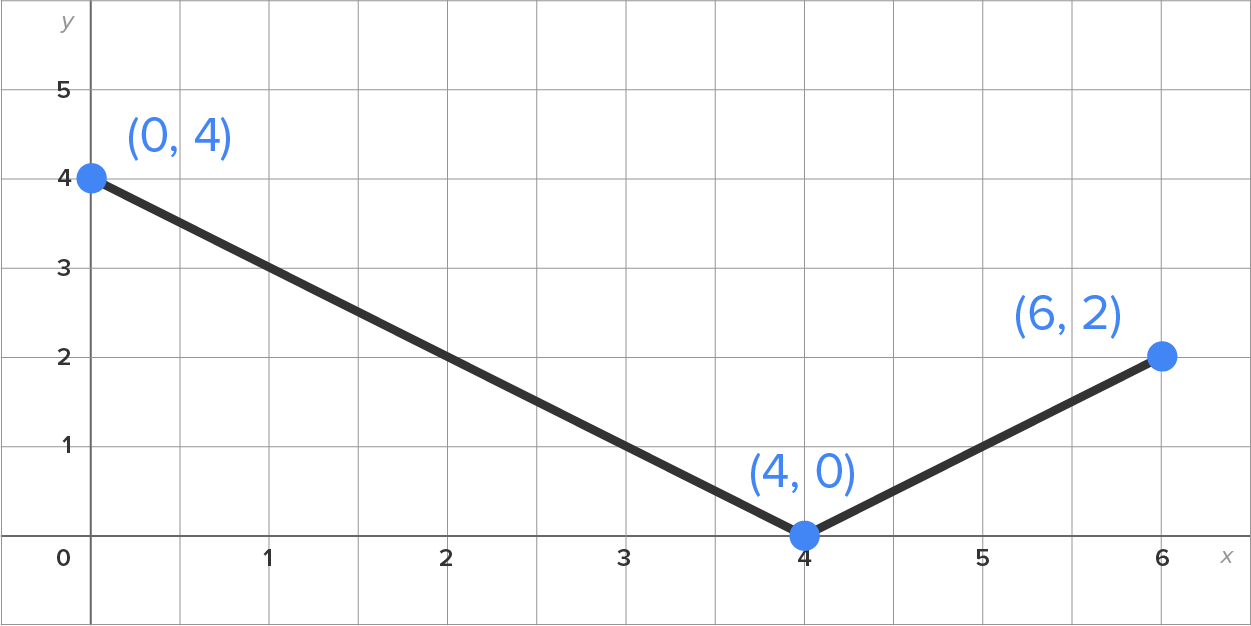
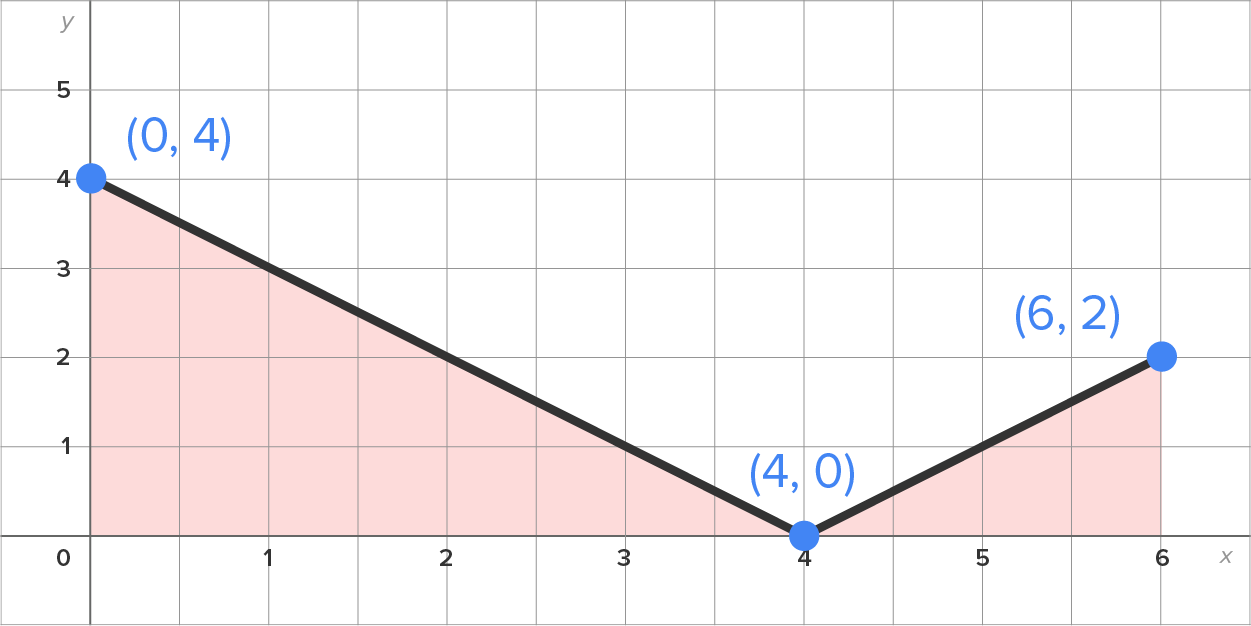
 has area
 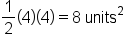 and the triangle on
  has area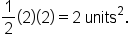
 which means that
 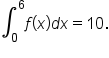 shown in the figure that can be used to evaluate
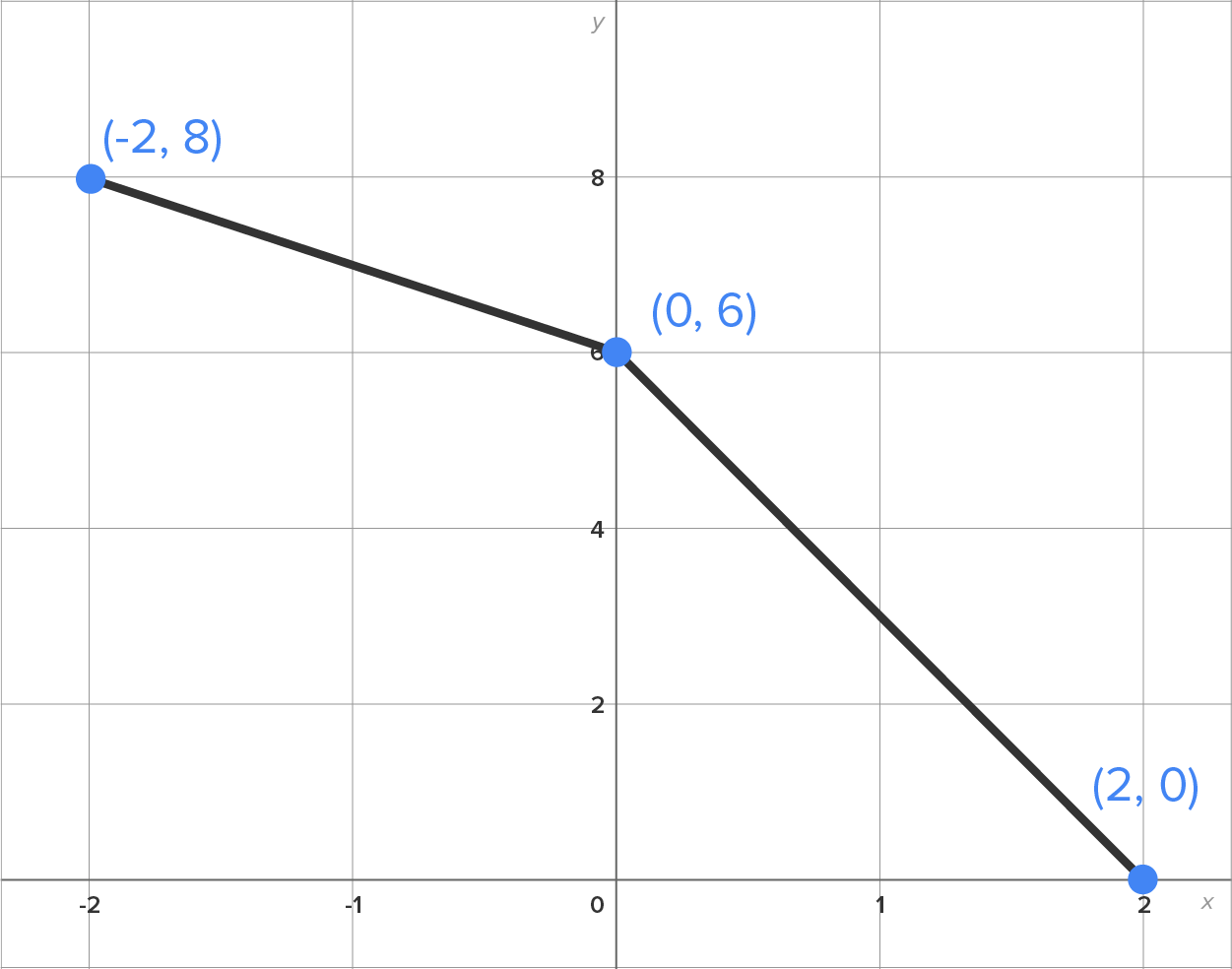
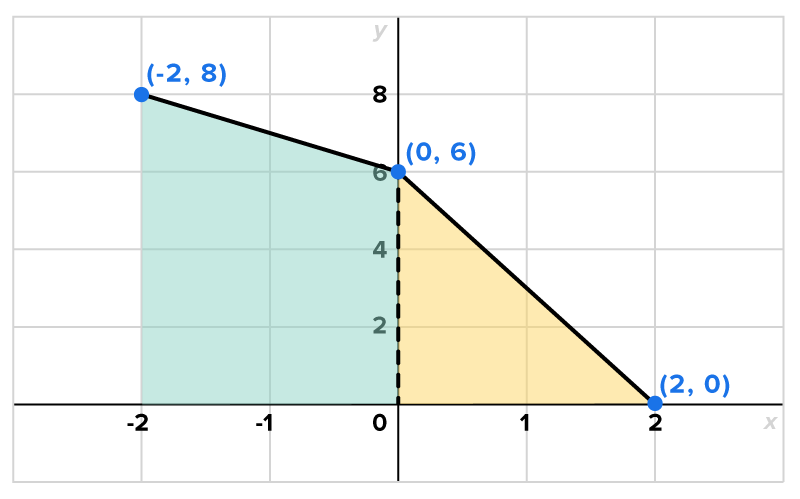
 to
to  the region is a trapezoid with bases 8 and 6, and height 2. The area of this region is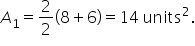
 to
to  the region is a triangle with base 2 and height 6. The area of this region is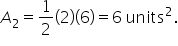

As it turns out, doesn't have to be continuous in order to be integrable. Here is an example that illustrates this.
 shown to evaluate
  the value of the Riemann sum approaches the definite integral as
  . You also learned that by using the formulas for sigma notation combined with the limit definition, you can evaluate definite integrals of functions for which you don’t know the area of the corresponding region, by using Riemann sums to visualize how the area between and the x-axis on is obtained. Finally, through a series of examples using area to evaluate Riemann sums and definite integrals, you have seen that does not have to be continuous to be integrable.
Source: THIS TUTORIAL HAS BEEN ADAPTED FROM CHAPTER 4 OF "CONTEMPORARY CALCULUS" BY DALE HOFFMAN. ACCESS FOR FREE AT WWW.CONTEMPORARYCALCULUS.COM. LICENSE: CREATIVE COMMONS ATTRIBUTION 3.0 UNITED STATES.
If the value of  exists and is equal to A regardless of the values of
  used in each subinterval, then we say that
  is integrable on the interval