Table of Contents |
As you have learned, all living cells in multicellular organisms contain an internal cytoplasmic compartment and a nucleus within the cytoplasm. Cytosol, the jelly-like substance within the cell (cyto, cell), provides the fluid medium necessary for biochemical reactions. All animal cells (and many non-animal cells) also contain various cellular organelles. Recall that an organelle (“little organ”) is one of several different types of structures in the cell, each performing a unique function. Just as the various bodily organs work together in harmony to perform all of a human’s functions, the many different cellular organelles work together to keep the cell healthy and perform all of its important functions. The organelles and cytosol, taken together, compose the cell’s cytoplasm.
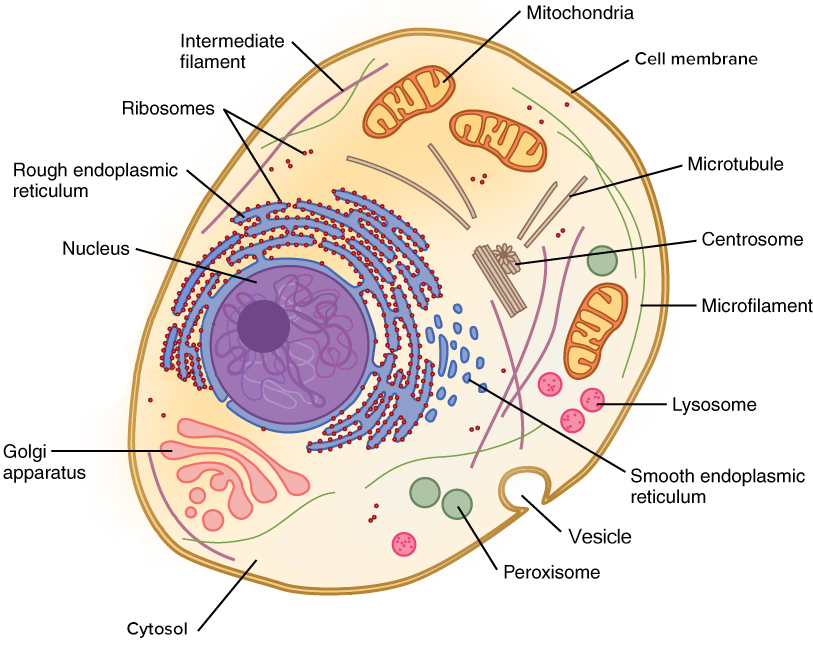
Among the organelles in the cytoplasm, the cytoskeleton is a part of the cell contained in the cytoplasm that acts as the structure and support for the cell.
EXAMPLE
Think of your skeleton, for example, and the role that your skeleton plays. It acts to support your body and give your body structure. This is similar to the cytoskeleton of a cell; it has some of the same roles. It helps the cell to maintain its shape and supports the cell as a whole.The cytoskeleton is composed of three different parts.
| Parts of the Cytoskeleton | |
|---|---|
| Part Name | Description |
Microtubules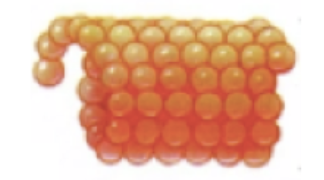
|
Largest parts of the cytoskeleton. They move cell parts and help to organize the cell. |
Microfilaments
|
Act to reinforce parts of the cell and also help to anchor membrane proteins. |
Intermediate filaments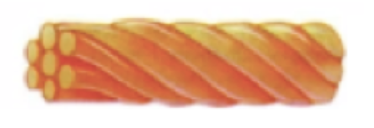
|
Help to strengthen the cytoskeleton. They also help to anchor actin and myosin, which are an important part of muscle contractions. |
The nucleus contains the cell's DNA and is basically the control center of the cell. Think of it as the brain of the cell or the control center that controls everything happening within the cell.
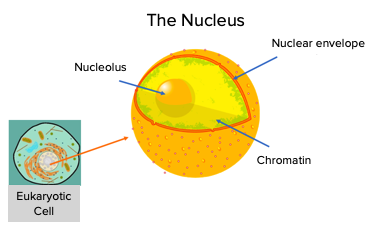
Outside, surrounding the nucleus, is something called a nuclear envelope. This nuclear envelope is a double-layer membrane composed of two lipid bilayers.
Within the nuclear envelope are pores—the little black dots in the figure above represent the pores in the nuclear envelope. These pores are very important because they allow for RNA to leave the cell, along with certain ions or molecules. There are also many different types of proteins embedded within this membrane that provide various functions.
Another part of the structure of the nucleus is the nucleolus, a structure found inside of the nucleus. The purpose of the nucleolus is to construct ribosome subunits. Then, ribosome subunits will cross through the pores and into the cytoplasm of the cell, where they will connect and form the protein-building organelles known as ribosomes, which are responsible for synthesizing proteins.
Chromatin is also included in the nucleus and is all of the eukaryotic cell's DNA (and therefore, all its genetic information) stretched out within the nucleus, along with some protein. When chromatin condenses, it will form chromosomes. Chromatin becomes so condensed when it forms chromosomes that these chromosomes become visible under a microscope. The purpose of chromosomes is to allow for the passage of genetic information to a new cell. The nucleus therefore helps to keep this genetic information organized and separate from the rest of the cell.
EXAMPLE
You can think of DNA like yarn: A chromosome is the "yarn" wound into a neat ball, and chromatin is when the "yarn" is unwound all over the room. Just like it's much easier to knit yarn that is unwound, it's much easier to make RNA from DNA when DNA is uncondensed in the form of chromatin.Mitochondria are often described as the powerhouse of the cell, meaning they're the place in the cell where the majority of energy is made.
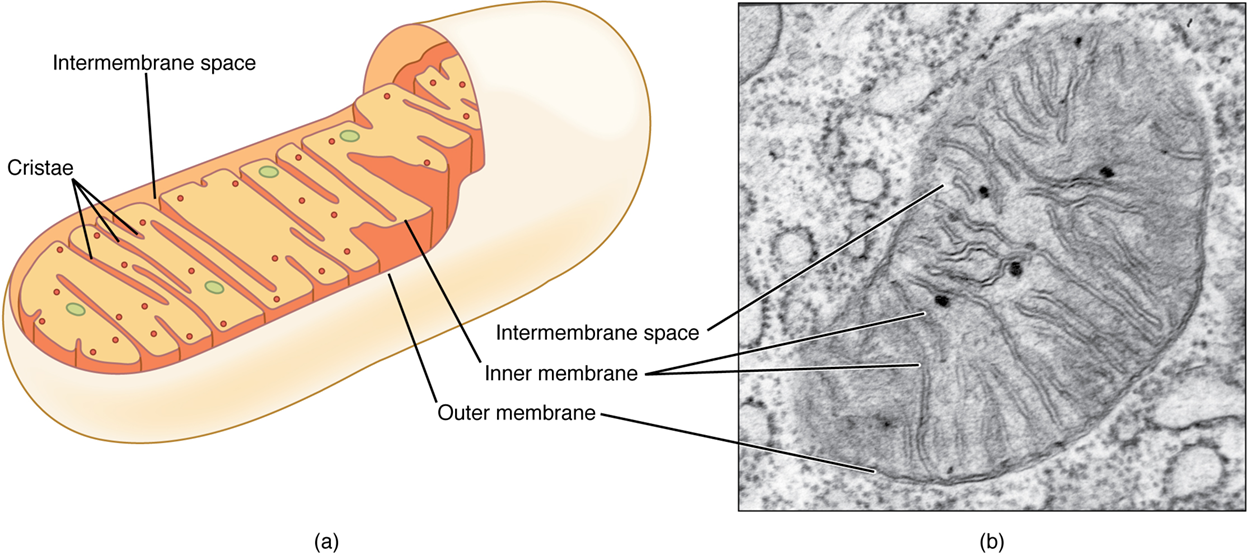
Mitochondria are the site of the majority of ATP production. ATP stands for "adenosine triphosphate." It is basically an energy storage molecule produced by cells so cells can carry out their normal functions. This ATP energy is made through a process called cellular respiration. You will learn about the details of cellular respiration in a future lesson.
If you were to think of the cell as a factory and of the organelles as different parts of the factory, the endoplasmic reticulum would be like a packager. Imagine a highway where materials are moving through this endoplasmic reticulum and getting ready to be packaged and sent off to other parts of the cells.
The endoplasmic reticulum also works closely with another organelle called the Golgi body (also known as the Golgi apparatus or Golgi complex). They help prep materials and get them packaged to be sent out to different parts of the cell.
The endoplasmic reticulum's role is to synthesize and package proteins and lipids in the cell. There are two parts of the endoplasmic reticulum: smooth and rough.
The ER is part of the endomembrane system, a system that makes lipids, modifies proteins, and helps to package those molecules that will be sent out to different parts of the cell wherever they're needed. The endomembrane system includes the nucleus, the ER, the Golgi body, and the plasma membrane. These organelles are grouped into a system because vesicles connect them. For example, a bit of the ER's membrane will pinch off into a membrane-bound bubble (a vesicle), which will merge with the membrane of the Golgi body and deliver part of the ER's contents into the Golgi body. Likewise, the Golgi body will send vesicles to the ER.
Surrounding the nucleus, we have the nuclear envelope, which is where the ER begins.
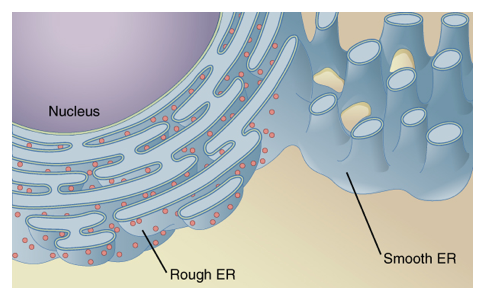
The rough endoplasmic reticulum is attached to the nuclear envelope. The reason that you call it “rough” ER is because it has ribosomes attached to it.
The little dots in the image above are the ribosomes. In this part of the ER, newly formed polypeptide chains will enter, then side chains will be added onto them to help complete that protein.
Ribosomes use RNA messages sent from the nucleus to build proteins. Therefore, it makes sense that the rough ER is near the nucleus: The RNA messages leave the nucleus and immediately get converted into protein by the ribosomes on the rough ER.
Farther away from the nucleus, the ER has fewer ribosomes attached to it. This is called the smooth endoplasmic reticulum, which is called such because it does not have as many ribosomes attached to it. The smooth ER's job is to assemble lipids.
The function of the Golgi body is to modify, package, and transport materials throughout the cell. As you just learned, the Golgi body, like the ER, is a part of the endomembrane system.
The Golgi body looks like a bunch of flattened sacs (or "pancake stacks") between the ER and the plasma membrane.
Within the Golgi body, there are enzymes. The enzymes help to finish the production of proteins and lipids that began in the ER. The ER is like the assembly line that helps to assemble the proteins and lipids. From there, they're sent to the Golgi body, where they're finished off and then packaged into a vesicle.
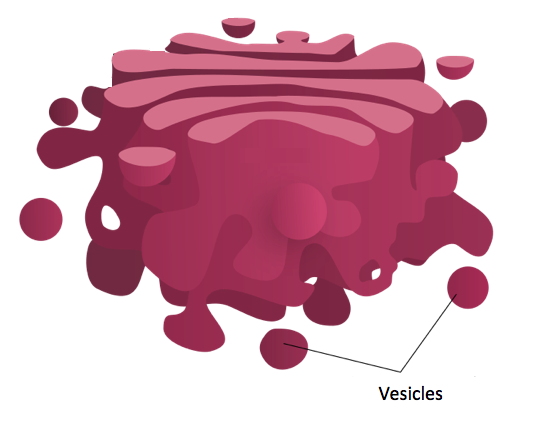
The vesicle will have a specific location that it needs to go to in the cell. That location will be determined by enzymes or different tag molecules that are added to that vesicle. These tag molecules tell the vesicle where it needs to go within the cell.
Some vesicles are used to transport different molecules throughout the cell, but other types of vesicles can contain enzymes that will help to break down substances within the cell.
One type of vesicle within a cell that you will become familiar with is a lysosome. Enzymes contained in the lysosome will help break down materials in the cell, such as cell parts or bacteria.
Lysosomes are organelles found in animal cells but not most plant cells. The lysosomes are the cell’s “garbage disposal.” Enzymes within the lysosomes aid in breaking down proteins, polysaccharides, lipids, nucleic acids, and even worn-out organelles. These enzymes are active at a much lower pH than the cytoplasm's. Therefore, the pH within lysosomes is more acidic than the cytoplasm's pH. Many reactions that take place in the cytoplasm could not occur at a low pH, so again, the advantage of compartmentalizing the eukaryotic cell into organelles is apparent.
In addition to their role as the digestive component and organelle recycling facility of animal cells, lysosomes are part of the endomembrane system. Lysosomes also use their enzymes to destroy pathogens (disease-causing organisms) that might enter the cell.
EXAMPLE
A good example of this occurs in macrophages, a group of white blood cells which are part of your body’s immune system. In a process that scientists call phagocytosis, a section of the macrophage's plasma membrane invaginates (folds in) and engulfs a pathogen. The invaginated section, with the pathogen inside, then pinches itself off from the plasma membrane and becomes a vesicle. The vesicle fuses with a lysosome. The lysosome’s enzymes then destroy the pathogen.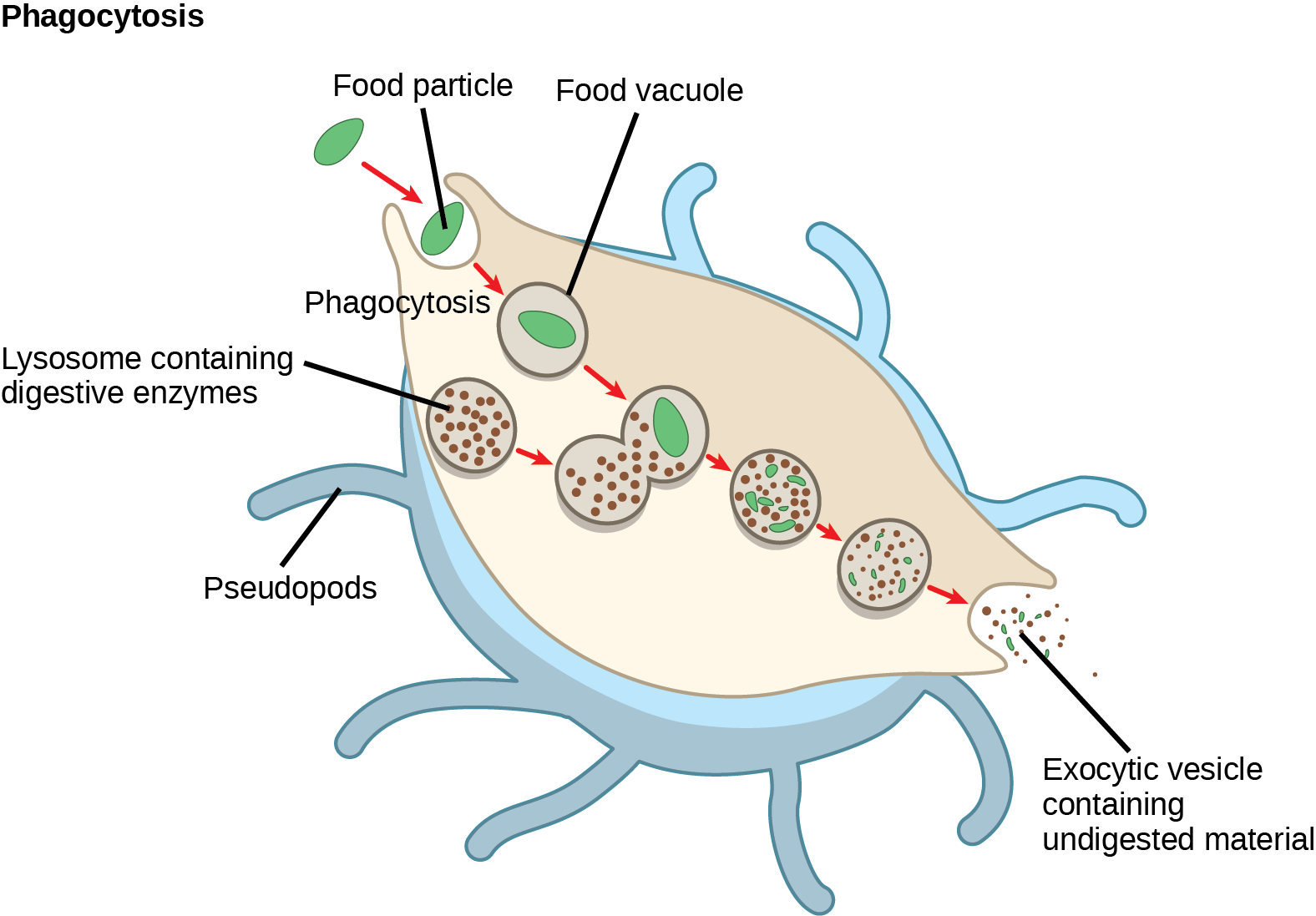
Peroxisomes are small, round organelles enclosed by single membranes that mostly contain enzymes. They carry out oxidation reactions that break down fatty acids and amino acids. They also detoxify many poisons that may enter the body.
In contrast to the digestive enzymes found in lysosomes, the enzymes within peroxisomes serve to transfer hydrogen atoms from various molecules to oxygen, producing hydrogen peroxide (H₂O₂). In this way, peroxisomes neutralize poisons such as alcohol.
H₂O₂ is a substance that is damaging to cells; however, when these reactions are confined to peroxisomes, enzymes safely break down the H₂O₂ into oxygen and water.
 Explore eukaryotic cells in three dimensions using augmented reality (AR)! Remember, AR resources are not required but may enhance your learning experience. To use AR, you will need a phone or tablet with a camera and browser.
Source: THIS TUTORIAL HAS BEEN ADAPTED FROM OPENSTAX "ANATOMY AND PHYSIOLOGY 2E". ACCESS FOR FREE AT OPENSTAX.ORG/BOOKS/ANATOMY-AND-PHYSIOLOGY-2E/PAGES/1-INTRODUCTION. LICENSE: CREATIVE COMMONS ATTRIBUTION 4.0 INTERNATIONAL. Accessed by May 2024.



