Table of Contents |
When you ask a group of people, “What’s marketing?” most people will answer “advertising” or “selling.” It’s true that both of these functions are part of marketing, but marketing is also so much more. The American Marketing Association (AMA) defines marketing as “the activity, set of institutions, and processes for creating, communicating, delivering, and exchanging offerings that have value for customers, clients, partners, and society at large.”
As a reminder, the 5-step marketing process involves understanding the marketplace and customers, developing a marketing strategy, delivering value, growing customer relations, and capturing value from customers. It’s all about value creation.

Packaging is the branded design and container that envelops a product. If you have ever purchased from Apple, you know the power of sleek packaging. Apple is known for its simple white design packaging with metallic logos. Products are visually appealing in their packages, and unboxing an Apple product feels like an experience. Apple’s packaging is as innovative as its products, which brings us to an important lesson in packaging. The package and label, which is the brand and product identification, must represent the brand effectively. While not one of the 4Ps of marketing, packaging is an important element of the marketing mix based on its close tie to the product. Packaging is also a critical shopper marketing tool as related to place. And, certainly, effective packaging can be its own form of promotion.
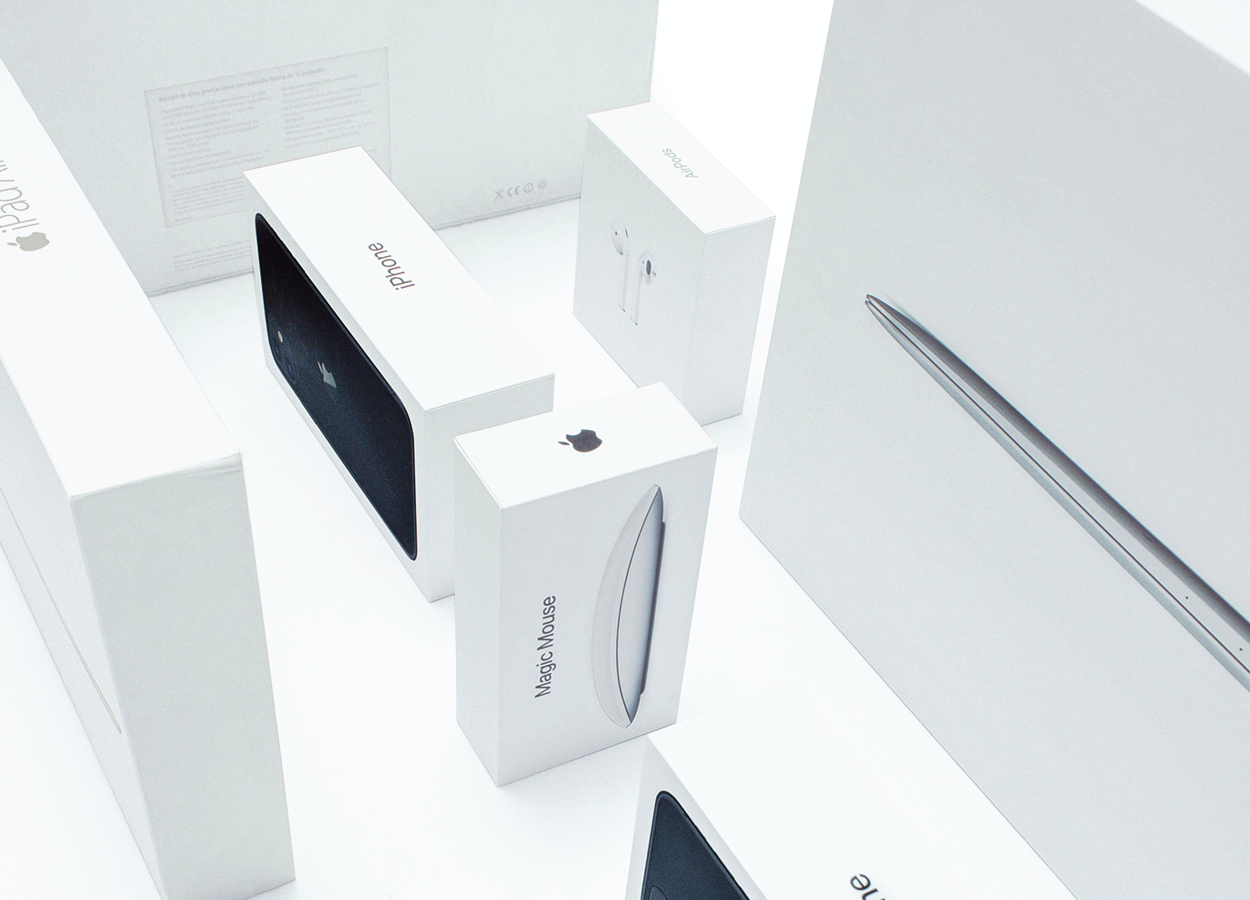
A package essentially serves as a container for the product. It has a functional purpose to protect the product from harm. Package designers are first and foremost concerned with protecting the product and secondarily with designing an appealing package and label that piques interest on store shelves and online retailers’ websites.
The functional benefits of packaging are numerous. First, a package serves to store the product to protect it from harm in transit from manufacturer to customer. Items, such as foam and cardboard, shield the product from damage and keep it clean. Second, packaging can also serve as convenience and safety for customers to carry items and store them in the home.
EXAMPLE
Tide Pods are sold in a plastic container with a child-locked lid. This packaging is convenient for customers to safely store the pods in their home.Third, packaging can aid in the product’s usability or become a part of the product experience itself. For example, drinkable yogurt is sold in small bottles. The bottles become part of the product experience when a consumer takes a sip of the yogurt. Fourth, packaging and labeling can aid in a brand’s compliance with the law. For example, the Federal Trade Commission Act of 1914 stipulates that false, misleading, or deceptive labels or packaging may be upheld as unfair competition. Thus, packaging and labeling allow a brand to be clear, accurate, and transparent in communication with customers.
Packaging can be used to differentiate a brand, either through design or functionality. For example, beautifully designed packages, such as Tiffany’s little blue box, differentiate the brand through its status. Meanwhile, functional packaging, such as potato chip bags filled with air, serves as differentiation to deliver uncrushed chips.
Packaging can also create a customer experience. Unboxing a product can contribute to the positive emotions associated with a brand. Artisans who sell goods on Etsy understand packaging as a contributor to customer experience. Artisans will often take special care to package goods beautifully with a handwritten note of gratitude. Personalization and packaging make Etsy customers feel involved in an experience.
Consumers are increasingly concerned about the environmental impact of packaging and its contribution to waste. A study by McKinsey indicates that more than half of U.S. consumers are highly concerned about the impact of product packaging. While it is not a top criterion for purchase, product packaging is a consideration among consumers. Furthermore, consumers are willing to purchase products that have green packaging, such as recycled plastics and fiber-based substitutes.
IN CONTEXT
Groceries are typically packaged in glass, cardboard, plastic, and metal cans. Single-serve plastics are a concern when used for groceries, as they cannot be recycled. Electronics and other fragile products may be packaged with cardboard and foam, which can find their way into landfills. In addition to the energy used to manufacture the product, packaging adds to the environmental burden. Discarded product packaging can be found in landfills, as street litter, and in water sources, harming the environment. Creation of product packaging depletes critical resources, such as trees, and adds to air pollution.
Companies are innovating on packaging to make it sustainable. As you may see at a restaurant like Chipotle, brands are adopting more fiber-based packaging and compostable, and recyclable options.
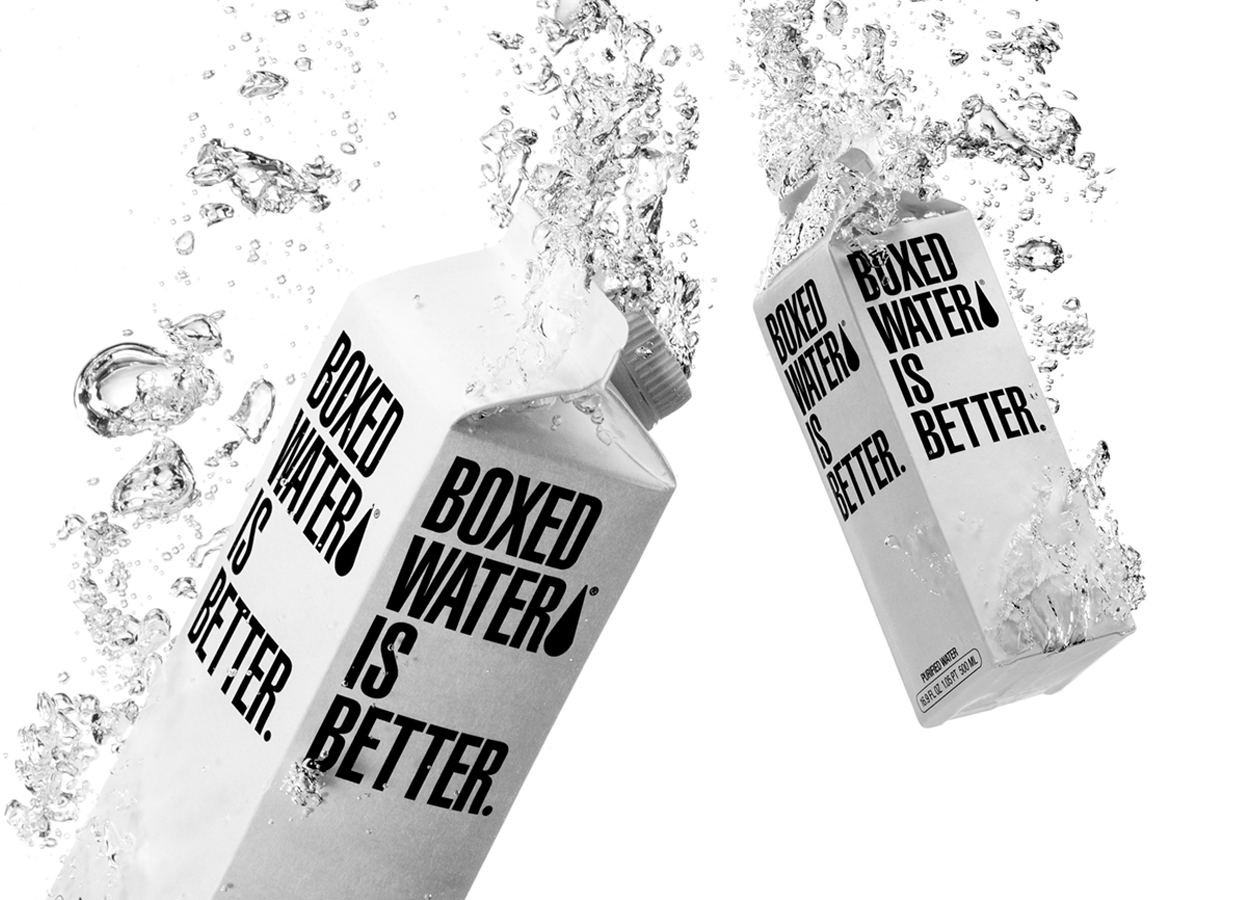
Companies are also looking at ways to reduce packaging to only its necessary components. Boxed Water Is Better has adopted a cardboard box for its water that is 75 percent paper and 100 percent recyclable. The packaging is free of BPA and other chemicals. The paper is ethically sourced and shipped flat to reduce the amount of space in a truck, further reducing the company’s carbon footprint.
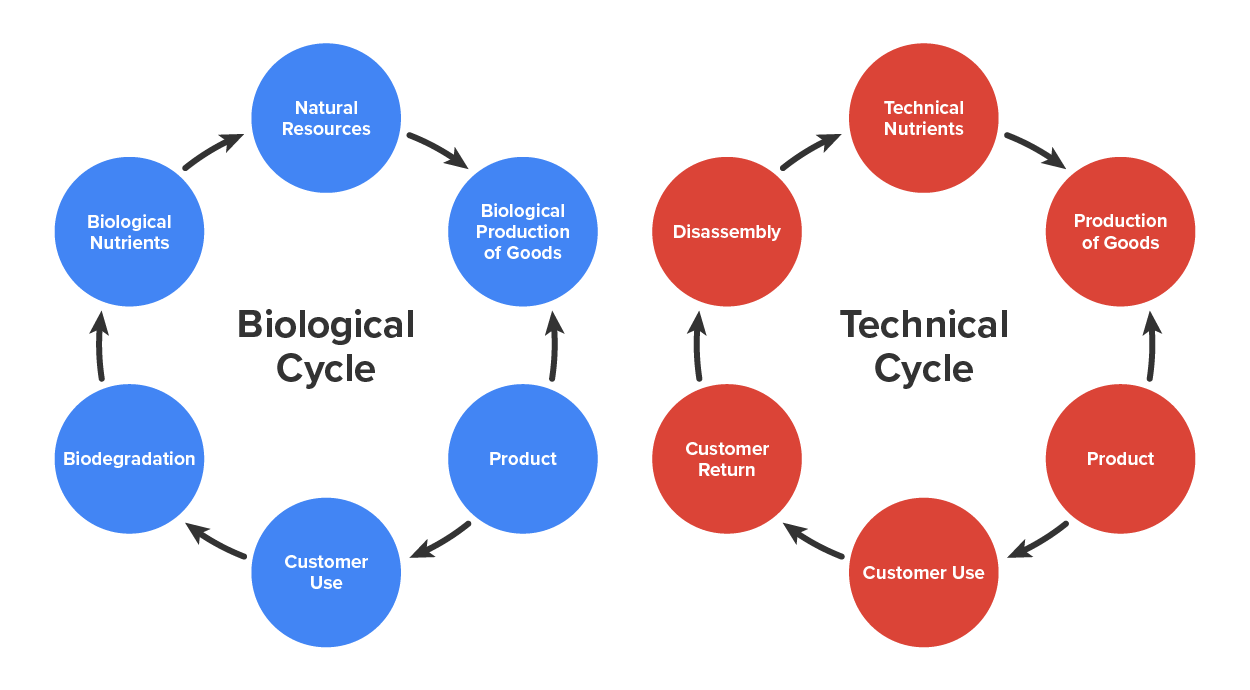
Cradle-to-cradle packaging design takes the waste out of the life cycle of a package. The package is designed to be something that can be reused or 100 percent recycled. It is meant to imitate nature’s processes by being regenerative. A cradle-to-cradle approach uses renewable energy and keeps parts of the biological world within the biological world. In a similar way, some consumer goods flow in a technical cycle, so that the material resources can be generated into new products.
Nike has used recycled plastics to manufacture its vegan Space Hippie sneakers, which are reputed to have the lowest carbon footprint of any of its products. Many eco-conscious retailers also reuse the cardboard boxes their goods are delivered in to design displays for their stores and showcase their values in sustainable design and zero waste. Manufacturers who receive products on wooden pallets donate these to local community artists who make fences for homeowners and schools to provide safety in a more sustainable fashion.
In addition to concerns about sustainability, marketing professionals must be mindful of ethical concerns regarding packaging. Remember, a consumer can see the package on the store shelf, not the product inside. The customer is seeking guidance, explanation, and assurance of a product’s quality from the packaging. The package must not mislead customers about the size, quality, ingredients, or health claims. The graphics on a package must also properly represent the product inside. For example, a package might display a photo of a product that is larger or more substantial than the product inside, leading the consumer to erroneously believe that the product matches the photo.
Product packaging should be effective in protecting the product. Therefore, brands have a responsibility beyond sustainability to design packaging that ensures that the product survives transport from the manufacturer, to the wholesaler, to the retailer, and finally home with the customer. Think about the last time you purchased eggs at the grocery store. The eggs are quite fragile, but they are packaged in such a way that minimizes damage as the container travels from the farm to your home. It would be unethical for a brand to reduce packaging to save money and leave the consumer with a damaged product.
Additionally, product packaging informs the customer of important safety issues. For example, a package with small parts might have a warning that it is a choking hazard for children under the age of three.
Source: THIS TUTORIAL HAS BEEN ADAPTED FROM OPEN STAX’S PRINCIPLES OF MARKETING COURSE. ACCESS FOR FREE AT https://openstax.org/details/books/principles-marketing. LICENSE: CREATIVE COMMONS ATTRIBUTION 4.0 INTERNATIONAL.
REFERENCES
Nike. (2023). Space Hippie. Retrieved from www.nike.com/space-hippie



