In this lesson, you will learn about currently available methods of birth control as well as some common causes of infertility. Specifically, this lesson will cover:
The prevention of a pregnancy comes under the terms contraception or birth control. Strictly speaking, contraception refers to preventing the sperm and egg from joining. Both terms are, however, frequently used interchangeably.
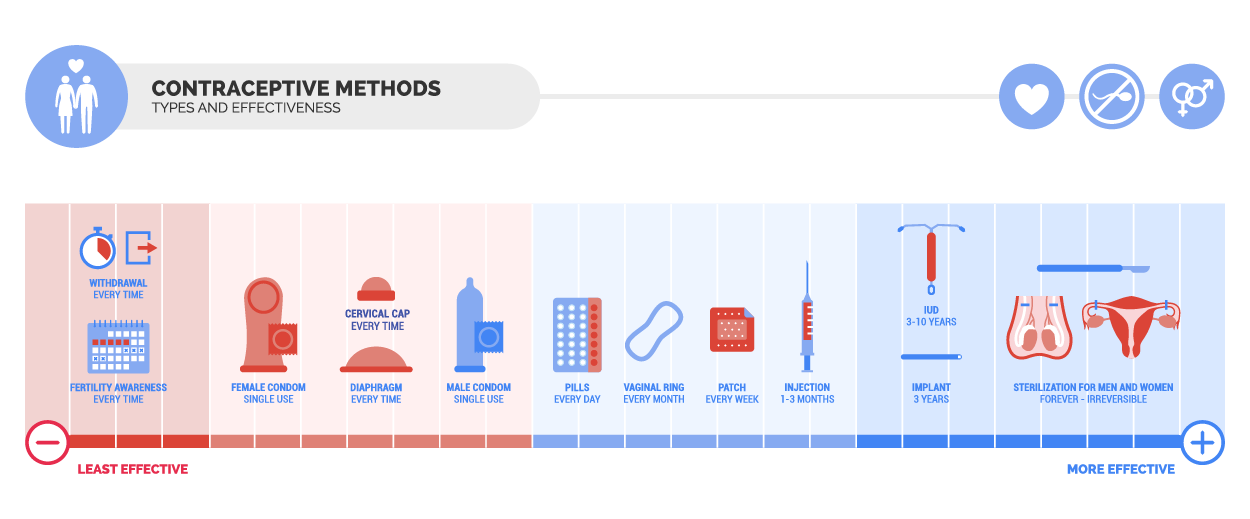
The table below lists some common contraceptive methods. The failure rates listed are not the ideal rates that could be realized, but the typical rates that occur. A failure rate is the number of pregnancies resulting from the method’s use over a 12-month period.
Some Contraceptive Methods
Method
Examples
Failure Rate in Typical Use Over 12 Months
Barrier
male condom, female condom, sponge, cervical cap, diaphragm, spermicides
15% to 24%
Hormonal
oral, patch, vaginal ring
8%
injection
3%
implant
less than 1%
Other
natural family planning
12 to 25%
withdrawal
27%
sterilization
less than 1%
Nearly a quarter of the couples using barrier methods, natural family planning, or withdrawal can expect a failure of the method. Natural family planning is based on the monitoring of the uterine cycle and having intercourse only during times when the egg is not available. During ovulation, a person’s body temperature may rise a degree Celsius and the cervical mucus may increase in volume and become more pliable. These changes give a general indication of when intercourse is more or less likely to result in fertilization. Withdrawal involves the removal of the penis from the vagina during intercourse before ejaculation occurs. This is a risky method with a high failure rate due to the possible presence of sperm in the bulbourethral gland’s secretion, which may enter the vagina prior to removing the penis.
Compliance with the contraceptive method is a strong contributor to the success or failure rate of any particular method. The only method that is completely effective at preventing conception is abstinence. The choice of contraceptive method depends on the goals of the woman or couple. Tubal ligation (female surgical sterilization in which the uterine tubes are cut, tied, or blocked; commonly called “getting your tubes tied”), hysterectomy (female surgical sterilization in which the uterus is removed), and vasectomy (male surgical sterilization in which the ductus deferens are cut) are considered permanent prevention, whereas other methods are reversible and provide short-term contraception.
Types and Effectiveness of Some Contraceptive Methods.
Termination of an existing pregnancy can be spontaneous or voluntary. Spontaneous termination is a miscarriage and usually occurs very early in the pregnancy, usually within the first few weeks. This occurs when the fetus cannot develop properly and the gestation is naturally terminated. Voluntary termination of a pregnancy is an abortion. Laws regulating abortion vary among states in the United States.
term to know
Contraception
(also, birth control) Various means used to prevent pregnancy.
1a. Hormonal Birth Control
Hormonally based contraceptives are the most commonly prescribed form of contraceptives because they are generally safe and reliable for most individuals. However, hormonal birth control options are currently only available for females.
Some hormonal methods use synthetic progesterone (sometimes in combination with estrogen) to inhibit the hypothalamus from releasing FSH or LH. Without FSH, the follicles do not mature, and without the LH surge, ovulation does not occur; this prevents an egg from being available for fertilization. The method of administering the hormone affects the failure rate. The most reliable method, with a failure rate of less than 1%, is the implantation of the hormone under the skin. The same rate can be achieved through the sterilization procedures of vasectomy in the man or of tubal ligation in the woman, or by using an intrauterine device (IUD). IUDs are inserted into the uterus and establish an inflammatory condition that prevents fertilized eggs from implanting into the uterine wall.
Birth control pills take advantage of the negative feedback system that regulates the ovarian and uterine cycles to stop ovulation and prevent pregnancy. They typically work by providing a constant level of both estrogen and progesterone, which negatively feeds back onto the hypothalamus and pituitary, thus preventing the release of FSH and LH. Although the estrogen in birth control pills does stimulate some thickening of the endometrial wall, it is reduced compared with a normal cycle and is less likely to support implantation.
Some birth control pills contain 21 active pills containing hormones, and 7 inactive pills (placebos). The decline in hormones during the week that the person takes the placebo pills triggers menses, although it is typically lighter than a normal menstrual flow because of the reduced endometrial thickening. Newer types of birth control pills have been developed that deliver low-dose estrogens and progesterone for the entire cycle (these are meant to be taken 365 days a year), and menses never occurs. While some people prefer to have the proof of a lack of pregnancy that a monthly period provides, menstruation every 28 days is not required for health reasons, and there are no reported adverse effects of not having a menstrual period in an otherwise healthy individual.
Because birth control pills function by providing constant estrogen and progesterone levels and disrupting negative feedback, skipping even just one or two pills at certain points of the cycle (or even being several hours late taking the pill) can lead to an increase in FSH and LH and result in ovulation. It is important, therefore, to follow the directions on the birth control pill package to successfully prevent pregnancy.
If emergency contraception is needed (e.g., in the case of unprotected sex or known birth control failure), the morning after pill is a hormonally based emergency contraceptive that can be taken after to prevent pregnancy. This pill uses the hormone levonorgestrel (a progestin, which is a synthetic form of progesterone) to delay or prevent ovulation, and it most effectively prevents pregnancy when taken as quickly as possible after unprotected sex. If fertilization occurs, the morning after pill may prevent the fertilized egg from implanting. However, the morning after pill will not work if taken after the fertilized egg is implanted.
1b. Male Contraceptives in Clinical Trials
Currently available male contraceptive options include external condoms and vasectomies. However, there are several methods that are in clinical trials as of 2023.
Oral contraceptive pills that are being studied include YCT529 and dimethandrolone undecanoate (DMAU). YCT529 is a non-hormonal chemical that attaches to a chemical binding site for vitamin A in the body. Vitamin A is required for spermatogenesis. Therefore, sperm count is reduced. In contrast, DMAU is a hormonal medication that suppresses FSH and LH to decrease testosterone and sperm production without causing low-testosterone symptoms.
TDI-11861 is another pill that has been tested on mice and shows promise as a non-hormonal male contraceptive that can be used on an as-needed basis. This chemical temporarily interferes with soluble adenylyl cyclase, which makes it difficult for sperm to mature, swim, and fertilize an egg.
Non-oral options for males are also being developed, such as nestorone and testosterone (NES/T), which is a contraceptive gel that is applied to the skin. Nestorone is a hormonal medication that blocks testosterone production in the testes to reduce sperm counts, and testosterone is used to mitigate side effects of nesterone, which can include low sex drive.
2. Infertility and Miscarriage
Infertility is the inability to conceive a child. About 75% of causes of infertility can be identified; these include diseases, such as sexually transmitted infections that can cause scarring of the reproductive tubes in males or females, or developmental problems frequently related to abnormal hormone levels in one of the individuals. Inadequate nutrition, especially starvation, can delay menstruation. Stress can also lead to infertility. Short-term stress can affect hormone levels, while long-term stress can delay puberty and cause less frequent uterine cycles. Other factors that affect fertility include toxins (such as cadmium), tobacco smoking, marijuana use, gonadal injuries, and aging.
IN CONTEXT
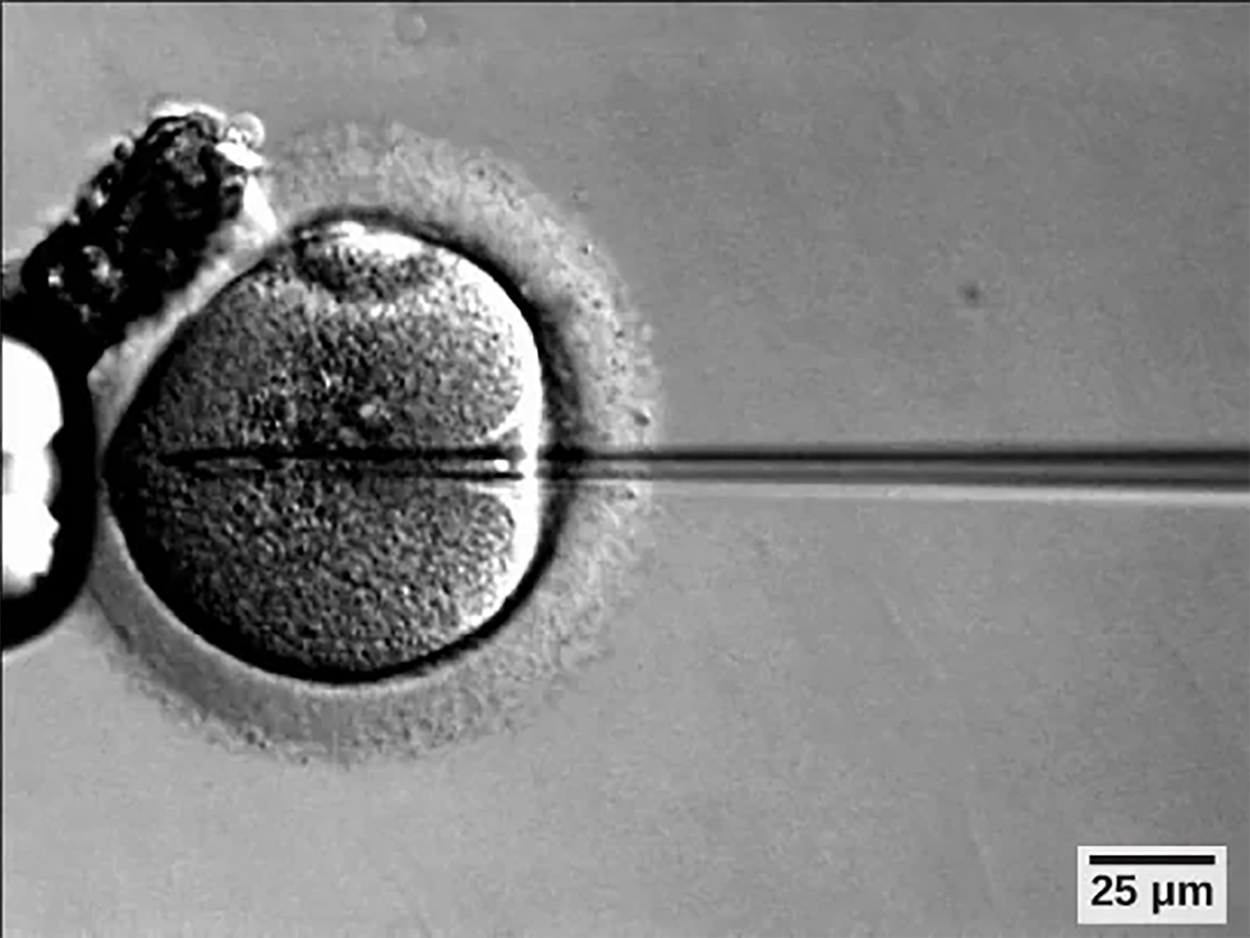
If infertility is identified, several assisted reproductive technologies (ART) are available to aid conception. A common type of ART is in vitro fertilization (IVF) where an egg and sperm are combined outside the body and then placed in the uterus. This technique was first successfully performed in mice by Anne McLaren and John Biggers, whose work is credited as among the most significant in reproductive medicine. Eggs are obtained from the woman after extensive hormonal treatments that prepare mature eggs for fertilization and prepare the uterus for implantation of the fertilized egg. Sperm are obtained, combined with the eggs, and supported through several cell divisions to ensure the viability of the zygotes. When the embryos have reached the eight-cell stage, one or more are implanted into the gestational parent's or carrier's uterus. If fertilization is not accomplished by simple IVF, a procedure that injects the sperm into an egg can be used. This is called intracytoplasmic sperm injection (ICSI) and is shown in the image below. IVF procedures produce a surplus of fertilized eggs and embryos that can be frozen and stored for future use. The procedures can also result in multiple births.
An Example of Intracytoplasmic Sperm Injection (ICSI) - A sperm is inserted into an egg for fertilization during intracytoplasmic sperm injection (ICSI). (credit: scale-bar data from Matt Russell)
Recurrent pregnancy loss is distinct from infertility. With infertility, an individual cannot get pregnant. With recurrent pregnancy loss, an individual can get pregnant but experience miscarriages. A miscarriage is a spontaneous termination of an existing pregnancy. Miscarriages usually occur very early in the pregnancy, usually within the first few weeks. This occurs when the fetus cannot develop properly and the gestation is naturally terminated.
There is a broad range of potential causes of miscarriages, such as uterine abnormalities, hormonal disorders, and genetic abnormalities, and medical intervention may be necessary for individuals who try to get pregnant but suffer from recurrent pregnancy loss.
did you know
Voluntary termination of a pregnancy is referred to as an abortion. Abortions may be sought for many reasons, such as unintended pregnancies, health concerns, or fetal abnormalities.
term to know
Infertility
Inability to conceive children.
make the connection
If you're taking the Anatomy & Physiology II Lab course simultaneously with this lecture, it's a good time to try the Lab Endocrinology: Learn how contraceptives work in Unit 5 of the Lab course. Review the lab-to-lecture crosswalk if you need more information. Good luck!
summary
In this lesson, you learned about some of the ways humans can prevent pregnancy and some causes of infertility (the inability to conceive children). First, you examined several different types of birth control methods, such as barrier and hormonal methods, and their general success rates for preventing the conception of a baby. You then explored how hormonal birth control can specifically be used to prevent pregnancy in females. Subsequently, you learned about several male contraceptives in clinical trials that may be available in the future as additional contraceptive options. Finally, you learned about some causes of infertility and miscarriage and how modern technological advances can help aid with conception when infertility has been identified.
Thirumalai, A., Ceponis, J., Amory, J. K., Swerdloff, R., Surampudi, V., Liu, P. Y., ... & Page, S. T. (2019). Effects of 28 days of oral dimethandrolone undecanoate in healthy men: a prototype male pill. The Journal of Clinical Endocrinology & Metabolism, 104(2), 423-432.
Balbach, M., Rossetti, T., Ferreira, J., Ghanem, L., Ritagliati, C., Myers, R. W., ... & Levin, L. R. (2023). On-demand male contraception via acute inhibition of soluble adenylyl cyclase. Nature Communications, 14(1), 637.