Table of Contents |
A function is called continuous at a point where there is no break in the graph at that point.
That is, 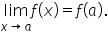
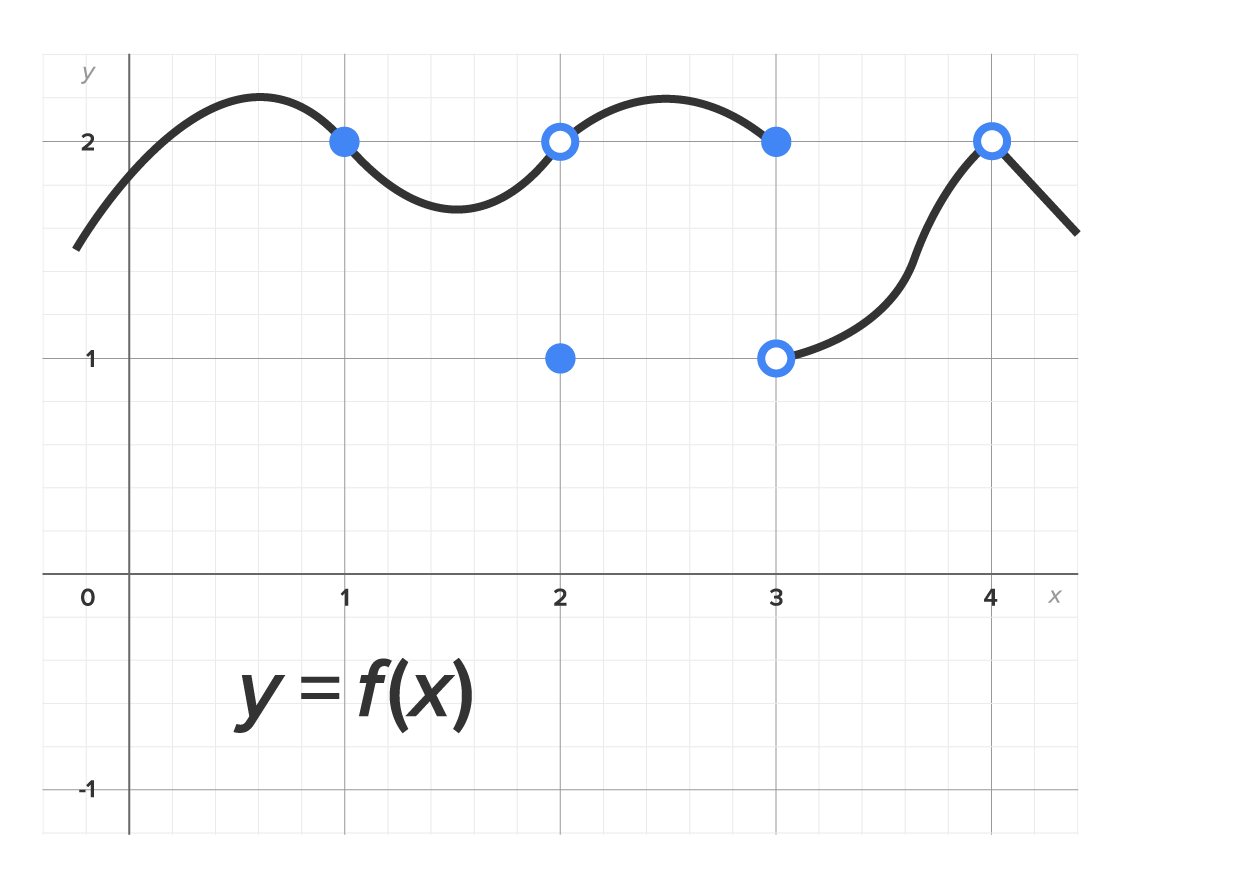
Consider the graph of  shown below. We will examine the continuity of
  when x = 1, 2, 3, and 4.
| Given Point |
Continuity of  at the Given Point at the Given Point
|
|---|---|

|
The graph of is continuous when since there are no breaks in the graph at that point. Looking just before  the graph passes through the point the graph passes through the point  and continues to “flow” afterwards. and continues to “flow” afterwards.
|

|
The graph of is NOT continuous when  There is a hole in the graph when There is a hole in the graph when  meaning there is a break in the graph. meaning there is a break in the graph.
|

|
The graph is NOT continuous when  There is a break in the graph. There is a break in the graph.
|

|
The graph is NOT continuous when  There is a hole in the graph. There is a hole in the graph.
|
Now, considering these 4 points, let’s examine the limits at these points and the values of at these points as well as whether or not the function is continuous at these points:
| x-value |

|

|
Continuous? |
|---|---|---|---|
|
|

|

|
Yes |
|
|

|

|
No |
|
|
 does not exist (the left-hand and right-hand limits are not equal). does not exist (the left-hand and right-hand limits are not equal).
|

|
No |
|
|

|
 is not defined. is not defined.
|
No |
is continuous at  if That is,
  exists and is equal to the value of
  is not continuous at if any of the following occur: does not exist.
 is undefined. exists, but is not equal to
To determine if a function is continuous at  we need to compare the values of and While computing is straightforward, computing requires more care, and sometimes requires one-sided limits.
EXAMPLE
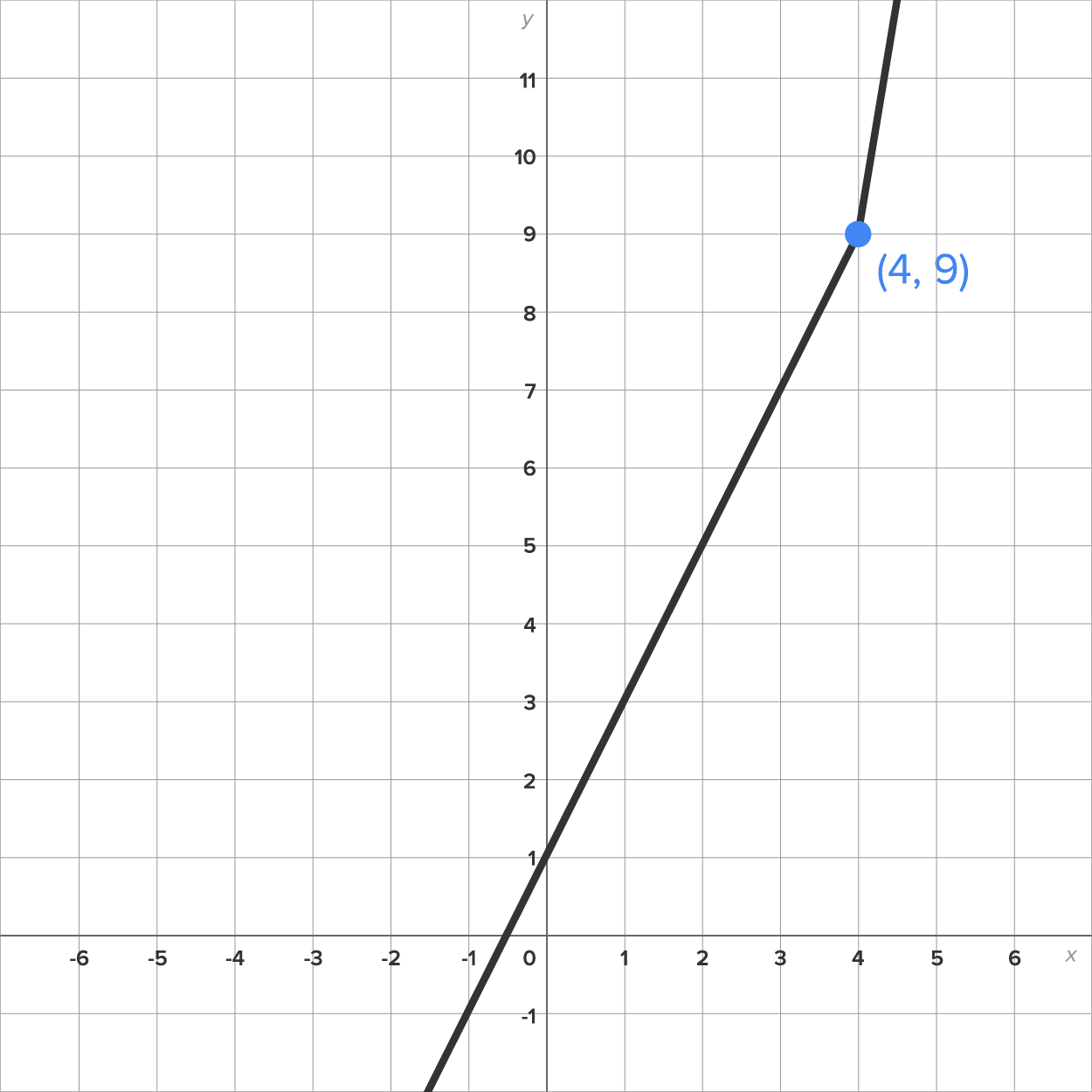
Consider the function . Determine if is continuous at
 exists. Since changes definition when
  we need to consider the one-sided limits:


 which means it exists and is equal to 9.
 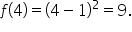 Thus, the limit and the function value are the same; therefore the function is continuous at Here is the graph of to help visualize this:
EXAMPLE
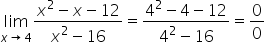
Consider the function . Determine if is continuous at
 Since is defined on both sides of there is no need to compute one-sided limits.

|
Factor the expression. |

|
Remove the common factor of 
|

|
Direct substitution works since the denominator is not 0. |

|
Simplify. |
 Since the limit and the function value are different, this function is not continuous at Here is a graph to help visualize this:
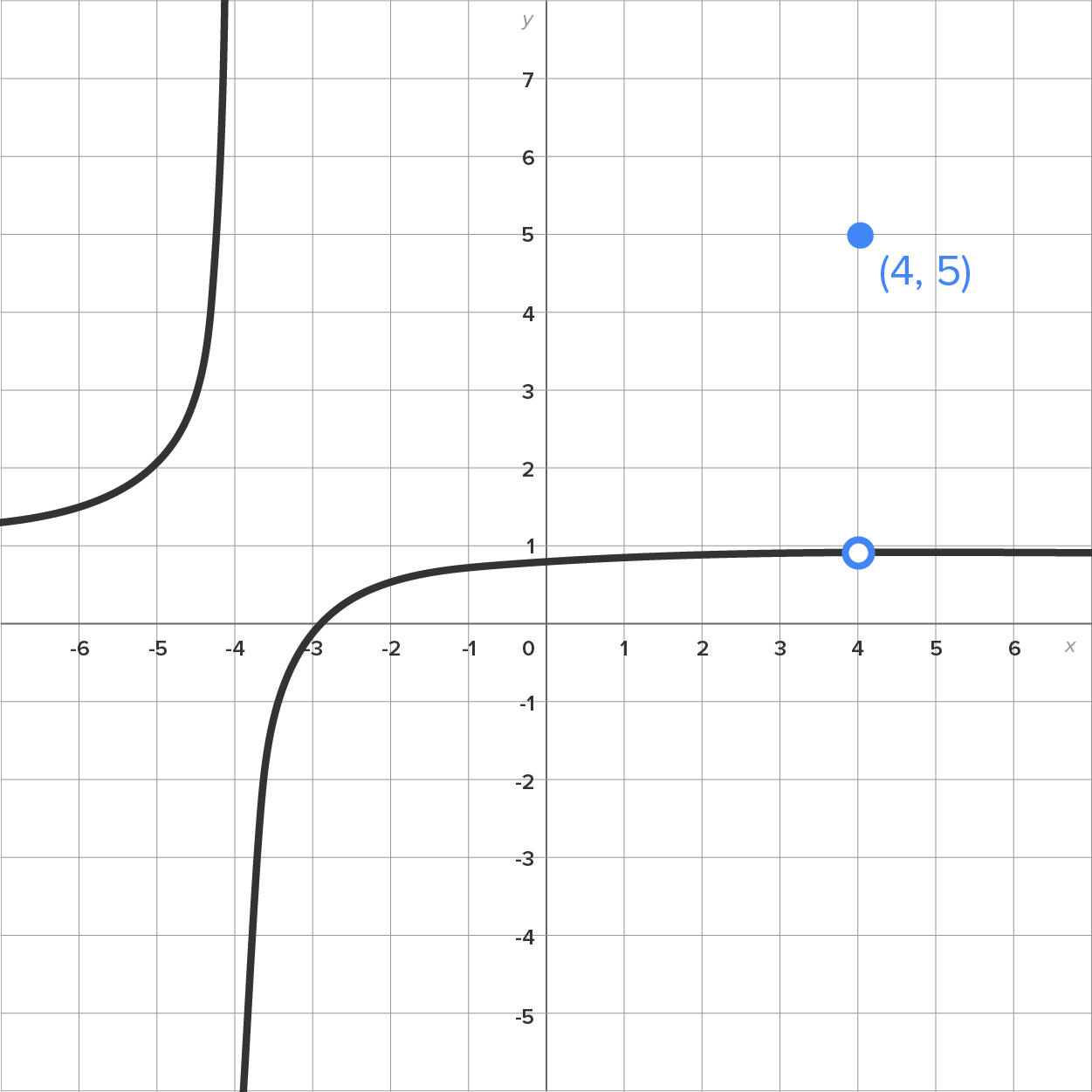
 from each side:

 is not continuous at
For a function to be continuous on an interval of values, it has to be continuous at every point contained in the interval.
EXAMPLE
 is continuous at every real number. Thus, we say that is continuous on the interval
EXAMPLE
 is continuous at every value except We can say that is continuous on the intervals
  and
and  This can also be written as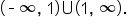
It is also possible to define continuity at an endpoint. For example, consider 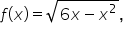 whose graph is shown below. Note that the domain of this function is
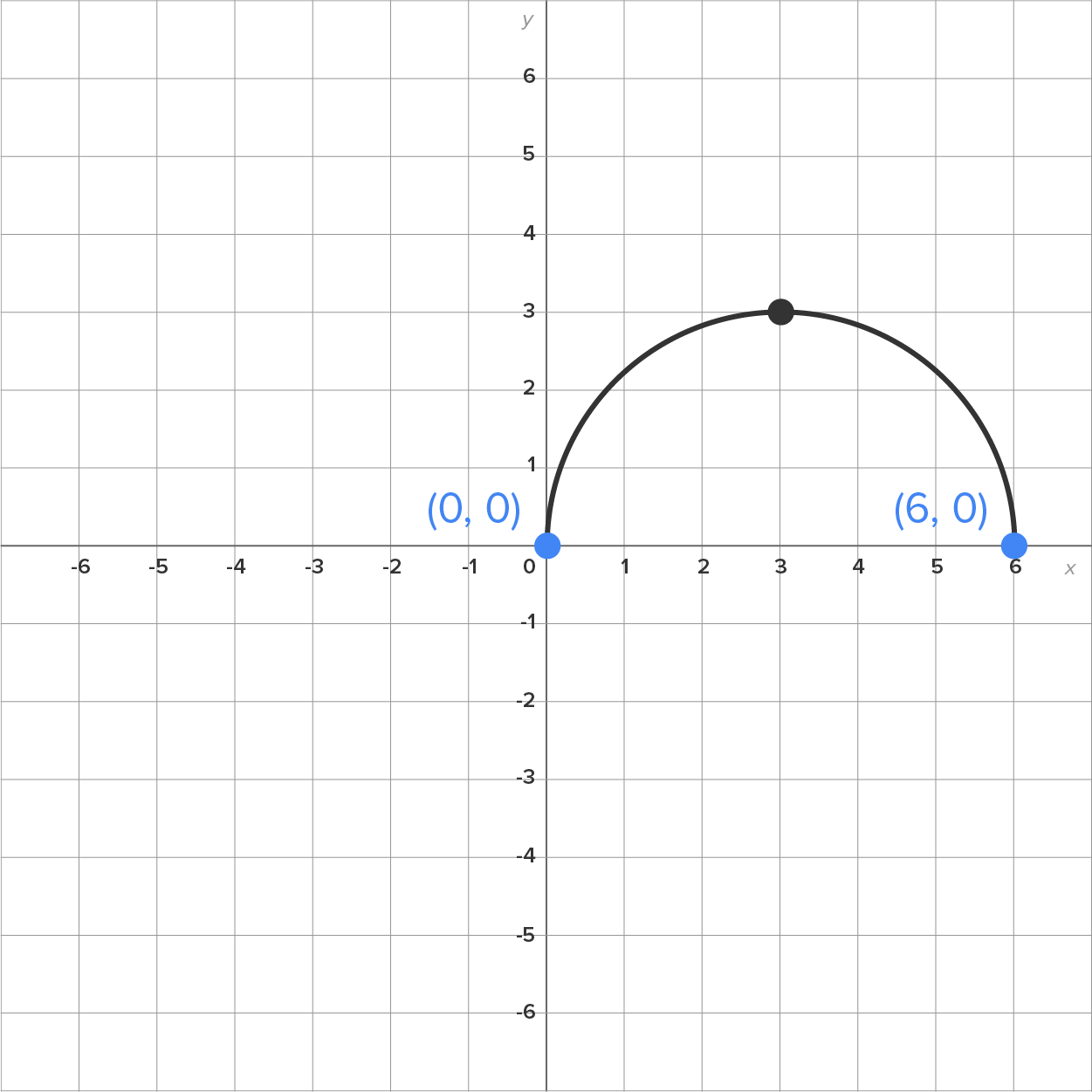
This means that defining continuity at  and
and  takes a bit more care.
Consider the endpoint  It can only be approached from the right. Looking at the graph, observe that
  and
and 
Consider the endpoint  It can only be approached from the left. Looking at the graph, observe that
  and
and 
if 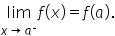 if
if 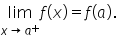
Thus, in the previous problem, we can say that is continuous from the left at and continuous from the right at This enables us to say that is continuous for all values on the interval
EXAMPLE
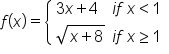
Determine the interval(s) over which is continuous. The graph is shown below.
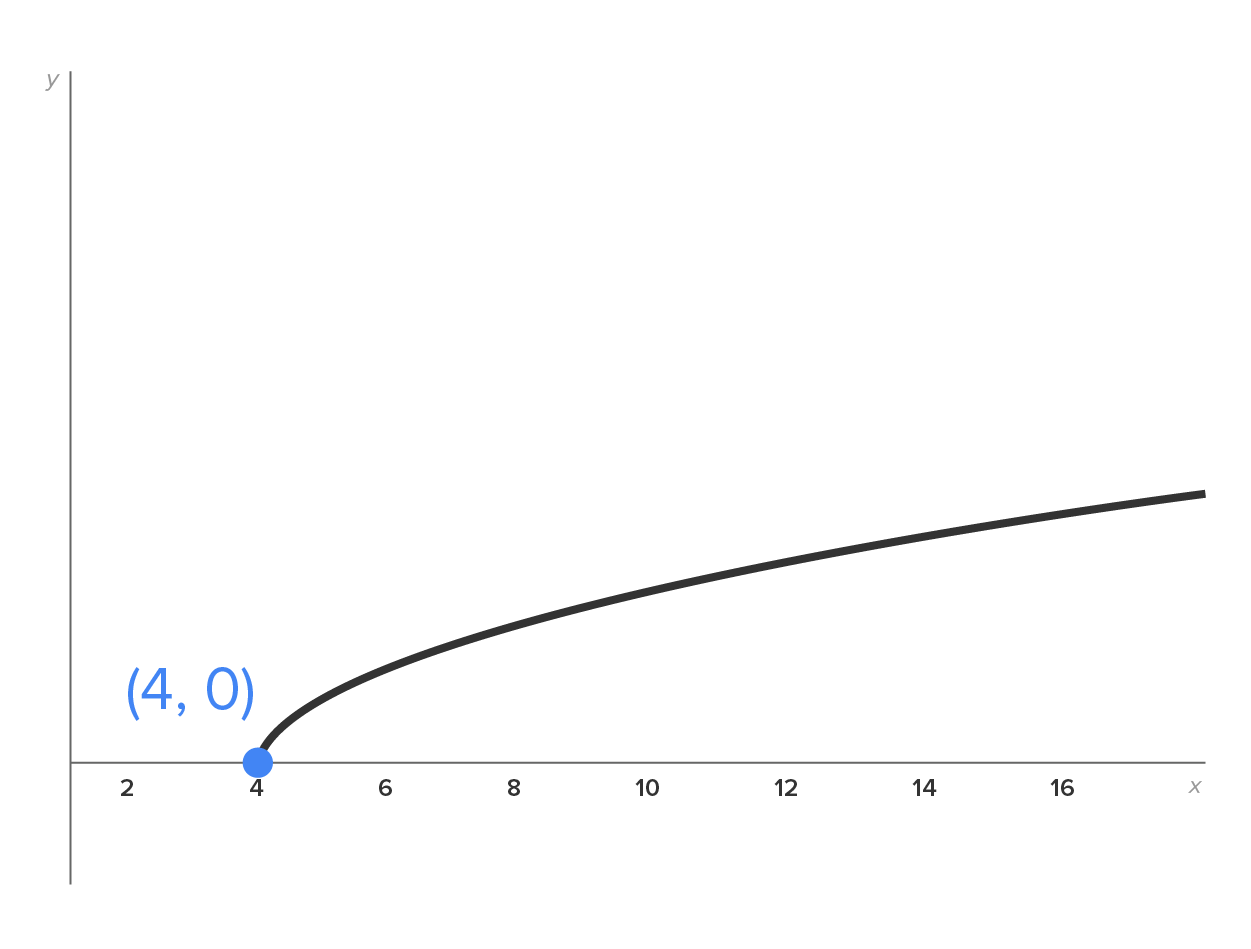 is
is  It follows that is continuous on the interval
  noting that it is continuous from the right at
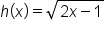
| Function | Continuous Interval |
|---|---|

|
? |

|
? |
|
? |
| Function | Continuous Interval |
|---|---|
|
|

|
|
|

|
|
|

|
if
if
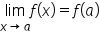 . You learned that you can use limits to determine if a function is continuous at (a specific point) by comparing the values of and . It's important to note that while computing is straightforward, computing requires more care, and sometimes requires one-sided limits. Lastly, you learned that by examining the domain of a function, you can use it to determine the intervals over which a function is continuous, noting that the function has to be continuous at every point contained in the interval in order to say the function is continuous on the interval.
Source: THIS TUTORIAL HAS BEEN ADAPTED FROM CHAPTER 1 OF "CONTEMPORARY CALCULUS" BY DALE HOFFMAN. ACCESS FOR FREE AT WWW.CONTEMPORARYCALCULUS.COM. LICENSE: CREATIVE COMMONS ATTRIBUTION 3.0 UNITED STATES.
A function is continuous from the left at x = a if  .
.
A function is continuous from the left at x = a if  .
.
A function that has no breaks in the graph. That is,  .
.



