Table of Contents |
With 535 members in Congress and a seemingly infinite number of domestic, international, economic, agricultural, regulatory, criminal, and military issues to deal with at any given moment, the two chambers must divide their work somehow. Congress does this through the committee system. Specialized committees and subcommittees in both the House and the Senate do most of the work on bills. There are well over two hundred committees, subcommittees, select committees, and joint committees in Congress.
Four types of committees exist in the House and the Senate. The first type is the standing committee, a type of permanent committee with jurisdiction over a policy area. Table 1 lists standing committees in the House and all permanent committees in the Senate, including standing and select committees. These committees do most of the work on bills—studying the bills, hearing testimony about them, and revising them. If the committee approves a bill, it is called “reporting a bill out of committee.” When this happens, the whole Congressional chamber votes on it. Fewer than ten percent of bills are reported out of committee to the chamber of Congress.
Table 1 Congressional Standing and Permanent Select Committees
| House of Representatives | Senate |
|---|---|
| Agriculture | Agriculture, Nutrition, and Forestry |
| Appropriations | Appropriations |
| Armed Services | Armed Services |
| Budget | Banking, Housing, and Urban Affairs |
| Education and Labor | Budget |
| Energy and Commerce | Commerce, Science, and Transportation |
| Ethics | Energy and Natural Resources |
| Financial Services | Environment and Public Works |
| Foreign Affairs | Ethics (select) |
| Homeland Security | Finance |
| House Administration | Foreign Relations |
| Intelligence (select) | Health, Education, Labor and Pensions |
| Judiciary | Homeland Security and Governmental Affairs |
| Natural Resources | Indian Affairs |
| Oversight and Reform | Intelligence (select) |
| Rules | Judiciary |
| Science, Space, and Technology | Rules and Administration |
| Small Business | Small Business and Entrepreneurship |
| Transportation and Infrastructure | Veterans’ Affairs |
| Veterans’ Affairs | |
| Ways and Means |
Members of both parties compete for positions on various committees. These positions are typically filled by the majority and minority members to roughly approximate the ratio of majority to minority members in the respective chambers, although committees are chaired by members of the majority party.
The second type is the joint committee. Joint committee members are appointed from both the House and the Senate and are charged with exploring a few key issues, such as the economy and taxation. However, joint committees have no bill-referral authority whatsoever—they are informational only.
In order for a bill to pass Congress, it must succeed in both the House and Senate. Additionally the bill each chamber passes must be word-for-word identical. Since a bill might be introduced to both chambers simultaneously and then amended in different ways, a bill might have two different versions. In this case, a conference committee is used to reconcile the different bills passed in the House and the Senate.
The conference committees are appointed on an ad hoc basis as necessary when a bill passes the House and Senate in different forms. These committees revise each version of the bill with the hope that when it is returned to the House and the Senate, each chamber will vote to pass it. Sometimes, to save time and avoid a conference committee, one chamber will simply adopt the version of the bill passed by the other chamber. Still, conference committees are the norm on most major pieces of legislation.
EXAMPLE
One of the most difficult recent battles in Congress was to approve budgetary measures, especially when it involves taxation and reducing funding to popular programs. During the first year of his second term as president, President Donald Trump promoted a budget reconciliation measure called the “One Big Beautiful Bill Act.” The legislation would extend tax cuts enacted during his first term and would reduce spending in several areas, including Medicaid and the Supplemental Nutrition Assistance Program (SNAP).Finally, ad hoc, special, or select committees are temporary committees set up to address specific topics. These types of committees often conduct special investigations and hearings, such as on aging or ethics. Committee hearings can become politically driven public spectacles. Some select committees attain a permanent status, such as those listed in Table 1.
IN CONTEXT
In 2022, the Democrats assembled a House Select Committee to investigate the January 6th riot at the United States Capitol. The riot took place in 2021 after President Trump urged attendees at a rally he organized to march to the Capitol to protest the formal recognition of the victory of President-Elect Joe Biden in the 2020 elections. The committee membership was composed largely of Democratic members of the House. Out of the 9 members of the committee, only 2 were members of the Republican Party. The hearings were broadcast live on television to millions of viewers (Figure 1). However, since select committees are temporary by nature and reflect the priorities of the majority party, this committee was abolished once the Republican Party regained the majority in the 2024 election.

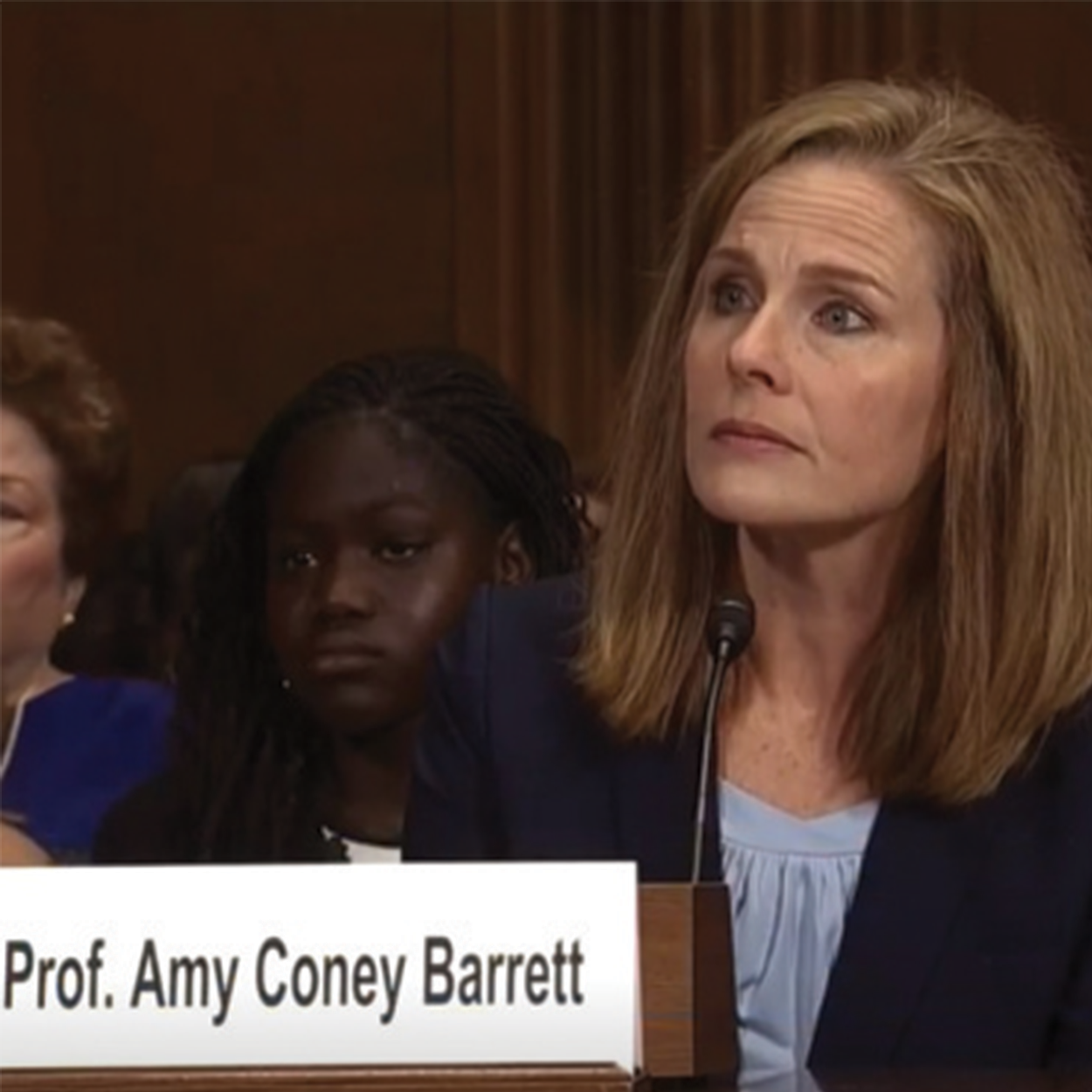
In the Senate, committee hearings are also held to confirm presidential appointments (Figure 2). The Senate Judiciary Committee is one of the oldest of the sixteen standing committees in the Senate.
Committees and their chairs have a lot of power in the legislative process, including the ability to stop a bill from going to the full chamber for a vote. When a committee is eager to develop legislation, it takes a number of methodical steps. The committee reaches out to relevant agencies for comment on resolutions to the problem at hand, such as by holding hearings with experts to collect information. After the information has been collected, the committee meets to discuss amendments and legislative language. Finally, the committee sends the bill to the full chamber along with a committee report. The report provides a majority opinion about why the bill should be passed and a minority view to the contrary, and it estimates the proposed law’s cost and impact.
Committee chairs are very powerful. They control the committee’s budget and choose when the committee will meet when it will hold hearings and even whether it will consider a bill (Figure 3). A chair can convene a meeting when members of the minority party are absent or adjourn a meeting when things are not progressing as the majority party leadership wishes. Chairs can hear a bill even when the rest of the committee objects.
Chairs do not remain in these powerful positions indefinitely, however. In the House, rules prevent committee chairs from serving more than six consecutive years and from simultaneously serving as the chair of a subcommittee. A senator may serve only six years as the chair of a committee. They may, in some instances, also serve as a chair or ranking member of another committee.

Members of Congress bring to their roles a variety of specific experiences, interests, and levels of expertise, and they try to match these to committee positions. For example, House members from states with large agricultural interests will typically seek positions on the Agriculture Committee. Senate members with a background in banking or finance may seek positions on the Senate Finance Committee. Members can request these positions from their chambers’ respective leadership, but they may not be granted them. The leadership also selects the committee members and chairs.
Because the Senate is much smaller than the House, senators hold more committee assignments than House members. There are sixteen standing committees in the Senate and each position must be filled. In contrast, with 435 members and only twenty standing committees, House committee members have time to pursue a more in-depth review of a policy. House members historically defer to the decisions of committees, while senators tend to view committee decisions as recommendations, often seeking additional discussion that could lead to changes.
Source: THIS TUTORIAL HAS BEEN ADAPTED FROM OPENSTAX “AMERICAN GOVERNMENT 3E”. ACCESS FOR FREE AT OPENSTAX.ORG/DETAILS/BOOKS/AMERICAN-GOVERNMENT-3E. LICENSE: CREATIVE COMMONS ATTRIBUTION 4.0 INTERNATIONAL.



