Table of Contents |
To begin with, recall that virtue-based ethics is an ethical theory maintaining that an action is to be evaluated based on how that action informs aspects of the agent's character.
The character traits of an agent are seen as either morally good or bad—they are called virtues and vices, respectively. Traditionally, traits such as patience, courage, generosity, and honesty are seen as virtues; while traits such as impatience, cowardice, greed, and dishonesty are seen as vices.
Because of the emphasis on character, the kind of question you would ask yourself in virtue-based ethics is different from the kind that you would ask if you were primarily concerned with evaluating actions.
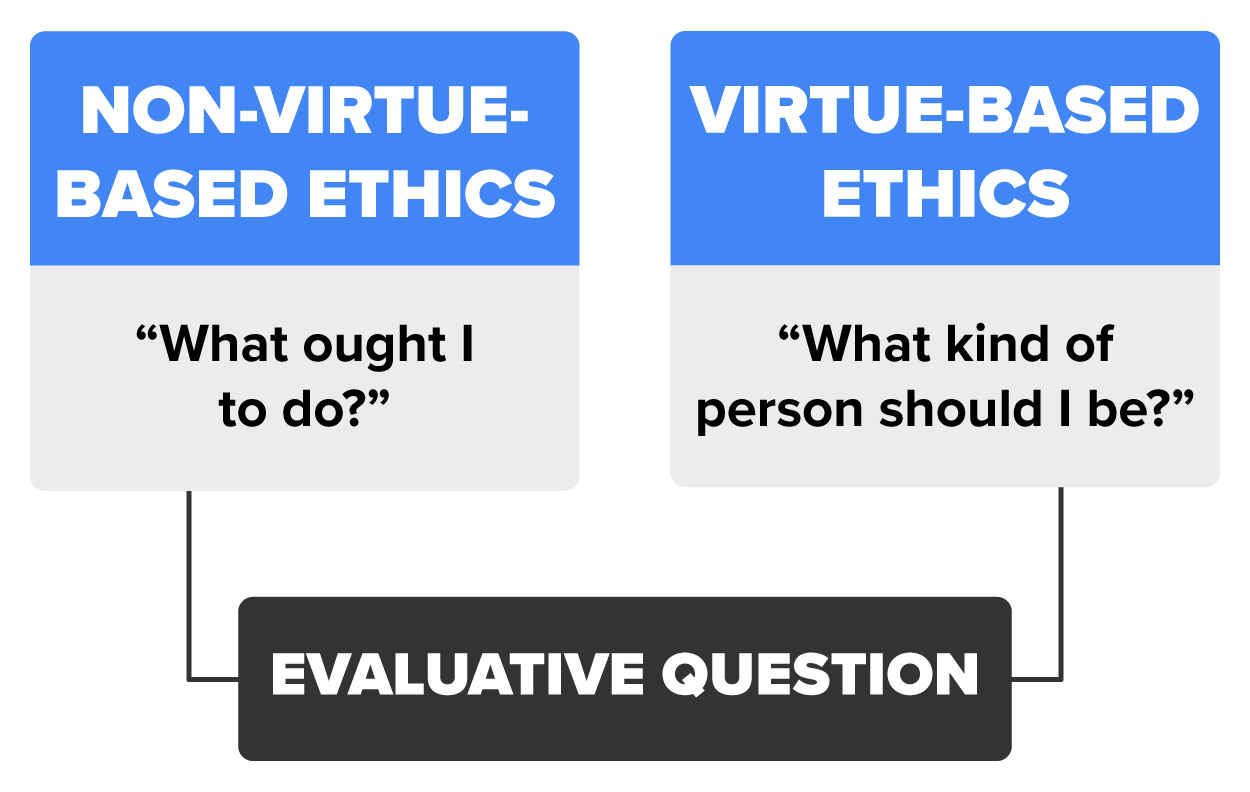
In the next section, we will look at the various ways virtue-based ethics can evaluate actions. But before doing so, let’s remind ourselves of the terms that ethical theorists use to evaluate actions.
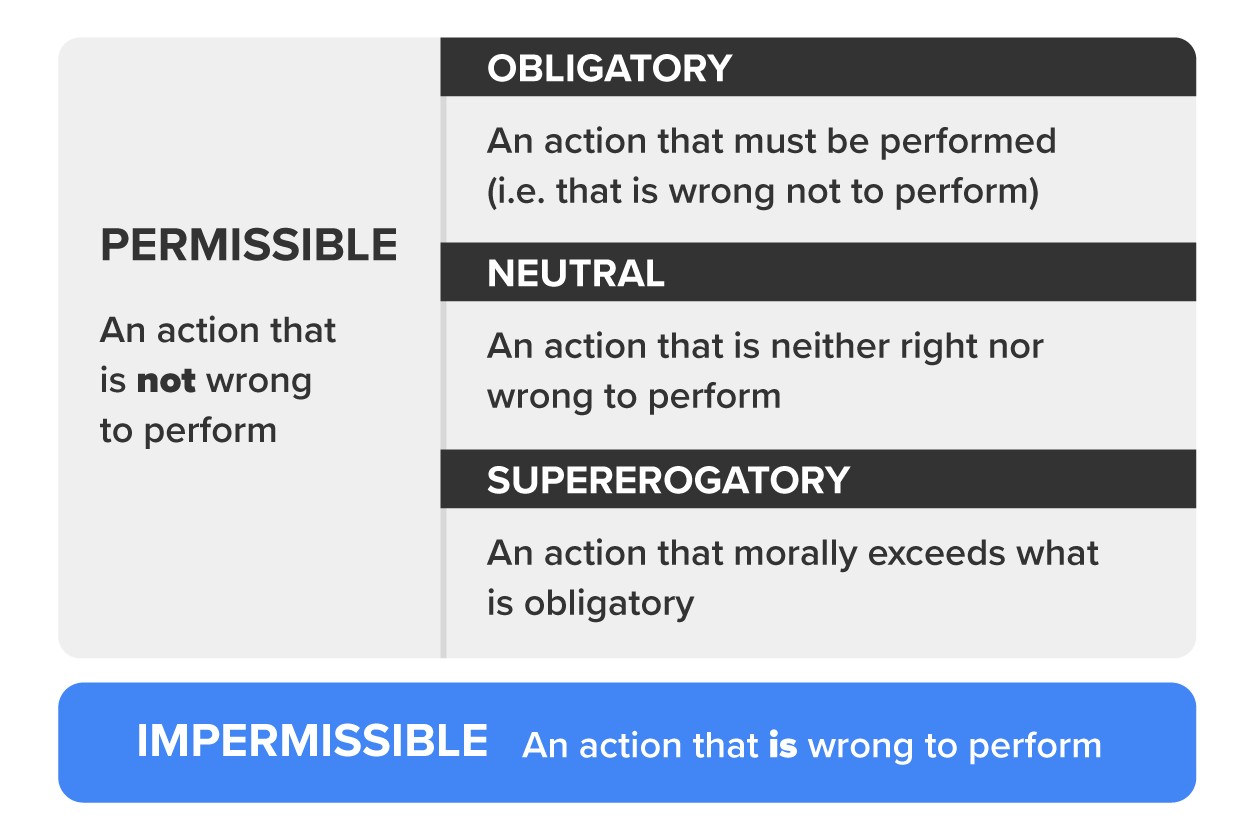
Make sure you’re thinking about these evaluative terms when as we go on to see virtue-based ethics in action.
For virtue-based ethics, an action is permissible if it isn’t a sign of vice in the agent.
EXAMPLE
Eating your dinner is an action that doesn’t indicate any particular vice on your part. But if it was your fifth dinner of the evening, this would indicate a vice, such as gluttony or intemperance. Since this action now indicates a vice, it would be considered impermissible by virtue-based ethics.Now let’s look at the different types of permissibility. First, an action is obligatory if failing to do it would encourage a vice or discourage a virtue in yourself.
IN CONTEXT
Imagine that you work in a government department that deals with people’s requests for help in times of hardship. You have targets to meet, otherwise you could lose your job. So, you have to deal with people as quickly as possible.
In order to do this, you need to detach yourself from sympathizing with their struggles, but treating people like obstacles to your targets every day could make you cold or callous. Since it’s obligatory for you to avoid fostering these vices, you would need to either treat people better (and risk missing your targets) or quit your job.
For virtue-based ethics, a neutral action is one that indicates neither virtue nor vice in the agent. This would cover many of your daily activities, such as having a cup of coffee or watching a film. On their own, actions such as these aren’t signs of virtue or vice.
It’s a bit more difficult to think of supererogatory actions in this account of ethics because virtues are generally about having the correct measure of a trait, neither in excess nor in deficiency.
EXAMPLE
Think back to the vice of gluttony or intemperance. It’s virtuous to satisfy your needs in a moderate fashion (i.e., eating the amount that’s enough for you), but starving yourself wouldn’t be even more virtuous. Rather, this would be the vice of self-denial.Despite this difficulty, there are some examples that seem to show an exceptional degree of virtue without falling back into a vice.
EXAMPLE
A soldier who jumps onto a hand grenade to save her fellow soldiers seems to demonstrate an exceptional degree of bravery, without it becoming mere rashness.Now that you have seen how ethical evaluations can be based on the way actions indicate or impact character, you can think about using this in a specific situation.



