Table of Contents |
As you’ve learned in previous lessons, in conflict resolution, understanding the various problem-solving strategies available is key to finding the best approach for any given situation. Conflict resolution is essential in both professional and personal settings, as it helps individuals and groups manage disagreements constructively. Different techniques such as negotiation, mediation, arbitration, collaboration, compromise, avoidance, and competition offer unique ways to address conflicts, and each varies in approach and outcome. The table below provides an overview of these key techniques you’ve learned and when each is best applied.
| Type of Conflict Resolution Technique | Description | Best Used When |
|---|---|---|
| Negotiation | This is a flexible, direct discussion between the parties aimed at reaching a mutually beneficial agreement. | Both parties are willing to work together and communicate effectively. |
| Mediation | This involves a neutral third party (mediator) who facilitates communication and guides the parties toward a voluntary resolution. | Communication has broken down, or the parties need a neutral voice to facilitate discussions. |
| Arbitration | A third party (arbitrator) makes a binding decision to resolve the conflict. | A quick, legally binding decision is needed, and both parties agree to abide by the arbitrator’s ruling. |
| Collaboration | Both parties work together creatively to find a solution that meets everyone’s needs (win-win). | The issue is complex, and both parties are committed to maintaining a long-term relationship |
| Compromise | Both parties make concessions to reach an agreement (win some, lose some). | Time is limited, and both parties are willing to give up something to settle the issue. |
| Avoidance | One or both parties avoid the conflict entirely. | The conflict is minor or when it is not worth the time and effort to resolve. |
| Competition | One party seeks to win the conflict at the expense of the other. | The issue is critical, and a decisive stance is necessary. |
By understanding how problem-solving techniques differ in their application, outcomes, and impact on relationships, you’ll be better equipped to select the most appropriate approach based on the specific circumstances of the conflict.
In this next section, you’ll also gain insight into the strengths and weaknesses of each technique, recognizing that some methods, like collaboration and mediation, focus on preserving relationships and finding mutually beneficial solutions, while others, like arbitration or competition, may resolve issues more quickly but risk causing tension or dissatisfaction. By learning to assess the nature of the conflict, the urgency of resolution, and the importance of relationships, you will develop the ability to choose the best conflict resolution method for any situation, ensuring more effective and sustainable outcomes.
When comparing conflict resolution techniques, it’s essential to consider the outcomes, relationship impact, and feasibility of each method:
Techniques like collaboration and mediation tend to create win-win situations where both parties are satisfied with the result. These approaches focus on understanding each side’s needs and finding a solution that benefits everyone. In contrast, competition and arbitration may lead to win-lose outcomes, where one party’s gain is another’s loss. These techniques are more adversarial and may leave one party feeling dissatisfied with the result.
Some techniques, such as compromise, offer quick fixes by asking both parties to give up something. While this can resolve the issue in the short term, it may not address deeper concerns, leading to future conflicts. Collaboration, on the other hand, works toward sustainable, long-term solutions by focusing on the root causes of the conflict and finding creative ways to meet all the parties’ interests.
Techniques like arbitration and legal proceedings can be expensive and time consuming due to their formal structure and the involvement of third parties. In contrast, negotiation and compromise are typically faster and less costly, as they rely on direct communication between the parties and require fewer resources.
Techniques such as collaboration and mediation tend to preserve or even strengthen relationships by promoting open communication and mutual understanding. Conversely, competition or avoidance can strain relationships, as they often create resentment or leave issues unresolved.
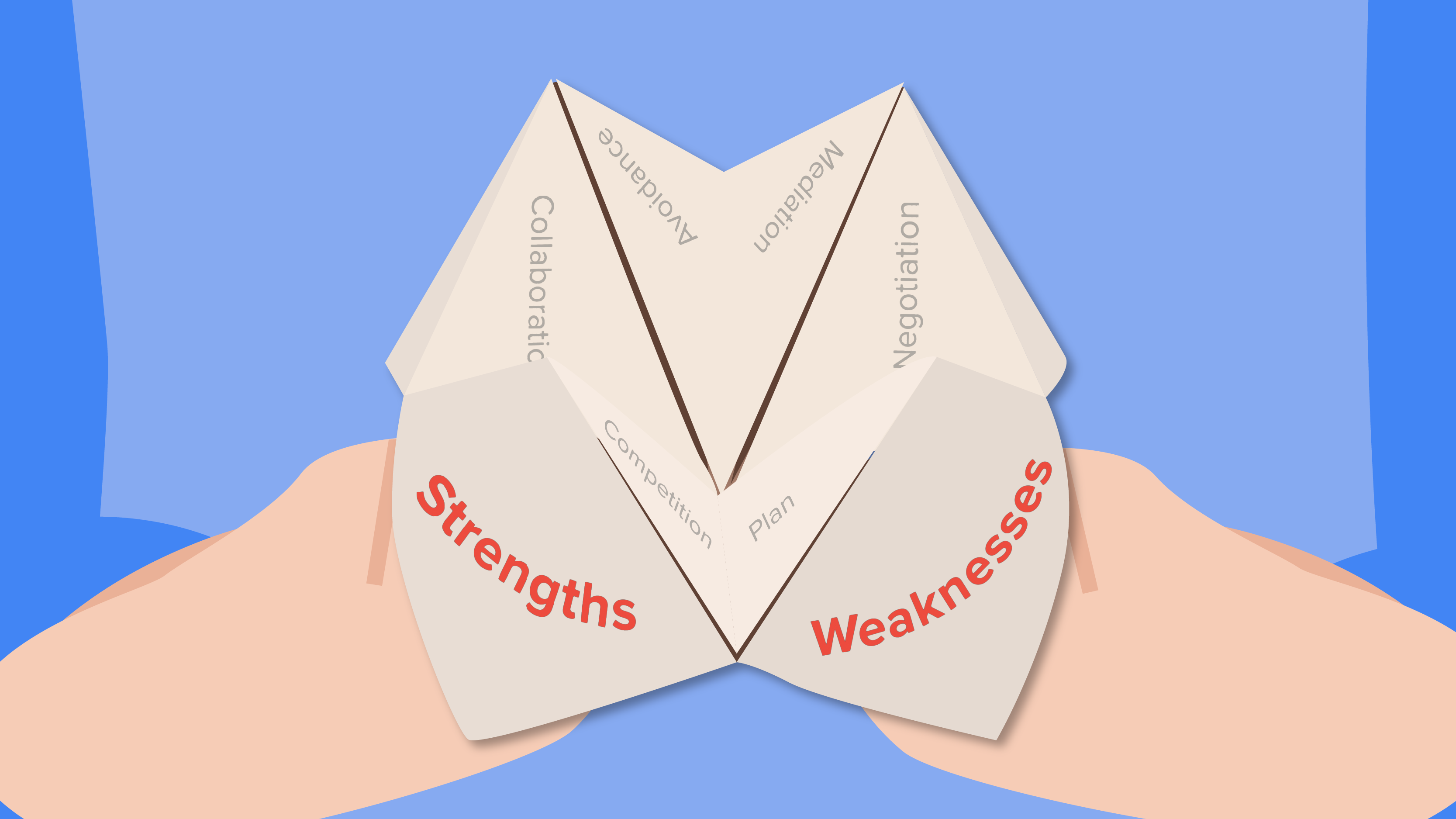
Understanding the strengths and weaknesses of different conflict resolution techniques is essential for selecting the appropriate approach based on the nature of the conflict and the desired outcome. The table below highlights how each conflict resolution technique has its advantages and limitations. Understanding these factors helps in choosing the best approach for the specific circumstances of the conflict, ensuring that the chosen method aligns with both the desired outcome and the nature of the relationship between the parties.
| Technique | Strengths | Weaknesses |
|---|---|---|
| Negotiation | Is flexible, preserves relationships, and allows parties to reach a mutually beneficial solution | Requires open communication and trust; can be lengthy if parties struggle to reach an agreement |
| Mediation | Offers neutral guidance, allows for creative solutions, encourages open communication, and preserves relationships | Is nonbinding; requires cooperation from both parties to work effectively |
| Facilitative mediation | Encourages autonomy and improves communication between parties | Can be slower if parties struggle to find a resolution on their own |
| Transformative mediation | Improves long-term relationships by focusing on transforming communication | Does not always lead to resolution, as the focus is more on relationships than on specific outcomes |
| Evaluative Mediation | Provides expert guidance and input, which can lead to informed decisions | Can cause parties to become too reliant on the mediator’s suggestions, reducing their ownership of the outcome |
| Mediation-Arbitration | Offers a binding resolution if mediation fails, providing finality | Can create tension if the parties prefer to resolve the conflict themselves but end up relying on the arbitrator for the decision |
| Arbitration | Offers a quick, binding resolution and legally enforceable outcomes | Can be expensive, with the final decision possibly leaving one party dissatisfied |
| Collaboration | Leads to win-win outcomes, builds trust, strengthens long-term relationships, and addresses underlying issues | Time consuming and requires full commitment from all parties |
| Compromise | Offers a quick settlement, is easy to implement, and avoids prolonged conflict | Can lead to neither party getting everything they want or the solution feeling incomplete or unsatisfactory |
| Avoidance | Saves time and energy when the conflict is minor or not worth addressing | Ignores the conflict, which could escalate over time if not resolved |
| Competition | Is useful for critical situations where decisive action is needed, especially when the stakes are high | Can damage relationships and breed resentment, as one party seeks to win at the expense of the other |
When deciding which conflict resolution technique to use, several factors should be carefully considered to ensure the best outcome for the situation. By thinking through these factors—relationship importance, time constraints, and the need for a formal outcome—you can better navigate conflicts and choose the most appropriate resolution technique. Understanding the strengths and weaknesses of each approach also allows you to adapt to changing circumstances, ensuring that the conflict is resolved in a way that meets the immediate needs while preserving long-term goals.

In many conflicts, especially in personal, professional, or long-term business settings, preserving the relationship between the parties is a desired outcome. Techniques like collaboration and mediation are ideal for situations in which maintaining trust and fostering future cooperation are priorities.
EXAMPLE
In workplace disputes or family conflicts, approaches that emphasize communication and mutual understanding can help resolve the immediate issue while strengthening the relationship moving forward.On the other hand, techniques like competition or arbitration might not be as beneficial for relationship preservation, as they focus on asserting one party’s position or relying on a third-party decision, which could leave one party feeling dissatisfied or alienated. In high-stakes business deals where ongoing relationships are not as critical, competition or arbitration might still be appropriate.
The amount of time available to resolve the conflict is another key consideration. When a quick resolution is necessary, techniques such as compromise or arbitration may be the most appropriate. These methods focus on settling the conflict promptly, often by making concessions (in compromise) or deferring to a third party’s binding decision (in arbitration). This is especially useful in legal or business disputes where delays could be costly or harmful.
However, if there is time for collaboration and the parties are willing to invest in finding a long-term solution, approaches like collaboration and facilitative mediation are more suitable. These techniques allow the parties to thoroughly explore their interests and work toward a solution that satisfies both sides, though they require more time and effort than quicker methods.
In some situations, a formal, legally binding outcome is necessary, especially in contractual disputes or legal matters where clarity and enforceability are important. In these cases, arbitration or mediation-arbitration (med-arb) can provide a definitive solution that is enforceable in court if necessary. These methods ensure that the conflict reaches a resolution, even if one or both parties are unsatisfied with the result.
Conversely, if the parties prefer more flexibility and control over the outcome, mediation or negotiation may be better suited. These techniques allow for creative solutions and can be tailored to the specific needs of the parties, but they are not legally binding unless formalized through a legal agreement.

How do relationship dynamics influence which problem-solving technique to use?
The nature of your relationship with the other party often dictates the best approach. For instance, if maintaining a positive, long-term relationship is important (e.g., with a coworker, family member, or business partner), techniques like collaboration or mediation may be more appropriate.
By thoughtfully considering your personal experiences, you can develop a toolkit of conflict resolution techniques that align with your values and the dynamics of each situation. Every conflict is unique, and understanding the specific context, the relationship dynamics, and the desired outcome allows you to tailor your approach to fit the circumstances.
EXAMPLE
A conflict that requires preserving a long-term relationship may benefit from collaboration or mediation, whereas a time-sensitive, high-stakes disagreement may call for a more decisive method, such as arbitration or competition.By carefully choosing the right technique, you not only resolve the immediate conflict but also foster better relationships, ensure more satisfactory solutions, and set the stage for long-term success. Techniques like mediation and collaboration encourage open communication and mutual understanding, which can strengthen relationships. Meanwhile, methods such as compromise and negotiation can provide quick solutions when needed, though they may require concessions from both sides.
Ultimately, the ability to assess and apply the most suitable conflict resolution technique leads to more constructive outcomes in both personal and professional settings. Whether resolving interpersonal disputes, workplace disagreements, or legal conflicts, understanding the strengths and limitations of each technique will empower you to approach conflicts strategically and achieve sustainable resolutions.
Source: THIS TUTORIAL WAS AUTHORED BY SOPHIA LEARNING. PLEASE SEE OUR TERMS OF USE.



