Table of Contents |
The four components of a basic speech communication model include the sender (speaker), message, receiver (audience), and channel.
Claude Shannon, who developed one of the earlier communication models, defined the channel as the medium used to transmit the signal from the transmitter to the receiver. In a face-to-face, in-person speaking situation, the channel will be primarily audio using sound and visual using light waves; in a speaking situation with a remote audience via video conferencing, the channel will be computer-mediated audio and visual.
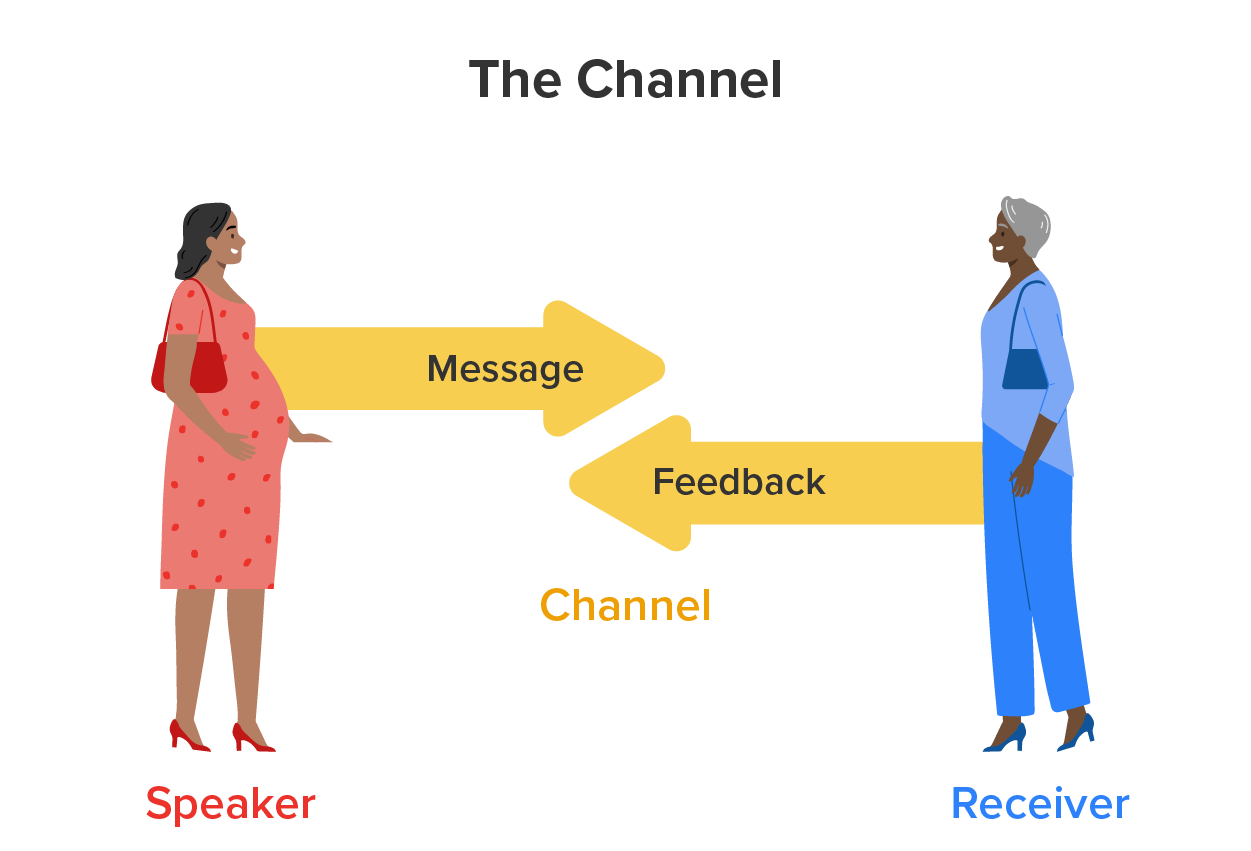
When speaking to an audience in person, a speaker uses both verbal and nonverbal methods to communicate the message. The sounds that a speaker makes are interpreted as words. The sounds are transmitted through an audio (or auditory) channel as sound waves and are received by the listeners in the audience.
Speakers also use their hands to make gestures, change their facial expressions, and project images or words on a screen. These cues are received by the listeners through the visual part of the channel: their sense of sight. When the speaker and the audience are co-located, or in the same place at the same time, the channels of communication are synchronous, or in real time.
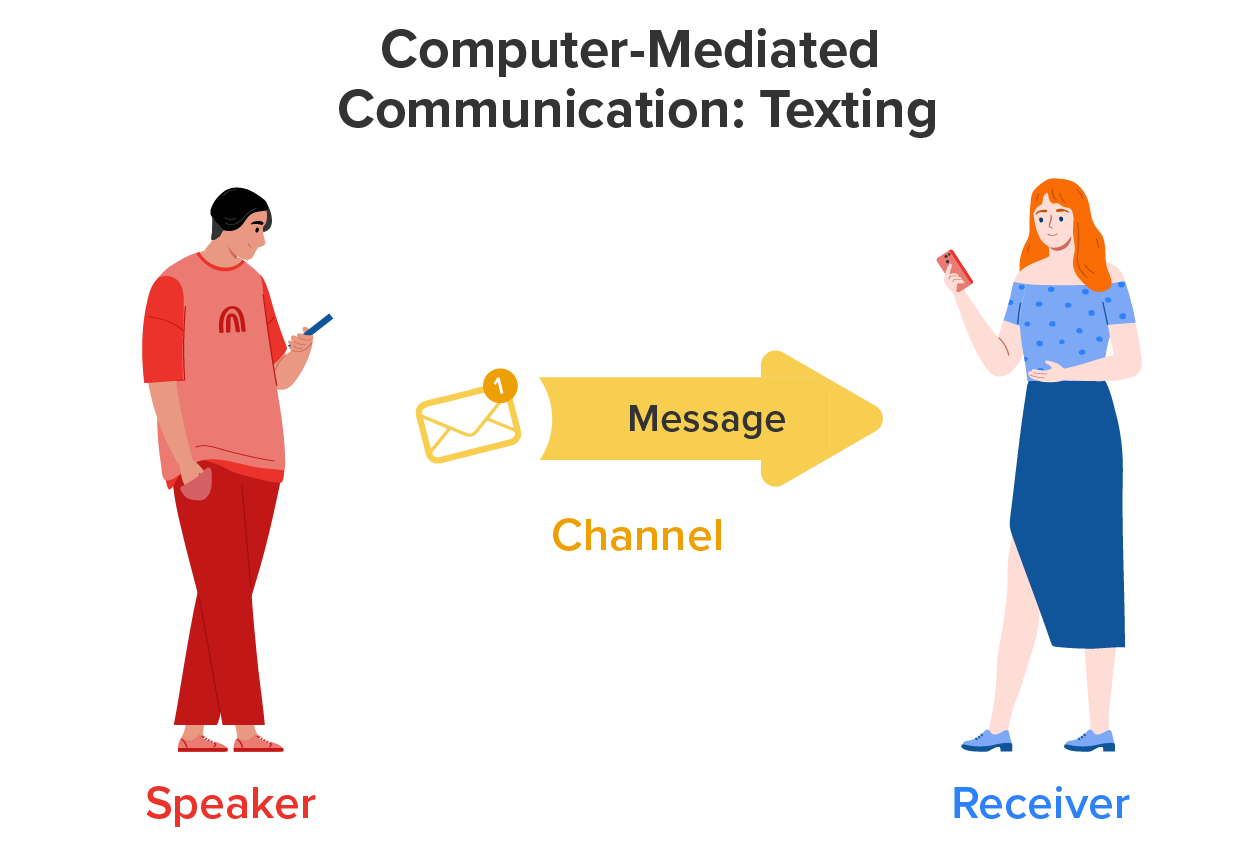
Speakers also use communication channels that are mediated, meaning there is something between the speaker and the receivers. In some cases, the auditory and visual signal is mediated by a computer to convert what the speaker says and does into a digital signal that is transmitted to remote audiences.
Computer-mediated communication (CMC) is able to overcome the physical and social limitations of other forms of communication, and therefore allow the interaction of people who are not physically sharing the same space. Computer-mediated digital channels may be synchronous when remote audiences are listening to the speech via computer conferencing or streaming audio and video while the speech is being delivered.
The channel might also be asynchronous, such as when audiences watch a video of the speech on YouTube. The message delivered through CMC channels can include both audio and video; humans use their senses of sight and hearing to decode the digital signals and process the message.
Source: THIS TUTORIAL HAS BEEN ADAPTED FROM "BOUNDLESS COMMUNICATIONS" PROVIDED BY BOUNDLESS.COM. ACCESS FOR FREE AT oer commons. LICENSE: CREATIVE COMMONS ATTRIBUTION-SHAREALIKE 4.0 INTERNATIONAL.



