Table of Contents |
What do you think of when you hear the word “carbohydrate”?
Do you think of bagels, bread, pasta, potatoes, and sweet desserts? If so, you are correct. All of those are foods rich with carbohydrates.
If you recall, carbohydrates are one of the four macromolecules (large molecules) that are important for the function of the human body. In the duration of this lesson, you’ll learn about their chemical structure, various forms, and functions in the human body.
Let’s start with the terminology—what does “carbohydrate” mean? The term carbohydrate means “hydrated carbon,” where carbo- refers to the atom carbon and the root hydro- indicates water. When bonded together, these form a carbohydrate, a molecule composed of carbon, hydrogen, and oxygen. The majority of carbohydrates have a 1:2:1 proportion of carbon, hydrogen, and oxygen, making the chemical formula for a “generic” molecule of carbohydrate (CH₂O)ₙ.
Scientifically speaking, carbohydrates are referred to as saccharides, a word meaning “sugars.” Three forms of saccharides are important in the body. Monosaccharides are the monomers of carbohydrates. Disaccharides (di, two) are made up of two monomers. Polysaccharides are the polymers and can consist of hundreds to thousands of monomers. Monosaccharides and disaccharides are considered simple carbohydrates, whereas polysaccharides are considered complex carbohydrates.
The body obtains carbohydrates from plant-based foods. Grains, fruits, and legumes and other vegetables provide most of the carbohydrates in the human diet, although lactose is found in dairy products.
Although most body cells can break down other organic compounds for fuel, all body cells can use glucose (a monosaccharide). Moreover, nerve cells (neurons) in the brain, spinal cord, and through the peripheral nervous system, as well as red blood cells, are limited almost exclusively to the use of glucose for fuel.
In addition to being a critical fuel source, carbohydrates are present in very small amounts in a cell’s structure. For instance, some carbohydrate molecules bind with proteins to produce glycoproteins, and others combine with lipids to produce glycolipids, both of which are found in the membrane that encloses the contents of body cells and will be discussed in future lessons.
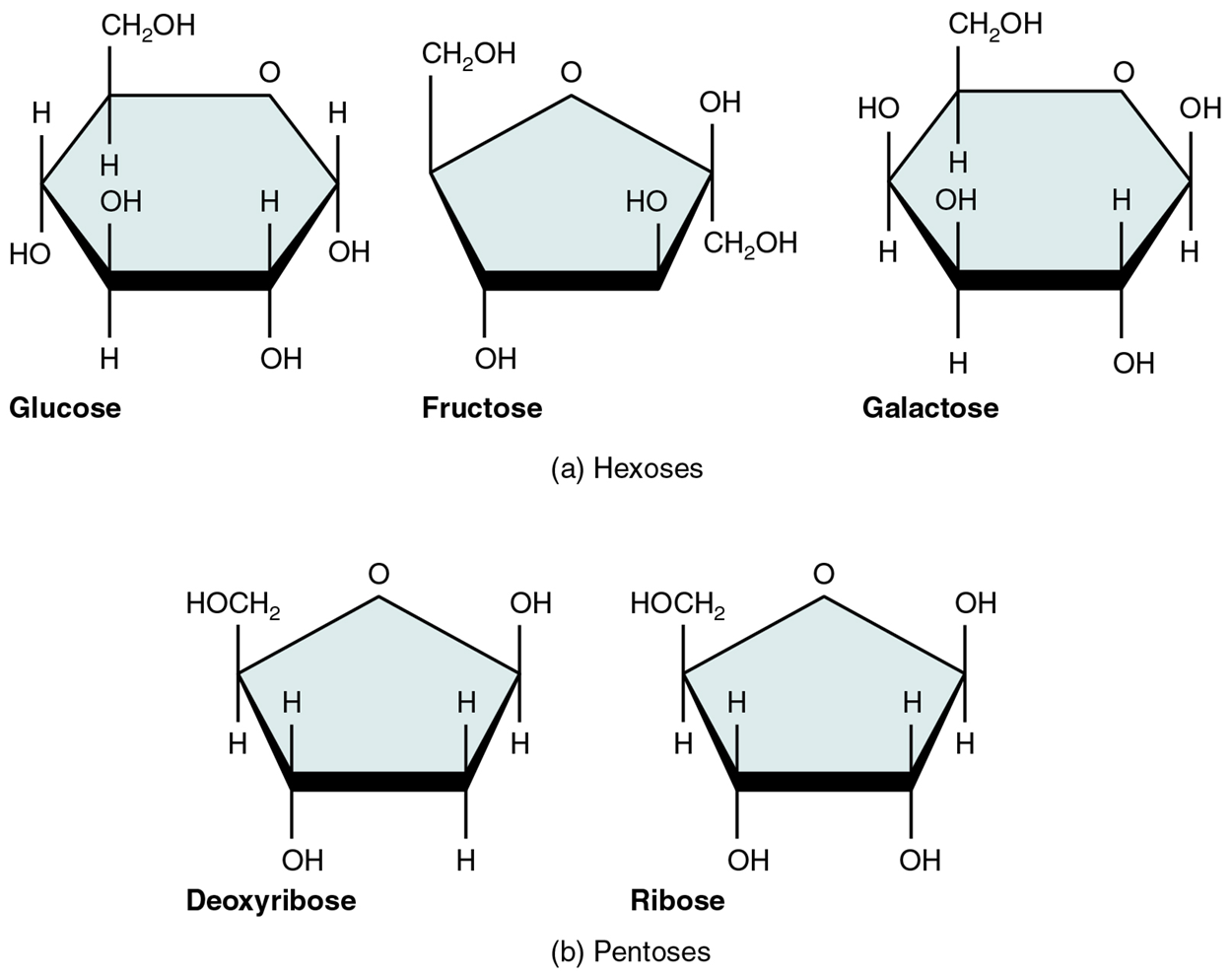
As you learned, a monosaccharide is a monomer of carbohydrates. Five individual monosaccharides are important in the body. Three of these are the hexose sugars, so called because they each contain six atoms of carbon and form a hexagon shape. These are glucose, fructose, and galactose, each with the chemical formula C₆H₁₂O₆ with slightly different orientations.
Glucose is the most common monosaccharide in the human body. Fructose is known as fruit sugar and is found in fruits and many plants. Galactose is known as milk sugar and is found in many dairy products.
The remaining two monosaccharides are the two pentose sugars, each of which contains five atoms of carbon and has the chemical formula C₅H₁₀O₅. They are ribose and deoxyribose, and they play roles in information storage in the cell, which will be covered in depth in a future lesson.
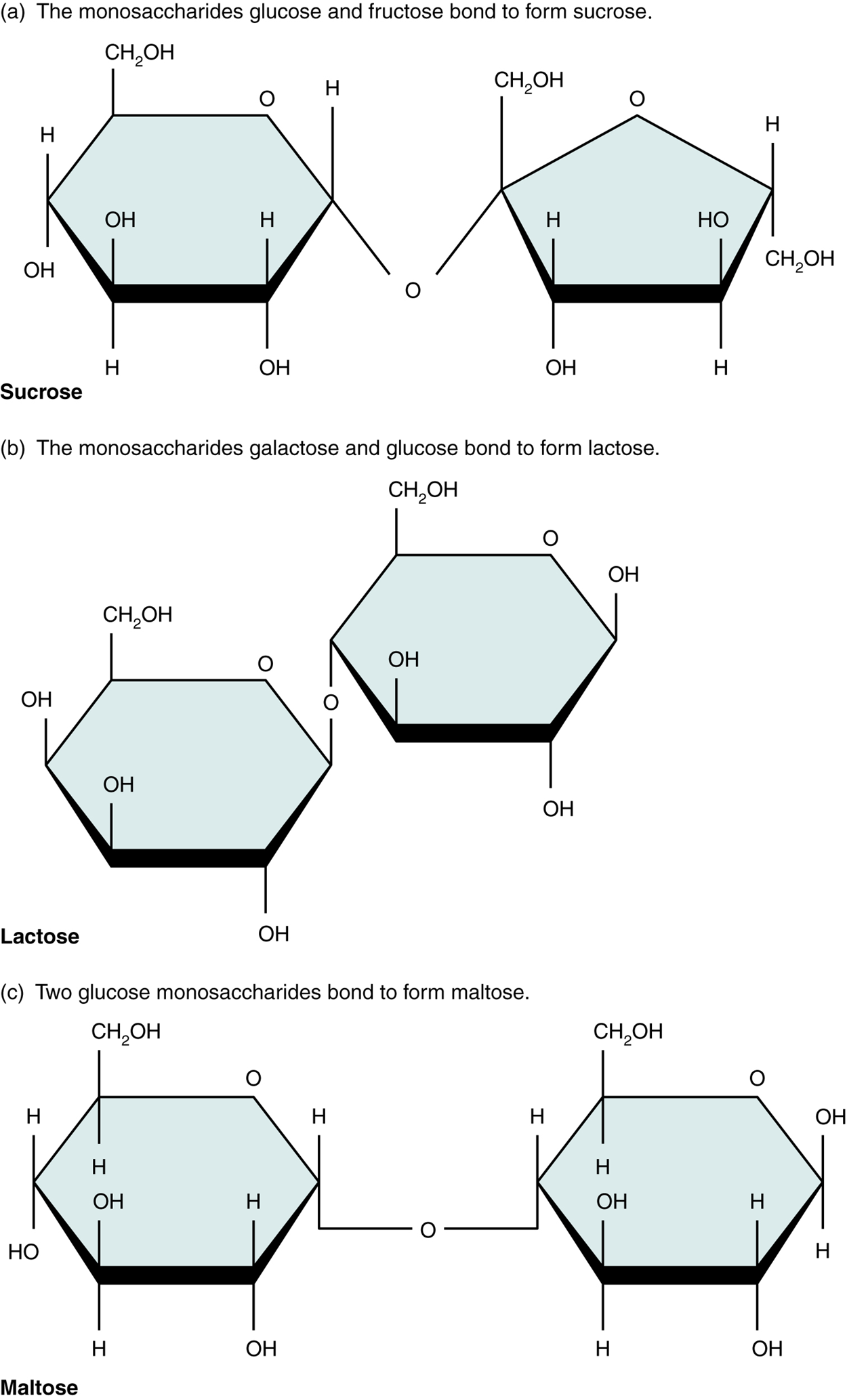
A disaccharide is a pair of monosaccharides bonded together by what is called a glycosidic bond (glyco, sugar). Each combination of the above monosaccharides forms a different disaccharide. Three disaccharides shown below are important to humans: sucrose, lactose, and maltose.
Sucrose, commonly referred to as table sugar, is one glucose molecule and one fructose molecule bonded together. Lactose, or milk sugar, is one glucose molecule and one galactose molecule bonded together. Maltose, or malt sugar, is two glucose molecules bonded together.
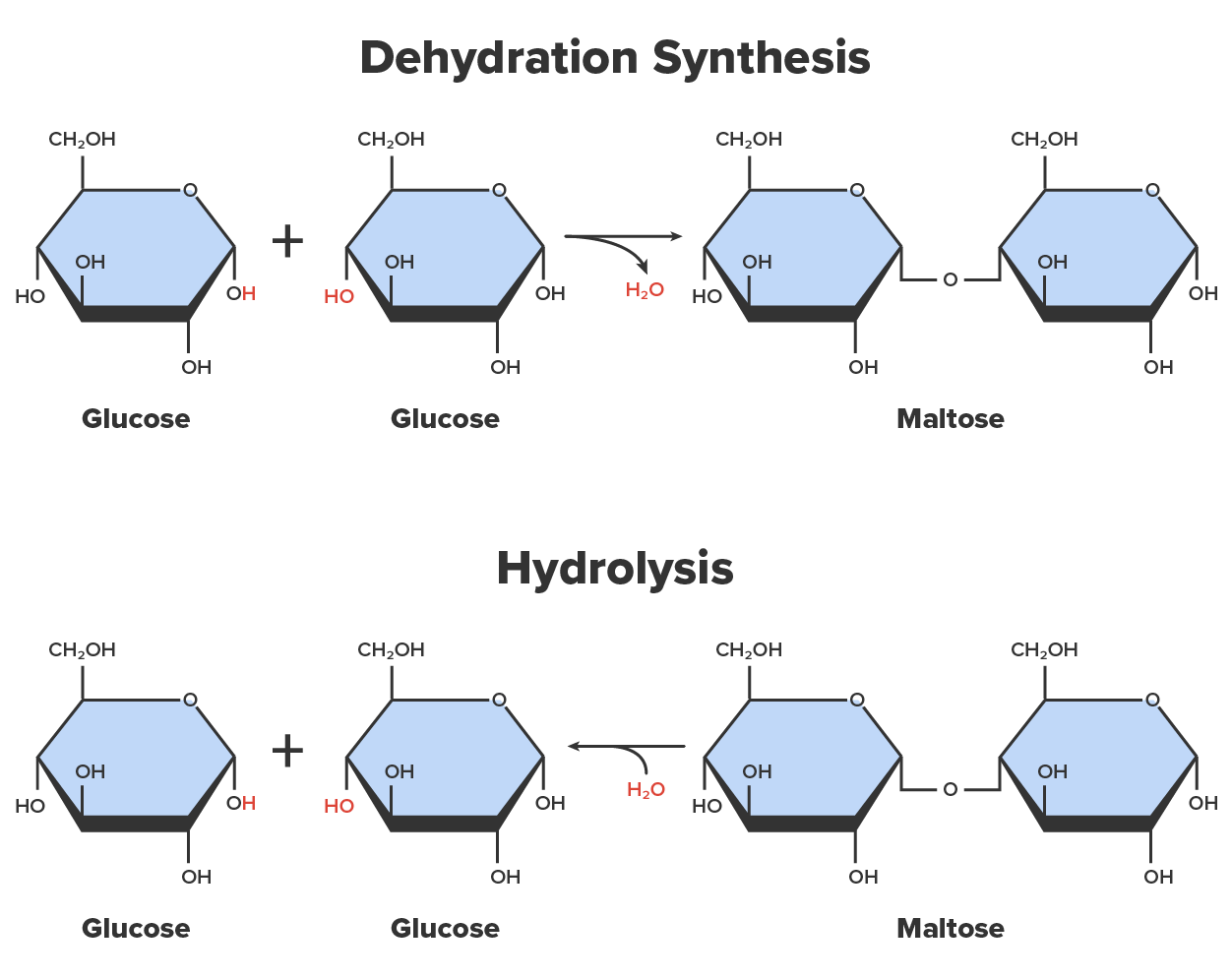
Disaccharides are formed by combining monosaccharides via dehydration synthesis reactions. You consume these in your diet; however, your body cannot use disaccharides directly. Instead, in the digestive tract, the bond is broken via hydrolysis reactions, and they are split into their component monosaccharides before being absorbed and utilized.
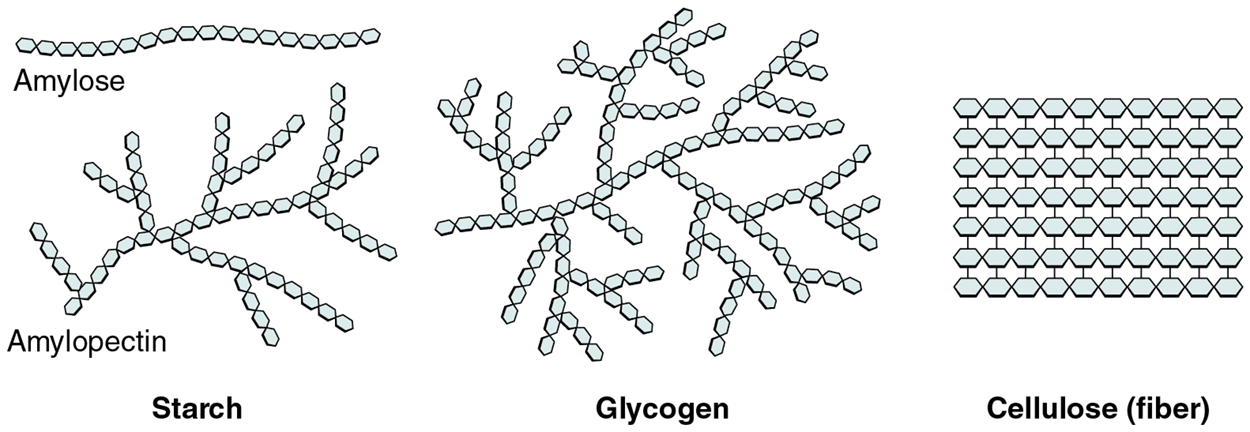
Polysaccharides are sugars that can contain a few to a thousand or more monosaccharides. There are three polysaccharides that are important to the body.
SOURCE: THIS TUTORIAL HAS BEEN ADAPTED FROM OPENSTAX “ANATOMY AND PHYSIOLOGY 2E”. ACCESS FOR FREE AT OPENSTAX.ORG/BOOKS/ANATOMY-AND-PHYSIOLOGY-2E/PAGES/1-INTRODUCTION. LICENSE: CREATIVE COMMONS ATTRIBUTION 4.0 INTERNATIONAL.



