Table of Contents |
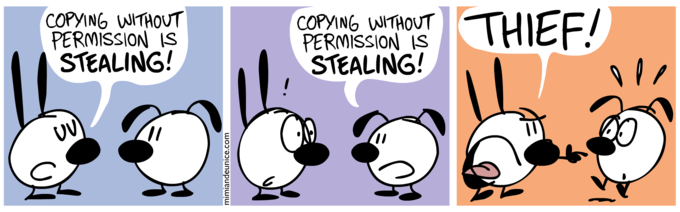
When most students think of plagiarism, they think of outright copying another person’s work. However, plagiarism can delve into murky territory that includes everything from wrongful appropriation to blatant thievery.
While plagiarism may not be a crime per se, in many academic and professional contexts, plagiarism carries serious risks, including expulsion from a school or termination from a position, organization, or company.
In its simplest form, plagiarism occurs when someone takes the words or ideas of someone else and attempts to present them as their own. Appropriating a person's work without proper credit distinguishes plagiarism from mere citation or quotation. When a writer quotes or cites a person, text, image, or another piece of intellectual property, the writer must give credit to where or from whom the quote or idea originated.
The "ideas" part of plagiarism can be especially tricky. Though unlikely, two completely different people may produce the same idea at the exact moment. Inevitably, one person would be guilty of plagiarism. And while this does happen, the instances are few and far between.
Students and professionals should always avoid deliberate plagiarism in academic and professional settings. To knowingly take another person’s work and attribute it as one's own is widely regarded as unethical, unprofessional, and illegal across most industries and organizations.
Many academic and professional services can detect whether entire sections of books, articles, and other works are published elsewhere, particularly on the World Wide Web. Additionally, suppose a writer has a unique writing style and author's voice. In that case, it can be even easier to identify plagiarism if the content is cut and pasted into a work with a completely different tone and style.
However, unintended plagiarism is more common than one might think. Sometimes the problem stems from working too closely with the source material. To avoid unintentional plagiarism, writers often develop new content with the aid of notes, as opposed to whole sources such as books, articles, or web pages. Writers also craft original compositions by working off their own notes and paraphrasing.
When pressed for time with a looming deadline, you might think a quick copy and paste of a few sentences here or maybe a paragraph there might be an easy solution. While copying and pasting your way through a speech is easy, it's certainly not wise.
It might be tempting to fire up your browser and pick a relevant source buried deep within the search results. "Who looks at what's on search page 10?", you may be thinking. Just because it's obscure doesn't mean it's okay to take it and claim it as your own.
If you get caught, you could face serious academic or professional consequences. Plus—on a very plain note—it's just not cool. It's just bad intellectual form. In the internet age, as easy as it can be to lift something from a relevant but obscure source via Google, it's equally as easy to get caught plagiarizing the words of others.
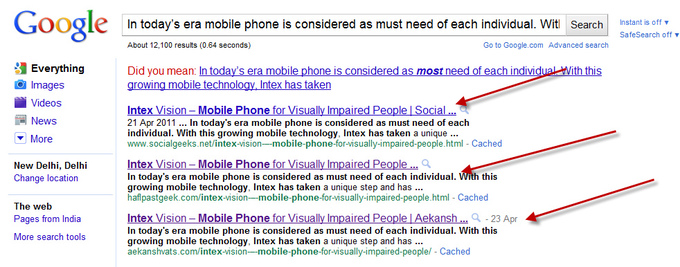
With the advent of complex, proprietary search engine algorithms has come another niche market: plagiarism detection. If you think you can get away with borrowing a sentence here or there, beware: free and easily accessible software is available for academics and professionals to check your work for plagiarism. Additionally, it is commonplace for universities to automatically upload student work to plagiarism-checking software when submitted online.
And if you think you can fool plagiarism detection software, don't count out manual checking, either. You might pull a sentence or idea from an obscure professional or expert in the field, but remember that your professor is an expert in this field; they are likely to have read whatever you're copying.
When in doubt, avoid the temptation to plagiarize despite the seemingly endless availability of content online. Your speech is better served when your words are original and genuine.
Source: THIS TUTORIAL HAS BEEN ADAPTED FROM "BOUNDLESS COMMUNICATIONS" PROVIDED BY BOUNDLESS.COM. ACCESS FOR FREE AT oer commons. LICENSE: CREATIVE COMMONS ATTRIBUTION-SHAREALIKE 4.0 INTERNATIONAL.



