Table of Contents |
The artwork you will be looking at today dates from 1770 to 1793 and focuses geographically on London, England, and Paris, France.
Neoclassicism, influenced by various elements, may seem complex, but its core characteristics are distinct. The artistic style of Neoclassical painting includes the following:
Do you ever wonder how artists become so talented? Innate talent is part of it, but this talent is usually honed and refined through years of formal schooling and application where masters instruct the student artist.
During medieval times, this instruction took place within what is called “the guild system.” During the Neoclassical era, academies, like the one shown below, replaced the medieval guild system and influenced the art, tastes, and subject matters that were considered acceptable for the time.
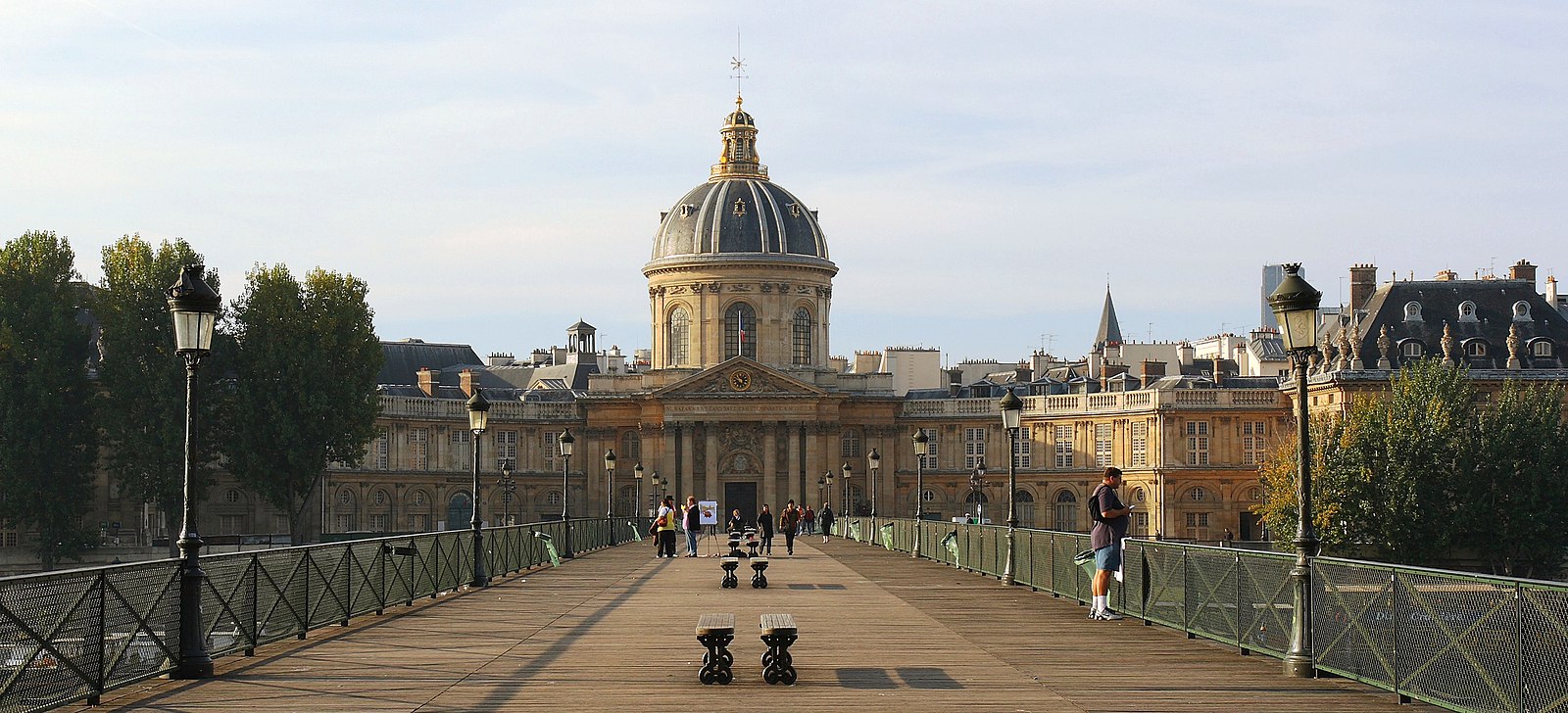
Institut de France
Paris, France
1795
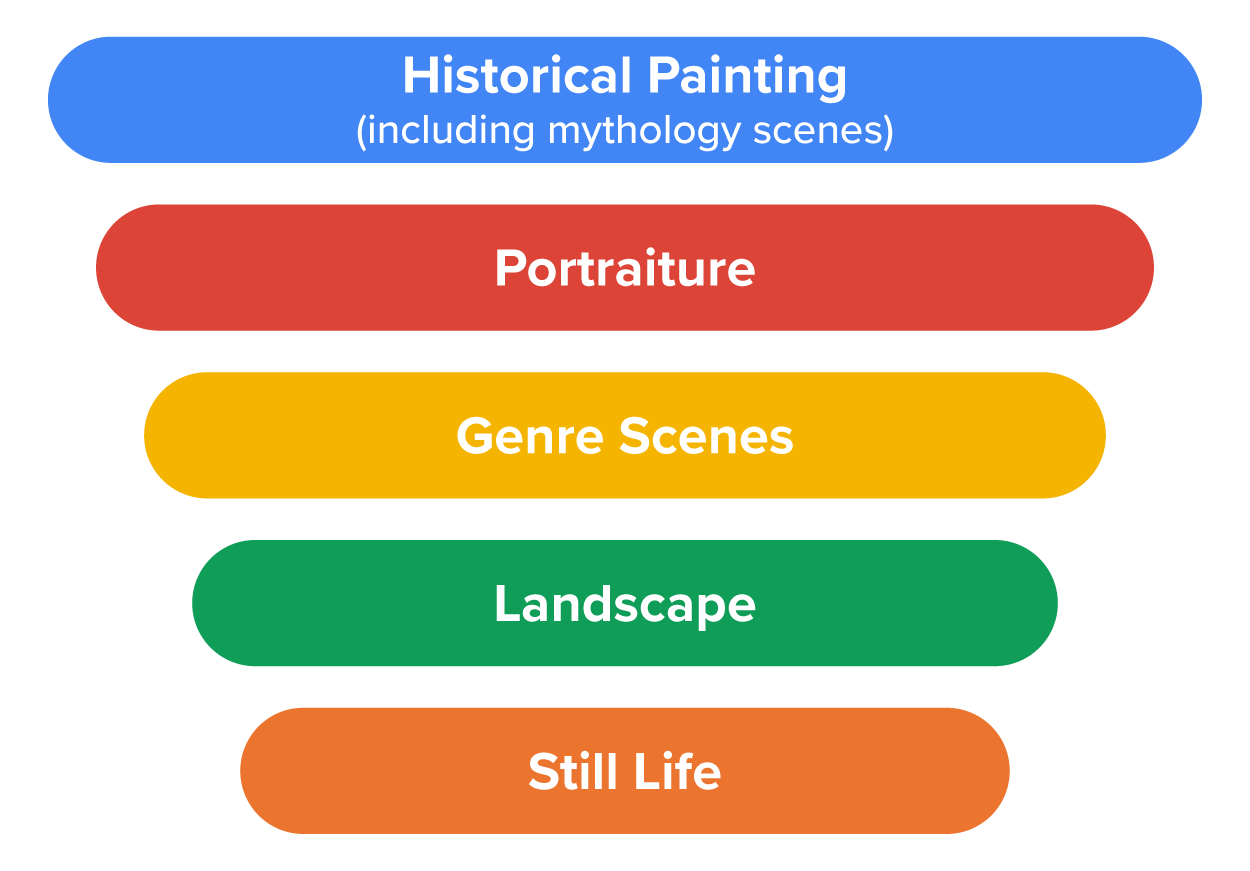
Academies were a more formal method of education. They were sponsored by the state or government, so the range of artistic styles and subject matters would be limited to artistic training in what was considered essential. There was a hierarchy of artistic subjects in academic art, as outlined below. At the top—considered to be the most important area—was history painting (including mythology scenes) because it incorporated all the other subject areas in one, followed by portraiture in second place, genre scenes in third place, landscape in fourth, and still life painting bringing up the rear.
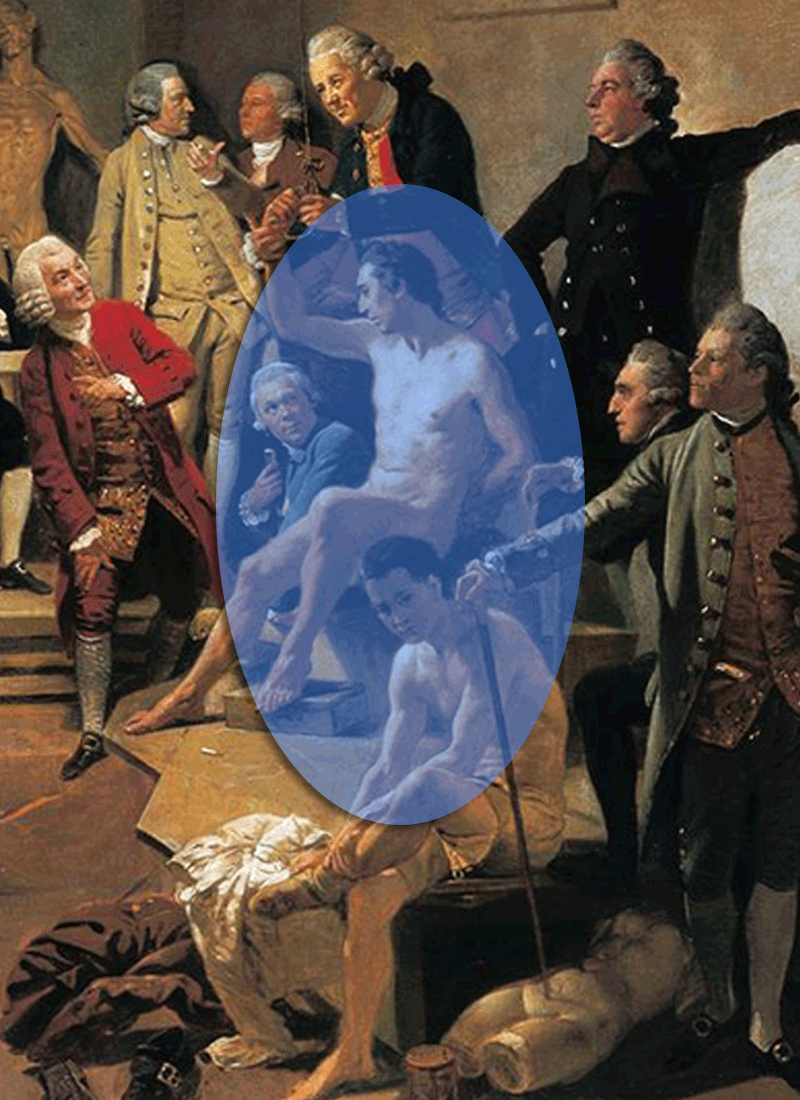
Training for artists in an academy would begin with copying plaster casts or molds—particularly, of faces—and would eventually transition to the drawing of live nude models. The painting below, called the Portraits of the Academicians of the Royal Academy, provides an idea of what formal artist training may have looked like—although, keep in mind that this is an idealized picture.
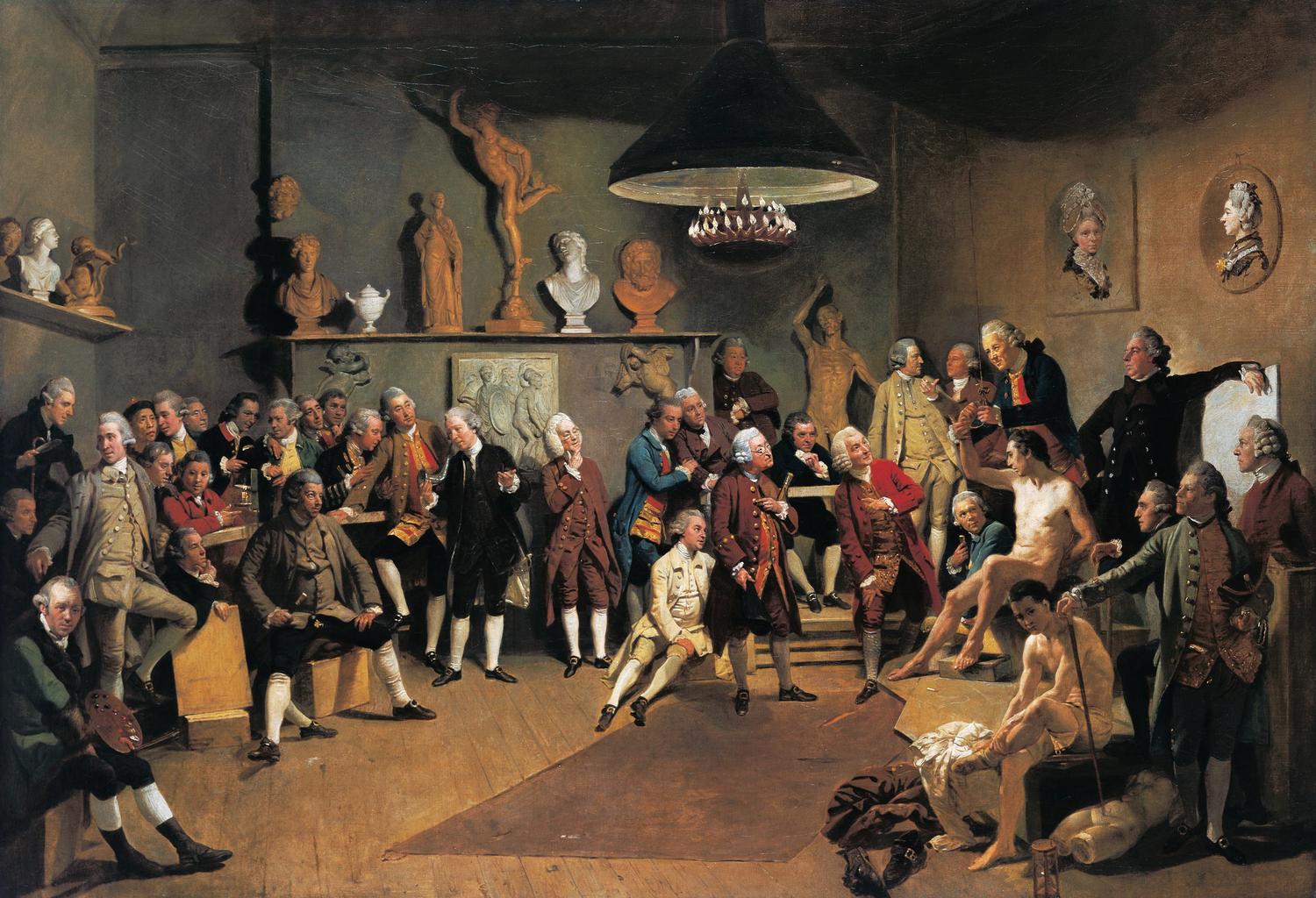
Portraits of the Academicians of the Royal Academy
The Royal Collection, London
1771–1772
Oil on canvas
The room is decorated with numerous examples of classical and Renaissance art. In the background, you can see it on the shelves.
The American-born artist Benjamin West was a pivotal figure in the Neoclassical movement. He masterfully integrated classical ideals into a modern context, immortalizing his subjects as symbols of patriotism and heroism.
West’s ability to blend the grandeur of classical themes with contemporary events is evident in his famous painting of the death of General Wolfe during the French and Indian War (known as the Seven Years’ War in Europe). In this work, West takes significant artistic liberties, transforming the historical event into an idealized and dramatic scene.
West’s depiction of General Wolfe’s death is not a straightforward, realistic portrayal. Instead, it is a deliberate idealization, designed to elevate Wolfe’s demise from being a mere war casualty to a moment of noble sacrifice. By doing so, West creates a powerful visual narrative that glorifies Wolfe’s heroism and dedication to his country.
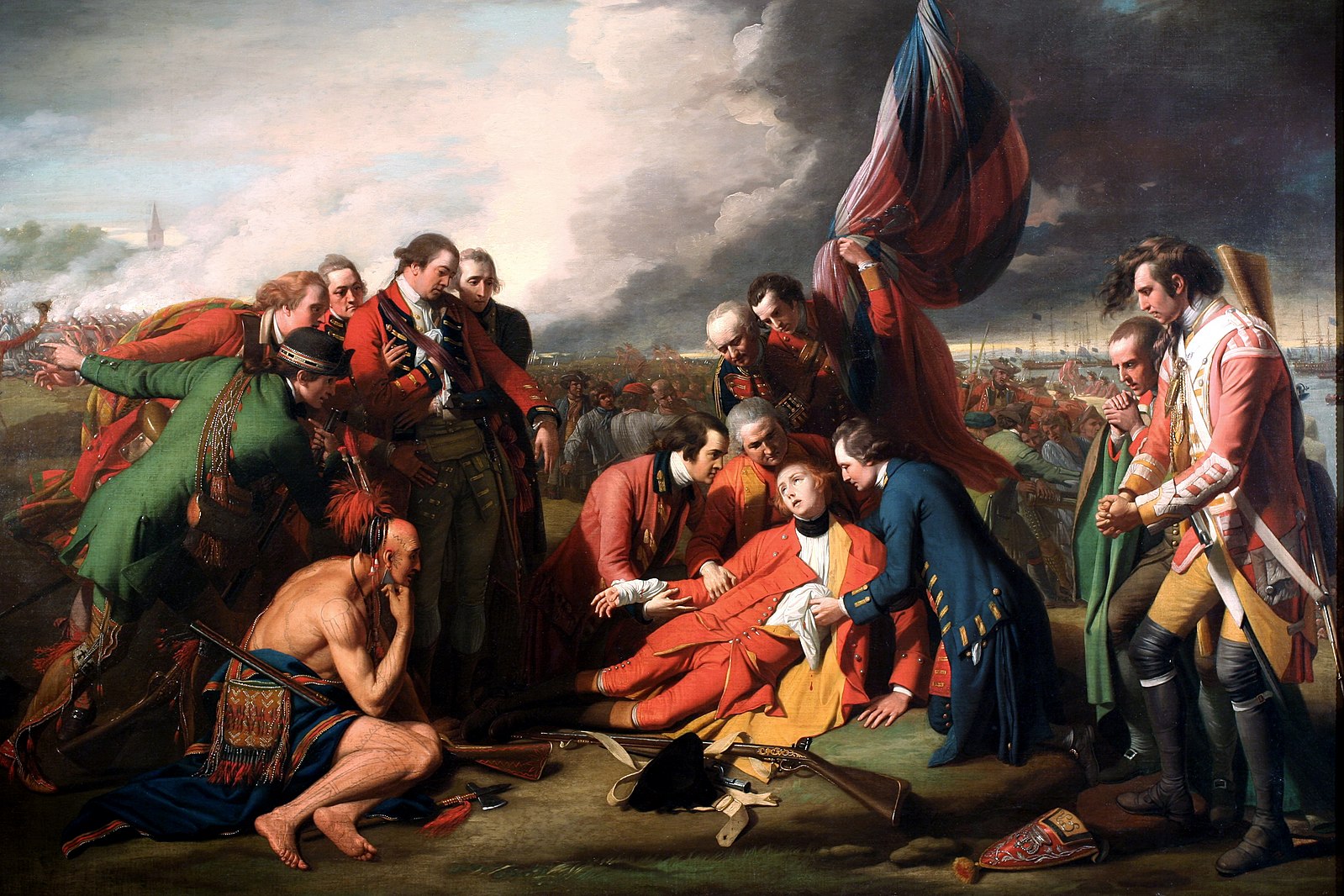
The Death of General Wolfe
National Gallery of Canada, Ottawa
1770
Oil on canvas
The painting features Wolfe surrounded by his officers and soldiers who express a range of emotions, from sorrow to reverence. The composition is carefully crafted to draw the viewer’s attention to Wolfe, whose serene expression and graceful posture suggest a Christ-like martyrdom. This approach not only enhances the dramatic impact of the scene but also aligns with the Neoclassical ideals of stoicism, virtue, and honor.
As mentioned, history painting was considered the most important area of Neoclassical academic art.
Angelica Kauffman, born in Switzerland in 1741, showed exceptional talent in painting from a young age. She received training from her father, Joseph Johann Kauffman, who was also an artist, and her skills quickly garnered attention across Europe. By the time she moved to London in 1766, she had already established a reputation for her work in Italy and Austria.
Angelica Kauffman’s Cornelia Pointing to Her Children as Her Treasures is a celebrated work that exemplifies the Neoclassical style and themes that Kauffman mastered. This painting, also known as Cornelia, Mother of the Gracchi, tells a story rich in moral and historical significance, drawing from Roman history to convey the ideals of virtue, motherhood, and civic duty.
The painting portrays Cornelia, a revered Roman matron, presenting her two sons—Tiberius and Gaius Gracchus, who grew up to be great Roman Senators—as her most valuable treasures. The scene is set in a domestic environment where Cornelia is approached by a wealthy woman showing off her jewelry, asking Cornelia to show her own treasures. In response, Cornelia points to her sons, signifying that they are her true treasures.
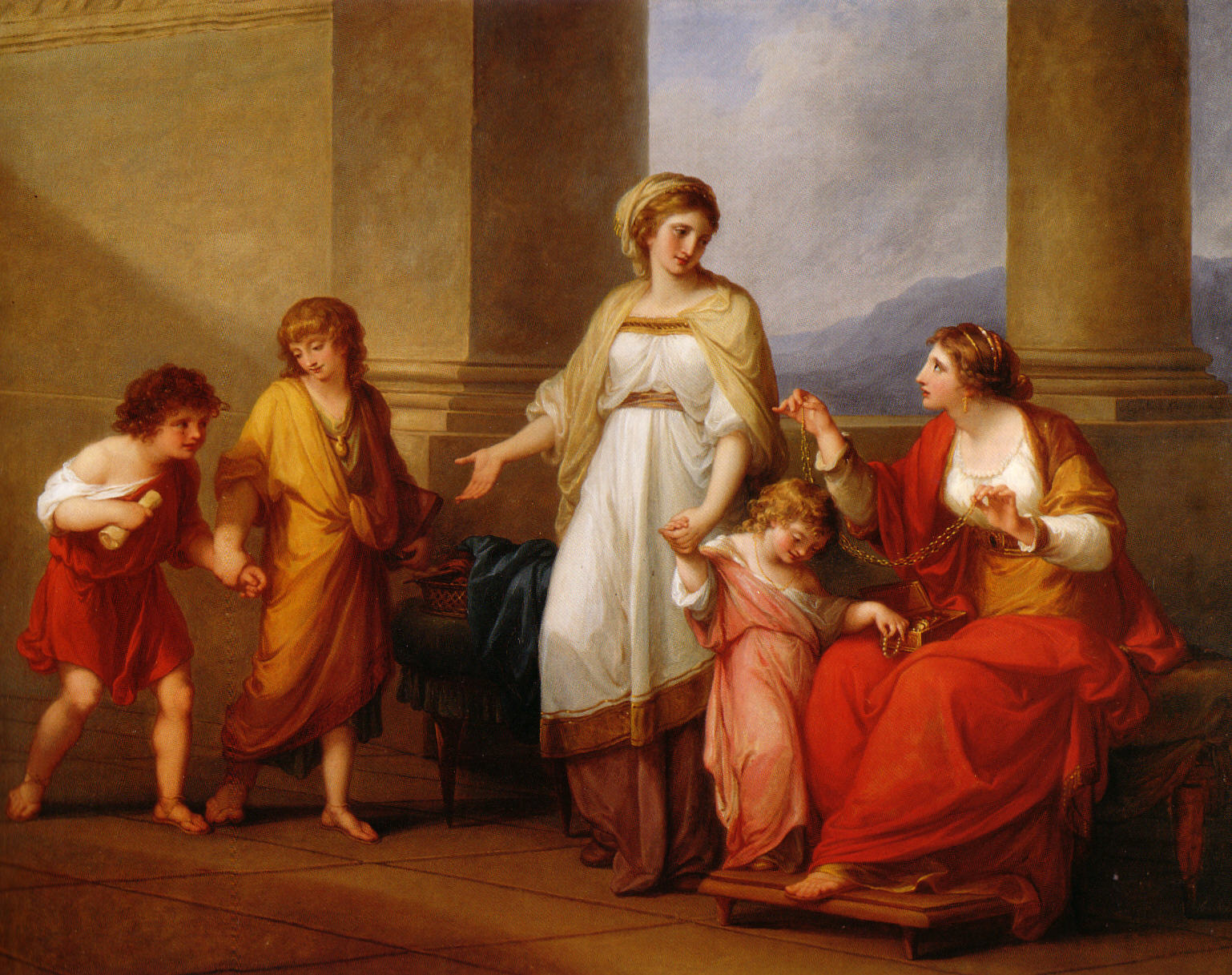
Cornelia Pointing to Her Children as Her Treasures
Virginia Museum of Fine Arts, Richmond, Virginia
1785
Oil on canvas
Kauffman’s ability to convey a complex narrative through her composition and character portrayal showcases her skill as a storyteller. The painting does not just depict a historical scene; it communicates a timeless message about values, priorities, and the true measure of wealth.
Cornelia Pointing to Her Children emphasizes the role of women in shaping the future through the moral and civic education of their children. Kauffman, as a female artist in a male-dominated field, likely found personal resonance in this theme, reinforcing the idea that women can significantly influence society.
The painting and artwork of the artist Jacques-Louis David are some of the finest examples of Neoclassical painting. In a sense, his paintings almost function as a Neoclassical checklist. You can use the image of the painting Oath of the Horatii as an example.
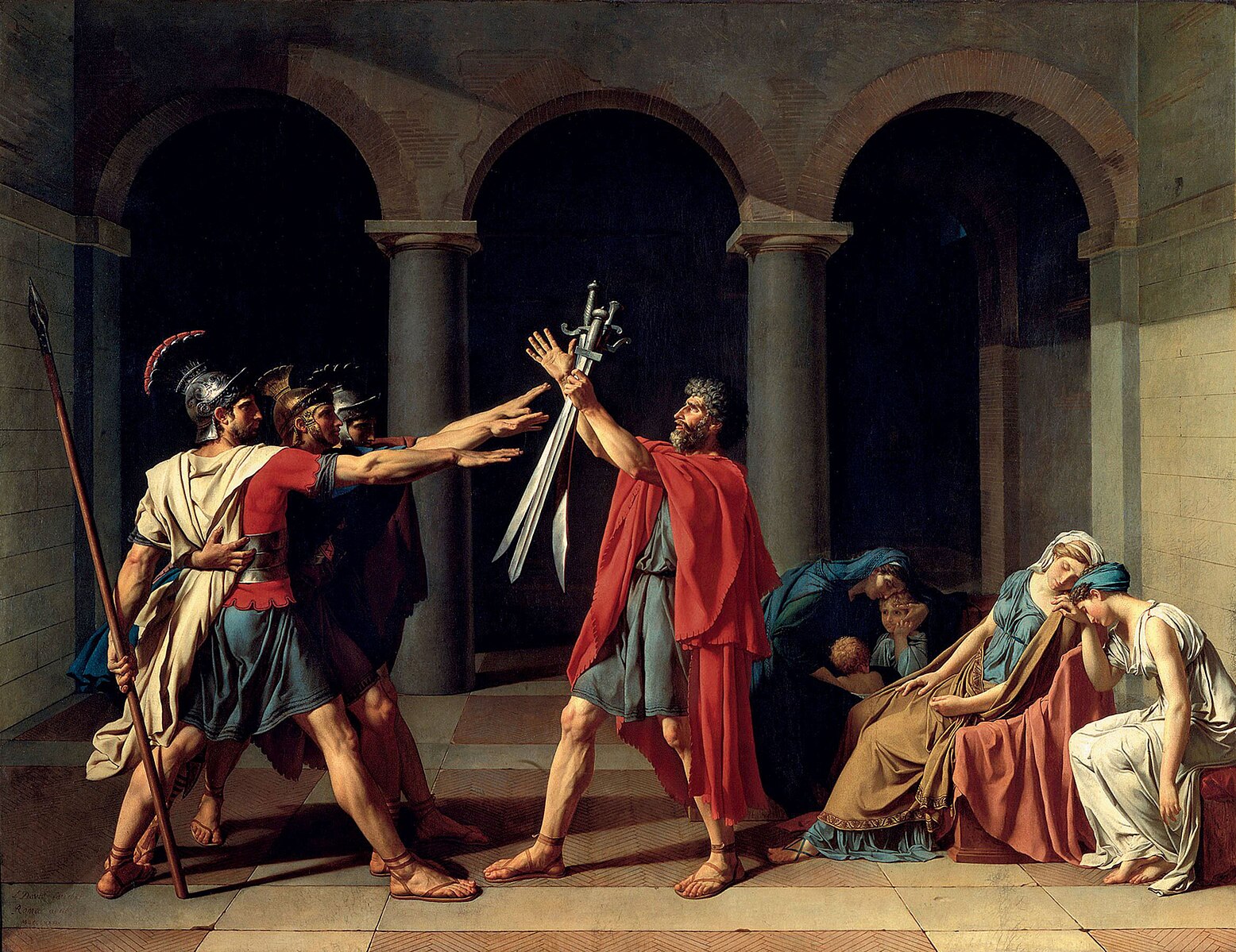
Oath of the Horatii
Louvre Museum, Paris
1784/1785
Oil on canvas
Created in the years leading up to the French Revolution, Oath of the Horatii is a commentary on contemporary political issues. The painting’s themes of loyalty and sacrifice resonated with the revolutionary fervor of the time, and David himself later became an active supporter of the Revolution. Notice how the courageous poses and facial expressions of the men contrast with the defeated body language of the women. David’s masterful retelling of an ancient story presented two poignant aspects of aspirational civic pride.
The final example, The Death of Marat, is arguably David’s most famous work and often the image most closely associated with the artist. Jean-Paul Marat was a journalist and an important figure during the French Revolution. He suffered from a very painful skin condition near the end of his life that required him to take medicinal baths, which is where he did most of his writing. As one can see, there was a makeshift desk situated over Marat’s tub.
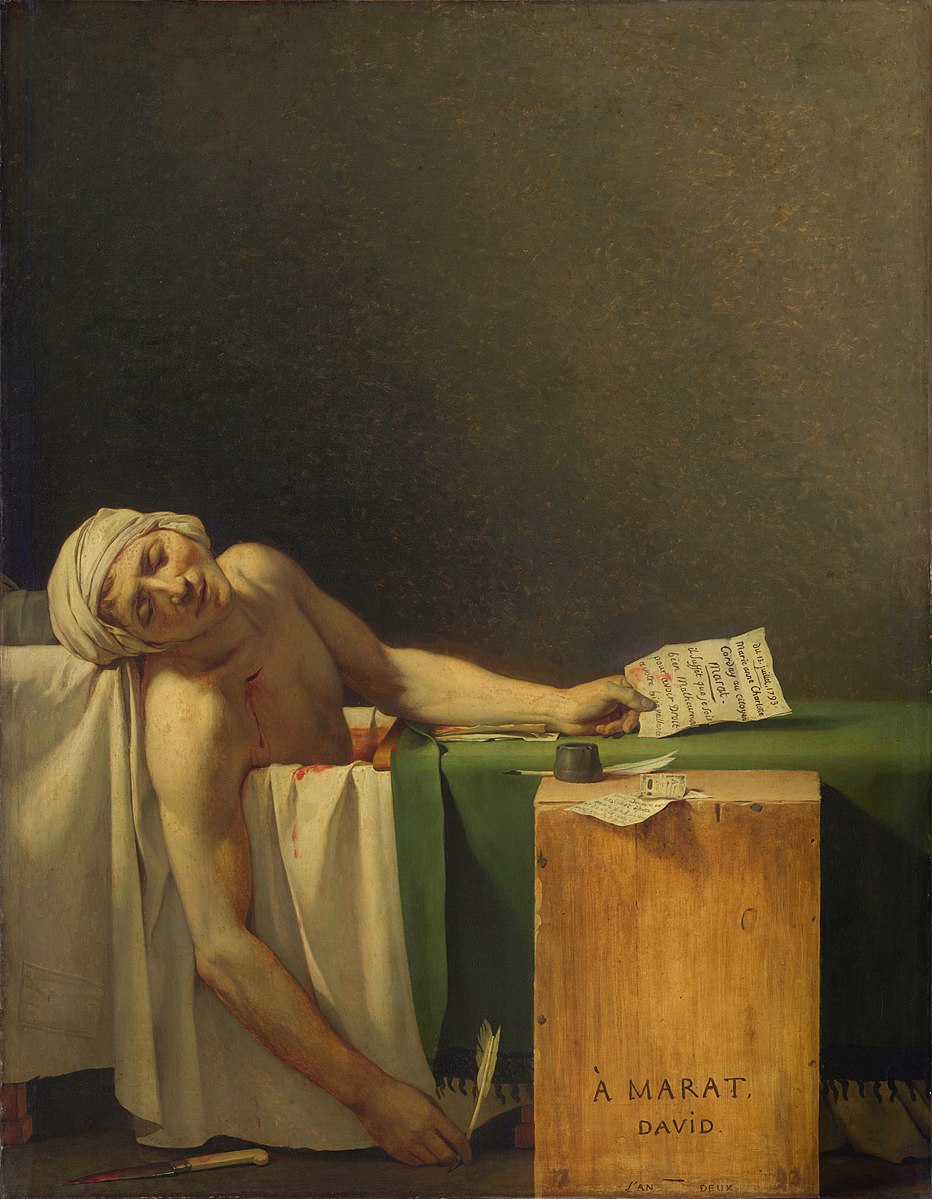
The Death of Marat
Royal Museums of Fine Arts of Belgium, Brussels
1793
Oil on canvas
Marat is credited for having incited radical action during the revolution by his writings. He was killed by Charlotte Corday, a member of an opposing faction, who feared that Marat’s writings were contributing to an increase in violence.
The painting portrays Marat as a martyr for the revolutionary cause. His calm and composed expression, despite a violent death, suggests that he died peacefully, reinforcing the idea that his death was a noble sacrifice for the greater good. Notice how Marat’s right arm hangs lifelessly, much like Christ’s arm in Michelangelo’s 1498 Pietà, drawing a visual connection to past images of martyrdom.
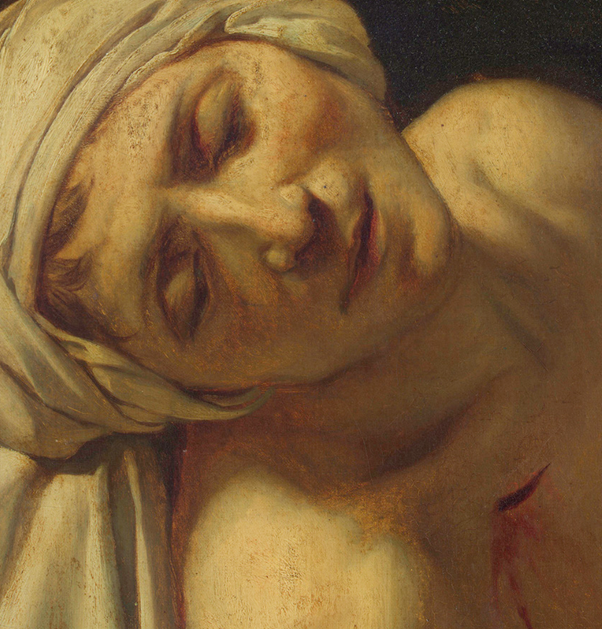
David succeeds in immortalizing the figure of Marat, just as West immortalized General Wolfe. In contrast to Baroque depictions of death that are visually graphic, death is a rallying call here. By depicting Marat in a humble, almost saintly manner, David aimed to contrast the righteousness of the revolutionary cause with the perceived treachery and violence of its enemies. The blood-stained letter in Marat’s hand, addressed to the widows and orphans of revolutionaries, underscores his compassion and dedication to the people.
The Death of Marat evokes a strong emotional response from the viewer, aiming to inspire sympathy for Marat and outrage against his assassination. This emotional appeal was intended to rally support for the revolutionary government and justify its actions against perceived enemies.
David’s painting influenced not only his contemporaries but also future generations of artists. Its combination of political messaging, emotional depth, and classical style set a precedent for the use of art as a means of political and social commentary.
Born in 1760 in the French colony of Guadeloupe in the Caribbean, Guillaume Guillon-Lethière was a celebrated Neoclassical painter. He was the son of a French colonial official and a freed African slave.
At a young age, Lethière moved to mainland France, where he showed early promise as an artist. He studied under the renowned painter Jean-Baptiste Descamps in Rouen and later at the prestigious Académie Royale de Peinture et de Sculpture in Paris.
Despite the upheaval of the French Revolution and the prejudices he faced as a man of mixed race, Lethière achieved the highest levels of recognition in his time. He was Napoleon’s brother Lucien Bonaparte’s favorite artist, served as the director of the Académie de France in Rome, was a member of the Institut de France, and was a professor at the École des Beaux-Arts. In addition to being a well-respected professor, he operated one of the most successful studios in France.
Lethière’s painting The Oath of the Ambassadors commemorates the 1803 alliance between the Black and Mulatto populations of Haiti, who united to defeat the French colonial forces, ultimately leading to Haiti’s independence in 1804. Haiti became the first Black republic and the second independent nation in the Americas after the United States.
The painting depicts two prominent leaders of the Haitian Revolution: Jean-Jacques Dessalines, a Black general who later became the first ruler of independent Haiti, and Alexandre Pétion, a leader of mixed race. They are shown taking an oath, symbolizing unity and commitment to the cause of independence.
The background features the figure of a divine or allegorical figure, representing the spirit of liberty overseeing the alliance. This adds a spiritual dimension to the historical event, suggesting that their cause is just and divinely sanctioned.
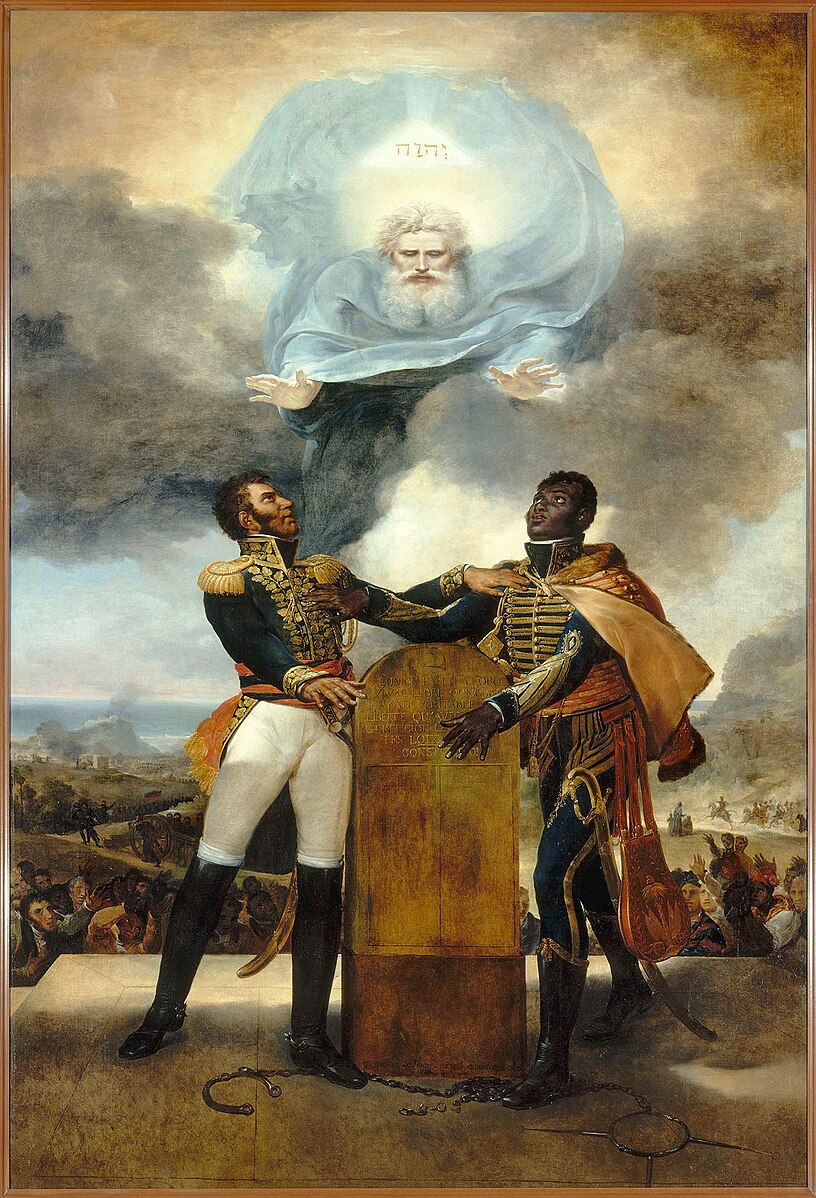
Oath of the Ancestors
Musée du Panthéon National Haïtien, Port au Prince, Haiti
1823
Oil on canvas
Source: THIS TUTORIAL WAS AUTHORED BY SOPHIA LEARNING. PLEASE SEE OUR TERMS OF USE.



