In this lesson, you’ll learn how to use the APA citation style used most often in the social sciences. As you refine your draft, understanding how to properly cite sources and format references will help you maintain academic integrity and present your work like a professional. Specifically, this lesson will cover:
1. APA Formatting and Documentation
As you learned earlier, disciplines in the social sciences, like psychology, sociology, anthropology, political science, economics, social work, and often education, commonly use the APA (American Psychological Association) system of documenting sources. This is the style that we use at Sopia, but there are many others, such as MLA and Chicago, which you may have used in the past.
-
Citing sources is how a conversation is sustained among academics. Scholars will scan an article's references for key names, recent dates, and important publications to put the article in context. In terms of college writing, correctly following the conventions of formatting and documentation demonstrates your professionalism.
APA style highlights authors and dates of publication because timeliness of published material is of primary importance in these disciplines. In this lesson, we will follow the Publication Manual of the American Psychological Association, 7th edition (2020).
We think it is important to return to APA as you are completing your draft. Now is a good time for you to check on your citations and make sure you are following APA format to the best of your ability. APA formatting makes your overall effort look more polished, like going into a job interview with professional clothing and neat hair.
Here are the general features of APA citation style:
- All material borrowed from sources is cited in the text of a paper by the author’s name, date of publication, and page numbers (if available).
- A list of references at the end of a paper provides full publication data for each source cited in the text of the paper.
These are the basic conventions of APA in terms of formatting a document:
-
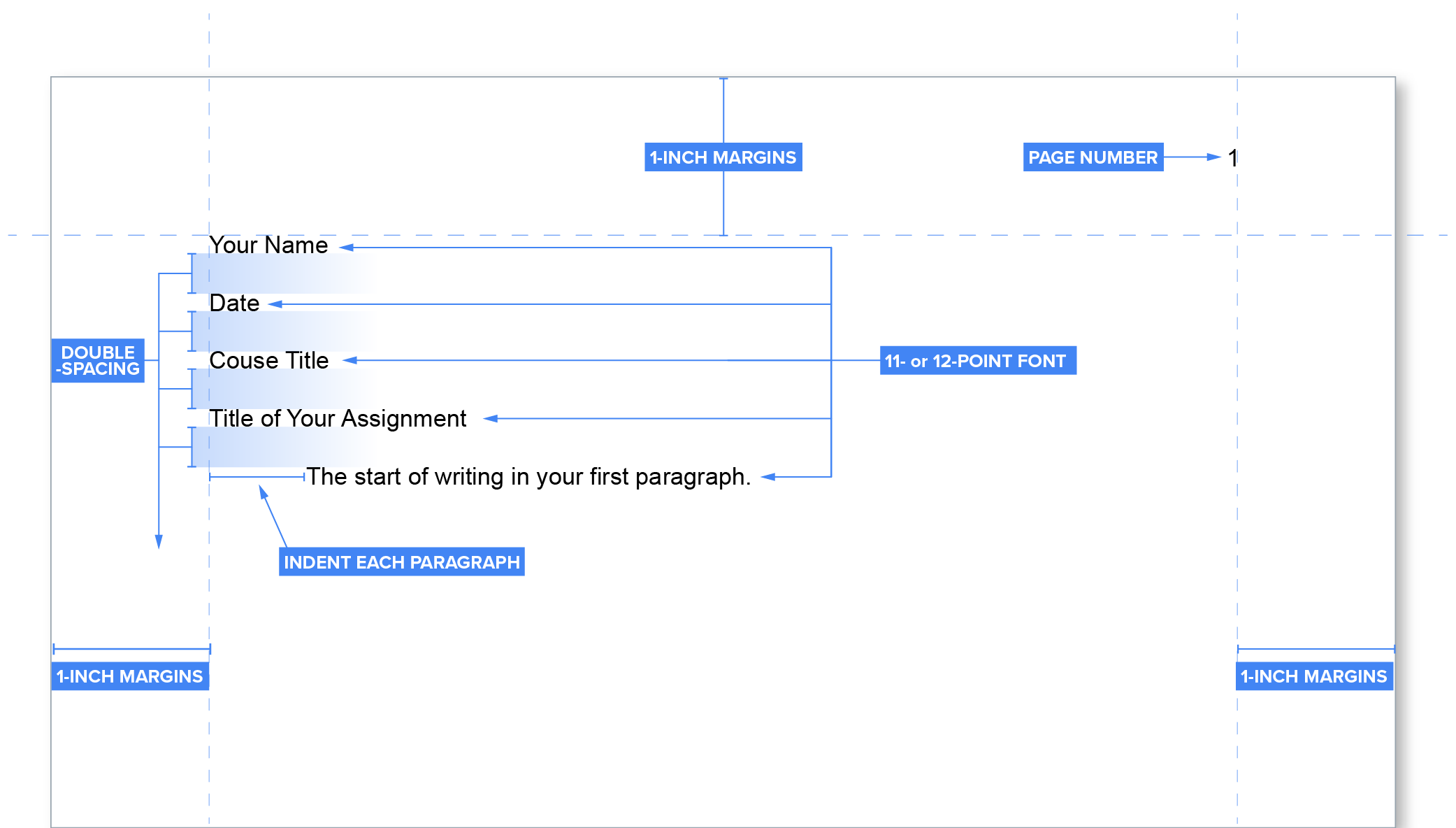
Margins: Use one-inch margins on all sides.
-
Spacing: Double-space throughout the paper, including the reference page. There are no additional spaces between paragraphs.
-
Paragraphs: Indent paragraphs one-half inch.
-
Page Numbers: Place page numbers in the upper-right corner.
Take a look at how this sample document is set up:
-
For sample papers showing APA paper format, visit the resources at
Purdue OWL.
2. In-Text Citations for Different Kinds of Sources
In-text citations feature author names, dates of publication, and page numbers, depending on what information is available. As you have learned, there are different stylistic options for integrating this information. Here is a review of options for different kinds of sources.
One author
There are two options: Include the last name of the source’s author in a signal phrase or in parentheses at the end of the sentence.
If you add the author’s name as part of the signal, give the publication date after the author’s name. Provide the page or pages on which the original material appeared preceded by
p. or
pp. in parentheses at the end of the sentence. It will look like this:
According to Thomas (1974), many bacteria become dangerous only if they manufacture exotoxins (p. 76).
If you add the author’s name as part of the parenthetical at the end of the sentence, it will look like this:
Many bacteria become dangerous only if they manufacture exotoxins (Thomas, 1974, p. 76).
Two authors
For works with two authors, include both names in the paragraph using “and.” Take a look at this example:
Smith and Hawkins (1990) confirmed that bacteria producing exotoxins are harmful to humans (p. 17).
If the authors’ names appear at the end of the sentence in parentheses, use an ampersand (&). Notice this example:
The study confirmed that bacteria producing exotoxins are harmful to humans (Smith & Hawkins, 1990, p. 17).
Three or more authors
For works with more than two authors, give the last name of the first author followed by “et al.” Notice how this appears in the example:
The results indicate that alcohol use rose during the period of the study (Dominic et al., 2021, p. 16).
Unknown author
When the author of a work is unknown, use the work’s title in a signal phrase, or put the title in parentheses. Put quotation marks around article titles and put book or journal titles in italics.
In a pointed editorial, the New York Times argued that college athletic departments should support public health by canceling sports seasons until athletes and the public were vaccinated (“Don’t Let the Games Begin,” 2020).
You can also reference the title in the text, followed by the year only in parentheses.
In its pointed editorial, “Don’t Let the Games Begin” (2020), the New York Times argued that college athletic departments should support public health by canceling sports seasons until athletes and the public were vaccinated.
Two or more works in the same citation
When you cite more than one work in parentheses, put the works in the same order that they appear in your list of references, and use a semicolon between them:
Americans who resisted or ignored civil defense were later cast as heroic people who chose not to build fallout shelters or as marginalized people who could not afford them (Garrison, 2006; Mechling & Mechling, 1991).
Work with no page numbers
If the work you are citing has no page numbers, help readers find the quotation by providing a heading, a section name, and/or a paragraph number (using the abbreviation para. or paras.):
According to the National Institute of Mental Health (NIMH, 2019), research on PTSD includes gene research and brain imaging technologies (Next Steps for PTSD Research section, para. 6).
3. How to Format the References List
Remember that each source cited in the text of your paper refers readers to the list of references, a complete list of all the sources you quoted, paraphrased, or summarized. Every source cited in the text of your paper must be included in the references list, and every source in the references list must be cited in the text of your paper.
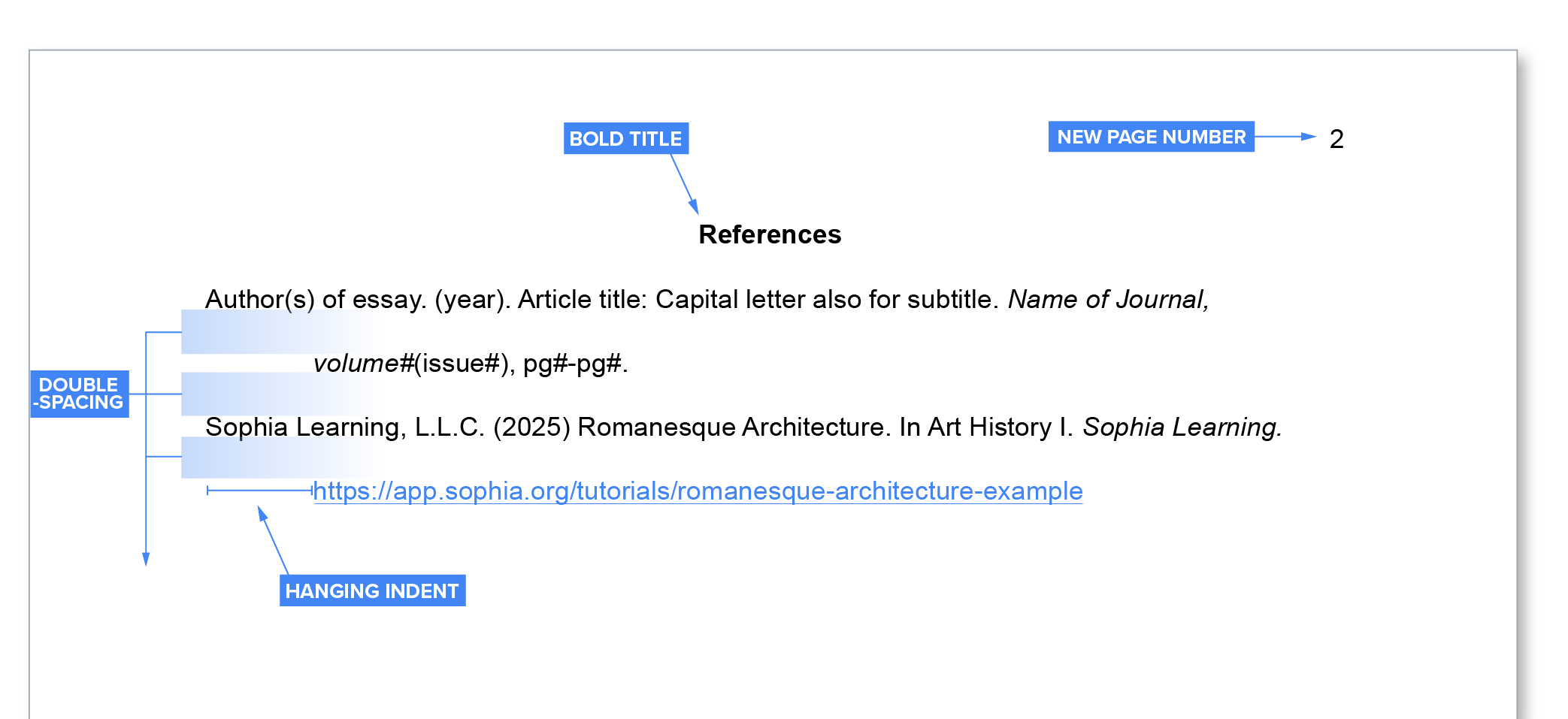
After the last page of your paper, start a new page with the centered, boldfaced title "References" at the top. Create an entry for each source using the following guidelines and examples.
- Begin each entry at the left margin and indent subsequent lines one-half inch. (In Microsoft Word, you can also highlight the entire page when you are finished and select “Hanging” from the Special options on the Indentation section of the Paragraph menu.)
- Alphabetize the entries according to authors’ last names. If two or more authors have the same last name, alphabetize by the initials of their first and middle names. Alphabetize sources with unknown authors by the first word of the title, excluding a, an, or the.
- Double-space the entire page.
Take a look at how this sample reference page is set up:
Each entry in the list of references consists of these core elements:
- Author
- Date of publication
- Title
- Publication information
Sometimes core elements are unknown or missing. In such cases, the entry in the reference list entry must be adapted:
- No author? If the source has no known author, cite it by the title.
- No date of publication? If the source has no publication date, write n.d. instead of the publication date.
- No title? If the work has no title, put a brief description in square brackets.
3a. Different Author Situations
Give the author’s last name, comma, and first and middle initials if available. For works with more than one author, put a comma and an ampersand (&) before the final author’s name, even when there are two authors.
Let’s take a look at some examples of how to cite different author situations.
One author
Milanovic, B. (2016). Global inequality: A new approach for the age of globalization. Harvard UP.
Two authors
Kristoff, N. D., & WuDunn, S. (2009). Half the sky: Turning oppression into opportunity for women worldwide. Alfred A. Knopf.
Three to twenty authors
Barlow, D. H., Durand, V. M., & Hofmann, S. G. (2017). Abnormal psychology: An integrative approach. Cengage Learning.
Unknown author
The most beautiful battalion in the army. (1968). Grunt magazine, 12–15.
Two or more works by the same author
Bandura, A. (1969). Principles of behavior modification. Holt, Rinehart, and Winston.
Bandura, A. (1977a). Self-efficacy: Toward a unifying theory of behavioral change. Psychological Review, 84, 191–215.
Bandura, A. (1977b). Social learning theory. Prentice Hall.
3b. Articles in Journals, Magazines, and Newspapers
Articles, reviews, editorials, and other short works are published in journals, newspapers, and magazines, and they appear in print, on databases, and on websites (though sometimes through a paywall).
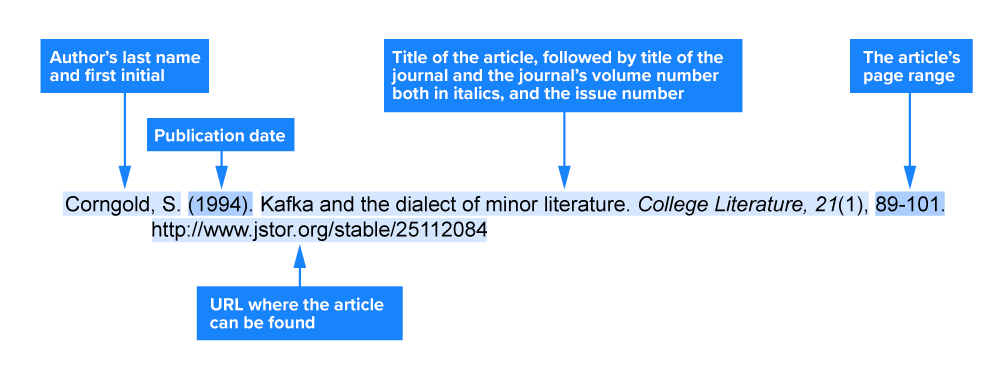
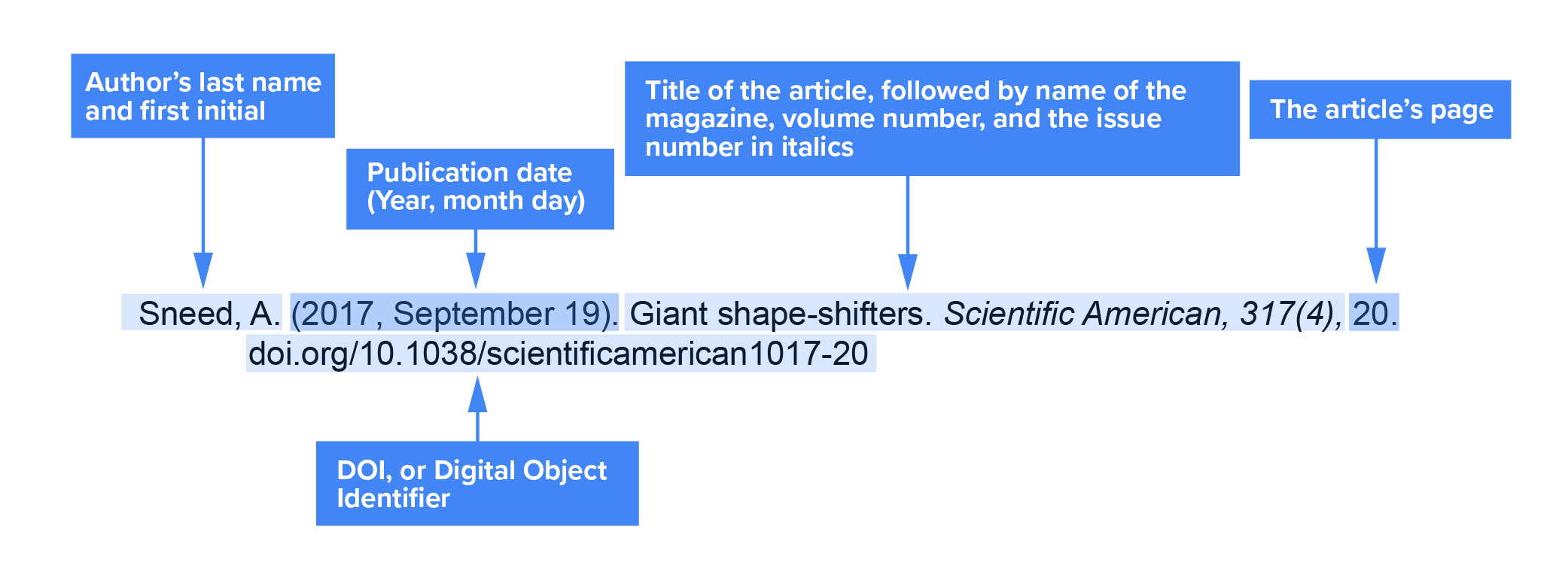
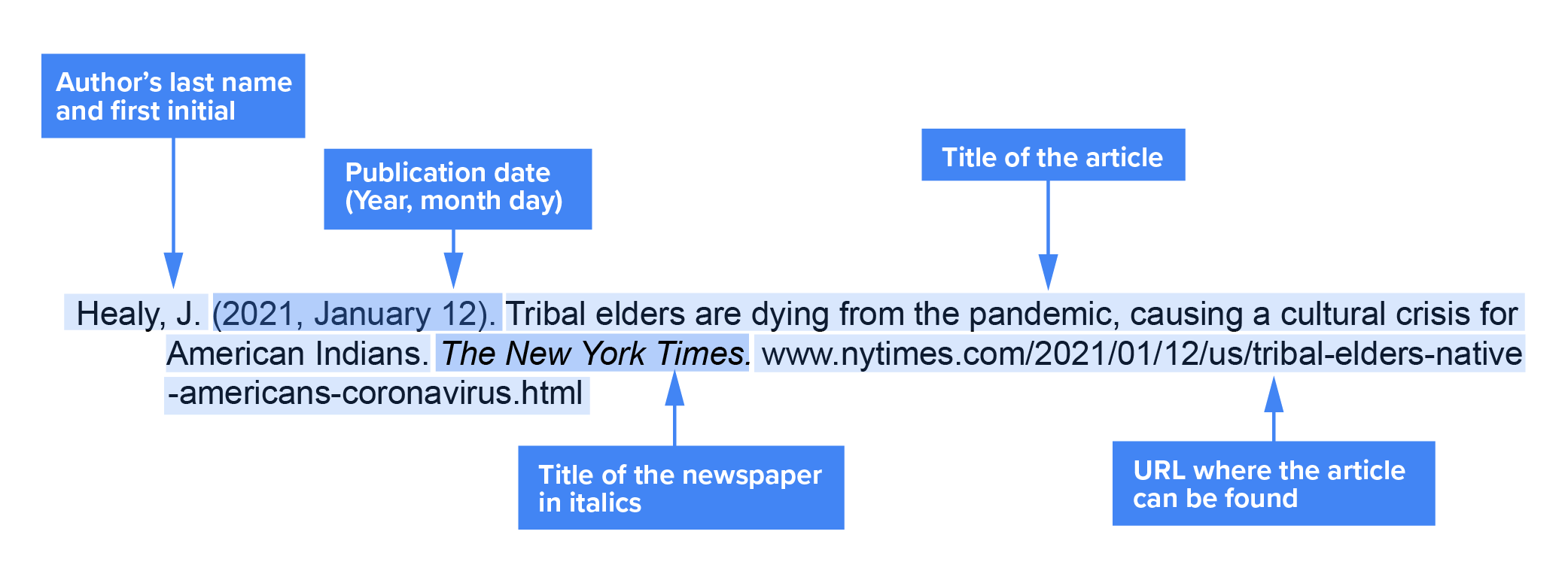
The basic format for an article looks like this:
Author’s Last Name, Initials. (Date of Publication). Title of article. Title of Journal, Volume (number), Pages. DOI or URL.
Remember to include these elements:
-
Author: Give the last name, a comma, and the initials of the first name and middle name (if available). End with a period.
-
Date of Publication: In parentheses, give the year of publication, a comma, and the month or season of publication. End with a period outside the closing parentheses.
-
Title of the Article: Give the full title and any subtitle, separating them with a colon. For articles and book chapters, do not use quotation marks or italicize the title. Capitalize only the first word of the title and the first word of a subtitle and any proper nouns.
-
Title of the Journal: Put the journal title in italics. Capitalize all significant words in the title. End the title with a comma.
-
Volume and Issue Numbers: Italicize the volume number and follow it with the issue number in parentheses (not italicized). End with a comma.
-
Page Numbers: Give inclusive page numbers without p. or pp. End with a period.
-
DOI or URL: Provide a DOI (Digital Object Identifier) or a URL. Include “http://,” and do not add a period at the end. The preferred format for a DOI is “https://doi.org/” followed by the number. You may encounter older formats for DOI; if so, change them to this format. If the article is online and does not have a DOI, give the URL instead.
-
For a magazine article you read on a database or online: Give the DOI if the article has one; otherwise give the URL. For a magazine article you consulted in print, end the entry after the page number unless a DOI is provided.
-
For a newspaper article that you read on a database or in print: End the entry after the page numbers. For a newspaper article that you read online, give the URL instead of page numbers.
Expand to see some examples of how this looks for sources from journals, magazines, or newspapers.
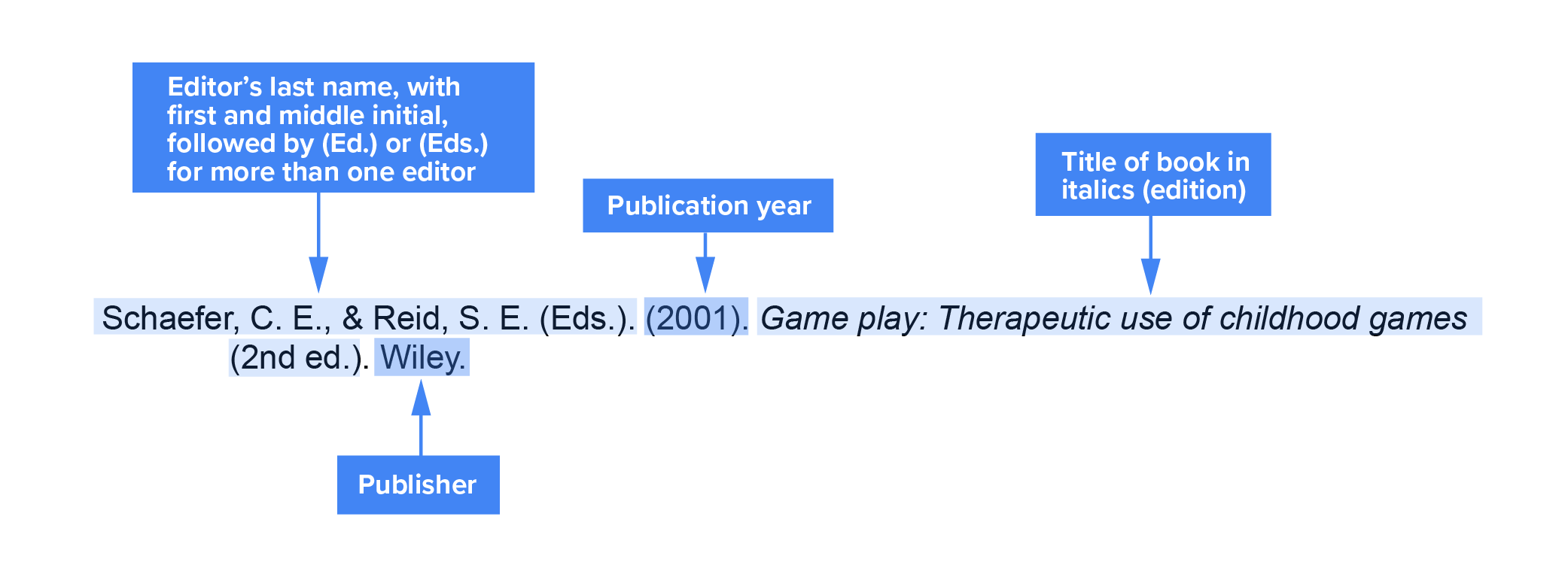
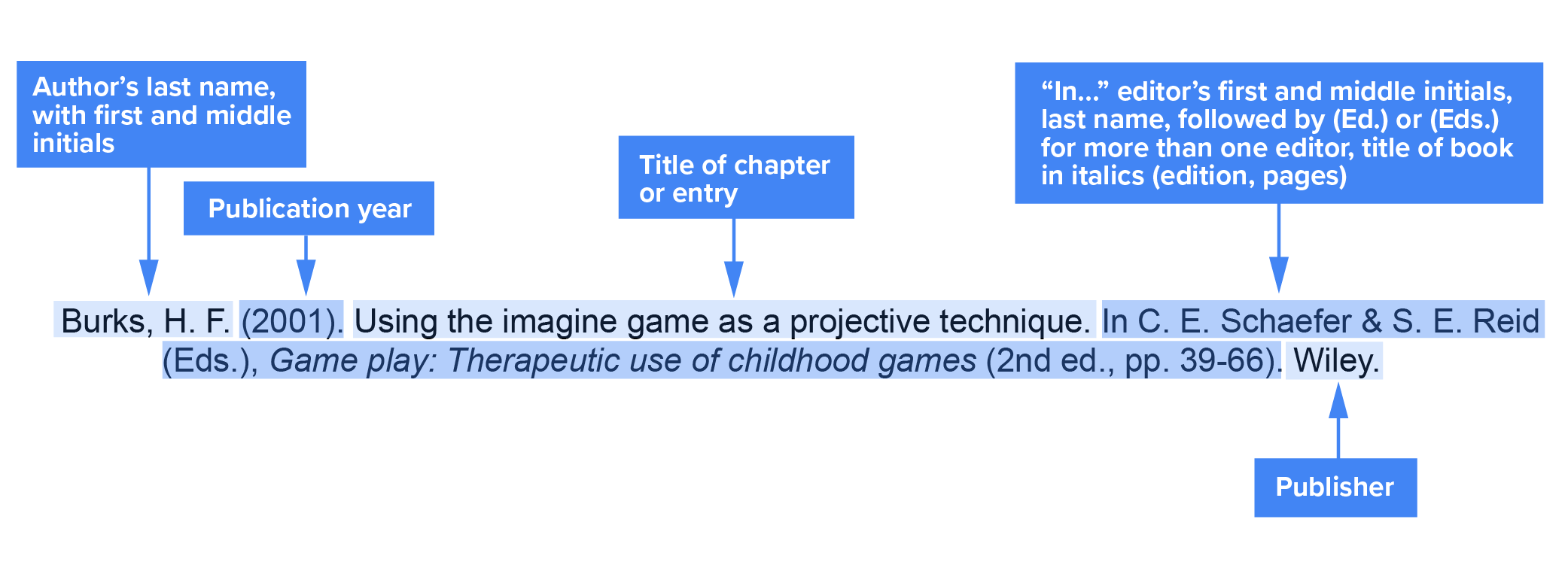
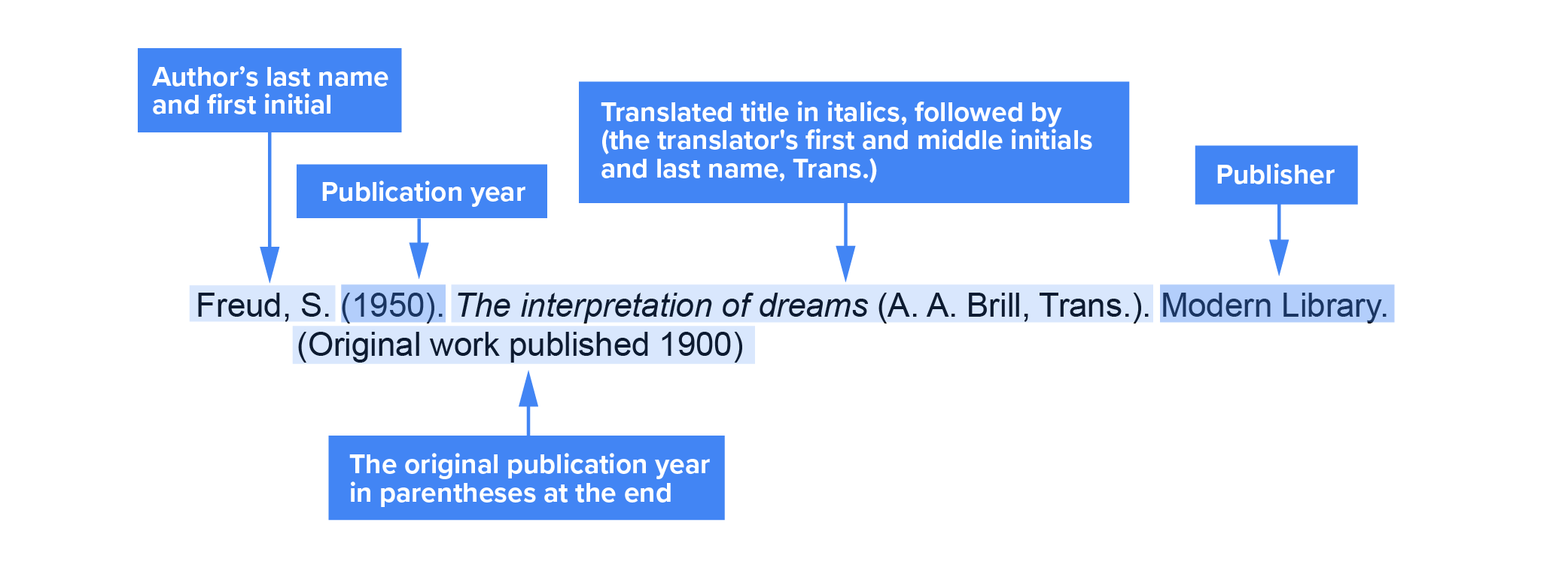
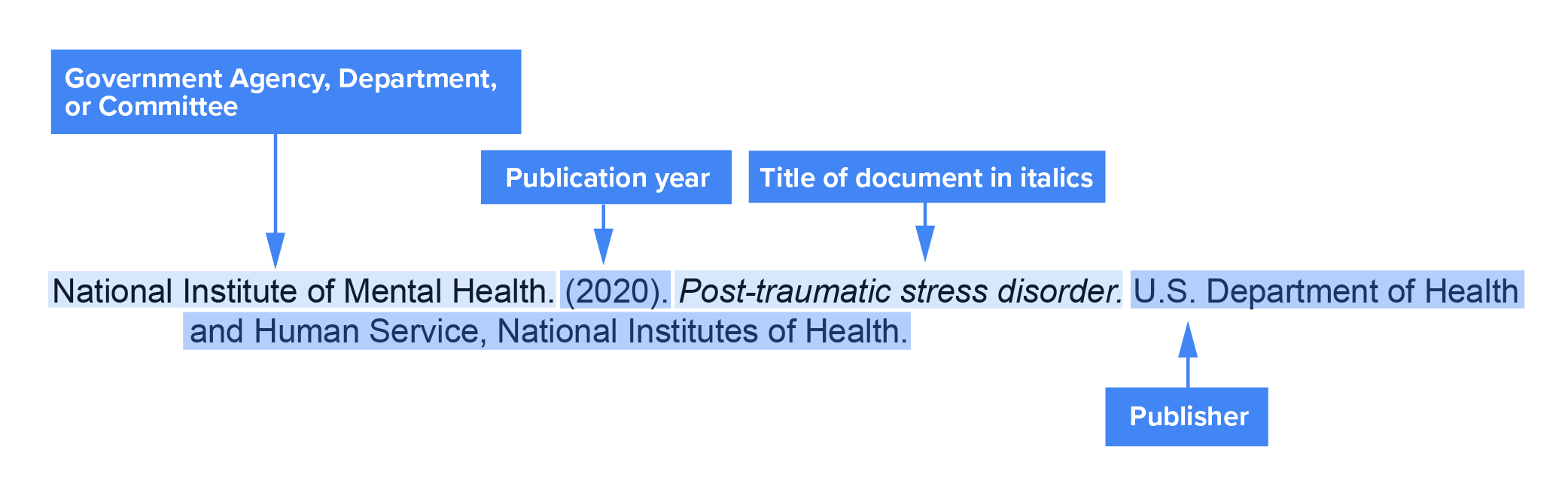
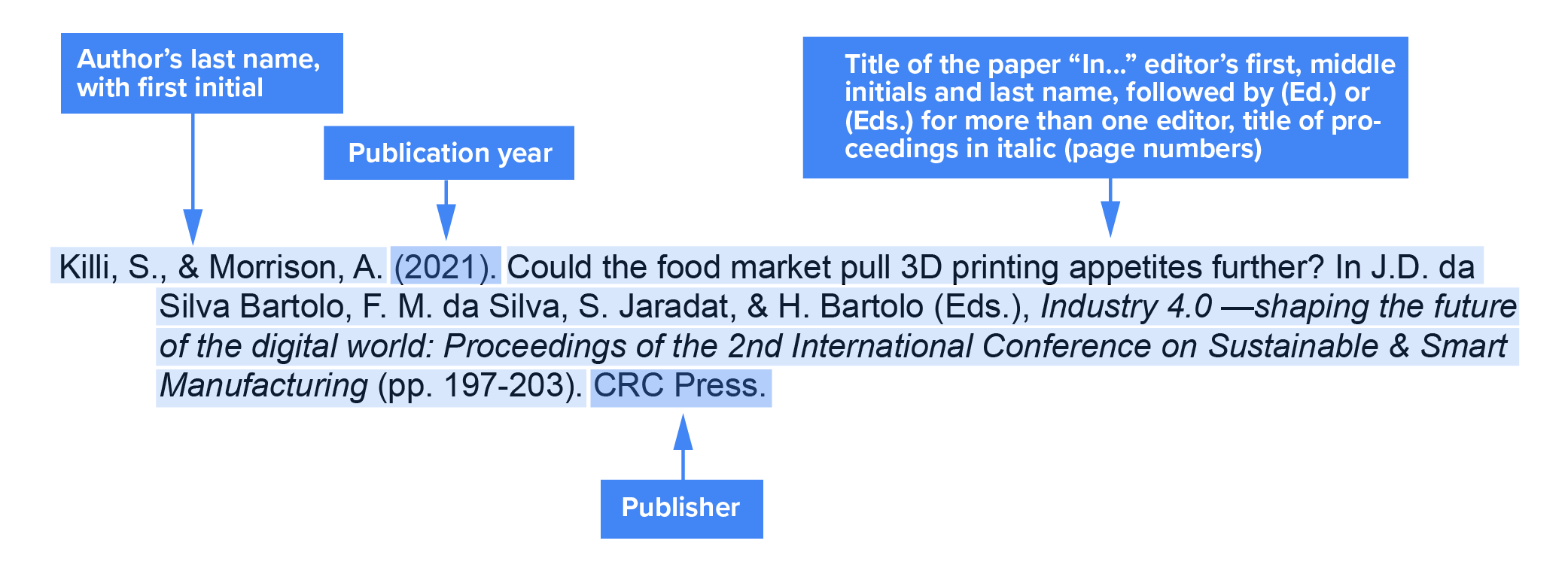
3c. Books and Parts of Books
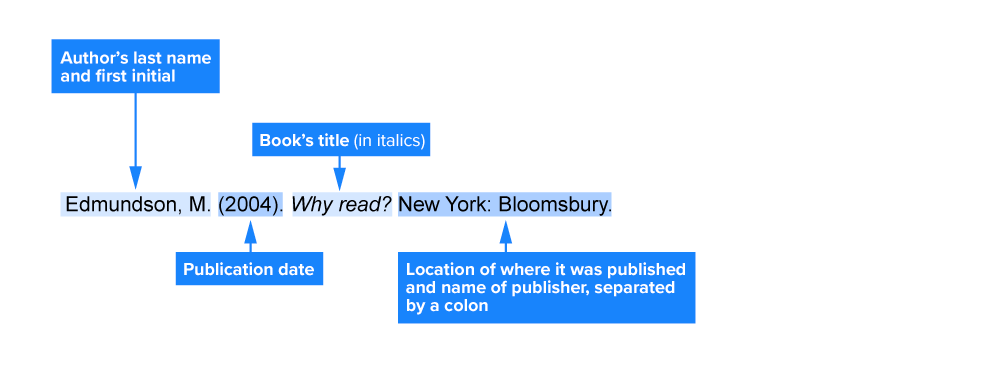
Here is the basic entry for a book:
Author’s Last Name, Initials. (Year of Publication). Title of book. Publisher.
Remember to include these elements:
-
Author: Give the last name, a comma, and the initials of the first name and middle name (if available). End with a period.
-
Year of Publication: In parentheses, give the year of publication, ending with a period outside the closing parentheses.
-
Title of the Book: Put the book’s title in italics. Give the full title and any subtitle, separating them with a colon. Capitalize only the first word of the title and the first word of a subtitle and any proper nouns.
-
Publisher: Give the publisher’s name as shown on the work, omitting words such as Inc. or Company.
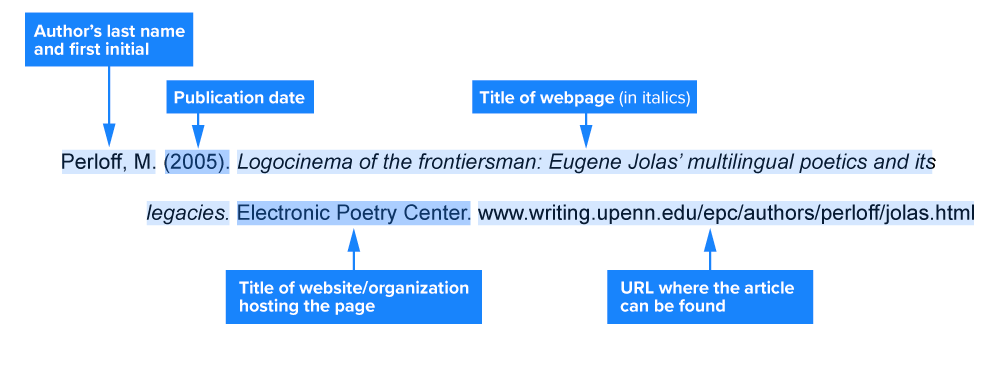
3d. Internet Sources
Use the following guidelines for works published only online that do not have an overarching publication, such as a journal, newspaper, or magazine:
Author’s Last Name, Initials. (Publication Date). Title of work. Title of website. URL
Remember to include these elements:
-
Author: Give the last name, a comma, and the initials of the first name and middle name (if available). Do not list an author’s professional title, such as Dr. or PhD. End with a period.
-
Date of Publication: In parentheses, give the year of publication and a comma, followed by the month and the day. End with a period outside the closing parentheses.
-
Title of the Work: Put the title of the work in italics. Give the full title and any subtitle, separating them with a colon. Capitalize only the first word of the title and the first word of a subtitle and any proper nouns.
-
Title of the Website: Give the title of the website and end with a period. If the author and the website title are the same, you can omit the title of the site.
-
URL: Copy and paste the URL from your browser window.
Let’s look at some example references for different internet sources.
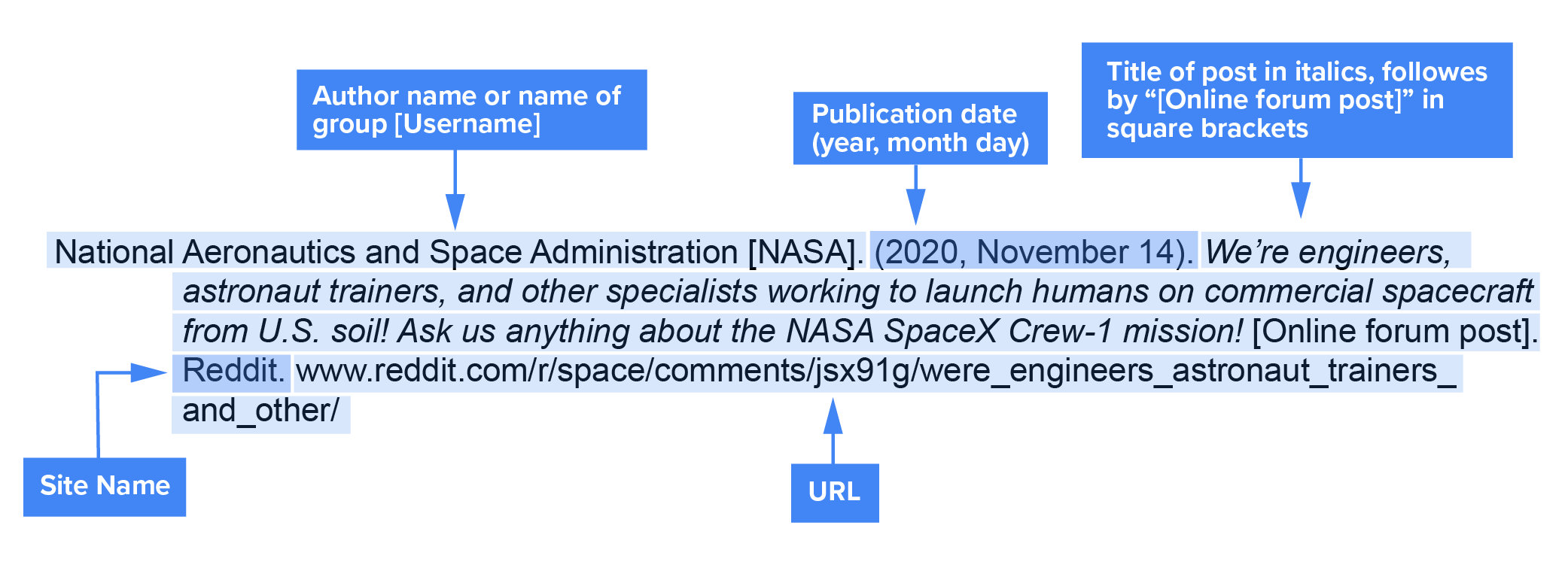
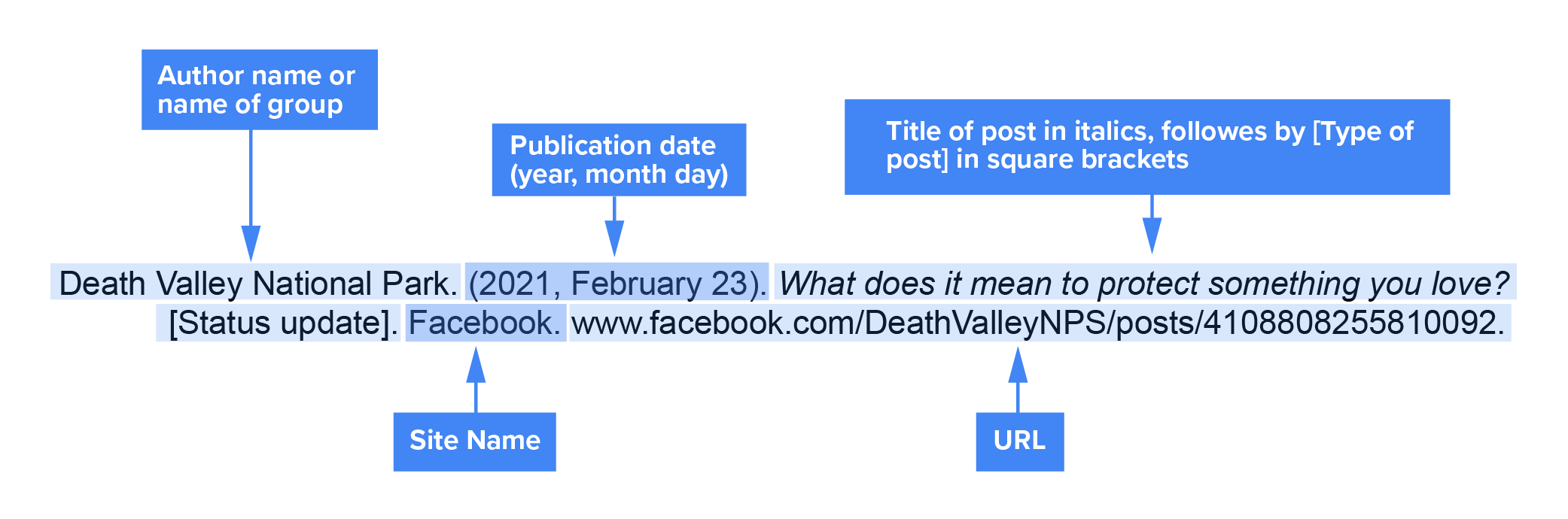
Social media post
When you cite a social media post as a source, use labels in square brackets to indicate the type of post and whether images were attached to it.
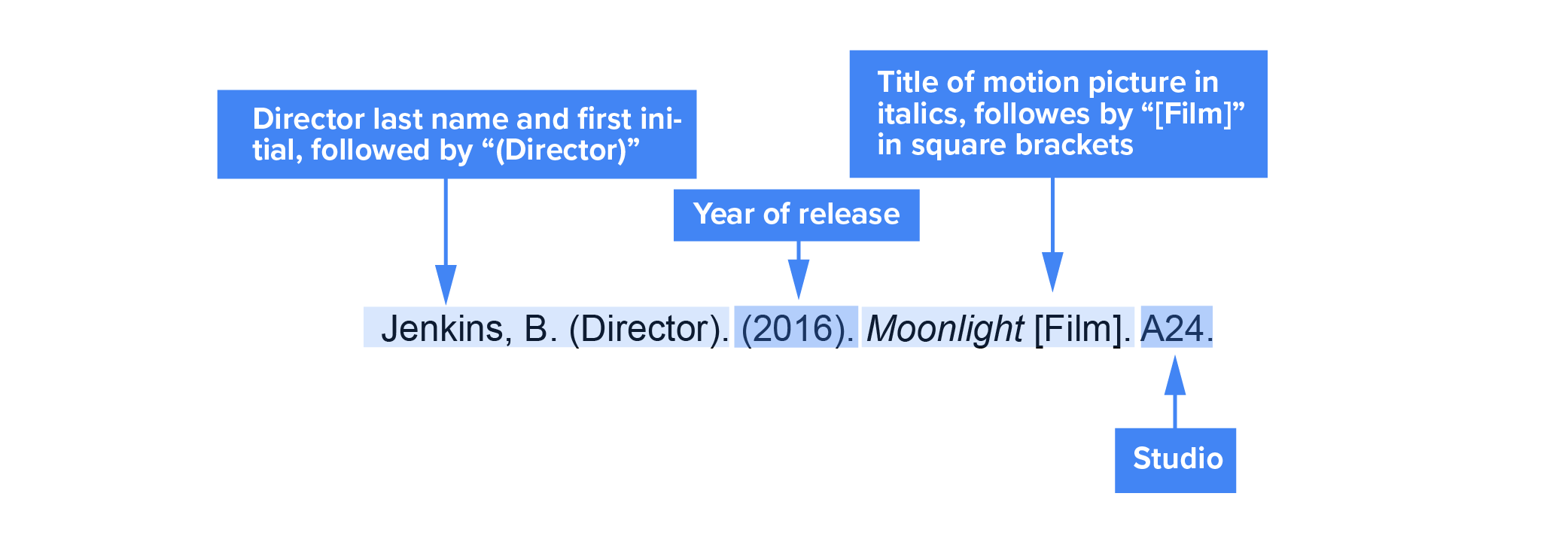
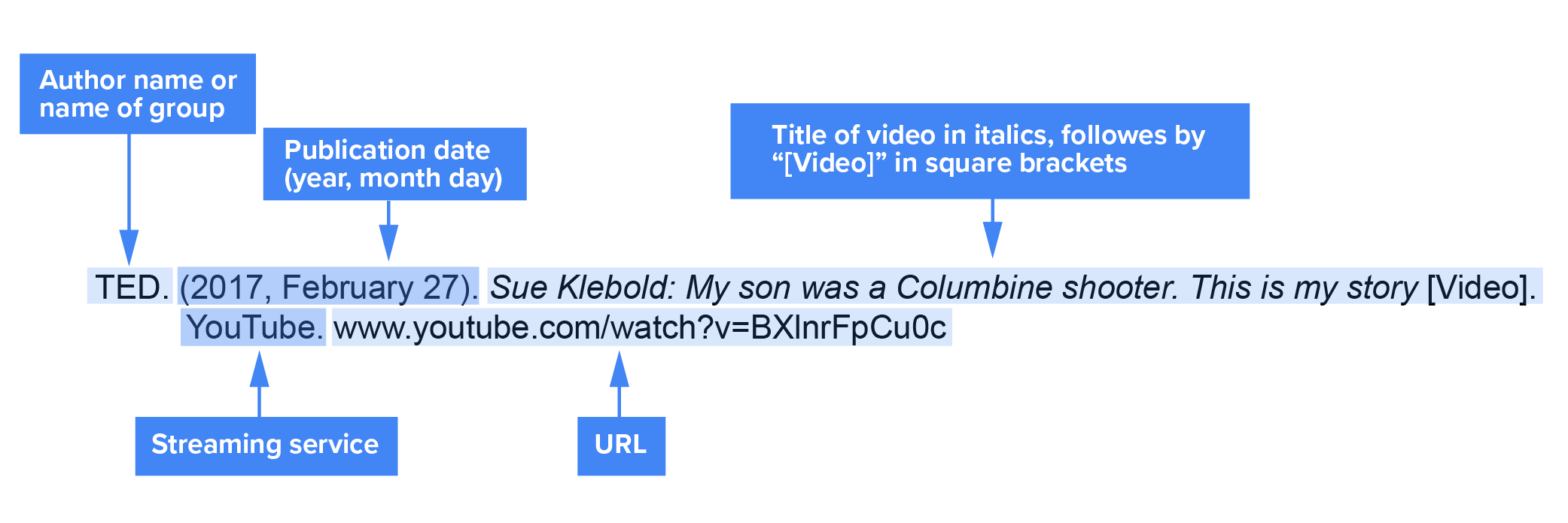
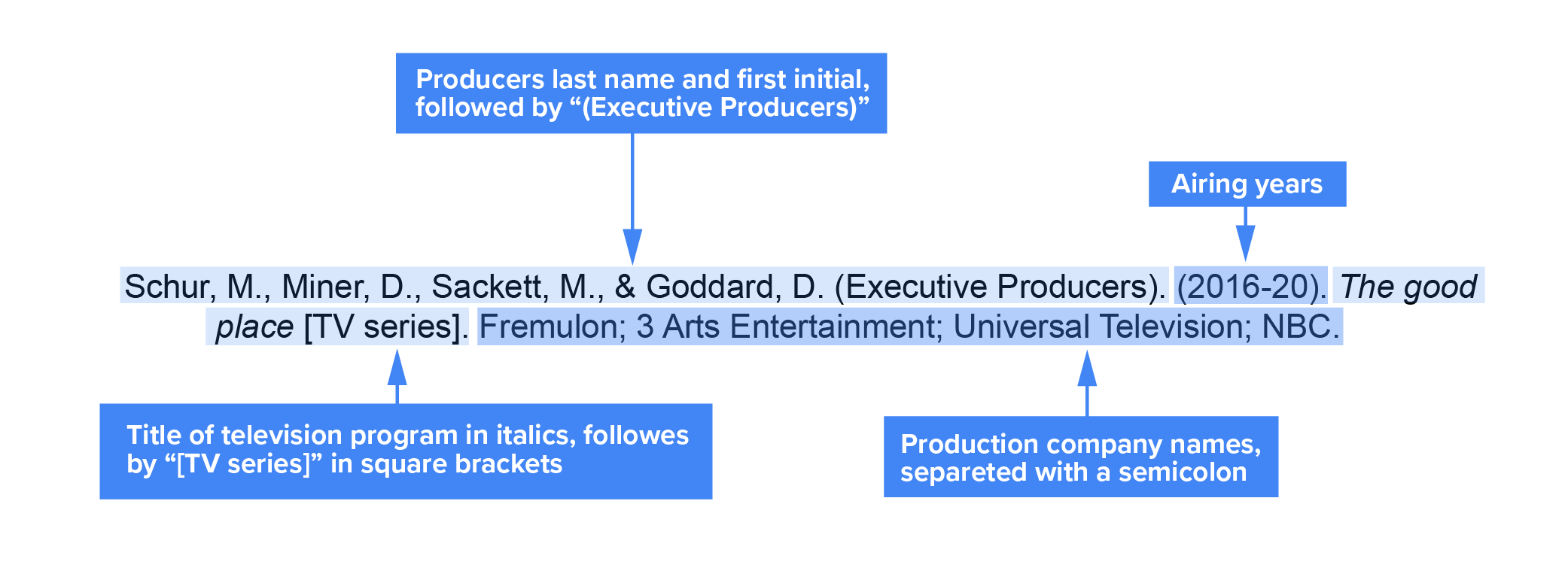
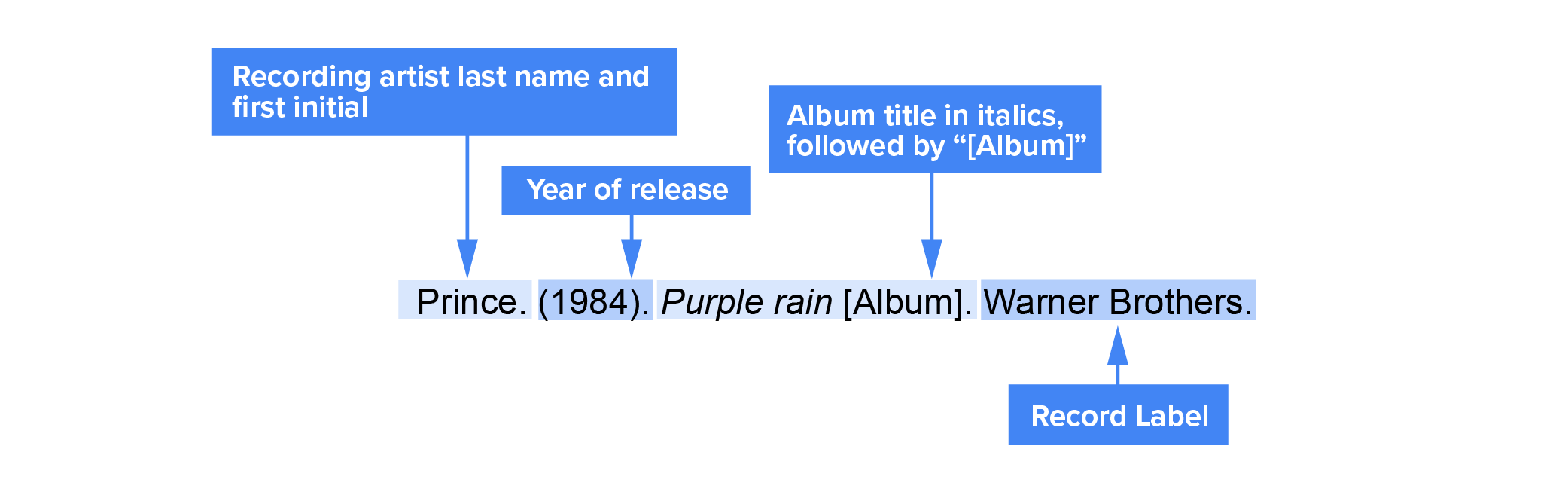
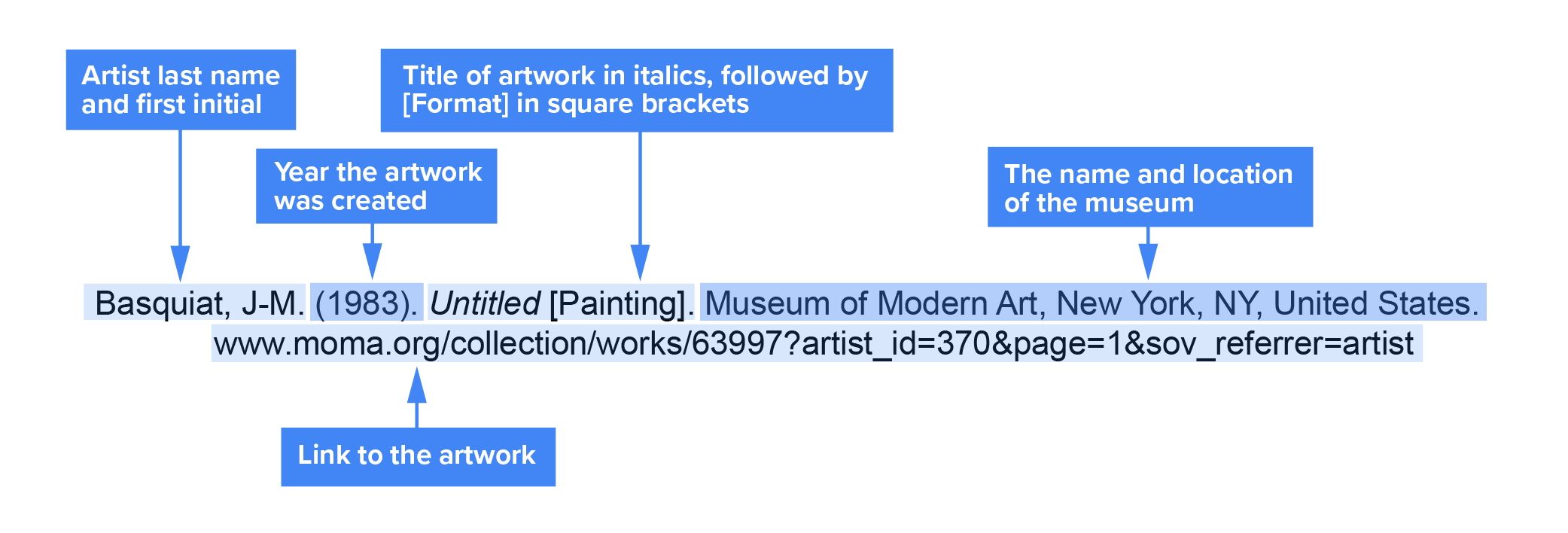
3e. Video, Audio, and Other Media Sources
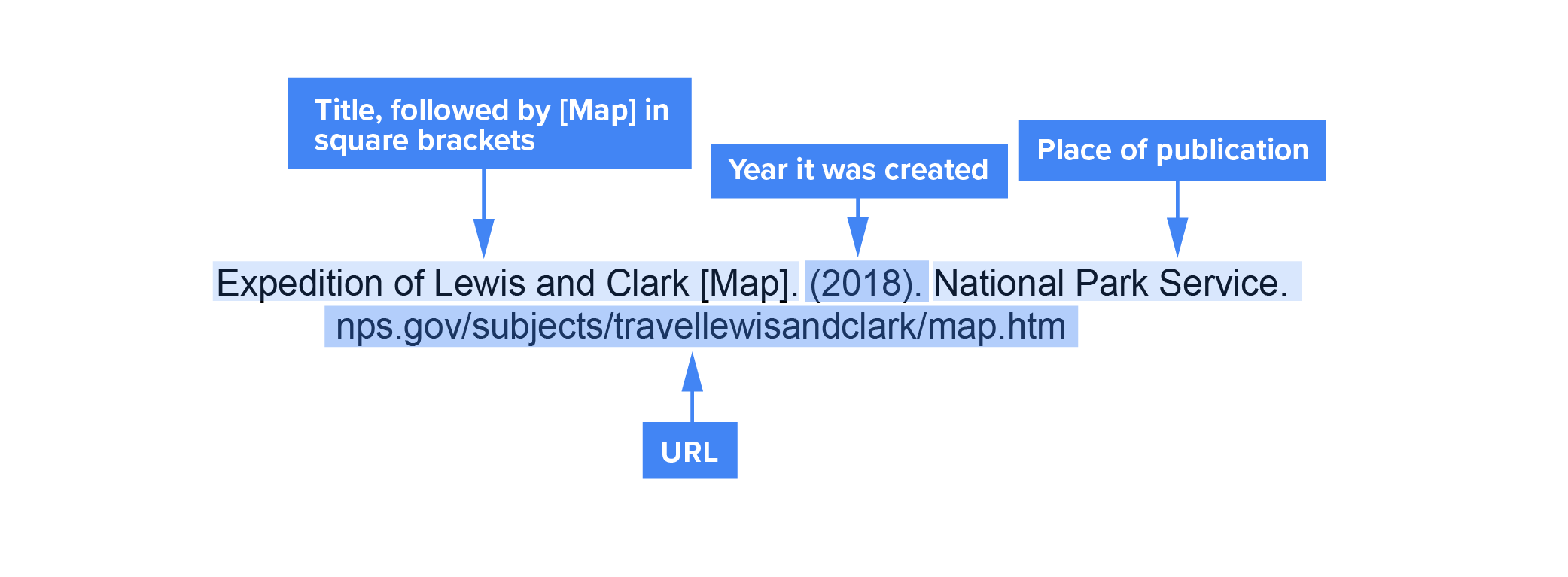
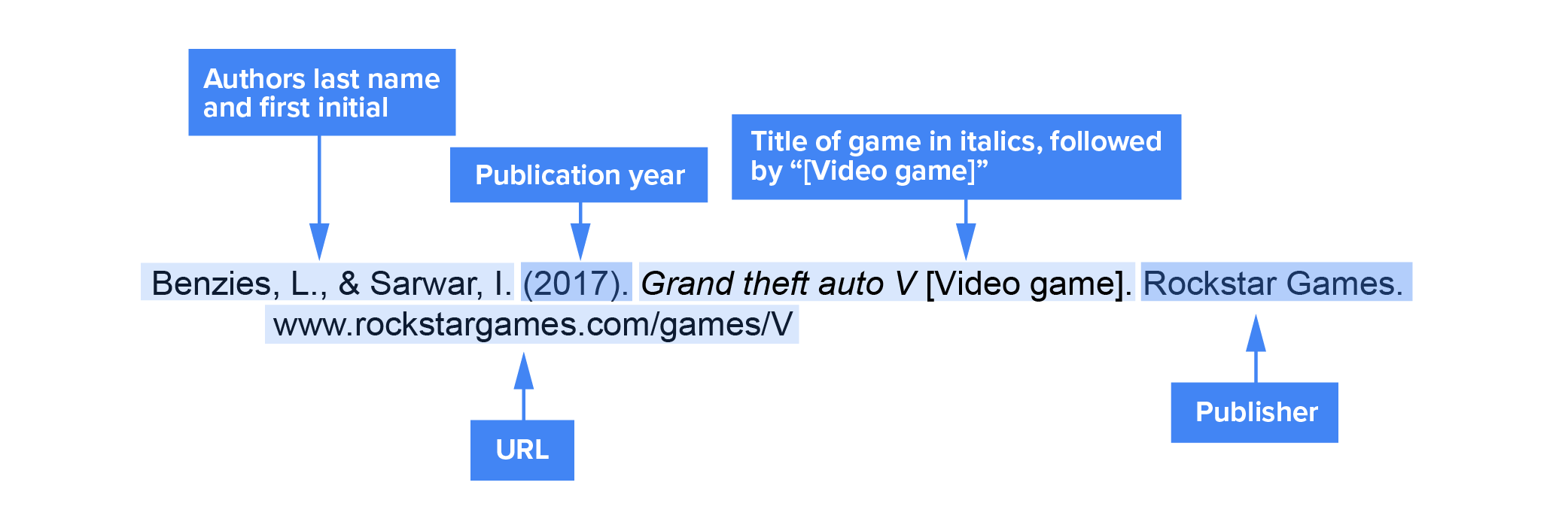
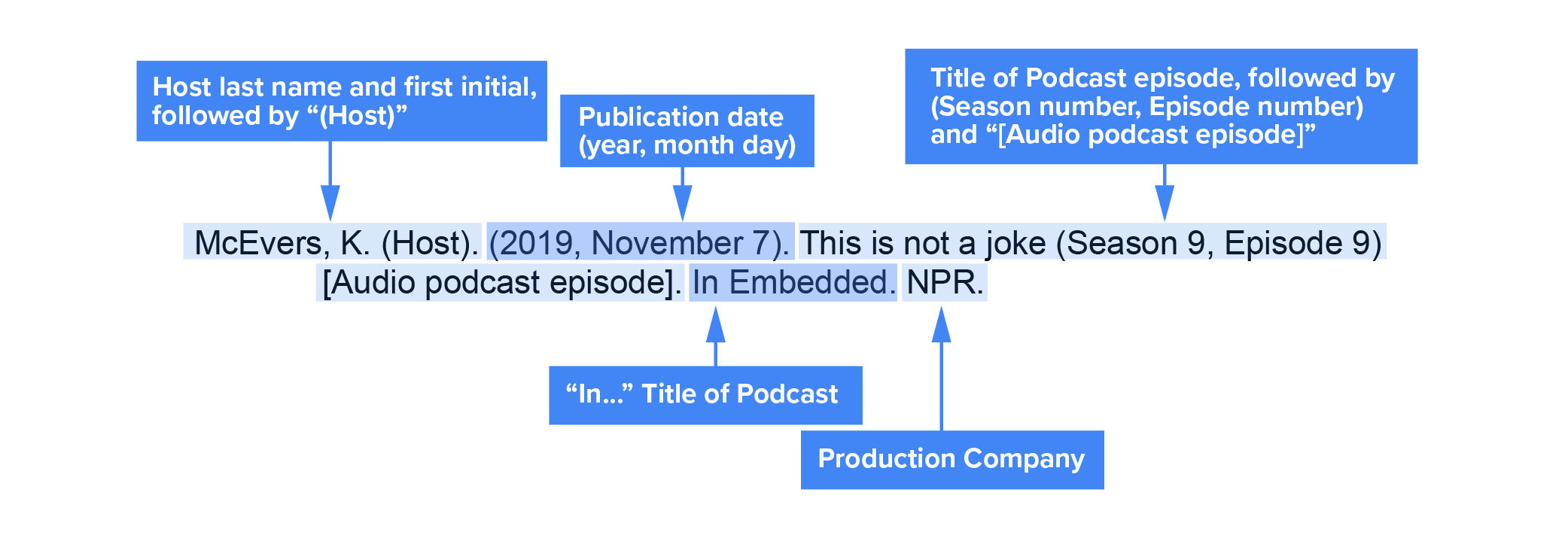
When you cite nonprint sources, such as visual and multimedia sources, use labels in square brackets to indicate the type of source, such as a film, a TV episode, a song, a painting, a photograph, and so on.
In this lesson, you learned how to correctly apply APA format and documentation to your academic writing, a critical skill in disciplines like psychology, sociology, and education. APA style emphasizes source timeliness by requiring author names and publication dates in both in-text citations and reference entries. You reviewed formatting essentials such as one-inch margins, double-spacing, paragraph indentation, and page numbering.
Then, you explored a variety of citation situations in in-text citations for different kinds of sources and looked at how to format the references list, creating accurate bibliographic entries that include core elements, such as author, date, title, and publication information, even when some details are missing. You reviewed formatting entries for different author situations, and you applied APA rules to sources found in periodicals, such as articles in journals, magazines, and newspapers. You reviewed citation techniques for published texts in books and parts of books and for online material in internet sources. Finally, you explored how to cite video, audio, and other media sources. Mastering these formats helps ensure your work is properly cited, clearly presented, and academically credible.
 .
.