Use Sophia to knock out your gen-ed requirements quickly and affordably. Learn more
×

Ancient Civilizations

Author: Sophia

what's covered
In this lesson, you will explore how the geography, government systems, and cultural achievements of major ancient civilizations influenced their educational practices and contributed to their lasting legacies. By examining societies such as Mesopotamia, Egypt, Greece, China, and others, we’ll uncover how their environments shaped learning, how leadership and laws impacted access to education, and how cultural innovations—from writing systems to philosophical thought—continue to influence modern education today. Specifically, this lesson will cover:

Table of Contents

1. Introduction to Education

Before we take a look at the history of education and where we came from, let's take a brief look at what education looks like today.

watch


2. Introduction and Timeline: Ancient Civilizations

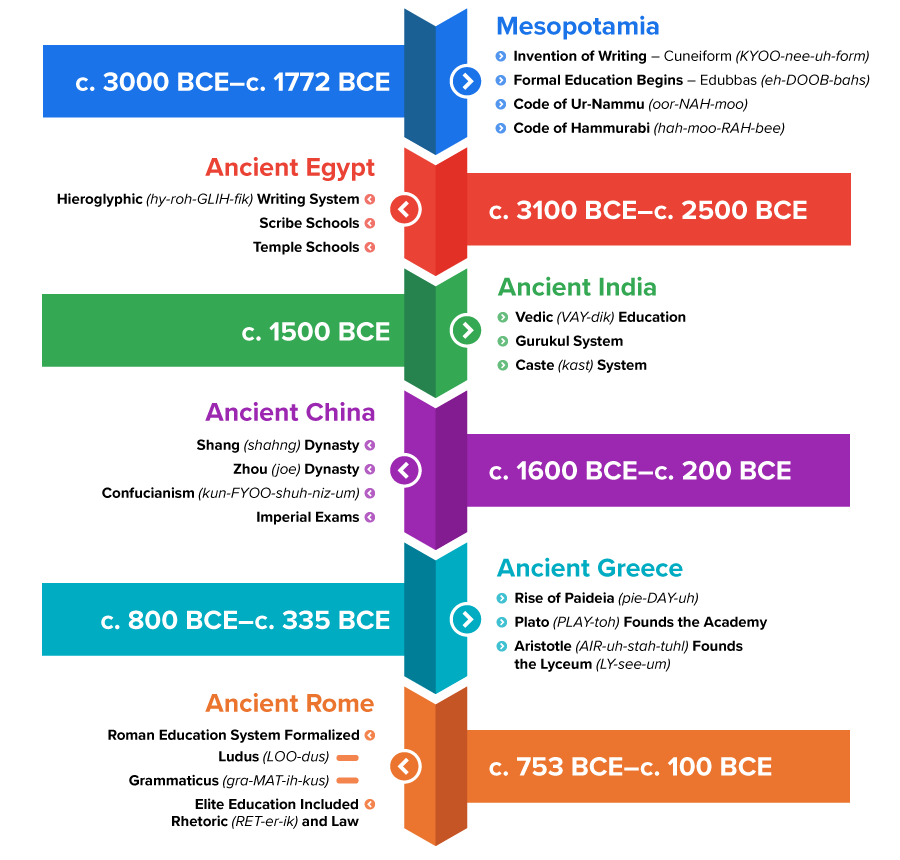
Education has always reflected society’s values and needs. Ancient civilizations pioneered practices like formal schools, writing systems, and structured lessons—foundations that still influence modern education. Beyond literacy, these systems emphasized moral instruction, critical thinking, and civic preparedness. Geography, government, and culture shaped how education developed and who had access to it. The timeline below highlights key milestones in the evolution of education across major ancient civilizations:
events to know
Here’s a brief timeline highlighting significant educational developments in ancient civilizations.

Vertical timeline showing how education developed across ancient civilizations, highlighting key milestones in Mesopotamia, Egypt, India, China, Greece, and Rome from about 3000 BCE to 100 BCE, including the emergence of writing systems, formal schools, philosophical teaching, and structured education systems.


3. Mesopotamia—The Cradle of Civilization

Mesopotamia was one of the first civilizations to develop a formal education system. They created the system mainly due to inventions in writing and law. Around 3200 BCE, the Sumerians, an ancient civilization that lived in southern Mesopotamia and are considered one of the first urban societies, developed cuneiform, one of the earliest systems of writing that used wedge-shaped symbols pressed into clay tablets. This innovation enabled people to record important information about trade, religion, and government, helping preserve knowledge and support the growth of organized society. As writing became increasingly important, schools called Edubbas, which were specialized institutions for training scribes and teaching writing, were formed. These schools played a key role in preserving and transmitting knowledge related to trade, religion, and government. These schools trained elite boys, typically sons of wealthy or high-ranking families, in reading, writing, math, and law so they could become scribes. Scribes are highly educated individuals who were taught to read, write, and record important information.
key concept
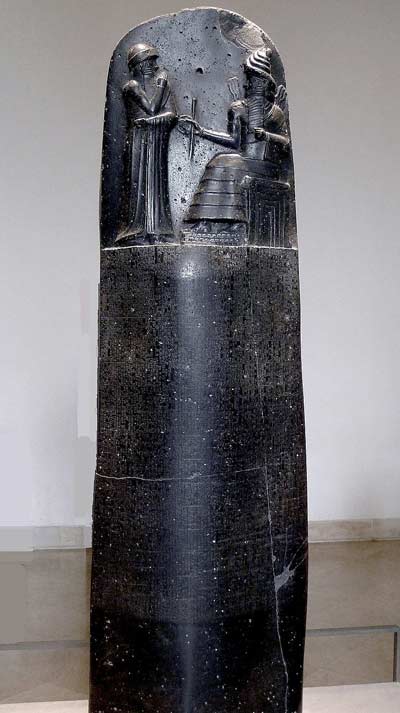
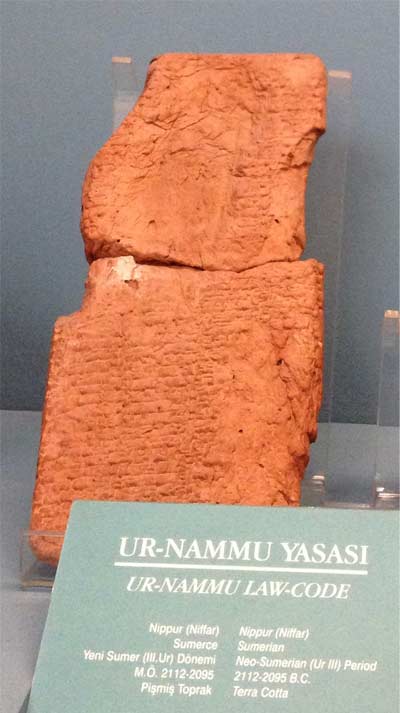
Learning about laws was an essential part of becoming a scribe. Around 2100 BCE, the Code of Ur-Nammu was written. It is the oldest known law code, and it focused on fairness and justice. It helped students understand how laws worked and how society was organized. Later, around 1750 BCE, the Code of Hammurabi was created. It included 282 laws about crime, business, and family life. These law codes were used to guide people's lives and helped teach future leaders and scribes about legal systems and the responsibilities of being a citizen.

Code of Ur-Nammu
Code of Hammurabi

big idea
Although Mesopotamia did not implement many formal or government-mandated reforms, they made significant improvements by expanding scribal schools and organizing a curriculum for students. The Mesopotamians developed the concept of formal schooling, teaching laws, and utilizing written lessons. Mesopotamia’s focus on writing and law helped shape how later civilizations taught their people and created social rules.

terms to know
Mesopotamia
One of the first civilizations to develop a formal education system.
Sumerians
An ancient civilization that emerged in southern Mesopotamia around 4500 BCE, known for creating one of the first urban societies and developing early innovations like writing, law, and architecture.
Cuneiform
One of the earliest writing systems, developed by the Sumerians around 3200 BCE. It used wedge-shaped marks pressed into clay tablets to record information.
Edubbas
Formal schools in Mesopotamia where elite boys learned reading, writing, math, and law to become scribes.
Elite Boys
Sons of wealthy or high-ranking families in Mesopotamian society who received advanced education in subjects such as reading, writing, mathematics, and law to prepare for roles like scribes or administrators.
Code of Ur-Nammu
The earliest known law code, focused on fairness and used to teach civic responsibility.
Code of Hammurabi
A detailed legal code with 282 laws that helped formalize legal education and influenced future law systems.


4. Ancient Egypt—Education for the Afterlife

The Nile River’s annual floods made Egypt prosperous in farming and government, enabling the growth of cities and temples along its banks. These temples became centers of religion, learning, and leadership. Pharaohs—both political rulers and divine figures—governed with the help of priests and scribes. Their close ties to religious institutions shaped education, which was essential for maintaining Egypt’s religion and government. Scribes, highly respected in society, used hieroglyphics—a complex writing system of picture-like symbols—to record laws, religious texts, and historical events. Learning hieroglyphics required years of study, so specialized schools emerged. Temple schools, located within temples, taught boys reading, writing, mathematics, and religious studies under the guidance of priests. Girls were generally excluded from this formal education.
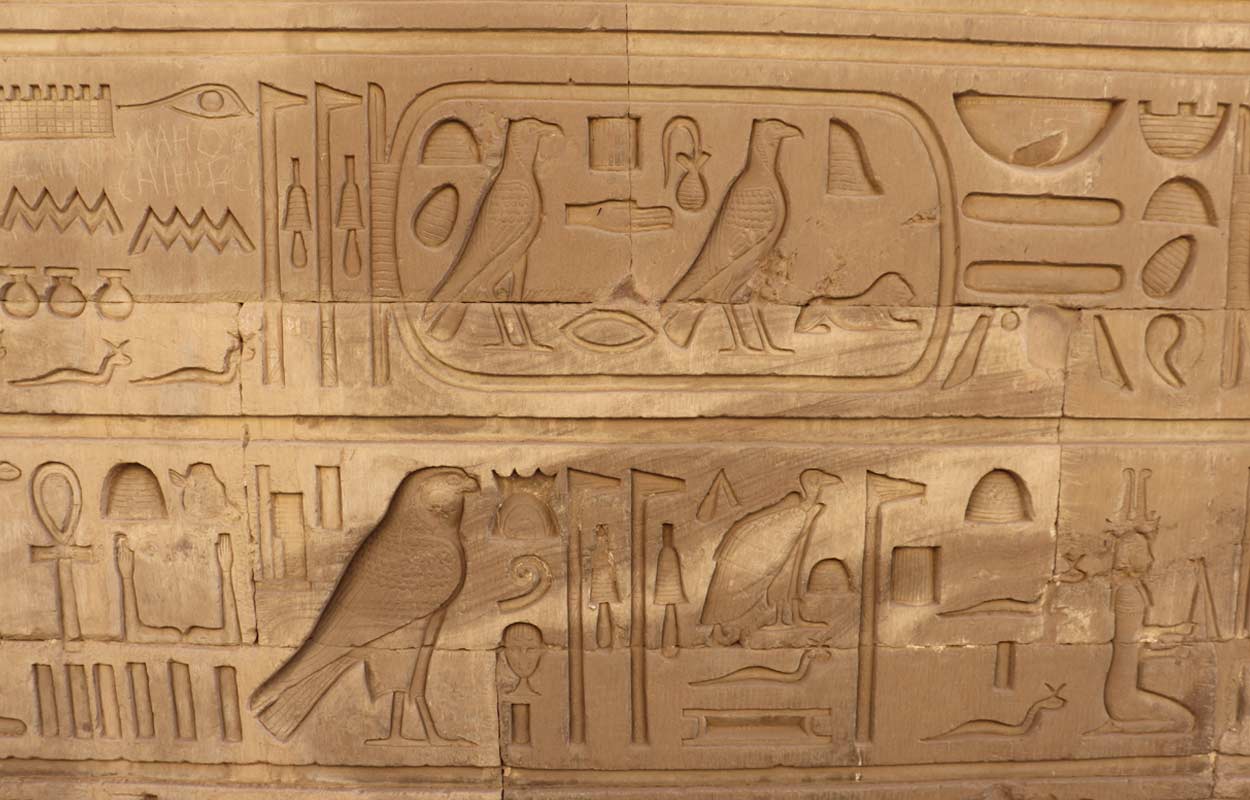
Hieroglyphics

Boys aspiring to become scribes attended scribe schools, where they mastered advanced writing techniques and administrative skills for roles in government, temples, and commerce. Many students worked in government offices while studying, preparing them for careers in law, recordkeeping, and religious documentation.

big idea
In Ancient Egypt, law and religion were deeply linked. Priests not only led religious ceremonies but also taught people how to live good and honest lives. This shows that education in temple schools supported both religious beliefs and the rules that governed society. Learning wasn’t just for personal success; it helped keep the country strong and organized. By combining religion, education, and leadership, Ancient Egypt created a system that influenced future civilizations. Their emphasis on writing and structured training laid the foundation for today’s educational systems, influencing how schools teach literacy and how governments use written records for communication, law, and administration.

terms to know
Pharaoh
A ruler of Ancient Egypt considered both a king and a god, responsible for leading the government, military, and religious ceremonies.
Hieroglyphic Writing System
A picture-based writing system used in Ancient Egypt to record religious texts, laws, and history.
Temple Schools
Schools located in temples where boys learned religious texts, math, and writing from priests.
Scribe Schools
Schools that trained boys to read and write hieroglyphics for government and temple work.


5. Ancient India—Sacred Scripts and Social Structures

did you know
Ancient India was one of the world’s oldest civilizations. It was renowned for its strong beliefs, innovative ideas, and rich cultural heritage.

Education was critical, especially during the Vedic period, a historical era in Ancient India marked by the composition of the Vedas, sacred texts that shaped religious, social, and educational practices. During that time, learning was closely connected to religion and philosophy. Students memorized and shared sacred texts, such as the oldest and most authoritative scriptures of Hinduism. These texts taught lessons about values, traditions, and knowledge that shaped Indian life.

A critical part of education was the Gurukul system. In this system, students, called shishyas (SHISH-yuhs), lived with their guru, a spiritual teacher and mentor who guided them in both academic learning and personal development in a forest or village. They learned many subjects, including philosophy, astronomy, mathematics, war skills, and how to live a good life. The bond between the teacher and student was firm and respectful. Learning was viewed as a lifelong process. The Gurukul system helped students develop discipline, humility, and kindness.

However, not everyone could attend school. The caste system divided people into four main groups: priests, warriors, merchants, and workers. Education was primarily reserved for boys from the higher castes, especially priests, who were responsible for preserving sacred knowledge and traditions. Girls and people from lower castes were usually not allowed to study, though there were a few exceptions. Even with these limits, Ancient India made significant contributions to math, medicine, language, and philosophy.

terms to know
Vedic Education
An Ancient Indian system focused on memorizing sacred texts and learning spiritual and philosophical ideas.
Gurukul System
A traditional model where students lived with a teacher and learned through oral instruction and daily practice.
Guru
A spiritual teacher and mentor who guides students in both academic learning and personal growth, especially within traditional Indian education systems.
Caste System
A social hierarchy in India that determined who could access education, with learning mostly limited to upper-caste boys.


6. Ancient China—Dynasties and Discipline

Ancient China was shaped by strong rulers and influential ideas that profoundly influenced its culture, government, and education. The Shang dynasty (around 1600–1046 BCE) was one of the first recorded dynasties. The Shang dynasty was known for making bronze tools, using oracle bones, animal bones or turtle shells inscribed with questions and heated until they cracked, to predict the future, and developing early writing systems. Shang leaders built a powerful government and practiced ancestor worship, which became an essential part of Chinese religion.

Following the Shang, the Zhou dynasty (1046–256 BCE), the longest-lasting dynasty in Ancient China, is known for its development of feudalism and influential philosophical ideas. During this time, a wise man named Confucius created Confucianism, a philosophical system based on moral values, social harmony, and respect for hierarchy. His ideas focused on respect, responsibility, and maintaining peace in society.

Confucian ideas helped make education more organized in Ancient China. Later dynasties introduced the Imperial Exams, a rigorous testing system used to select candidates for government positions based on merit and knowledge rather than family background or social status. These exams focused on Confucian writings and classic literature. As a result, the system helped create a group of skilled and educated workers who could effectively manage the empire. With strong dynasties, Confucian teachings, and formal education, Ancient China developed into a civilization that valued wisdom, fairness, and good leadership.

watch

terms to know
Shang Dynasty
One of China’s earliest dynasties, known for bronze work, ancestor worship, and early writing.
Oracle Bones
Pieces of animal bone or turtle shell used in Ancient China to ask questions of the gods, with priests interpreting the cracks formed during heating as answers.
Zhou Dynasty
A long-lasting Chinese dynasty that introduced Confucian ideas and expanded education.
Confucianism
A philosophy focused on respect, discipline, and moral education that shaped Chinese schooling.
Imperial Exams
Merit-based tests in China that allowed students to earn government jobs based on knowledge.


7. Ancient Greece—Education for the Mind and Body

Ancient Greece had a profound impact on Western ideas about thought, governance, and education. As Greek society evolved, people began to prioritize learning. One crucial idea was called paideia, which focused on giving students a well-rounded education. It included subjects like reading, music, public speaking, and exercise. The goal was to help students grow in mind, body, and character so they could be good citizens.
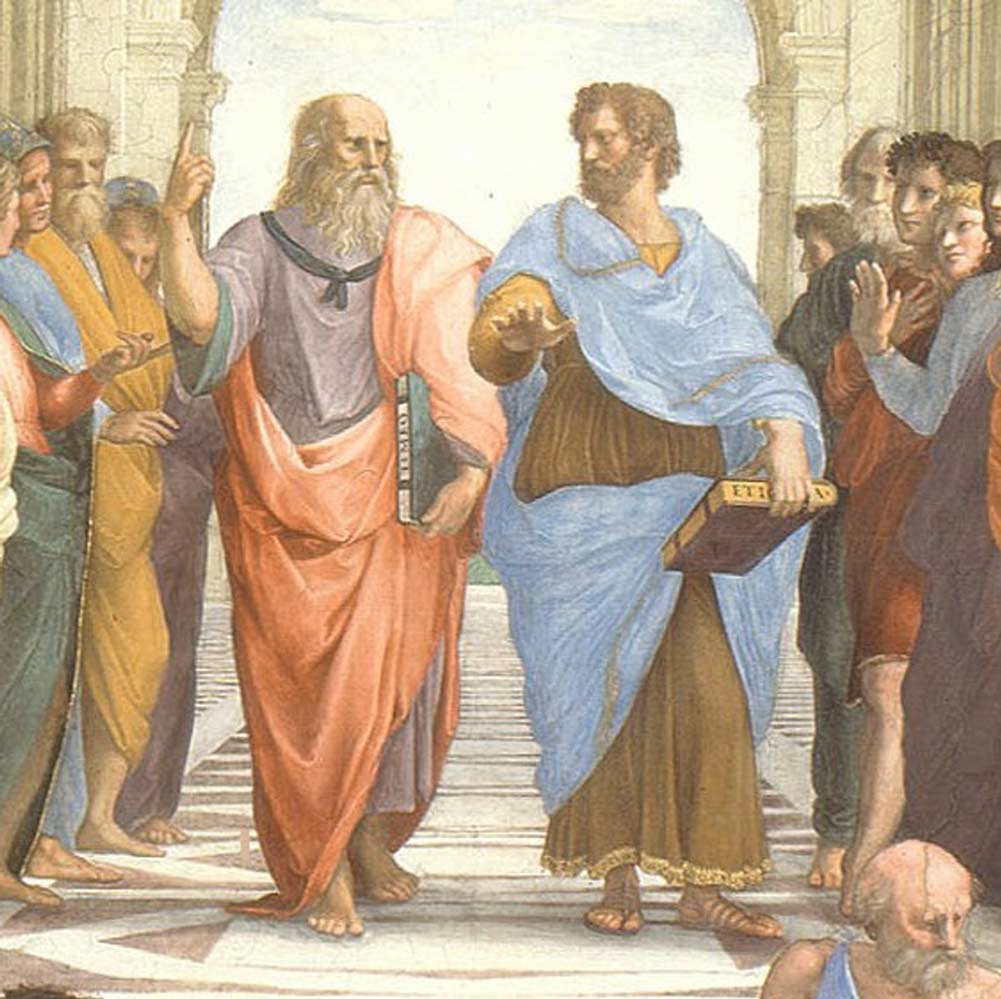
people to know
Two famous Greek thinkers, Plato and Aristotle, significantly influenced how people think about education. Plato founded the Academy in Athens around 387 BCE. It was one of the first schools for older students in the Western world. Students there studied philosophy, math, and how to think deeply. Plato believed education should help people understand truth and fairness. Later, Aristotle, one of Plato’s students, established his own school, known as the Lyceum. His school focused more on observing the world and using logic. He taught subjects like science, politics, ethics, and biology. The Lyceum became a hub for research and played a crucial role in the development of the scientific method.

Together, paideia, the Academy, and the Lyceum show that Ancient Greek thinkers believed education could improve both individuals and society. The ideas of philosophers like Plato and Aristotle continue to influence schools, thought, and government today.

terms to know
Paideia
A Greek approach to education that focused on developing the mind, body, and character.
Plato’s Academy
One of the first higher learning institutions, where students studied philosophy and mathematics.
Aristotle’s Lyceum
A school focused on science, logic, and observation that helped shape modern research methods.


8. Ancient Rome—Law, Rhetoric, and the Power of Education

Ancient Rome had a school system that reflected its values, including discipline, community service, and public service, such as instilling discipline, contributing to the community, and serving the public.

key concept
Young kids started school at a place called the Ludus, which was an elementary school in Ancient Rome where children learned basic subjects like reading, writing, and arithmetic, often under the guidance of a teacher known as a ludi magister. When boys turned about 12, wealthy families sent them to a school called the grammaticus, which was a secondary school in Ancient Rome where students studied literature, grammar, and the Greek language and culture to prepare for advanced education or public service. Students studied rhetoric to learn how to speak clearly and persuade others, which are skills that were especially useful for careers in government and public speaking. Students also learned about law, which helped them understand how rules were made and how the Roman government stayed organized and stable.

Roman schools focused on memorizing lessons and copying old writings. Many teachers were former Greek slaves or freed people, which demonstrates that the Romans learned a great deal from Greek culture. Most students were boys, but some wealthy girls had the opportunity to learn at home with private tutors. The Roman approach to education helped shape the way schools operate today, particularly in areas such as law, public speaking, and structured learning.
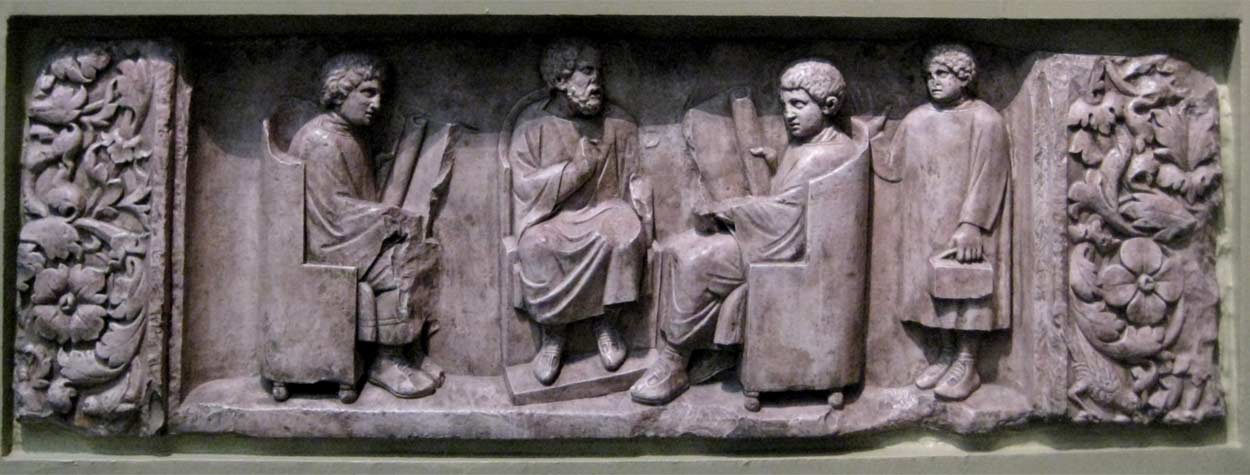
Ancient Roman Education

terms to know
Ludus
Elementary-level schooling in Ancient Rome where children learned basic reading, writing, and math.
Grammaticus
Secondary education in Rome focused on grammar, literature, and Greek culture.
Rhetoric and Law
Advanced subjects taught to elite Roman students to prepare them for careers in politics and public speaking.


9. Modern Implications

Ancient education systems laid the groundwork for many practices we still use today. Their influence can be seen in the following ways:

  • Mesopotamia: Introduced writing for learning, formal schools for structured education, and legal codes promoting civic responsibility.
  • Egypt: Literacy tied to governance; specialized schools for careers; limited access reminds us of fairness in education today.
  • India: Oral learning and mentorship shaped character education; caste restrictions reveal limits on who could receive education.
  • China: Moral instruction and Confucian values of respect and discipline endure; merit-based exams echo standardized testing.
  • Greece: Holistic education and critical thinking underpin liberal arts and inquiry-based learning.
  • Rome: Formalized school levels and emphasized rhetoric, influencing K–12 structure and subjects like debate and civics.
summary
In this lesson, you explored the origins and evolution of education across major ancient civilizations and considered the modern implications. Beginning with an introduction to education, you examined today’s classrooms, which are dynamic, technology-driven, and focused on personalized learning, preparing students for real-world challenges. Then you reviewed an introduction to and timeline of ancient civilizations and traced the development of educational systems over time. You learned how formal schooling focused on literacy and recordkeeping for administrative and religious purposes in Mesopotamia, which is known as the cradle of civilization. Moving to Ancient Egypt and its emphasis on education for the afterlife, you discovered how education was deeply tied to religion, with scribes holding an esteemed role.

You explored how sacred scripts and the social structure of the caste system shaped access to learning in Ancient India. Education in Ancient China was shaped by dynasties and discipline, highlighting Confucian ideals, emphasizing moral development and civil service examinations. In Ancient Greece, where education was for the mind and body, you saw a holistic approach balancing intellectual and physical training, while Ancient Rome revealed a focus on law, rhetoric, and the power of education, including practical skills for governance. Finally, in modern implications, you reflected on how these ancient philosophies continue to influence contemporary education, from standardized testing to liberal arts traditions.

Source: THIS TUTORIAL WAS AUTHORED BY SOPHIA LEARNING. PLEASE SEE OUR TERMS OF USE.

REFERENCES

AcademiaLab. (n.d.). Education in Ancient Rome. academia- lab.com/encyclopedia/education-in-ancient-rome/

Asia for Educators. (n.d.). Living in the Chinese cosmos: Confucian classics & the civil service examinations. Columbia University. afe.easia.columbia.edu/cosmos/irc/classics.htm

Bhat, A. N., & Javaid, S. (2024). The education system in ancient India: Philosophy, pedagogy, and practice. Historical Research Journal of History and Archaeology, 2(1), 22–45. hrjha.lexarcheus.com/storage/app/public/pdf/1748960599.pdf

Brewminate. (2020, September 20). From the Edubba: Education in ancient Mesopotamia. Brewminate: A Bold Blend of News & Ideas. brewminate.com/from-the-edubba-education-in-ancient-mesopotamia/

Encyclopaedia Britannica. (2025, July 28). Chinese examination system. www.britannica.com/topic/Chinese-examination-system

Encyclopaedia Britannica. (n.d.). Lyceum: Greek philosophical school. www.britannica.com/topic/Lyceum-Greek-philosophical-school

Mark, J. J. (2011, September 9). Code of Ur-Nammu. World History Encyclopedia. www.worldhistory.org/Code_of_Ur-Nammu/


Attributions
Terms to Know
Aristotle’s Lyceum

A school focused on science, logic, and observation that helped shape modern research methods.

Caste System

A social hierarchy in India that determined who could access education, with learning mostly limited to upper-caste boys.

Code of Hammurabi

A detailed legal code with 282 laws that helped formalize legal education and influenced future law systems.

Code of Ur-Nammu

The earliest known law code, focused on fairness and used to teach civic responsibility.

Confucianism

A philosophy focused on respect, discipline, and moral education that shaped Chinese schooling.

Cuneiform

One of the earliest writing systems, developed by the Sumerians around 3200 BCE. It used wedge-shaped marks pressed into clay tablets to record information.

Edubbas

Formal schools in Mesopotamia where elite boys learned reading, writing, math, and law to become scribes.

Elite Boys

Sons of wealthy or high-ranking families in Mesopotamian society who received advanced education in subjects such as reading, writing, mathematics, and law to prepare for roles like scribes or administrators.

Grammaticus

Secondary education in Rome focused on grammar, literature, and Greek culture.

Guru

A spiritual teacher and mentor who guides students in both academic learning and personal growth, especially within traditional Indian education systems.

Gurukul System

A traditional model where students lived with a teacher and learned through oral instruction and daily practice.

Hieroglyphic Writing System

A picture-based writing system used in Ancient Egypt to record religious texts, laws, and history.

Imperial Exams

Merit-based tests in China that allowed students to earn government jobs based on knowledge.

Ludus

Elementary-level schooling in Ancient Rome where children learned basic reading, writing, and math.

Mesopotamia

One of the first civilizations to develop a formal education system.

Oracle Bones

Pieces of animal bone or turtle shell used in Ancient China to ask questions of the gods, with priests interpreting the cracks formed during heating as answers.

Paideia

A Greek approach to education that focused on developing the mind, body, and character.

Pharaoh

A ruler of Ancient Egypt considered both a king and a god, responsible for leading the government, military, and religious ceremonies.

Plato’s Academy

One of the first higher learning institutions, where students studied philosophy and mathematics.

Rhetoric and Law

Advanced subjects taught to elite Roman students to prepare them for careers in politics and public speaking.

Scribe Schools

Schools that trained boys to read and write hieroglyphics for government and temple work.

Shang Dynasty

One of China’s earliest dynasties, known for bronze work, ancestor worship, and early writing.

Sumerians

An ancient civilization that emerged in southern Mesopotamia around 4500 BCE, known for creating one of the first urban societies and developing early innovations like writing, law, and architecture.

Temple Schools

Schools located in temples where boys learned religious texts, math, and writing from priests.

Vedic Education

An Ancient Indian system focused on memorizing sacred texts and learning spiritual and philosophical ideas.

Zhou Dynasty

A long-lasting Chinese dynasty that introduced Confucian ideas and expanded education.

People to Know
Aristotle

One of Plato’s students, established his own school, known as the Lyceum. His school focused more on observing the world and using logic. He taught subjects like science, politics, ethics, and biology.

Plato

Founded the Academy in Athens around 387 BCE. It was one of the first schools for older students in the Western world. Students there studied philosophy, math, and how to think deeply. Plato believed education should help people understand truth and fairness.