In this lesson, you will learn what makes someone an entrepreneur. You will gain a better understanding of how many of them have strong innovation skills and how this impacts how they generate ideas and implement them. You will begin to consider how you can use your own innovation skills to find new and interesting solutions to problems.
Specifically, this lesson will cover:
- What Makes an Entrepreneur
- Innovative Thinking
- Benefits of Innovation
- Fail Fast Model
1. What Makes an Entrepreneur
An entrepreneur is a person who organizes and operates a business or businesses, taking on greater than normal financial risks in order to do so. Those who are entrepreneurs understand how to use their innovation skill to achieve their goals. In other words, they think outside the box, create unique solutions to old problems, develop bold solutions to new problems, and think creatively in all aspects of their life.
Being innovative might mean inventing a recipe to use up leftovers in the fridge, developing a new slogan for your company‘s product, or changing the way employees are onboarded in your department. Wherever life takes you, relying on your innovation skill will not only help you think differently about the world around you, it will help you instigate change, explore opportunities, and even create the future you want.
-
In the 1980s and 1990s, after decades of vinyl records, the invention of portable cassettes and CD players allowed regular people the ability to carry their music with them wherever they went. But Steve Jobs, CEO and co-founder of Apple, saw a unique opportunity to innovate the music experience even more.
In 2001, Apple released the iPod, an innovation that fundamentally changed the way people all over the world listen to music and helped Apple become the powerhouse company it is today.
Most major inventions in the history of the world were created because someone saw an opportunity to do something different or unique. These entrepreneurs changed the way people live their lives.
-
-
- Entrepreneur
- Someone who organizes and manages a business.
- Innovation
- Creatively thinking and coming up with new ideas and solutions to solve old problems.
2. Innovative Thinking
You can use your innovation skill to train your brain to think creatively and take action so you can approach challenges and obstacles in your life with a fresh perspective. Those with an entrepreneurial mindset understand this. Not all innovation has to be an idea that is brand new. In many cases, you can make changes to improve upon an idea that already exists.
-
Think about the problems that a lot of people have with time management while juggling responsibilities associated with work, school, and family. Make a list of at least three tools that already exist to help with time management and try to come up with an idea to improve one of those.
- 2a. Benefits of Innovation

There are numerous benefits to thinking outside the box. Often, entrepreneurs use their innovation skill to identify pain points—things that have given them trouble at work or in their personal life—and then search for ways to improve them. When you think creatively and look for solutions rather than just doing the usual thing, you see benefits like:
- A better understanding of the perspectives of others
- A better understanding of alternate experiences
- Better teamwork
- More productivity
- Improved problem-solving skills
- Increased feeling of freedom from judgment
- Improved self and social awareness skill
As you practice identifying pain points in your own life, it‘s important to think of any hurdles you face as opportunities to work on your innovation skill. Be sure to keep in mind that the goal is progress—not perfection.
-
Can you think of a time when you thought “outside the box” and came up with a solution to a problem?
- 2b. Fail Fast Model
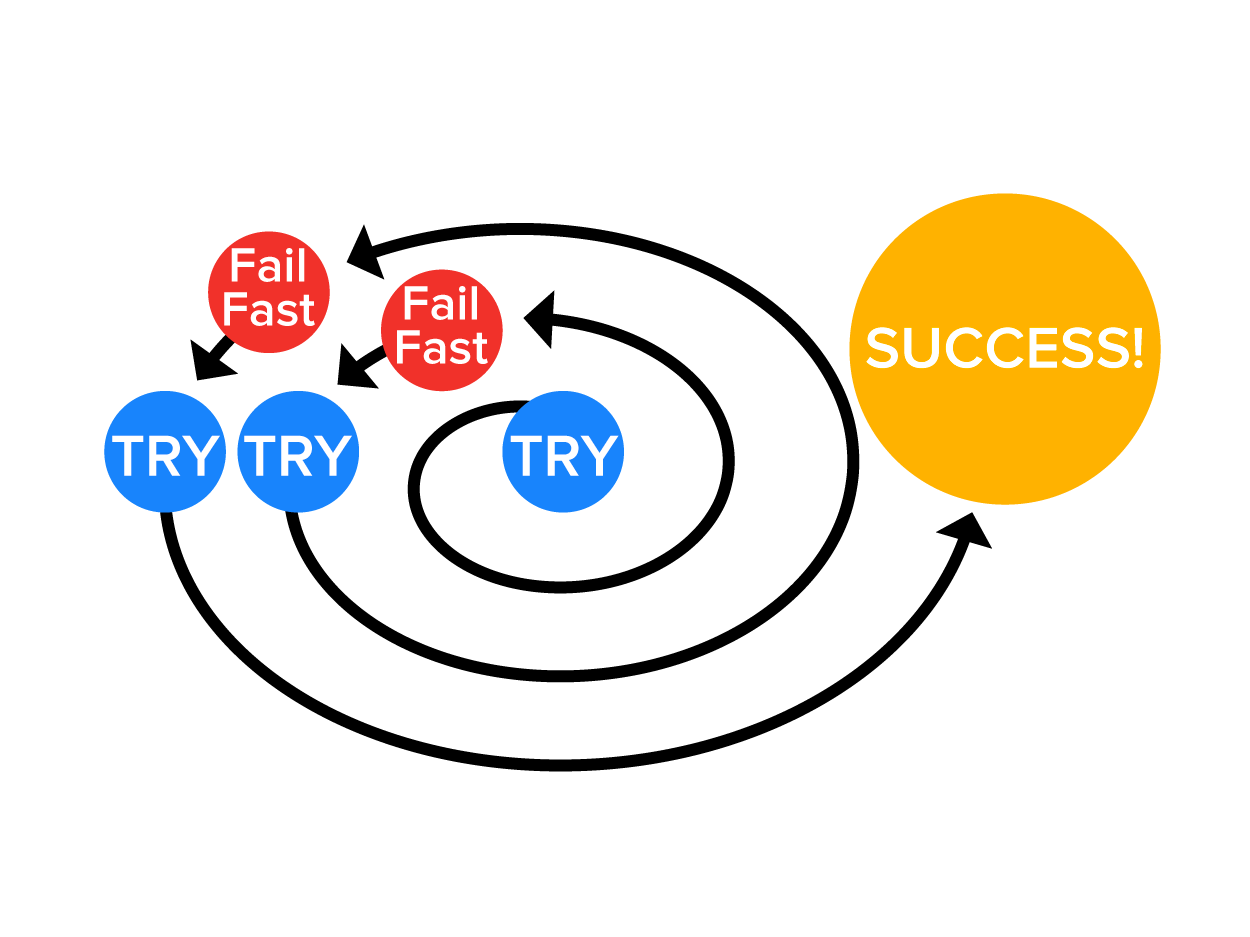
Any entrepreneur or someone who innovates will fail sometimes. In some cases, you may fail a lot. While this may seem like a less than ideal situation, the truth is that failure often leads to a better solution than could have been achieved without it.
A fail fast model is all about working quickly, failing (sometimes often), and then using lessons learned to iterate and create a new solution. This process continues until a final solution is achieved that meets all objectives and goals.
-
EXAMPLE
Rick is an entrepreneur who is working on developing a new kind of phone case. He completed his first prototype. He knew it was not perfect but he employed the fail fast model to get some early feedback on the overall concept. He shared his initial prototype with 10 friends and gathered their comments. Based on what they shared, he revised the model and then sent it out to them again to hear their thoughts on the changes. Every time he received feedback, he changed his model and sent it out again. This cycle repeated more than 30 times before he felt he had a product he should take to market.
In future lessons, you will focus more on how you overcome those failures. For now, it is important to understand that this iterative process can help you overcome things like:
- Shifting priorities
- A change in circumstances
- New financial situation
-
A great example of an entrepreneur who failed much more than he succeeded is Thomas Edison. When asked about his creation of the light bulb and all the failures he faced, he famously said:
“I have not failed 10,000 times—I’ve successfully found 10,000 ways that will not work.”
You can read more about his failures and his approach to success and innovation
here.
In today’s fast-paced and ever-changing workplace, it is more important than ever to have strong innovation skills. You may not consider yourself to be an entrepreneur, but you never know when you will be faced with a challenge at work or at home. You could be the person who generates a solution that helps yourself and others.
-
When studying innovation, sociologists consider the
social structures that influence how people come up with innovative ideas. The culture of a society is as important to innovation as the structure of institutions and organizations within that society (Dahlin, 2014). It is not always enough to simply come up with an innovative idea. Sociological research shows that you must also consider whether that idea would be a good fit for the society’s existing culture and structures in order for it to even be accepted.
-
-
- Fail Fast Model
- A model of innovation that consists of someone working quickly with the freedom to fail and quickly learn from their mistakes. With the fail fast model, the process is repeated over and over until the innovative idea is successful.
- Iterate
- To do something repeatedly.
- Social Structure
- A stable pattern and arrangement for how people relate to each other in a society.
In this lesson, you learned what makes someone an entrepreneur. You explored the benefits of using your innovation skill to come up with solutions to problems. You also explored the fail fast model that is often used in business today. This model allows you to quickly move to tackle a problem, take lessons learned and iterate to come up with a better idea.
REFERENCES
Dahlin, E.C. (2014). The sociology of innovation: Organizational, environmental, and relative perspectives. Sociology Compass, 8(6), 671-687.



