Use Sophia to knock out your gen-ed requirements quickly and affordably. Learn more
×

Accessory Structures of the Skin

Author: Sophia

what's covered
In this lesson, you will learn about the accessory structures in the skin as part of the integumentary system. Specifically, this lesson will cover:

Table of Contents

before you start
The integumentary system consists of the integument (skin) and the structures that it contains and produces. In a previous lesson, you learned about the layers of the skin, the tissues and cells that make them up, and their functions. In this lesson, you will learn about accessory structures that the skin produces—hair and nails—and those that are found in the skin—sweat and oil glands.

1. Hair

Hair is an accessory structure of the integumentary system that functions to protect the body from cold and harmful organisms. It is primarily made of dead, keratinized cells that are generated from tissue of the epidermis. Hair is grown in and extends out of a specialized cavity in the skin called a hair follicle. The majority of hair follicle is located in the dermis of the skin. However, as you can see in the image below, it is formed by epidermal tissue that has extended deep into the dermis. As hair grows, it extends out of the skin and into the surrounding external environment.

The hair shaft is the part of the hair not attached to the surrounding tissue of the follicle. Much of the hair shaft is exposed outside of the skin surface. This is the hair that you see on your arm or head. The rest of the hair, which is attached to the tissue of the follicle, lies below the surface of the skin and is referred to as the hair root. The hair root ends deep in the dermis at the expansion of the hair follicle called the hair bulb. Inside of the hair bulb are basal cells, collectively called the hair matrix, which function like the basal cells of the stratum basale, actively dividing to produce new keratinocytes. The hair bulb surrounds the hair papilla, which is made of connective tissue and contains blood capillaries and nerve endings from the dermis, supplying nutrients, waste removal, and communication to the hair matrix.
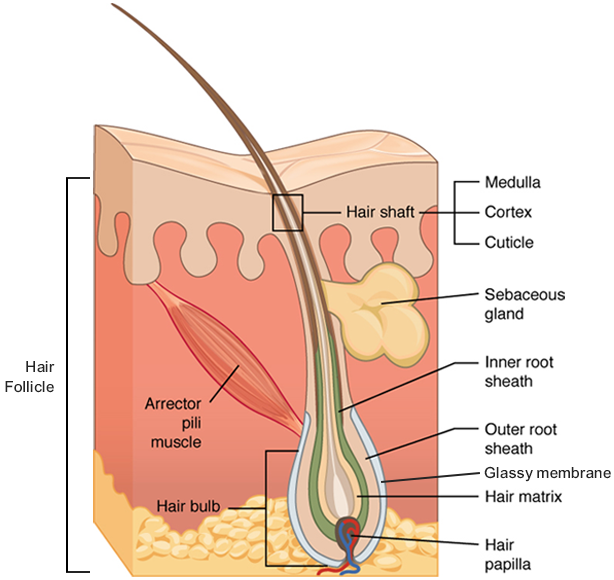
This diagram shows a cross-section of the skin containing a hair follicle. The follicle is teardrop shaped. Its enlarged base, labeled the hair bulb, is embedded in the hypodermis. The outermost layer of the follicle is the epidermis, which invaginates from the skin surface to envelop the follicle. Within the epidermis is the outer root sheath, which is only present on the hair bulb. It does not extend up the shaft of the hair. Within the outer root sheath is the inner root sheath. The inner root sheath extends about half of the way up the hair shaft, ending midway through the dermis. The hair matrix is the innermost layer. The hair matrix surrounds the bottom of the hair shaft where it is embedded within the hair bulb. The hair shaft, in itself, contains three layers: the outermost cuticle, a middle layer called the cortex, and an innermost layer called the medulla.
Hair - Hair follicles originate in the epidermis and have many different parts.

Just as the basal layer of the epidermis forms the layers of epidermis that get pushed to the surface as the dead skin on the surface sheds, the basal cells of the hair bulb divide and push cells outward in the hair root and shaft as the hair grows. Each hair is composed of three layers of keratinocytes. The medulla forms the innermost layer of the hair, which is surrounded by the cortex, a layer of compressed, keratinized cells that is covered by an outer layer of very hard, keratinized cells known as the cuticle.

did you know
The external hair is completely dead and composed entirely of keratin. For this reason, our hair does not have sensation. Furthermore, you can cut your hair or shave without damaging the hair structure because the cut is superficial. Most chemical hair removers also act superficially; however, electrolysis and yanking both attempt to destroy the hair bulb so hair cannot grow.

The wall of the hair follicle is made of three concentric layers of cells. The cells of the internal root sheath surround the root of the growing hair and extend just up to the hair shaft. They are derived from the basal cells of the hair matrix. The external root sheath, which is an extension of the epidermis, encloses the hair root. It is made of basal cells at the base of the hair root and tends to be more keratinous in the upper regions. The glassy membrane is a thick, clear connective tissue sheath covering the hair root, connecting it to the tissue of the dermis.

Hair serves a variety of functions, including protection, sensory input, thermoregulation, and communication. For example, hair on the head protects the skull from the sun.

  • The hair in the nose and ears, and around the eyes (eyelashes) defends the body by trapping and excluding dust particles that may contain allergens and microbes.
  • Hair of the eyebrows prevents sweat and other particles from dripping into and bothering the eyes.
  • Hair also has a sensory function due to sensory innervation by a hair root plexus surrounding the base of each hair follicle. Hair is extremely sensitive to air movement or other disturbances in the environment, much more so than the skin surface. This feature is also useful for the detection of the presence of insects or other potentially damaging substances on the skin surface.
  • Each hair root is connected to a smooth muscle called the arrector pili muscle. When the body temperature drops, this muscle contracts, causing the hair follicle to become perpendicular to the skin surface. This movement causes the external hair shaft to “stand up,” commonly referred to as goosebumps, goose flesh, or goose pimples. Goosebumps create a layer of insulation at the skin surface; the erect hair traps a layer of warm, body-heated air which helps to reduce heat loss. Think of this like putting on a jacket—the puffier the jacket, the more warm air it can hold and the more cold air it can keep away from the body.

1a. Hair Growth

Hair grows and is shed in a cyclic pattern. This occurs in three phases. The first is the anagen phase, during which cells divide rapidly at the root of the hair, pushing the hair shaft up and out. The length of this phase is measured in years, typically from 2 to 7 years. The catagen phase lasts only 2 to 3 weeks, and marks a transition from the hair follicle’s active growth. During this phase, the existing hair disconnects from the hair matrix and becomes a club hair. Finally, during the telogen phase, the hair follicle is at rest and no new growth occurs. At the end of this phase, which lasts about 2 to 4 months, another anagen phase begins. The basal cells in the hair matrix then produce a new hair follicle, which pushes the club hair out as the growth cycle repeats itself. Hair typically grows at the rate of 0.3 mm per day during the anagen phase. On average, 50 hairs are lost and replaced per day. Hair loss occurs if there is more hair shed than what is replaced and can happen due to hormonal or dietary changes. Hair loss can also result from the aging process or the influence of hormones.
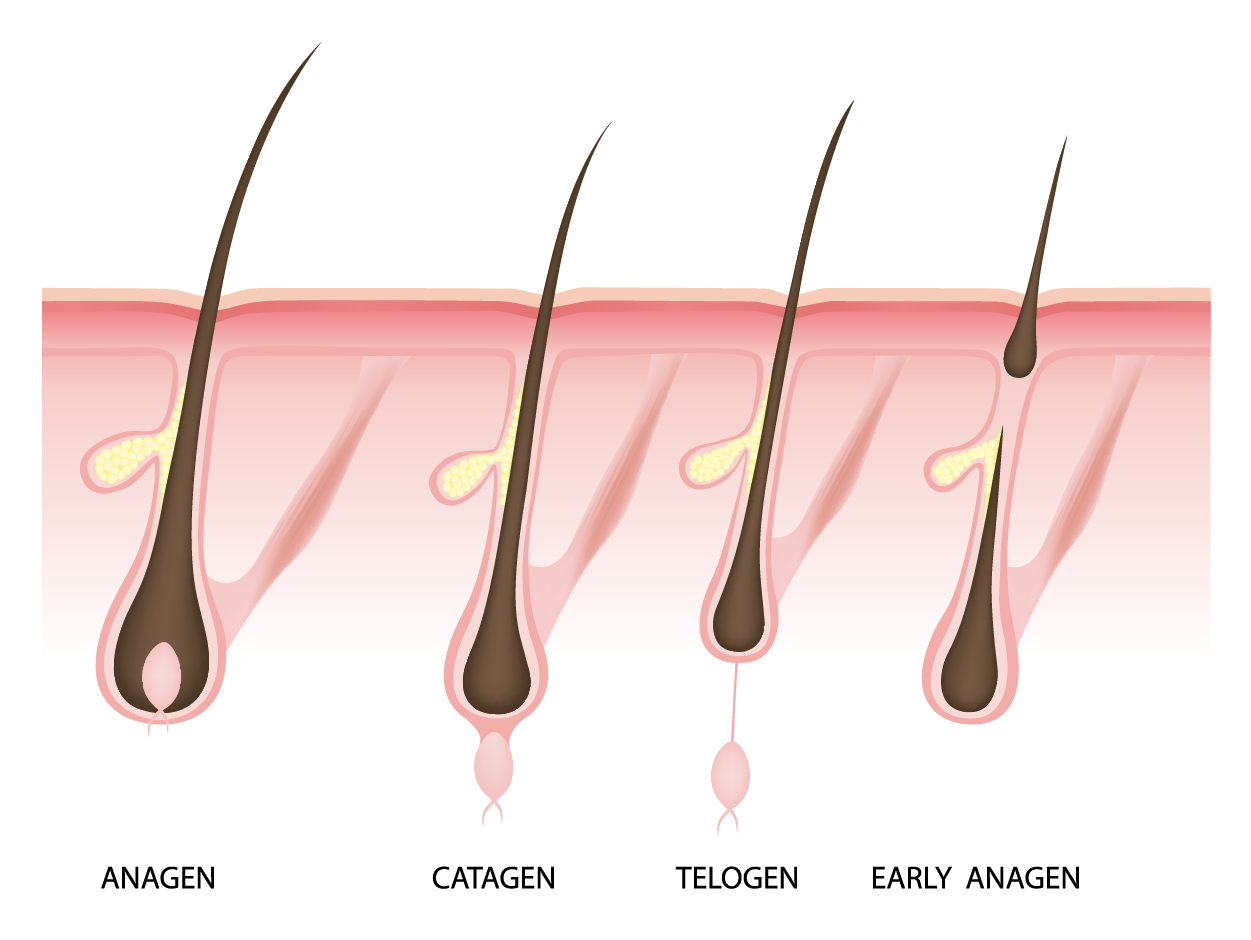
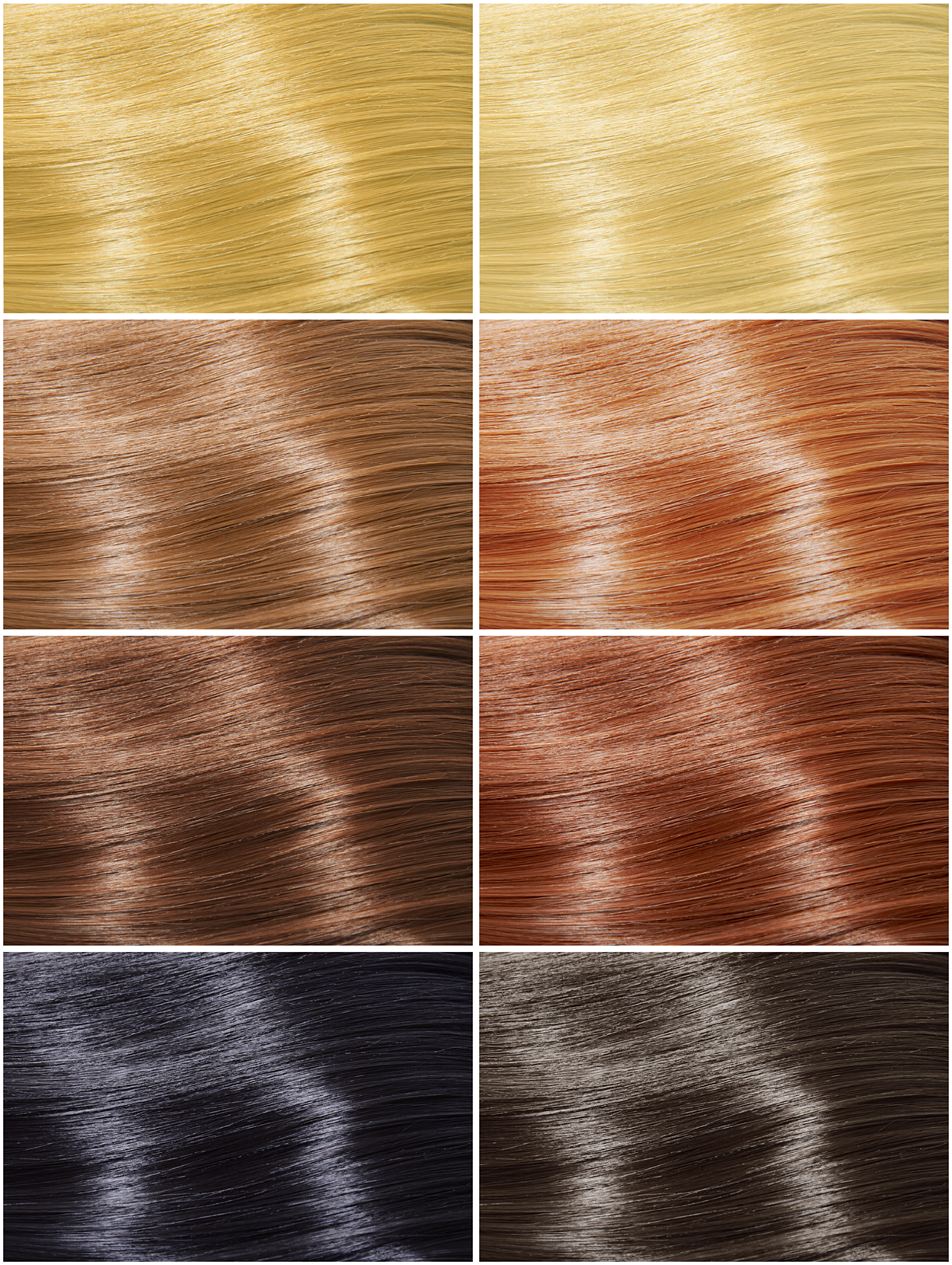
Image shows the three stages of hair development.
Hair Growth -The growth of hair is separated into three phases. The anagen phase is a growth phase and lasts 2–7 years. The catagen phase is a transition phase that lasts 2–3 weeks while the now club hair separates from the hair matrix. The telogen phase is a 2–4 month period of rest and no growth. With the new cycle, a new hair will be produced, the club hair will be pushed out, and the cycle will begin again.

1b. Hair Color

image shows a variety of hair pigments, from light yellows to reds, browns, and darker shades and black.
Hair Color -The melanin produced by melanocytes in the hair bulb determines natural hair color.

Similar to the skin, hair gets its color from the pigment melanin, produced by melanocytes in the hair papilla. Different hair color results from differences in the type of melanin, which is genetically determined. Recall that melanin can produce colors ranging from red to yellow to brown to black.

As a person ages, melanin production decreases, and hair tends to lose its color and becomes gray and/or white. Melanin production can also be changed under periods of stress.

watch
View the following video for more information on this topic.

terms to know
Hair Follicle
A cavity in the skin from which a hair grows.
Hair Shaft
The region of a hair that is not attached to the hair follicle.
Hair Root
The region of a hair that is attached to the hair follicle.
Hair Bulb
The expanded portion at the base of the hair follicle that surrounds the hair papilla.
Hair Matrix
The basal cells in the hair bulb that generate the hair.
Hair Papilla
A collection of connective tissue that supplies blood vessels and nerves to the hair follicle.
Medulla
The innermost layer of a hair.
Cortex
The middle layer of a hair.
Cuticle
The outermost layer of a hair.
Internal Root Sheath
The innermost layer of the hair follicle surrounding the hair root.
External Root Sheath
The middle layer of the hair follicle surrounding the hair root.
Glassy Membrane
The outer connective tissue layer of the hair follicle surrounding the hair root.
Arrector Pili Muscle
A smooth muscle that, when activated, pulls the hair follicle to form goosebumps.
Anagen
The growth phase of the hair growth cycle.
Catagen
The transition phase of the hair growth cycle.
Club Hair
A hair disconnected from the hair matrix.
Telogen
The resting (non-growth) phase of the hair growth cycle.

2. Nails

Nails are an accessory structure of the integumentary system which functions to protect the body from damage at the tips of the fingers and toes. The nail is formed by highly keratinized, dead stratified squamous epithelial tissue generated by an active stratum basale at the nail root deep within the proximal edge of the nail. As new cells are produced, the nail is pushed forward, creating growth. The large central portion of the nail is called the nail body (or nail plate) and protects the underlying tissue at the distal end of the finger. The epithelial tissue that the nail body lays on top of is called the nail bed. As the nail extends beyond the distal edge of the finger, it forms the free edge. This is the part of the nail that you cut with nail clippers.

The nail itself is embedded into the skin of the finger. The lateral edges of the nail are covered by the lateral nail folds while the proximal edge of the nail coming from the nail root is covered by the proximal nail fold. The proximal nail fold produces a clear layer of skin called the eponychium, commonly called the cuticle. Underneath the free edge, the skin creates another clear layer of skin called the hyponychium. These structures keep dirt, bacteria, or other substances from finding their way underneath the skin at the fingertips.

The nail bed is rich in blood vessels, making it appear pink, except at the base, where a thick layer of epithelium over the nail matrix forms a crescent-shaped region called the lunula (the “little moon”).
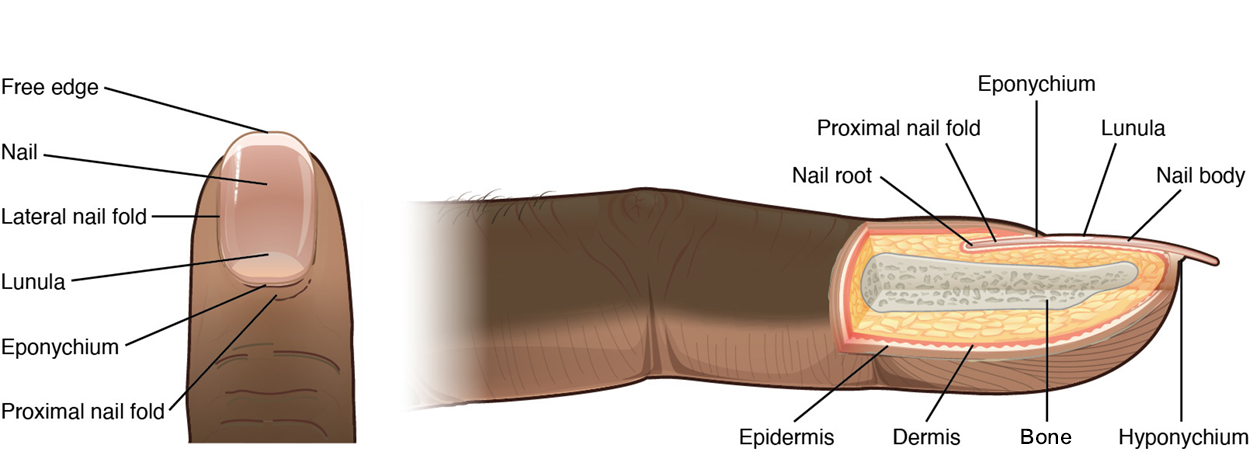

These two images show anatomy of the fingernail region. The top image shows a dorsal view of a finger. The proximal nail fold is the part underneath where the skin of the finger connects with the edge of the nail. The eponychium is a thin, pink layer between the white proximal edge of the nail (the lunula) and the edge of the finger skin. The lunula appears as a crescent-shaped white area at the proximal edge of the pink-shaded nail. The lateral nail folds are where the sides of the nail contact the finger skin. The distal edge of the nail is white and is called the free edge. An arrow indicates that the nail grows distally out from the proximal nail fold. The lower image shows a lateral view of the nail bed anatomy. In this view, one can see how the edge of the nail is located just proximal to the nail fold. This end of the nail, from which the nail grows, is called the nail root.
Nails - The nail is an accessory structure of the integumentary system.

Nails function to reinforce the distal end of the fingers and toes and protect them from pressure. If a nail is lost due to damage, it will grow back so long as the nail root is intact. As a new nail grows, it is possible that the lateral edge of the nail may grow further into the lateral nail fold than it should. This is called an ingrown nail. If caught early, the nail edge can be physically removed from the nail edge. If allowed to grow, this can lead to infections and pain.

terms to know
Nail Root
The basal cells in the proximal nail that generate the nail.
Nail Body
The large central portion of the nail.
Nail Bed
The underlying epidermis that the nail body lies on top of.
Free Edge
The distal portion of the nail that extends beyond the finger.
Lateral Nail Fold
Epidermal tissue that covers over the lateral portion of the nail.
Proximal Nail Fold
Epidermal tissue that covers over the proximal portion of the nail.
Eponychium
A portion of clear epidermal tissue extending from the proximal nail fold, also called the nail cuticle.
Hyponychium
A portion of clear epidermal tissue that is connected to the underside of the free edge.
Lunula
The crescent-shaped base of the nail body.

3. Exocrine Glands

Recall that exocrine glands are epithelial structures that produce and release secretions that have a direct pathway to the outside of the body. The integumentary system has two accessory structures that are exocrine glands—sweat glands and oil glands.

3a. Sweat Glands

When the body becomes warm, the skin has a gland called the sudoriferous gland, also known as sweat gland, that can help to cool the body. Sweat glands develop from epidermal projections into the dermis and are classified as merocrine glands; that is, the secretions are excreted by exocytosis through a duct without affecting the cells of the gland. There are two types of sweat glands, each secreting slightly different products.

An eccrine sweat gland is a type of sudoriferous gland that produces a hypotonic sweat primarily meant to regulate body temperature, a process called thermoregulation. These glands are active from birth and are found all over the skin’s surface but are especially abundant on the palms of the hand, the soles of the feet, and the forehead. They are coiled glands lying deep in the dermis, with the duct rising up to a pore on the skin surface, where the sweat is released. This type of sweat is composed mostly of water, with some salt, antibodies, traces of metabolic waste, and an antimicrobial peptide. Eccrine glands are a primary component of thermoregulation in humans and thus help to maintain homeostasis. However, they also serve to wash the skin and limit the growth of harmful bacteria on the skin's surface.
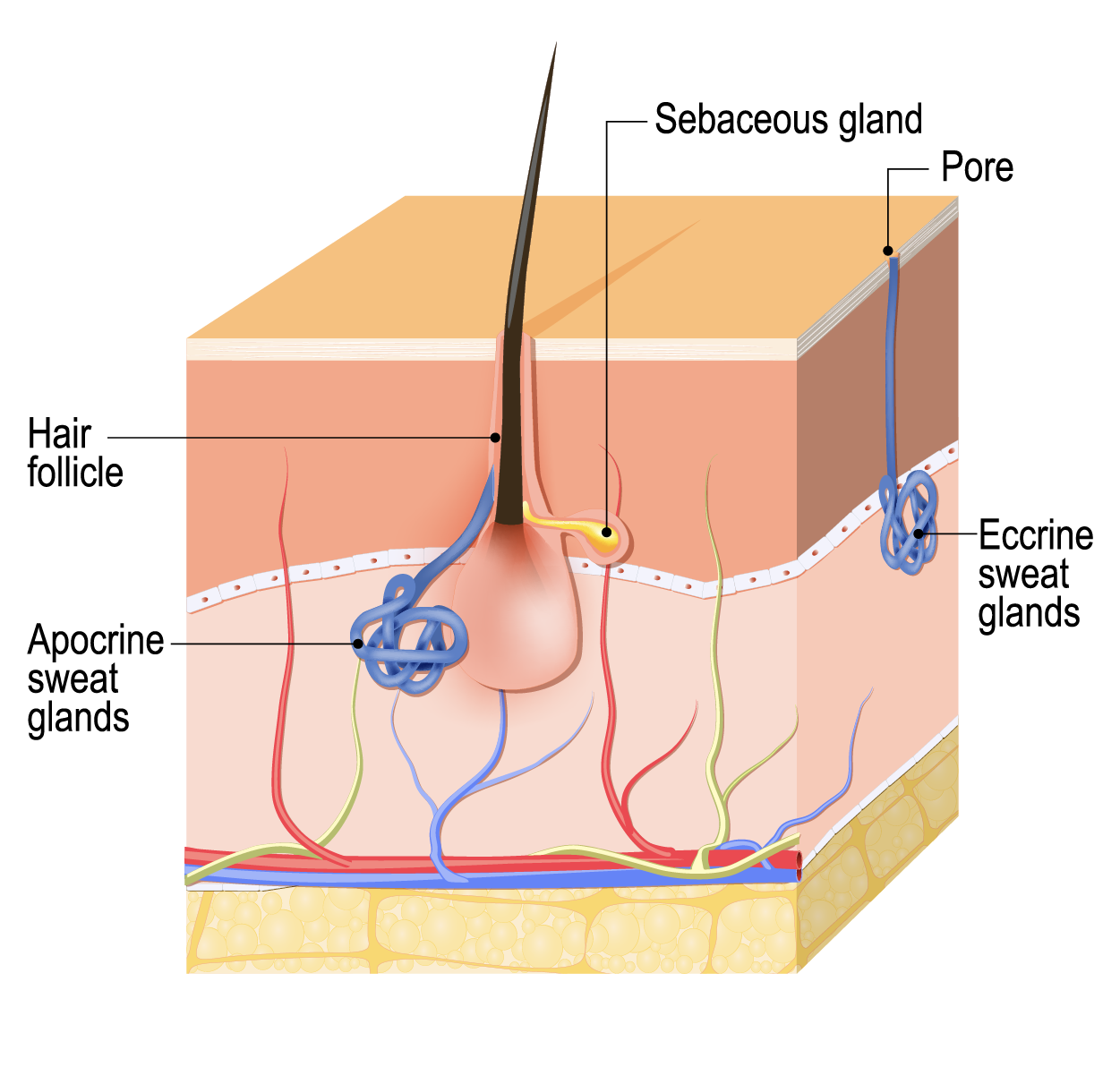

This diagram shows an eccrine sweat gland embedded in a cross-section of skin tissue. The eccrine sweat gland is a bundle of white tubes embedded in the dermis. A single white tube travels up from the bundle and opens onto the surface of the epidermis. The opening is called a pore. There are several pores on the small block of skin portrayed in this diagram.
Sweat Glands - Eccrine glands are smaller coiled glands in the dermis that release sweat that is mostly water directly onto the surface of the skin. Apocrine glands are larger coiled glands in the dermis or hypodermis that release sweat containing water and organic compounds most often into a hair follicle.

An apocrine sweat gland is a sudoriferous gland typically associated with hair follicles in densely hairy areas, such as armpits and genital regions. Apocrine sweat glands are larger than eccrine sweat glands and lie deeper in the dermis, sometimes even reaching the hypodermis, with the duct normally emptying into the hair follicle. These glands are also not active until puberty. In addition to water and salts, apocrine sweat includes organic compounds that make the sweat thicker and provide bacteria on the skin surface with metabolic nutrients (proteins, lipids). The smell associated with these sweat glands comes not from the secreted sweat but from the byproducts of bacterial metabolism. However, despite its negative social connotation (who likes to smell like an armpit?), the release of this sweat is under both nervous and hormonal control and plays a role in the poorly understood human pheromone response. Pheromones are chemicals secreted to influence the behavior of others such as attracting a mate, warning an enemy, etc.

did you know
Most commercial antiperspirants use an aluminum-based compound as their primary active ingredient to stop sweat. When the antiperspirant enters the sweat gland duct, the aluminum-based compounds precipitate due to a change in pH and form a physical block in the duct, which prevents sweat from coming out of the pore. Alternatively, non-aluminum based products may only be labeled as a deodorant and function to mask the smell.

3b. Oil Glands

A sebaceous gland is a type of oil gland that is found all over the body and helps to lubricate and waterproof the skin and hair. Most sebaceous glands are associated with hair follicles. They generate and excrete sebum, a mixture of lipids, onto the skin surface, thereby naturally lubricating the dry and dead layer of keratinized cells of the stratum corneum, keeping it pliable. The fatty acids of sebum also have antibacterial properties and prevent water loss from the skin in low-humidity environments. The secretion of sebum is stimulated by hormones, many of which do not become active until puberty. Thus, sebaceous glands are relatively inactive during childhood.

watch
View the following video for more information on this topic.

terms to know
Sudoriferous Gland
An exocrine gland that secretes sweat.
Eccrine Sweat Gland
A sudoriferous gland found throughout the body that is primarily for thermoregulation.
Thermoregulation
The process of regulating body temperature.
Apocrine Sweat Gland
A sudoriferous gland that is activated by puberty to produce sweat in the armpits and genital regions.
Sebaceous Gland
An exocrine gland found throughout the body that secretes sebum; also called an oil gland
Sebum
Oil produced by a sebaceous gland.

summary
In this lesson, you learned about the accessory structures of the integumentary system. You learned about the structures and function of hair, the cycle of hair growth, and how hair color is generated and changes with age. Then you learned about the structures and function of nails. Lastly, you learned about the exocrine glands found in the skin, namely the sweat and oil glands and how they function to protect the body.

Source: THIS TUTORIAL HAS BEEN ADAPTED FROM OPENSTAX “ANATOMY AND PHYSIOLOGY 2E.” ACCESS FOR FREE AT HTTPS://OPENSTAX.ORG/DETAILS/BOOKS/ANATOMY-AND-PHYSIOLOGY-2E. LICENSE: CC ATTRIBUTION 4.0 INTERNATIONAL.

Terms to Know
Anagen

The growth phase of the hair growth cycle.

Apocrine Sweat Gland

A sudoriferous gland that is activated by puberty to produce sweat in the armpits and genital regions.

Arrector Pili Muscle

A smooth muscle that, when activated, pulls the hair follicle to form goosebumps.

Catagen

The transition phase of the hair growth cycle.

Club Hair

A hair disconnected from the hair matrix.

Cortex

The middle layer of a hair.

Cuticle

The outermost layer of a hair.

Eccrine Sweat Gland

A sudoriferous gland found throughout the body that is primarily for thermoregulation.

Eponychium

A portion of clear epidermal tissue extending from the proximal nail fold, also called the nail cuticle.

External Root Sheath

The middle layer of the hair follicle surrounding the hair root.

Free Edge

The distal portion of the nail that extends beyond the finger.

Glassy Membrane

The outer connective tissue layer of the hair follicle surrounding the hair root.

Hair Bulb

The expanded portion at the base of the hair follicle that surrounds the hair papilla.

Hair Follicle

A cavity in the skin from which a hair grows.

Hair Matrix

The basal cells in the hair bulb that generate the hair.

Hair Papilla

A collection of connective tissue that supplies blood vessels and nerves to the hair follicle.

Hair Root

The region of a hair that is attached to the hair follicle. 

Hair Shaft

The region of a hair that is not attached to the hair follicle.

Hyponychium

A portion of clear epidermal tissue that is connected to the underside of the free edge.

Internal Root Sheath

The innermost layer of the hair follicle surrounding the hair root.

Lateral Nail Fold

Epidermal tissue that covers over the lateral portion of the nail.

Lunula

The crescent-shaped base of the nail body.

Medulla

The innermost layer of a hair.

Nail Bed

The underlying epidermis that the nail body lies on top of.

Nail Body

The large central portion of the nail.

Nail Root

The basal cells in the proximal nail that generate the nail.

Proximal Nail Fold

Epidermal tissue that covers over the proximal portion of the nail.

Sebaceous Gland

An exocrine gland found throughout the body that secretes sebum; also called an oil gland.

Sebum

Oil produced by a sebaceous gland.

Sudoriferous Gland

An exocrine gland that secretes sweat.

Telogen

The resting (non-growth) phase of the hair growth cycle.

Thermoregulation

The process of regulating body temperature.


